


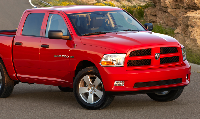
HID KIT Ram 2012 35w vs 55w


All Star
Joined: Jan 2010
Posts: 824
Likes: 1
From: Alberta

I don't want to start a fight here, but I am one of those that have HIDs in the factory housing. However I have adjusted them to the point where people don't get blinded, and I can see. Yes I am sure there are still those times where they are bright for the person with a sensitive eye, but unfortunately its not just HIDS that harm these people. Its also people who point there headlights up deliberately, or those that leave their high beams on and don't care what other people think. Those are the people whom I want to run their rear ends off the road. Those are the people who don't care what happens. At least there are those of us who do take into consideration there are others on the road and we find that happy medium! Yes I do plan on getting some projectors, but until then this is better then stock, and I still drive by many police officers and never get stopped so it cannot be that bad.
As far as the kits go, I have 35W kits and they do me just fine. They have 55W kits, these are for different bulbs. As far as I know the 9005s and H13s do not come in a 55W because they don't have too. Now there are other bulbs for different vehicles that might require the use of a 55W kit. We have to remember that when we say 35W or 55W that is not saying the the kits is using 35W of power. This is just stating that this is what the max power that ballast can operate to without rupturing. Chances are that when your bulb is on and has been for a few minutes your not using 35w. The biggest draw that happens is the initial firing of the bulb (or initial ignition of the gas), once its on, it runs very efficiently. This is why they have 55W HID kits, because im sure the bigger bulbs require that. Now I could be wrong, but as far as I know this how it works.
As far as the kits go, I have 35W kits and they do me just fine. They have 55W kits, these are for different bulbs. As far as I know the 9005s and H13s do not come in a 55W because they don't have too. Now there are other bulbs for different vehicles that might require the use of a 55W kit. We have to remember that when we say 35W or 55W that is not saying the the kits is using 35W of power. This is just stating that this is what the max power that ballast can operate to without rupturing. Chances are that when your bulb is on and has been for a few minutes your not using 35w. The biggest draw that happens is the initial firing of the bulb (or initial ignition of the gas), once its on, it runs very efficiently. This is why they have 55W HID kits, because im sure the bigger bulbs require that. Now I could be wrong, but as far as I know this how it works.

Captain
Joined: Sep 2011
Posts: 507
Likes: 9
The only way HID's in the stock housing won't blind is if they are pointed literally straight down at the ground. There is glare due to the housing being made for HALOGEN. some glare awful bad and some lights are not that bad. But all plug and play hids glare. Not to mention poor light distribution.


Moderate User


Joined: Oct 2008
Posts: 17,003
Likes: 21
From: Albany, NY
I don't want to start a fight here, but I am one of those that have HIDs in the factory housing. However I have adjusted them to the point where people don't get blinded, and I can see. Yes I am sure there are still those times where they are bright for the person with a sensitive eye, but unfortunately its not just HIDS that harm these people. Its also people who point there headlights up deliberately, or those that leave their high beams on and don't care what other people think. Those are the people whom I want to run their rear ends off the road. Those are the people who don't care what happens. At least there are those of us who do take into consideration there are others on the road and we find that happy medium! Yes I do plan on getting some projectors, but until then this is better then stock, and I still drive by many police officers and never get stopped so it cannot be that bad.
As far as the kits go, I have 35W kits and they do me just fine. They have 55W kits, these are for different bulbs. As far as I know the 9005s and H13s do not come in a 55W because they don't have too. Now there are other bulbs for different vehicles that might require the use of a 55W kit. We have to remember that when we say 35W or 55W that is not saying the the kits is using 35W of power. This is just stating that this is what the max power that ballast can operate to without rupturing. Chances are that when your bulb is on and has been for a few minutes your not using 35w. The biggest draw that happens is the initial firing of the bulb (or initial ignition of the gas), once its on, it runs very efficiently. This is why they have 55W HID kits, because im sure the bigger bulbs require that. Now I could be wrong, but as far as I know this how it works.
As far as the kits go, I have 35W kits and they do me just fine. They have 55W kits, these are for different bulbs. As far as I know the 9005s and H13s do not come in a 55W because they don't have too. Now there are other bulbs for different vehicles that might require the use of a 55W kit. We have to remember that when we say 35W or 55W that is not saying the the kits is using 35W of power. This is just stating that this is what the max power that ballast can operate to without rupturing. Chances are that when your bulb is on and has been for a few minutes your not using 35w. The biggest draw that happens is the initial firing of the bulb (or initial ignition of the gas), once its on, it runs very efficiently. This is why they have 55W HID kits, because im sure the bigger bulbs require that. Now I could be wrong, but as far as I know this how it works.
This part not so...
35 watts is 35w output to bulb, it's the amount of energy the bulb will use up.. 55w is 55w output to bulb. The initial current draw is spiked because the bulbs need to warm up. Even Haogen bulbs spike, but not for nearly as long.
Halogen spike ^_____ HID spike ^---_____
There's no difference in the bulbs for HID, just the ballast output. This is why running 55w ballasts diminishes the bulb life like I stated above. Your just overdriving the same bulb.
Once the HID bulbs are on, the increased efficiency you experience is the brighter ouput of light with the same current consumption as halogen.
Hopefully that explains it a little better?
All Star
Joined: Jan 2010
Posts: 824
Likes: 1
From: Alberta
This part not so...
35 watts is 35w output to bulb, it's the amount of energy the bulb will use up.. 55w is 55w output to bulb. The initial current draw is spiked because the bulbs need to warm up. Even Haogen bulbs spike, but not for nearly as long.
Halogen spike ^_____ HID spike ^---_____
There's no difference in the bulbs for HID, just the ballast output. This is why running 55w ballasts diminishes the bulb life like I stated above. Your just overdriving the same bulb.
Once the HID bulbs are on, the increased efficiency you experience is the brighter ouput of light with the same current consumption as halogen.
Hopefully that explains it a little better?
35 watts is 35w output to bulb, it's the amount of energy the bulb will use up.. 55w is 55w output to bulb. The initial current draw is spiked because the bulbs need to warm up. Even Haogen bulbs spike, but not for nearly as long.
Halogen spike ^_____ HID spike ^---_____
There's no difference in the bulbs for HID, just the ballast output. This is why running 55w ballasts diminishes the bulb life like I stated above. Your just overdriving the same bulb.
Once the HID bulbs are on, the increased efficiency you experience is the brighter ouput of light with the same current consumption as halogen.
Hopefully that explains it a little better?
HAVING SAID THAT! You cannot force power into a bulb that's not rated for it. Meaning if you have a 35W bulb, you can't force 55W into it. Laws of physics, it cannot work. Not to mention power is the use of energy, not the supplier. Ballasts are a current limiting device, not a power giving device. When you attach a device to a ballast (say a bulb), the bulb is still only going to use 35W of power. NOW when we put a 55W ballast on, we are not saying that the bulb is using 55W. The ballast is designed to limit the current to a certain level, this is pre-determined in the ballast. ((Newer ballasts have sensing devices, that will limit the current to the device that its connected to, this is not the case in MOST car ballasts)) SO when we put a 55W ballast on, it operates at a certain current level (which will be higher), and the same voltage level, this is why its a 55W ballast. Think P=IV... So when we put that and a 35W bulb together, its not the power output that's going to make the bulb run brighter, its the current. This is also why the bulb has a lower life span, because you are exceeding the current levels of the bulb. Not the power levels.
Basically long story short. A 35W ballast operates at a pre-determined current level. (around 3 amps) and a 55W ballast operates at its pre-determined current levels (around 6 amps) These are forced current levels, because they are designed to run at a minimum. Its not a forced power but a forced current.
Hope it KINDA clears things up...At least this is what makes sense to me. Essentially they function the same way, but the facts are different.
Moderate User
Joined: Oct 2008
Posts: 17,003
Likes: 21
From: Albany, NY
I guess I am getting a little ahead of myself as I am an electrician. I know from experience that if you have a 20W output, your not going to get 20W. Unless your device is running at 100% efficiency, which I highly doubt because there is nothing out there that runs on 100% efficiency. This is why electronics create heat. Thats what I thought about when saying the bulbs not going to use 35W of power. Now I will admit I was thinking too far into electrical and thinking transformers (thats the main principle of a ballast) but I forgot to realize that ballasts are a forced power output due to current.
HAVING SAID THAT! You cannot force power into a bulb that's not rated for it. Meaning if you have a 35W bulb, you can't force 55W into it. Laws of physics, it cannot work. Not to mention power is the use of energy, not the supplier. Ballasts are a current limiting device, not a power giving device. When you attach a device to a ballast (say a bulb), the bulb is still only going to use 35W of power. NOW when we put a 55W ballast on, we are not saying that the bulb is using 55W. The ballast is designed to limit the current to a certain level, this is pre-determined in the ballast. ((Newer ballasts have sensing devices, that will limit the current to the device that its connected to, this is not the case in MOST car ballasts)) SO when we put a 55W ballast on, it operates at a certain current level (which will be higher), and the same voltage level, this is why its a 55W ballast. Think P=IV... So when we put that and a 35W bulb together, its not the power output that's going to make the bulb run brighter, its the current. This is also why the bulb has a lower life span, because you are exceeding the current levels of the bulb. Not the power levels.
Basically long story short. A 35W ballast operates at a pre-determined current level. (around 3 amps) and a 55W ballast operates at its pre-determined current levels (around 6 amps) These are forced current levels, because they are designed to run at a minimum. Its not a forced power but a forced current.
Hope it KINDA clears things up...At least this is what makes sense to me. Essentially they function the same way, but the facts are different.
HAVING SAID THAT! You cannot force power into a bulb that's not rated for it. Meaning if you have a 35W bulb, you can't force 55W into it. Laws of physics, it cannot work. Not to mention power is the use of energy, not the supplier. Ballasts are a current limiting device, not a power giving device. When you attach a device to a ballast (say a bulb), the bulb is still only going to use 35W of power. NOW when we put a 55W ballast on, we are not saying that the bulb is using 55W. The ballast is designed to limit the current to a certain level, this is pre-determined in the ballast. ((Newer ballasts have sensing devices, that will limit the current to the device that its connected to, this is not the case in MOST car ballasts)) SO when we put a 55W ballast on, it operates at a certain current level (which will be higher), and the same voltage level, this is why its a 55W ballast. Think P=IV... So when we put that and a 35W bulb together, its not the power output that's going to make the bulb run brighter, its the current. This is also why the bulb has a lower life span, because you are exceeding the current levels of the bulb. Not the power levels.
Basically long story short. A 35W ballast operates at a pre-determined current level. (around 3 amps) and a 55W ballast operates at its pre-determined current levels (around 6 amps) These are forced current levels, because they are designed to run at a minimum. Its not a forced power but a forced current.
Hope it KINDA clears things up...At least this is what makes sense to me. Essentially they function the same way, but the facts are different.
When I say 35w and 55w ballasts, that is the predetermined power output from that ballast. As far as the ballast rating and useable wattage. The bulb will draw the given output.
Take any DC Halogen light bulb and vary the voltage, you'll see the bulb go dim and bright as it's changed. This is because the current is limited by the internal resistance of the bulb which is a fixed value based on the operating voltage. Once you change the ooperating voltage, the resistance still remains, but the current then increases giving you more power across the bulb.
With an HID bulb, the internal gas pressure increases triple when cold. When you overdrive an HID bulb, they run hotter and the internal pressure increases even more. This means more heat and cathode life. The bulb could rupture as well.
Philips does make a 50w bulb that is bigger. It's in a D2s base and I believe is avail overseas as well. The idea of going to a bigger housing is to allow more room for the gases and increase the surface area to allow more heat to escape. The internals of the bulb are the same with exception to the cathode.
All Star
Joined: Jan 2010
Posts: 824
Likes: 1
From: Alberta
I have an Electronics degree in Electrical Engineering so I know the difference between power, current, etc. The current is limited by the resistance of the bulb when operated at a certain voltage, so it can fluctuate as the voltage and resistance changes. Not really the case is a fixed ouput like a ballast, but def in a halogen bulb. HID bulbs aren't current limited themselves, it's the ballast that provides the limiting, so if you purchase a modded ballast rated at 55w, you can certainly run that same bulb at a 55w rated output power from the modded ballast. It only take s a couple of resistors added in parallel for the current sensing part to change it's ouput.
When I say 35w and 55w ballasts, that is the predetermined power output from that ballast. As far as the ballast rating and useable wattage. The bulb will draw the given output.
Take any DC Halogen light bulb and vary the voltage, you'll see the bulb go dim and bright as it's changed. This is because the current is limited by the internal resistance of the bulb which is a fixed value based on the operating voltage. Once you change the ooperating voltage, the resistance still remains, but the current then increases giving you more power across the bulb.
With an HID bulb, the internal gas pressure increases triple when cold. When you overdrive an HID bulb, they run hotter and the internal pressure increases even more. This means more heat and cathode life. The bulb could rupture as well.
Philips does make a 50w bulb that is bigger. It's in a D2s base and I believe is avail overseas as well. The idea of going to a bigger housing is to allow more room for the gases and increase the surface area to allow more heat to escape. The internals of the bulb are the same with exception to the cathode.
When I say 35w and 55w ballasts, that is the predetermined power output from that ballast. As far as the ballast rating and useable wattage. The bulb will draw the given output.
Take any DC Halogen light bulb and vary the voltage, you'll see the bulb go dim and bright as it's changed. This is because the current is limited by the internal resistance of the bulb which is a fixed value based on the operating voltage. Once you change the ooperating voltage, the resistance still remains, but the current then increases giving you more power across the bulb.
With an HID bulb, the internal gas pressure increases triple when cold. When you overdrive an HID bulb, they run hotter and the internal pressure increases even more. This means more heat and cathode life. The bulb could rupture as well.
Philips does make a 50w bulb that is bigger. It's in a D2s base and I believe is avail overseas as well. The idea of going to a bigger housing is to allow more room for the gases and increase the surface area to allow more heat to escape. The internals of the bulb are the same with exception to the cathode.
You can say then that the bulb is not taking in that extra wattage it is being forced because of the increased current. (that minimum pre-determined current level difference between the two ballasts) The bulb has not changed its specifications. The wattage is also a predetermined level given that it runs at a certain amperage and voltage...
I could still be a little out, but we are all here to learn!
Moderate User
Joined: Oct 2008
Posts: 17,003
Likes: 21
From: Albany, NY
The bulb is taking in/using the extra wattage and increased current, causing it to run hotter and have greater pressure inside the capsule. This is why the lifespan is diminished.
If you were to probe in series with an Ammeter the current going through an HID bulb running off a 35w ballast, you would get ~3.2-3.4A. Most 35w kits are already overdriving the bulb to make theirs the brightest 35w kit out there. Take that same bulb with a 55w ballast, you would get a reading of 3.8-3.9A. This will vary depending on manufacturer and their choice of quality control and quality parts.
Lets use Voltage X Current = Watts. So, 14V X 3.9A = 55W.
The amount of energy used is only limited when a dedicated voltage is present.
I think your confusing the current limit of the bulb and the current limit of the ballast? An HID bulb can consume as much current you drive into it. It's a closed circuit when warm with little resistance to flow. Got 100A, it'll try and put a super bright light output, but would likely melt and/or burn up the cathode and explode the bulb in doing so.
On last thing. There are differences between AC ballasts and DC ballasts as well. AC ballasts is what you want. DC's suck and burn up relatively quick and cause premature bulb life too.
If you were to probe in series with an Ammeter the current going through an HID bulb running off a 35w ballast, you would get ~3.2-3.4A. Most 35w kits are already overdriving the bulb to make theirs the brightest 35w kit out there. Take that same bulb with a 55w ballast, you would get a reading of 3.8-3.9A. This will vary depending on manufacturer and their choice of quality control and quality parts.
Lets use Voltage X Current = Watts. So, 14V X 3.9A = 55W.
The amount of energy used is only limited when a dedicated voltage is present.
I think your confusing the current limit of the bulb and the current limit of the ballast? An HID bulb can consume as much current you drive into it. It's a closed circuit when warm with little resistance to flow. Got 100A, it'll try and put a super bright light output, but would likely melt and/or burn up the cathode and explode the bulb in doing so.
On last thing. There are differences between AC ballasts and DC ballasts as well. AC ballasts is what you want. DC's suck and burn up relatively quick and cause premature bulb life too.
Last edited by dirtydog; Apr 15, 2012 at 02:42 PM.
All Star
Joined: Jan 2010
Posts: 824
Likes: 1
From: Alberta
The bulb is taking in/using the extra wattage and increased current, causing it to run hotter and have greater pressure inside the capsule. This is why the lifespan is diminished.
If you were to probe in series with an Ammeter the current going through an HID bulb running off a 35w ballast, you would get ~3.2-3.4A. Most 35w kits are already overdriving the bulb to make theirs the brightest 35w kit out there. Take that same bulb with a 55w ballast, you would get a reading of 3.8-3.9A. This will vary depending on manufacturer and their choice of quality control and quality parts.
Lets use Voltage X Current = Watts. So, 14V X 3.9A = 55W.
The amount of energy used is only limited when a dedicated voltage is present.
I think your confusing the current limit of the bulb and the current limit of the ballast? An HID bulb can consume as much current you drive into it. It's a closed circuit when warm with little resistance to flow. Got 100A, it'll try and put a super bright light output, but would likely melt and/or burn up the cathode and explode the bulb in doing so.
On last thing. There are differences between AC ballasts and DC ballasts as well. AC ballasts is what you want. DC's suck and burn up relatively quick and cause premature bulb life too.
If you were to probe in series with an Ammeter the current going through an HID bulb running off a 35w ballast, you would get ~3.2-3.4A. Most 35w kits are already overdriving the bulb to make theirs the brightest 35w kit out there. Take that same bulb with a 55w ballast, you would get a reading of 3.8-3.9A. This will vary depending on manufacturer and their choice of quality control and quality parts.
Lets use Voltage X Current = Watts. So, 14V X 3.9A = 55W.
The amount of energy used is only limited when a dedicated voltage is present.
I think your confusing the current limit of the bulb and the current limit of the ballast? An HID bulb can consume as much current you drive into it. It's a closed circuit when warm with little resistance to flow. Got 100A, it'll try and put a super bright light output, but would likely melt and/or burn up the cathode and explode the bulb in doing so.
On last thing. There are differences between AC ballasts and DC ballasts as well. AC ballasts is what you want. DC's suck and burn up relatively quick and cause premature bulb life too.
This could be a lost cause still, but I still see the power output as a result of current and voltage. We don't change the voltage in the system, but by using a ballast that has a higher operating current level, the power used must go up. We don't design a system on power ratings, but current and voltage, power is the resultant of these two figures...
We can disagree to agree or vise versa haha

Thread Starter
|
Rookie
Joined: Jan 2011
Posts: 97
Likes: 0
From: Granby,Qc CANADA
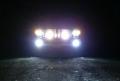
Did the convertion! almost work at the first shot... after putting all back together we start the truck and the HID start to have some serious flickering( The HID didn't flicker when the engine is not running). Solution : 1 capacitor on parallel on each headlight(16Volts 4700uF). Everything work fine now. I don't have projector but on a 45min roadtrip in pitch black, never got flash by other car, guess we have done a good job for the alignement.