


Odometer reading "error"


Thread Starter
|
Registered User
Joined: Apr 2013
Posts: 4
Likes: 0
 Odometer reading "error"
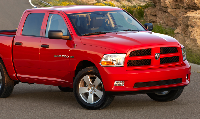
I recently picked up an 09 RAM 1500 with the 4.7 from an auction. It had a slight fire in the rear seat that was put out fairly quickly but caused smoke damage to the entire interior. The truck didn't come with keys, but I ordered 2 new ones off eBay to be programmed by the dealer at a later time. When I put the key in the ignition I get the common "key not programmed" error as well as an "error" in the place where mileage should be visible. Does the key need to be programmed in order to view the mileage? Thanks for your help!



Site Moderator-Dodge Tech
Joined: Sep 2010
Posts: 3,724
Likes: 22
From: Nashville, Tennessee
It should display the ODO when you open the doors and wake the BUS up, then go out a couple minutes after you shut the door. (no keys in ignition) The ERROR may be coming up for a different reason, as in the WCM has bonked out. If the car was a stolen recovery (you mentioned auction)the WCM may well be damaged too.
Thread Starter
|
Registered User
Joined: Apr 2013
Posts: 4
Likes: 0
It should display the ODO when you open the doors and wake the BUS up, then go out a couple minutes after you shut the door. (no keys in ignition) The ERROR may be coming up for a different reason, as in the WCM has bonked out. If the car was a stolen recovery (you mentioned auction)the WCM may well be damaged too.
I am not sure where the WCM is located, but nothing past the front seats was damaged by fire (though potentially by water). I have a contractor coming out today and he is going to hook up his super fancy scanner tools to it and see if he can diagnose anything before I proceed. I'm probably going to be better off pulling the cab and replacing it entirely. I will post back here if he is able to find anything. Thanks for your input!
Nick
Thread Starter
|
Registered User
Joined: Apr 2013
Posts: 4
Likes: 0
So my tech guy came out and was able to program the 2 keys I purchased off eBay. The truck was able to start and everything works, but the odometer still is not displaying. My guy was able to extract the actual mileage from the ECU(?) so I'm good on that front. He THINKS that the problem might be being caused by damaged wires in the headliner by the overhead console. I will tear it down this weekend and report back!
Trending Topics

Registered User
Joined: Dec 2011
Posts: 6
Likes: 0
Odometer Reading "error"
I would like to know the outcome of this. My 2004 4.7 Durango suddenly indicated "error" in place of the odometer reading. There were no other issues with the vehicle. I eventually had the dash cluster repaced with a used unit and had the odometer reset. It worked for a week and we are now back to "error". Help?!
Leslie
Leslie

Record Breaker
Joined: Jan 2010
Posts: 1,400
Likes: 5
From: San Pedro, California
Try this test for the cluster
SELF TEST
The instrument cluster self test will put the instrument cluster into its self-diagnostic mode. In this mode the instrument cluster can perform a self-diagnostic test that will confirm that the instrument cluster circuitry, the gauges, and the indicators are capable of operating as designed. During the self test the instrument cluster circuitry will position each of the gauge needles at various calibration points, illuminate all of the segments or portions in the Liquid Crystal Display (LCD) unit, and turn all of the indicators ON and OFF again.
Successful completion of the self test will confirm that the instrument cluster is operational. However, there may still be a problem with the CAN data bus, the Powertrain Control Module (PCM), the Totally Integrated Power Module (TIPM), the Transmission Control Module (TCM), the Occupant Restraint Controller (ORC), the Controller Anti-lock Brake (CAB), the Wireless Ignition Node (WIN) or the hardwired inputs to one of these electronic control modules. Use a diagnostic scan tool to diagnose these components. Refer to the appropriate diagnostic information.
1.
Begin the test with the ignition switch in the OFF position.
2.
Depress the odometer/trip odometer switch button.
3.
While still holding the odometer/trip odometer switch button depressed, turn the ignition switch to the ON position, but do not start the engine.
4.
Release the odometer/trip odometer switch button.
5.
The instrument cluster will simultaneously begin to illuminate all of the operational segments in the LCD unit and perform a bulb check of each operational Light Emitting Diode (LED) indicator. The LCD segments and LED indicators remain illuminated as each gauge needle is swept to several calibration points and back. If a VFD segment or an LED indicator fails to illuminate, or if a gauge needle fails to sweep through the calibration points and back during this test, the instrument cluster must be replaced.
6.
The self test is now completed. The instrument cluster will automatically exit the self-diagnostic mode and return to normal operation at the completion of the test. The self test will be aborted if the ignition switch is turned to the OFF position, or if a vehicle speed message indicating that the vehicle is moving is received from the PCM over the CAN data bus during the test.
7.
Go back to Step #1to repeat the test, if necessary.
SELF TEST
The instrument cluster self test will put the instrument cluster into its self-diagnostic mode. In this mode the instrument cluster can perform a self-diagnostic test that will confirm that the instrument cluster circuitry, the gauges, and the indicators are capable of operating as designed. During the self test the instrument cluster circuitry will position each of the gauge needles at various calibration points, illuminate all of the segments or portions in the Liquid Crystal Display (LCD) unit, and turn all of the indicators ON and OFF again.
Successful completion of the self test will confirm that the instrument cluster is operational. However, there may still be a problem with the CAN data bus, the Powertrain Control Module (PCM), the Totally Integrated Power Module (TIPM), the Transmission Control Module (TCM), the Occupant Restraint Controller (ORC), the Controller Anti-lock Brake (CAB), the Wireless Ignition Node (WIN) or the hardwired inputs to one of these electronic control modules. Use a diagnostic scan tool to diagnose these components. Refer to the appropriate diagnostic information.
1.
Begin the test with the ignition switch in the OFF position.
2.
Depress the odometer/trip odometer switch button.
3.
While still holding the odometer/trip odometer switch button depressed, turn the ignition switch to the ON position, but do not start the engine.
4.
Release the odometer/trip odometer switch button.
5.
The instrument cluster will simultaneously begin to illuminate all of the operational segments in the LCD unit and perform a bulb check of each operational Light Emitting Diode (LED) indicator. The LCD segments and LED indicators remain illuminated as each gauge needle is swept to several calibration points and back. If a VFD segment or an LED indicator fails to illuminate, or if a gauge needle fails to sweep through the calibration points and back during this test, the instrument cluster must be replaced.
6.
The self test is now completed. The instrument cluster will automatically exit the self-diagnostic mode and return to normal operation at the completion of the test. The self test will be aborted if the ignition switch is turned to the OFF position, or if a vehicle speed message indicating that the vehicle is moving is received from the PCM over the CAN data bus during the test.
7.
Go back to Step #1to repeat the test, if necessary.

