


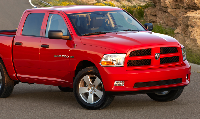
Low End Torque Increase - Performance Chip, Intake?


Thread Starter
|
Registered User
Joined: May 2013
Posts: 2
Likes: 0
From: Texas
 Low End Torque Increase - Performance Chip, Intake?
Hello All,
1st time to post on here, I just got a 2011 Quad Cab 4x4 w/4.7L. FYI - I am no mechanic, but all the rest of my family is, so I can take the information given on here & talk w/my brother, cousin, & father & they will be the ones helping me to install the upgrades I'd like to do.
I want some low end torque increase, for no other reason than inc performance & hopefully a little better mpg. I drive 120 mile round trip to work everyday & generally keep the highway mph under 70(cruise at 69). I am getting over 17mpg driving this way. I do play a little offroad, but nothing major...
I am getting dual exhaust installed this weekend & am wanting to know what the suggestion is for installing a performance chip-brand & model? Also, would it be more beneficial to install a cold air intake 1st? What about a larger throttle body?
Any suggestions are MUCH appreciated. Again, this is not "needed", just wanted :-) Thank you all for the help!
1st time to post on here, I just got a 2011 Quad Cab 4x4 w/4.7L. FYI - I am no mechanic, but all the rest of my family is, so I can take the information given on here & talk w/my brother, cousin, & father & they will be the ones helping me to install the upgrades I'd like to do.
I want some low end torque increase, for no other reason than inc performance & hopefully a little better mpg. I drive 120 mile round trip to work everyday & generally keep the highway mph under 70(cruise at 69). I am getting over 17mpg driving this way. I do play a little offroad, but nothing major...
I am getting dual exhaust installed this weekend & am wanting to know what the suggestion is for installing a performance chip-brand & model? Also, would it be more beneficial to install a cold air intake 1st? What about a larger throttle body?
Any suggestions are MUCH appreciated. Again, this is not "needed", just wanted :-) Thank you all for the help!

Captain
Joined: Sep 2010
Posts: 664
Likes: 0
From: Wisconsin
Low end torque increase, equals gas mileage decrease.
If you really want to increase air flow, you'll need an aftermarket ported intake manifold to compliment a increased diameter ported TB, headers, and highflow cats with your custom exhaust. A fully functional ram hood with a port matched intake would be beneficial too.
As far as performance chips for a 4.7, don't waste your money, most claims are completely asinine!
If you really want to increase air flow, you'll need an aftermarket ported intake manifold to compliment a increased diameter ported TB, headers, and highflow cats with your custom exhaust. A fully functional ram hood with a port matched intake would be beneficial too.
As far as performance chips for a 4.7, don't waste your money, most claims are completely asinine!

Registered User
Joined: May 2013
Posts: 16
Likes: 0
From: Maryland
Lower gears do not create torque. It uses the engines available torque more efficiently. If the motor makes 300 ft/lbs it will make it no matter what gears you have. Lower gears will use that torque more efficiently.

Record Breaker
Joined: Jan 2010
Posts: 1,400
Likes: 5
From: San Pedro, California
gears do change the torque to the rear wheels. Just measure the torque at the rear wheels with a 4:56 rear end and the engine running at 2000 RPM and repeat the process with a 3:21. The results will tell you that there is more torque with the 4:56. The wheels will not rotate as fast but there will be more torque.
go here for the explanation if you don't believe me
http://maelabs.ucsd.edu/mae_guides/m...Ad/mech_ad.htm
go here for the explanation if you don't believe me
http://maelabs.ucsd.edu/mae_guides/m...Ad/mech_ad.htm

Captain
Joined: Apr 2007
Posts: 566
Likes: 2
From: Western PA
Lower gears do create more tq. Not at the engine but at the wheels. Gears are considered tq multipliers.
Trending Topics
Captain
Joined: Sep 2010
Posts: 664
Likes: 0
From: Wisconsin
And if you still don't believe gears don't create significant gains with regards to rwtq... I know a couple GTS owners that would strongly disagree, who have seen gains as much as 21% rwtq on the dyno after a rear swap.
Registered User
Joined: May 2013
Posts: 16
Likes: 0
From: Maryland
Which if you read what I wrote you wouldn't bother with links to try to prove what I said wrong.
Lowering the gears will use the available engine torque more efficiently. However this is only effective up to point, because eventually you run out of RPM for the other things you need to do, like highway driving, getting decent fuel mileage etc. Gears are an effective way to gain torque at the rear wheels, but not the most cost effective and they are a compromise of drivability depending on what your needs are. The OP posted 120 mile commute as en everyday occurrence and wanting a possible mpg increase. Lowering the gears may help performance acceleration but probably will not help mileage.
What is your current gear ratio?
Lowering the gears will use the available engine torque more efficiently. However this is only effective up to point, because eventually you run out of RPM for the other things you need to do, like highway driving, getting decent fuel mileage etc. Gears are an effective way to gain torque at the rear wheels, but not the most cost effective and they are a compromise of drivability depending on what your needs are. The OP posted 120 mile commute as en everyday occurrence and wanting a possible mpg increase. Lowering the gears may help performance acceleration but probably will not help mileage.
What is your current gear ratio?
Record Breaker
Joined: Jan 2010
Posts: 1,400
Likes: 5
From: San Pedro, California
Which if you read what I wrote you wouldn't bother with links to try to prove what I said wrong.
Lowering the gears will use the available engine torque more efficiently. However this is only effective up to point, because eventually you run out of RPM for the other things you need to do, like highway driving, getting decent fuel mileage etc. Gears are an effective way to gain torque at the rear wheels, but not the most cost effective and they are a compromise of drivability depending on what your needs are. The OP posted 120 mile commute as en everyday occurrence and wanting a possible mpg increase. Lowering the gears may help performance acceleration but probably will not help mileage.
What is your current gear ratio?
Lowering the gears will use the available engine torque more efficiently. However this is only effective up to point, because eventually you run out of RPM for the other things you need to do, like highway driving, getting decent fuel mileage etc. Gears are an effective way to gain torque at the rear wheels, but not the most cost effective and they are a compromise of drivability depending on what your needs are. The OP posted 120 mile commute as en everyday occurrence and wanting a possible mpg increase. Lowering the gears may help performance acceleration but probably will not help mileage.
What is your current gear ratio?
Your other comment, "However this is only effective up to point, because eventually you run out of RPM for the other things you need to do, like highway", is mostly true but not always. The OP cruises at 69-70 MPH, lower gears may be able to help him stay overdrive longer, thus helping his highway MPGs. Also many folks on this forum report getting better around town MPGs with the lower gears.
Since the usable torque for vehicles is what is delivered at the rear wheels, getting more torque to the rear wheels can be done either by gear changes or changes to the engine. I suggested stroking the engine (which I have done). Stroking will get you more torque and better MPGs as the truck will stay in higher gears longer at lower RPMs.
What does my gear ratio have to do with the OPs question?.
Last edited by Pedro Dog; May 27, 2013 at 07:14 PM.