


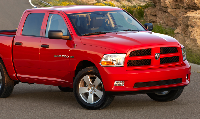
2012 RAM 1500 wont pass emmissions!?


Record Breaker
Joined: Jan 2010
Posts: 1,400
Likes: 5
From: San Pedro, California

I'm always surprised at the variety of laws over different states. When I visit my daughter in tennessee, they don't recycle, and the environmental laws are pretty lax. Same for other southern states.
Moderate User


Joined: Oct 2008
Posts: 17,003
Likes: 21
From: Albany, NY
yeah, i dont think Florida does any kind of inspection unless you bought a car from out of state.
I've seen some pretty beat up cars that I have steered clear of while driving there. Somce scary vehicles veing driven on the road.
on the other hand...Try to own a var in the UK. You cant drive a car with rusty panels supposedly!
I've seen some pretty beat up cars that I have steered clear of while driving there. Somce scary vehicles veing driven on the road.
on the other hand...Try to own a var in the UK. You cant drive a car with rusty panels supposedly!
Record Breaker
Joined: Jan 2010
Posts: 1,400
Likes: 5
From: San Pedro, California
Vermont is a pretty tough state for inspections, they require the vehicle to be inspected yearly for emissions and safety. My son has had to get rid of vehicles due to the cost to comply for some of the repairs.
Vehicle Documentation:
Vehicle Documentation:
- Fill out vehicle work order for inspection
- Verify registration certificate is current, accurate, and in agreement with vehicle
- Verify insurance document is current, accurate, and in agreement with vehicle
- Verify public VIN on vehicle dashboard and match to vehicle documentation
- Verify vehicle is equipped with seat belts (1964 & newer) and verify functionality
- Check interior rearview mirror
- Check exterior rearview mirror
- Check windshield wipers for correct operation and condition of blades
- Check bumpers and fenders
- Check for protruding metal
- Check for sun visors
- Measure tires for wear
- Check tires for cuts, snags, and cracks
- Check tires for bumps, bulges, and knots
- Check tire labeling for restricted usage
- Check wheel bolts, nuts, or lugs
- Check wheel for damage
- Check function of TPMS system
- Check for proper tire size
- Check for proper inflation
- Ensure tires do not protrude past fender walls
- Check for lash or free play in steering system
- Check power steering system for operation, fluid level, and leaks
- Check ball joints for movement
- Check ball joint assembly for seizure due to rust
- If ball joint movement is detected, check tolerance with tool (use manufacturer spec's)
- Check torsion bars or springs
- Check tire rod ends
- Check tie rods for seizure due to rust
- Check condition of shock absorbers and struts
- Check wheel bearings
- Check axle shaft
- Check for brake failure and ABS indicator lamp operation
- Check brake system integrity
- Check parking brake functionality
- Check brake failure lamp
- Check master cylinder lines and wheel brakes for signs of leakage
- Check brake hoses for integrity, cracks, and wear
- Road test brakes (stop within 25 feet at 20 mph)
- Verify critical vehicle instrumentation (odometer & speedometer)
- Perform a visual check of all lamp functionality
- Ensure fog and driving lights illuminate with corresponding headlight beams
- Check headlight aim
- Check switches and functions of directional controls
- Check defroster function
- Check horn function
- Check for exposed wiring for damage and poor connections
- Check lights for cracks, leaks, or insufficient repairs
- Check for unauthorized after-market lighting
- Check airbag readiness light
- Check windshield glass for cracks, chips, and discoloration
- Check left front window for visibility and operation of all windows
- Check for incorrect sticker placement or other visual restrictions
- Check glass to the left & right of the driver position for after-market tinting
- Check integrity of floor pan and trunk area
- Check frame and body mounts
- Check vehicle muffler
- Check for after-market uncertified muffler
- Check for loose joints or leaking joints
- Check for leaks caused by corrosion, seams, or patches on muffler or tailpipe
- Check tailpipe end for restrictions
- Check for exhaust system modifications allowing excessive noise
- Ensure no part of the exhaust system passes through the passenger compartment
- Ensure system is securely attached
- Check for vapor or fuel leakage
- Check for proper routing of fuel lines
- Check fuel tank and/or auxiliary fuel tank, or jug stored in vehicle
- Check catalytic converter if so equipped
- Ensure fuel cap is present and secure
- Perform OBDII check (1996 & newer vehicles - use CAN protocol scan tool)
- Fill out OBDII form

Veteran
Joined: Jun 2012
Posts: 400
Likes: 0
From: Woodbury Tn
In Tennessee, only counties that touch a county that has a major city in it, are emission tested. So Nashville, Knoxville Memphis and maybe Chattanooga, and surrounding counties are tested, the rest of us are left alone, and hope it stays that way.

Moderate User
Joined: Oct 2008
Posts: 17,003
Likes: 21
From: Albany, NY

For Jeep, Chrysler and Dodge, the owner’s manual states that the vehicle has a simple ignition key actuated test, which you can use prior to going to the test station. To check if your vehicle’s OBD II system is ready, you must do the following:
1. Turn the ignition switch to the “ON”position, but do not crank or start the engine. If you crank or start the engine, you will have to start this test over.
2. As soon as you turn the ignition switch to the ON position, you will see the MIL symbol come on as part of a normal bulb check.
3. Approximately 15 seconds later, one of two things will happen:
a. The MIL will flash for about 10 seconds and then return to being fully illuminated until you turn OFF the ignition or start the engine. This means that your vehicle’s OBD II system is not ready and you should not proceed to the E-Checkst ation.
b. The MIL will not flash at all and will remain fully illuminated until you turn OFF the ignition or start the engine. This means that your vehicle’s OBD II system is ready and you can proceed to the E-Check station
1. Turn the ignition switch to the “ON”position, but do not crank or start the engine. If you crank or start the engine, you will have to start this test over.
2. As soon as you turn the ignition switch to the ON position, you will see the MIL symbol come on as part of a normal bulb check.
3. Approximately 15 seconds later, one of two things will happen:
a. The MIL will flash for about 10 seconds and then return to being fully illuminated until you turn OFF the ignition or start the engine. This means that your vehicle’s OBD II system is not ready and you should not proceed to the E-Checkst ation.
b. The MIL will not flash at all and will remain fully illuminated until you turn OFF the ignition or start the engine. This means that your vehicle’s OBD II system is ready and you can proceed to the E-Check station