


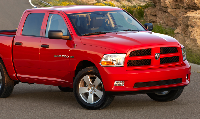
2012 RAM 1500 wont pass emmissions!?


Thread Starter
|
New Member
Joined: Nov 2008
Posts: 15
Likes: 0
 2012 RAM 1500 wont pass emmissions!?
Is it possible for my 2012 RAM 1500 to NOT pass emmissions if the battery was disconnected 7 days earlier? Mechanic told me i needed to drive it more for it to pass emmissions. Is this true?

Record Breaker
Joined: Nov 2011
Posts: 1,013
Likes: 2
From: Ontario, Canada
Removing the battery is good in some cases where you're trying to protect the computer when you're making repairs that could harm/destroy it (like welding or changing certain components). The downside to removing the battery is that you also remove ALL the history files that the computer uses for various purposes. Part of these files you have recorded events for what constitutes a clean drive cycle - you need to drive it long enough to do all the things necessary to have your computer declare that you've passed a clean drive cycle. You can get a list of the criteria on line or ask the dealer for it. Once you've done this, you can go and get your truck checked - it should pass.

Record Breaker
Joined: Jan 2010
Posts: 1,400
Likes: 5
From: San Pedro, California
For Jeep, Chrysler and Dodge, the owner’s manual states that the vehicle has a simple ignition key actuated test, which you can use prior to going to the test station. To check if your vehicle’s OBD II system is ready, you must do the following:
1. Turn the ignition switch to the “ON”position, but do not crank or start the engine. If you crank or start the engine, you will have to start this test over.
2. As soon as you turn the ignition switch to the ON position, you will see the MIL symbol come on as part of a normal bulb check.
3. Approximately 15 seconds later, one of two things will happen:
a. The MIL will flash for about 10 seconds and then return to being fully illuminated until you turn OFF the ignition or start the engine. This means that your vehicle’s OBD II system is not ready and you should not proceed to the E-Checkst ation.
b. The MIL will not flash at all and will remain fully illuminated until you turn OFF the ignition or start the engine. This means that your vehicle’s OBD II system is ready and you can proceed to the E-Check station
1. Turn the ignition switch to the “ON”position, but do not crank or start the engine. If you crank or start the engine, you will have to start this test over.
2. As soon as you turn the ignition switch to the ON position, you will see the MIL symbol come on as part of a normal bulb check.
3. Approximately 15 seconds later, one of two things will happen:
a. The MIL will flash for about 10 seconds and then return to being fully illuminated until you turn OFF the ignition or start the engine. This means that your vehicle’s OBD II system is not ready and you should not proceed to the E-Checkst ation.
b. The MIL will not flash at all and will remain fully illuminated until you turn OFF the ignition or start the engine. This means that your vehicle’s OBD II system is ready and you can proceed to the E-Check station

Veteran
Joined: Jun 2012
Posts: 400
Likes: 0
From: Woodbury Tn
Yes, the testing equipment needs to see so many start stop cycles in order to pass the test. If you had your battery disconnected you erased the start-stop cycle records and will have to use the vehicle and restore those records. This is what I have been told but don't know for fact
Record Breaker
Joined: Nov 2011
Posts: 1,013
Likes: 2
From: Ontario, Canada
Yes, the testing equipment needs to see so many start stop cycles in order to pass the test. If you had your battery disconnected you erased the start-stop cycle records and will have to use the vehicle and restore those records. This is what I have been told but don't know for fact
Moderate User


Joined: Oct 2008
Posts: 17,003
Likes: 21
From: Albany, NY
This is the case with ALL ODB-II vehicles, which is all vehicles 1996 and newer.
Any time you unhook the battery or clear the DTC codes, it clears all of the monitor histories.
For the most part it takes several ignition cycles and variable speeds to reset all of the monitors. Generally ~100miles works with a couple of on/off hot/cold cycles at different speeds.
NY allows 3/5 monitors to pass for 2001 older. 2002+newer needs 4/5 monitors to be in the Pass state.
Any time you unhook the battery or clear the DTC codes, it clears all of the monitor histories.
For the most part it takes several ignition cycles and variable speeds to reset all of the monitors. Generally ~100miles works with a couple of on/off hot/cold cycles at different speeds.
NY allows 3/5 monitors to pass for 2001 older. 2002+newer needs 4/5 monitors to be in the Pass state.
Veteran
Joined: Jun 2012
Posts: 400
Likes: 0
From: Woodbury Tn
There's quite a bit more information the PCM needs to gather than just start/stop cycles. Here's a link to a description of how to perform a basic clean drive cycle for a clean emmisions test.
Dang Alfons...I'd rather fail than to have to go through all that stuff...lol
Trending Topics
Record Breaker
Joined: Nov 2011
Posts: 1,013
Likes: 2
From: Ontario, Canada
Most of this stuff happens through a few days of normal use and a couple of good drives.
Veteran
Joined: Jun 2012
Posts: 400
Likes: 0
From: Woodbury Tn
We don't have emissions checking in my county, so until I move or the Govt catches up to my county....I guess I'm good
Moderate User
Joined: Oct 2008
Posts: 17,003
Likes: 21
From: Albany, NY
It will happen at some point or another.