


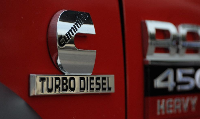
get ready for something that will make your head spin. . .


Thread Starter
|
Professional
Joined: Aug 2004
Posts: 117
Likes: 1
From: 33.43.342, 84.21.602
 get ready for something that will make your head spin. . .
I found this at another site that was linked to an RV site where someone did some impressive research. . .the question is this:
It's not who owns Cummins, but who does Cummins own?
(1) Isuzu owned Subaru, and sold out to Fuji Heavy Industries, which was then jointly acquired by British Leyland and Ford.
(2) BL & Ford then spun off Fuji/Subaru into an independent company. Big mistake. Ford bought BL, and owned Isuzu outright. Big mistake.
(3) Isuzu entered into a joint development partnership with Navistar International. Stock interests were traded. Eventually, one of the projects would be a 7.3L V-8 light-duty diesel. Guess who picked that one up for use in its pickup trucks?
(4) Navistar also had entered into a joint development partnership with Caterpillar. One of the projects was a direct injection system that would be picked up by -- Ford. And Isuzu mediums.
(5) Caterpillar owned a large chunk of Bosch. GM owned another big chunk. And so did a third major player -- Daimler Benz. Bosch was the primary developer of Caterpillar's direct injection system. But GM forced Caterpillar to turn over its share of Bosch, and then forced Bosch to abandon direct injection in favor of developing an "improved" generation rotary injection pumps. The initial designs for those pumps had been brought to GM by former Isuzu engineers working for Ford.
(6) What did Caterpillar receive in return for giving GM its stock in Bosch? GM's stock in Cummins. Ford then sold its small share of Cummins stock because of antitrust regulations in the U.S. Caterpillar, on the other hand, avoided antitrust problems by a joint incorporation agreement with Cummins under a Brazilian operation named Inquardo, Ltd.
(7) Eventually almost all Cummins manufacturing and design were moved over to that part of the "house". However, that move proved so efficient and profitable that Cummins began to eat into significant markets for Caterpillar, so Caterpillar merged its manufacturing and design base with Cummins in Brazil, leaving skeleton operations only in places like Peoria, Illinois. Cummins management largely pushed out Caterpillar management after several years.
(8) With me so far? Caterpillar owns Cummins, but Cummins has effectively "eaten" Caterpillar. In Brazil. Here, they're separate, of course, but it's only the purposes of adhering to American commercial law. But wait. There's more.
(9) Ford had some disasterous capitalization-and-flow problems after the overseas buying spree of the early nineties, during which it acquired British Leyland, Isuzu, Fuji, part of Fiat, and parts of other companies. Ford was forced to sell Isuzu to maintain cash flow beyond the U.S. Who did they sell Isuzu to? Navistar International. Along with certain manufacturing and sourcing arrangements. Navistar hoped to go global again, as in the grand old days of International Harvester.
(10) But Navistar couldn't hold on to Isuzu either, what with a $2 billion dollar loss in 1995, and eventually sold its controlling interest in the company to Daimler Benz.
(11) Isuzu was having its own problems, since its global market share in light and medium diesels was rapidly shrinking. The cause of the problem was Cummins, which, after swallowing Caterpillar - in Brazil - had also acquired NGT, Tapei Technologies, Allison Canada, and Nansen-Renault, all in hostile takeovers, all manufacturers of diesel technologies outside of the U.S. So, Cummins had effectively cornered the controlling share of the global market outside of North America and Western Europe. (Why do you think the splashgate at their website is so heavily global?)
(12) After nine months of negotiation, Cummins and its subsidiary, Allison Canada, entered into a joint development arrangement with Isuzu, owned by Daimler, and with the surviving U.S. corporation, Allison, which was at that point partly owned by GM. Cummins, however, dominated the partnership, and eventually managed to assume Daimler's and GM's interests in Isuzu and and Allison.
(13) In the case of Isuzu, Cummins has an equal partnership with Daimler, which, of course, has also acquired Chrysler Corporation. That's why, when Ford offered Cummins a billion-dollar package to manfacture medium and light truck diesels for its vehicles in 2001, Cummins said no. Again, for antitrust reasons, a public holding company was set up to handle Isuzu as a separate corporate entity. The name of the company is Benz Transporation Technologies, of San Paulo, Brazil. BTT also is a major owner of the Benz division of Daimler Chrysler, which manufacturers most of the diesel engines in Europe. In the case of Allison, Cummins controls it through a series of holding companies ending with Inquardo, Ltd., the orginal Caterpillar-Cummins creation in Brazil. Cummins also controls a fair-size block of stock in GM, through the ownership of a cartel of South Korean and Thai banks and investment groups.
(14) Navistar has continued its free-fall in spite of its partnership with Ford in the light-duty diesel area. Three weeks ago, after the implications of labor troubles, a rise in basic resource costs, and the disasterous introduction of the 6.0L PSD had become clear, Navistar's financial arrangements with Citibank and Manufacturers B&T collapsed. Both banks arranged to float the company infrastructural loans if it would agree to a merger with -- are you ready for this? -- Inquardo, Ltd. As of last Thursday, Cummins owns 67% of Navistar through Inquardo.
Right now, Cummins makes all diesels in all pickup trucks sold in the United States. Cummins makes 73% of all diesels in all trucks sold in the world. The board of directors at Inquardo -- which isn't listed on any stock exchange -- includes 9 Cummins execs, 2 Caterpillar execs, and one Wells Fargo Bank exec. The CEO and CFO are also Cummins vice presidents. And there are Cummins execs on the boards of Daimler Chrysler, General Motors, Toyota, and Honda America. Ford, the holdout, has not been doing very well.
So it isn't a question of who owns Cummins. It's a question of who Cummins owns, and who's next. Could be Ford. Could be DC. Could be both. Ford Viper, anyone? Mercedes Mustang with a 6.0L Shelby Diesel and a Holset twin turbo?
And some have claimed that the new Navistar/Ford 6.0L is Cummins' revenge for the Bosch VP44"
It's not who owns Cummins, but who does Cummins own?
(1) Isuzu owned Subaru, and sold out to Fuji Heavy Industries, which was then jointly acquired by British Leyland and Ford.
(2) BL & Ford then spun off Fuji/Subaru into an independent company. Big mistake. Ford bought BL, and owned Isuzu outright. Big mistake.
(3) Isuzu entered into a joint development partnership with Navistar International. Stock interests were traded. Eventually, one of the projects would be a 7.3L V-8 light-duty diesel. Guess who picked that one up for use in its pickup trucks?
(4) Navistar also had entered into a joint development partnership with Caterpillar. One of the projects was a direct injection system that would be picked up by -- Ford. And Isuzu mediums.
(5) Caterpillar owned a large chunk of Bosch. GM owned another big chunk. And so did a third major player -- Daimler Benz. Bosch was the primary developer of Caterpillar's direct injection system. But GM forced Caterpillar to turn over its share of Bosch, and then forced Bosch to abandon direct injection in favor of developing an "improved" generation rotary injection pumps. The initial designs for those pumps had been brought to GM by former Isuzu engineers working for Ford.
(6) What did Caterpillar receive in return for giving GM its stock in Bosch? GM's stock in Cummins. Ford then sold its small share of Cummins stock because of antitrust regulations in the U.S. Caterpillar, on the other hand, avoided antitrust problems by a joint incorporation agreement with Cummins under a Brazilian operation named Inquardo, Ltd.
(7) Eventually almost all Cummins manufacturing and design were moved over to that part of the "house". However, that move proved so efficient and profitable that Cummins began to eat into significant markets for Caterpillar, so Caterpillar merged its manufacturing and design base with Cummins in Brazil, leaving skeleton operations only in places like Peoria, Illinois. Cummins management largely pushed out Caterpillar management after several years.
(8) With me so far? Caterpillar owns Cummins, but Cummins has effectively "eaten" Caterpillar. In Brazil. Here, they're separate, of course, but it's only the purposes of adhering to American commercial law. But wait. There's more.
(9) Ford had some disasterous capitalization-and-flow problems after the overseas buying spree of the early nineties, during which it acquired British Leyland, Isuzu, Fuji, part of Fiat, and parts of other companies. Ford was forced to sell Isuzu to maintain cash flow beyond the U.S. Who did they sell Isuzu to? Navistar International. Along with certain manufacturing and sourcing arrangements. Navistar hoped to go global again, as in the grand old days of International Harvester.
(10) But Navistar couldn't hold on to Isuzu either, what with a $2 billion dollar loss in 1995, and eventually sold its controlling interest in the company to Daimler Benz.
(11) Isuzu was having its own problems, since its global market share in light and medium diesels was rapidly shrinking. The cause of the problem was Cummins, which, after swallowing Caterpillar - in Brazil - had also acquired NGT, Tapei Technologies, Allison Canada, and Nansen-Renault, all in hostile takeovers, all manufacturers of diesel technologies outside of the U.S. So, Cummins had effectively cornered the controlling share of the global market outside of North America and Western Europe. (Why do you think the splashgate at their website is so heavily global?)
(12) After nine months of negotiation, Cummins and its subsidiary, Allison Canada, entered into a joint development arrangement with Isuzu, owned by Daimler, and with the surviving U.S. corporation, Allison, which was at that point partly owned by GM. Cummins, however, dominated the partnership, and eventually managed to assume Daimler's and GM's interests in Isuzu and and Allison.
(13) In the case of Isuzu, Cummins has an equal partnership with Daimler, which, of course, has also acquired Chrysler Corporation. That's why, when Ford offered Cummins a billion-dollar package to manfacture medium and light truck diesels for its vehicles in 2001, Cummins said no. Again, for antitrust reasons, a public holding company was set up to handle Isuzu as a separate corporate entity. The name of the company is Benz Transporation Technologies, of San Paulo, Brazil. BTT also is a major owner of the Benz division of Daimler Chrysler, which manufacturers most of the diesel engines in Europe. In the case of Allison, Cummins controls it through a series of holding companies ending with Inquardo, Ltd., the orginal Caterpillar-Cummins creation in Brazil. Cummins also controls a fair-size block of stock in GM, through the ownership of a cartel of South Korean and Thai banks and investment groups.
(14) Navistar has continued its free-fall in spite of its partnership with Ford in the light-duty diesel area. Three weeks ago, after the implications of labor troubles, a rise in basic resource costs, and the disasterous introduction of the 6.0L PSD had become clear, Navistar's financial arrangements with Citibank and Manufacturers B&T collapsed. Both banks arranged to float the company infrastructural loans if it would agree to a merger with -- are you ready for this? -- Inquardo, Ltd. As of last Thursday, Cummins owns 67% of Navistar through Inquardo.
Right now, Cummins makes all diesels in all pickup trucks sold in the United States. Cummins makes 73% of all diesels in all trucks sold in the world. The board of directors at Inquardo -- which isn't listed on any stock exchange -- includes 9 Cummins execs, 2 Caterpillar execs, and one Wells Fargo Bank exec. The CEO and CFO are also Cummins vice presidents. And there are Cummins execs on the boards of Daimler Chrysler, General Motors, Toyota, and Honda America. Ford, the holdout, has not been doing very well.
So it isn't a question of who owns Cummins. It's a question of who Cummins owns, and who's next. Could be Ford. Could be DC. Could be both. Ford Viper, anyone? Mercedes Mustang with a 6.0L Shelby Diesel and a Holset twin turbo?
And some have claimed that the new Navistar/Ford 6.0L is Cummins' revenge for the Bosch VP44"

Legend
Joined: Aug 2006
Posts: 8,529
Likes: 0
From: 100% Heaven Sent
RE: get ready for something that will make your head spin. . .
After reading all of that, I really need a drink !!!
Things just seemed a helluva lot easier when everything was family owned and not stock motivated doesn't it?
Things just seemed a helluva lot easier when everything was family owned and not stock motivated doesn't it?


Legend
Joined: Aug 2006
Posts: 8,529
Likes: 0
From: 100% Heaven Sent
RE: get ready for something that will make your head spin. . .
ORIGINAL: RobertDunn
I'm so confused I started drinking WHILE reading it....
I'm so confused I started drinking WHILE reading it....
Is there a cliff notes version of this somewhere?


Champion
Joined: Dec 2003
Posts: 4,119
Likes: 5
From: Sycamore, Illinois (displaced to Arkansas)
RE: get ready for something that will make your head spin. . .
ORIGINAL: Drew
So it isn't a question of who owns Cummins. It's a question of who Cummins owns, and who's next.
So it isn't a question of who owns Cummins. It's a question of who Cummins owns, and who's next.
Too much there for me to understand... of course, thats not hard to do
Trending Topics

Registered User
Joined: Jul 2006
Posts: 485
Likes: 0
RE: get ready for something that will make your head spin. . .
Ok, call me skeptical. I did read through this and it does sound impressive but I couldn't find information validating a few of these items so I'm gonna say BS to a bulk off it...
I did find out though that they supply a huge number of engines to an impressive collection of companies and they have a huge number of subsidiaries.
They supplied 160,000 engines in 2005 for Dodge Ram trucks. (Cool)
They also supply engines to Navistar who at the same time is also a primary competitor... HA, go figure
On another note, Navistar did supply Ford with over 350,000 engines.
anyway just my rantings, and notes.
I did find out though that they supply a huge number of engines to an impressive collection of companies and they have a huge number of subsidiaries.
They supplied 160,000 engines in 2005 for Dodge Ram trucks. (Cool)
They also supply engines to Navistar who at the same time is also a primary competitor... HA, go figure
On another note, Navistar did supply Ford with over 350,000 engines.
anyway just my rantings, and notes.