


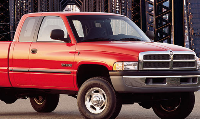
Changes about to go down.


Thread Starter
|
Banned
Joined: Apr 2007
Posts: 3,865
Likes: 0
From: Maine
 RE: Fed-up. Big changes about to go down.
LOL doesn't all of this make your head spin? Listen, this is what I will say. If I can get away with making this existing lift work, I will buck up and get over some of its disadvatanges. What do you guys think I need to finish making the truck "proper". If I do keep this lift, I know for sure I will want different tires and bigger gearing to be nice on the transmission. At the same time though, I can be guranteed the truck to be properly functional, safe, and long lasting if I put it back down to its size and run 33s. But as I stand now, what are some other things the truck needs as it stands with a 4.5-5" overall lift with 3" spacers? I'm trying to weigh all my options out here, and want to think out what realistically works best. Keep in mind I don't really do any heavy offroading to begin with, so coilspacers won't be an issue for me. Soorry if this is getting confusing, just want to make sure I go the best option here.

Champion
Joined: Apr 2007
Posts: 2,570
Likes: 0
RE: Fed-up. Big changes about to go down.
Well if his truck is already raised and the 5.5 is gonna throw him about the same height... who says he has to mess with the back to begin with?
http://store.summitracing.com/partde...919+4294881807+
There are 4-5" lower control arms if you decided to stay the same height. This could be your part of your alignment problems.
Listen to what other people say, im just throwin some things out there.
http://store.summitracing.com/partde...919+4294881807+
There are 4-5" lower control arms if you decided to stay the same height. This could be your part of your alignment problems.
Listen to what other people say, im just throwin some things out there.
Thread Starter
|
Banned
Joined: Apr 2007
Posts: 3,865
Likes: 0
From: Maine
RE: Fed-up. Big changes about to go down.
Ya see, that trackbar, Don over at thuren said that was the right one to go with. He said the fact my stock trackbar was even functioning meant his 0-3" could work. Do you think he was wrong on this, or it's because of the control arms that are causing the allignment to still be off?

Champion
Joined: Jan 2005
Posts: 4,268
Likes: 1
From:
RE: Fed-up. Big changes about to go down.
You basically need all of those parts I listed to make the truck be setup to properly handle the lift you have now. Otherwise without those it's just a hack job that will wear out parts way faster than they should and cause you problems. Which it looks like it's already doing since you are saying your alignment is off. I used to work at a shop that did alignments and my truck aligns up dead on so if you get the right parts you should be able to get it pretty close.
Champion
Joined: Apr 2007
Posts: 2,570
Likes: 0
RE: Fed-up. Big changes about to go down.
I was just thinking that if your truck comes with 2" lift... and you said your coil spring spacers are what 3" Thats 5" of lift for a trackbar that should be for a 0-3" lift. Thats how I see it at least.
Champion
Joined: Apr 2007
Posts: 2,570
Likes: 0
RE: Fed-up. Big changes about to go down.
I'm not saying yes or no. From my understanding, I would assume that would be the incorrect bar for 5" of lift, but i am not positive. Wait for someone who can verify this to be absolutely sure. In my eyes you had the stocker, replaced with the same length, which is why you still can't get a good alignment. You replaced with an expensive replacement of the same size. Thats just want im thinking, but wait for someone who could verify for sure.
Champion
Joined: Jan 2005
Posts: 4,268
Likes: 1
From:
RE: Fed-up. Big changes about to go down.
I am not 100% sure on this as it seems like Don knows his stuff from what I've heard but I think you either need a new trackbar or you need a track bar drop bracket. If you took the spacers off of your truck your current track bar should work fine.
 RE: Fed-up. Big changes about to go down.
All you need to do is take the blocks out, and you'll have a 3" lift left correct? And all your front end components will be okay with that much lift. Then you spend $250 on a 3" Preformance accessories body lift. That's a whole lot better idea than spending 1,500 on another suspension lift, when you don't even need all new parts. Then you keep the tires you have until you need new ones and you're good to go. The 4.10 gears will be absolutley fine with 35s until whenever you can afford new ones.
So you're looking at:
$2,500 for a new tranny
$250 for a 3" body lift
Total is $2,750
That doesn't sound too bad now does it? Whole lot better thanthe alternative...
New Transmission - $2,500
Fabtech lift - $1,500
Re-gear front and back
with master install kits, professionally installed - $1500
Tires - $1000
Total cost - $6,500
So you're looking at:
$2,500 for a new tranny
$250 for a 3" body lift
Total is $2,750
That doesn't sound too bad now does it? Whole lot better thanthe alternative...
New Transmission - $2,500
Fabtech lift - $1,500
Re-gear front and back
with master install kits, professionally installed - $1500
Tires - $1000
Total cost - $6,500

Professional
Joined: Aug 2007
Posts: 161
Likes: 0
From:
RE: Fed-up. Big changes about to go down.
I don't know if your trying to see if I'm full of it or what but this is what I know of Limp Mode other than my own personal experience...
This info is from http:\\Allpar.com\fix\trans.html
" Losing overdrive and third gear
Believe it or not, this is a sign of good design. Rather than having the engine shut down completely, Chrysler designed a "limp home mode" which causes the transmission to only use first and second, as a very visible sign that something is wrong. The immediate reaction should be checking the computer for error codes and changing the transmission fluid. If that fails, it could be a sensor problem or an internal problem. Suggestion is usually to chnage the fluid and filter (maybe flush the fluid too) and make sure that you use the correct amount of the appropriate chrysler fluid - DO NOT USE ANYONE ELSE'S FLUID!
"
That's what Ive read, and when from my own personal experience I've noticed that when an engine runs at a higher RPM in say a lower gear with an automatic, the Torque Converter spins a little faster than it normally would in a higher gear, thus the fluid inside the Torque Converter is pumped through the tranny and cooler lines at a higher pressure which allows for the fluid temps to drop a little bit.
Owner's manual for the 1999 Dodge that I got says...
"
Cooling System Tips - Trailer Towing
To reduce potential for engine and transmission over heating, take the following actions:
*City Driving - When stopped, put the transmission in N (Neutral) and increase the engine idle speed.
*Highway Driving - Reduce your speed.
*Air Conditioning - Turn it off temporarily.
See Cooling system Operation information in the Serive and Maintenance section of this manual for more information.
Automatic Transmission Oil Temperature Warning Light
All vehicles with heavy duty transmission oil cooling are equipped with a transmission oil temperature sensor and warning light. If elevated temperatures are encountered, the engine controller will disable Overdrive operation until transmission temperatures are reduced. If transmission oil temperatures continue to rise, a warning light located in the instrument cluseter will illuminate. If this should occur, manually downshift to a lower gear. If the light remains on for an extended period (3 to 5 minutes), stop the vehicle, shift to Neutral, and run the engine at idle or faster intil the light goes off.
Towing With An Automatic Transmission
Vehicles equipped with an automatic transmission may shift into and out of Overdrive, or a lower gear, when driving in hilly areas, when heavily loaded or when towing into heavy winds.
When this condition occurs, turn the Overdrive OFF or shift into a lower gear to prevent excessive transmission wear and / or overheating, and to provide better engine braking.
NOTE: Do not exceed the following RPM while manually downshifting:
*3800 RPM with V10 engines
*4600-4800 RPM with V6 / V8 engines
If your vehicle has an automatic transmission and you tow a trailer frequently, change transmission fluid and filter every 12,000 miles(19,000 Km).
"
"*City Driving - When stopped, put the transmission in N (Neutral) and increase the engine idle speed." - This seems to me like what the PCM and Tranny were trying to do when 360 got to his destination. Unfortunately, I don't know if it ever finished.
This info is from http:\\Allpar.com\fix\trans.html
" Losing overdrive and third gear
Believe it or not, this is a sign of good design. Rather than having the engine shut down completely, Chrysler designed a "limp home mode" which causes the transmission to only use first and second, as a very visible sign that something is wrong. The immediate reaction should be checking the computer for error codes and changing the transmission fluid. If that fails, it could be a sensor problem or an internal problem. Suggestion is usually to chnage the fluid and filter (maybe flush the fluid too) and make sure that you use the correct amount of the appropriate chrysler fluid - DO NOT USE ANYONE ELSE'S FLUID!
"
That's what Ive read, and when from my own personal experience I've noticed that when an engine runs at a higher RPM in say a lower gear with an automatic, the Torque Converter spins a little faster than it normally would in a higher gear, thus the fluid inside the Torque Converter is pumped through the tranny and cooler lines at a higher pressure which allows for the fluid temps to drop a little bit.
Owner's manual for the 1999 Dodge that I got says...
"
Cooling System Tips - Trailer Towing
To reduce potential for engine and transmission over heating, take the following actions:
*City Driving - When stopped, put the transmission in N (Neutral) and increase the engine idle speed.
*Highway Driving - Reduce your speed.
*Air Conditioning - Turn it off temporarily.
See Cooling system Operation information in the Serive and Maintenance section of this manual for more information.
Automatic Transmission Oil Temperature Warning Light
All vehicles with heavy duty transmission oil cooling are equipped with a transmission oil temperature sensor and warning light. If elevated temperatures are encountered, the engine controller will disable Overdrive operation until transmission temperatures are reduced. If transmission oil temperatures continue to rise, a warning light located in the instrument cluseter will illuminate. If this should occur, manually downshift to a lower gear. If the light remains on for an extended period (3 to 5 minutes), stop the vehicle, shift to Neutral, and run the engine at idle or faster intil the light goes off.
Towing With An Automatic Transmission
Vehicles equipped with an automatic transmission may shift into and out of Overdrive, or a lower gear, when driving in hilly areas, when heavily loaded or when towing into heavy winds.
When this condition occurs, turn the Overdrive OFF or shift into a lower gear to prevent excessive transmission wear and / or overheating, and to provide better engine braking.
NOTE: Do not exceed the following RPM while manually downshifting:
*3800 RPM with V10 engines
*4600-4800 RPM with V6 / V8 engines
If your vehicle has an automatic transmission and you tow a trailer frequently, change transmission fluid and filter every 12,000 miles(19,000 Km).
"
"*City Driving - When stopped, put the transmission in N (Neutral) and increase the engine idle speed." - This seems to me like what the PCM and Tranny were trying to do when 360 got to his destination. Unfortunately, I don't know if it ever finished.

