


Need Help On Tire Conversion


Thread Starter
|
Registered User
Joined: Aug 2007
Posts: 21
Likes: 0
 Need Help On Tire Conversion
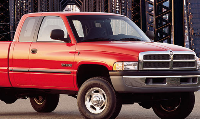
I have a 1996 Dodge Ram 1500 4x4 Sport. I put the pocket style bushwacker fender flares on the truck. I now want to go to a wider tire but am totally confused with everything I am hearing from people.
Right now I have Hight Country LT 285 75 R 16 tires on the truck on the stock rims. I want to go to a tire that is wider with a custom rim. I am thinking about the ION 171 or the American Racing Outlaw I solid rims.
Here is my question:
Do I want to go with a 15 x 10 or 16 x 10 custom rim. Also what is the biggest tire I can get away with putting on it. 31 x 10.50 or 32 x 11.50 or 33 x 12.50
I was also thinking about putting on the High Country 3 inch supension lift kit. What can I do with out the lift kit and what can I do with it?
Thank you,
Bill
Right now I have Hight Country LT 285 75 R 16 tires on the truck on the stock rims. I want to go to a tire that is wider with a custom rim. I am thinking about the ION 171 or the American Racing Outlaw I solid rims.
Here is my question:
Do I want to go with a 15 x 10 or 16 x 10 custom rim. Also what is the biggest tire I can get away with putting on it. 31 x 10.50 or 32 x 11.50 or 33 x 12.50
I was also thinking about putting on the High Country 3 inch supension lift kit. What can I do with out the lift kit and what can I do with it?
Thank you,
Bill

Rookie
Joined: Aug 2009
Posts: 89
Likes: 1
From: Selkirk Manitoba Canada
http://www.fourwheeler.com/techartic...tte/index.html
Why offset and backspacing are important
From the February, 2009 issue of Four Wheeler
By Ken Brubaker
Photography by Ken Brubaker

There are few bigger joys in life than getting a smokin' new set of wheels for your rig. OK, maybe winning the lottery or getting a date with a supermodel is a tad more invigorating, but wheels are pretty darn good. The beauty of wheels is that as long as you get the same bolt pattern, you can just bolt 'em on and go, right? Actually no, that's only a part of the equation. The other part is backspacing and offset, and if they're wrong, chances are you won't be rollin'.
From the factory, your rig was fitted with wheels carefully designed by engineers to allow for adequate clearance between the wheel and tire and items like tie-rod ends, brake calipers, fenderwells, the frame, and other exposed components. If you try to fit a different wheel-and-tire combination, you may find that contact may occur between these items and the wheel and/or tire during standard steering maneuvers or suspension articulation. The way to avoid this is to make sure you have wheels with the proper offset and backspacing for the tire you'd like to run on your truck.
First, let's define what each is. Backspacing is the distance from the inside bolting surface of the rim to the outer edge of the inboard side of the rim. Offset is the distance from the exact center of the rim to the outer edges of the rim. Positive offset means that the center of the wheel is moved towards the vehicle. Negative offset means that the center of the wheel is moved away from the vehicle. The included graphic image illustrates this.
Most stock wheels have a positive offset. When you go to a larger tire, the wheel backspacing needs to change so that the bigger tire won't contact the aforementioned items. Most often, when switching to aftermarket wheels this means that you'll be using a wheel with a negative offset. Naturally, this creates room for a larger tire. There are downsides to a negative offset, including an increased turning radius and more leverage on the lugs, bearings, spindles, and axlehousing. Further, chances are the tire will protrude past the fender, which is illegal in some states, requiring you to install fender flares. Fitting wider wheels can also increase sensitivity to tracking and require greater steering efforts. While these issues are inherently unavoidable, you'll have to take them into consideration. Obviously, you'll want to use a tire with the proper backspacing and offset to create the needed clearance without creating too much leverage. The upside of a negative offset, in addition to fitting a larger tire, is that the vehicle will now be slightly wider, thus improving stability.
The reality is that if your vehicle is still running the stock axles, there's a good chance you can simply query the wheel manufacturer for the recommended wheel for your application and they'll be able to recommend the proper sizing. After all, they are wheel experts and they have gobs of information at their fingertips. Talk with the technicians and scour their catalogs. They want to sell you wheels, and they want them to fit correctly the first time. If you want to measure backspacing and offset yourself, the accompanying sidebar will tell you how to do it. If you're in a position where you need custom wheels, fear not, because there are scores of custom wheel manufacturers like Stazworks (double internal bead-lock wheels only) and Stockton Wheel Service that can make a set of custom wheels for you.

Determining the actual backspacing of a wheel is easy. Since it's the distance from the mounting surface to the edge of the inboard side of the wheel, it simply needs to be measured. With the wheel facedown, rest a ruler horizontally along both edges (beads) of the wheel. Now take a tape measure and measure the distance from the ruler to the mounting pad of the wheel. That figure is your backspacing. Calculating a wheel's offset is even easier. Measure the wheel's overall width, subtract its backspace and divide by two.
Wheel spacers are simply an inexpensive way to create clearance between a wheel/tire and items like steering components and brakes. There are literally scores of sources for spacers, and there are a vast number of thicknesses available. Most manufacturers use high-grade aluminum, and many have weight and tire size ratings for their spacers. Don't confuse wheel spacers with wheel adapters. Wheel adapters are used to fit wheels with a different bolt pattern than the axles. Wheel spacers simply move the wheel away from the hub.
Adding wheel spacers will have the effect of running a wheel with a negative offset. They give you room for larger tires, thus solving fitment issues. The downside is that moving the wheel away from the hub puts increased stress on the wheel bearings, spindle, knuckle, and the axle housing itself, just like wider wheels. Also remember that because of the fact that the spacers bolt onto the hub and then the wheel bolts to the spacer, you now have two sets of lug nuts to torque and re-torque.
The most important tip to remember when purchasing wheel spacers is to carefully measure things out ahead of time so that you can purchase spacers that are no thicker than they have to be.
Why offset and backspacing are important
From the February, 2009 issue of Four Wheeler
By Ken Brubaker
Photography by Ken Brubaker
There are few bigger joys in life than getting a smokin' new set of wheels for your rig. OK, maybe winning the lottery or getting a date with a supermodel is a tad more invigorating, but wheels are pretty darn good. The beauty of wheels is that as long as you get the same bolt pattern, you can just bolt 'em on and go, right? Actually no, that's only a part of the equation. The other part is backspacing and offset, and if they're wrong, chances are you won't be rollin'.
From the factory, your rig was fitted with wheels carefully designed by engineers to allow for adequate clearance between the wheel and tire and items like tie-rod ends, brake calipers, fenderwells, the frame, and other exposed components. If you try to fit a different wheel-and-tire combination, you may find that contact may occur between these items and the wheel and/or tire during standard steering maneuvers or suspension articulation. The way to avoid this is to make sure you have wheels with the proper offset and backspacing for the tire you'd like to run on your truck.
First, let's define what each is. Backspacing is the distance from the inside bolting surface of the rim to the outer edge of the inboard side of the rim. Offset is the distance from the exact center of the rim to the outer edges of the rim. Positive offset means that the center of the wheel is moved towards the vehicle. Negative offset means that the center of the wheel is moved away from the vehicle. The included graphic image illustrates this.
Most stock wheels have a positive offset. When you go to a larger tire, the wheel backspacing needs to change so that the bigger tire won't contact the aforementioned items. Most often, when switching to aftermarket wheels this means that you'll be using a wheel with a negative offset. Naturally, this creates room for a larger tire. There are downsides to a negative offset, including an increased turning radius and more leverage on the lugs, bearings, spindles, and axlehousing. Further, chances are the tire will protrude past the fender, which is illegal in some states, requiring you to install fender flares. Fitting wider wheels can also increase sensitivity to tracking and require greater steering efforts. While these issues are inherently unavoidable, you'll have to take them into consideration. Obviously, you'll want to use a tire with the proper backspacing and offset to create the needed clearance without creating too much leverage. The upside of a negative offset, in addition to fitting a larger tire, is that the vehicle will now be slightly wider, thus improving stability.
The reality is that if your vehicle is still running the stock axles, there's a good chance you can simply query the wheel manufacturer for the recommended wheel for your application and they'll be able to recommend the proper sizing. After all, they are wheel experts and they have gobs of information at their fingertips. Talk with the technicians and scour their catalogs. They want to sell you wheels, and they want them to fit correctly the first time. If you want to measure backspacing and offset yourself, the accompanying sidebar will tell you how to do it. If you're in a position where you need custom wheels, fear not, because there are scores of custom wheel manufacturers like Stazworks (double internal bead-lock wheels only) and Stockton Wheel Service that can make a set of custom wheels for you.
Determining the actual backspacing of a wheel is easy. Since it's the distance from the mounting surface to the edge of the inboard side of the wheel, it simply needs to be measured. With the wheel facedown, rest a ruler horizontally along both edges (beads) of the wheel. Now take a tape measure and measure the distance from the ruler to the mounting pad of the wheel. That figure is your backspacing. Calculating a wheel's offset is even easier. Measure the wheel's overall width, subtract its backspace and divide by two.
Wheel spacers are simply an inexpensive way to create clearance between a wheel/tire and items like steering components and brakes. There are literally scores of sources for spacers, and there are a vast number of thicknesses available. Most manufacturers use high-grade aluminum, and many have weight and tire size ratings for their spacers. Don't confuse wheel spacers with wheel adapters. Wheel adapters are used to fit wheels with a different bolt pattern than the axles. Wheel spacers simply move the wheel away from the hub.
Adding wheel spacers will have the effect of running a wheel with a negative offset. They give you room for larger tires, thus solving fitment issues. The downside is that moving the wheel away from the hub puts increased stress on the wheel bearings, spindle, knuckle, and the axle housing itself, just like wider wheels. Also remember that because of the fact that the spacers bolt onto the hub and then the wheel bolts to the spacer, you now have two sets of lug nuts to torque and re-torque.
The most important tip to remember when purchasing wheel spacers is to carefully measure things out ahead of time so that you can purchase spacers that are no thicker than they have to be.
Last edited by canada_rokzz; Jun 15, 2010 at 02:19 AM.


Champion
Joined: Apr 2007
Posts: 2,831
Likes: 1
From: Miami, Fl
For the 15x10 rims it depends on if they are aluminum or steel, if they are steel you should have no problem running them if they are aluminum you will probrably have to shave the calipers.
Tires on a stock truck I think you would be best off with either a 305/70/16 or 32x11.5 but neither of these should really be run on a 10 inch wide rim, a 33x12.5 is fine on a 10 inch rim and stock height you might notice some rubbing
Tires on a stock truck I think you would be best off with either a 305/70/16 or 32x11.5 but neither of these should really be run on a 10 inch wide rim, a 33x12.5 is fine on a 10 inch rim and stock height you might notice some rubbing
Thread Starter
|
Registered User
Joined: Aug 2007
Posts: 21
Likes: 0
I took the truck down to a truck center to have it looked at and this is what they are telling me. I have always noticed that this truck is some what higher then other trucks like it but never really thought much of it. Has anyone ever heard of this and if so is there any up or downs to it.
The truck is a 1996 Dodge Ram 1500 4x4 but they told me the truck must have been updated or special ordered. The actual supension under the truck is 2500 supension. So I did some research this morning and here is what I have found out. I am the third owner of the truck, my mom and dad was the second owner and the original owner has a horse farm and found that they always special order their trucks. The truck is a Dodge Ram 1500 but was special ordered with 2500 supension. Has anyone ever heard of this? Sounds weird to me.....
This truck center had two customers bring in a 1996 and 1998 Dodge Ram 1500 4x4 and parked all three of them side by side and you can tell that mine actually sits some what higher then theirs. They told me that yes a 16 x 10 rim with 33 x 12.50 16 tires will actually fit under the truck and with spacers will not rub.
I think maybe this is where I was so confused and other people where so confused also because I heard so many differnt things and also heard that the tires I have on it now should be rubbing which they dont. So from what I understand then if this is correct, because the truck was special ordered with 2500 supension then it natrually sets higher, does that sound right?
Thanks
Bill
The truck is a 1996 Dodge Ram 1500 4x4 but they told me the truck must have been updated or special ordered. The actual supension under the truck is 2500 supension. So I did some research this morning and here is what I have found out. I am the third owner of the truck, my mom and dad was the second owner and the original owner has a horse farm and found that they always special order their trucks. The truck is a Dodge Ram 1500 but was special ordered with 2500 supension. Has anyone ever heard of this? Sounds weird to me.....
This truck center had two customers bring in a 1996 and 1998 Dodge Ram 1500 4x4 and parked all three of them side by side and you can tell that mine actually sits some what higher then theirs. They told me that yes a 16 x 10 rim with 33 x 12.50 16 tires will actually fit under the truck and with spacers will not rub.
I think maybe this is where I was so confused and other people where so confused also because I heard so many differnt things and also heard that the tires I have on it now should be rubbing which they dont. So from what I understand then if this is correct, because the truck was special ordered with 2500 supension then it natrually sets higher, does that sound right?
Thanks
Bill

Record Breaker
Joined: May 2010
Posts: 1,322
Likes: 1
you know i always wondered the same thing bout my truck, no lift and i sit higher than everyone else, and i have 33s on there and they are just fine.


