



PCV valve delete




Legend
Joined: Jul 2007
Posts: 7,843
Likes: 13
From: DFW, Texas

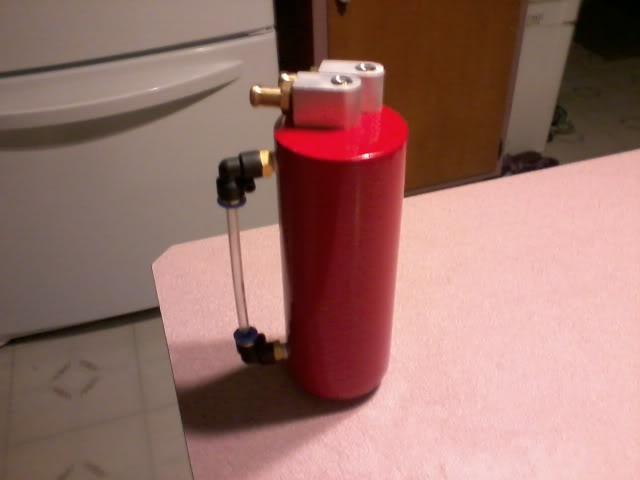
You can build a catch can out of a simple air compressor filter purchased from the local hardware store. Lowes, or Home depot for less than $20.00. They are completely unnecessary for a vehicle that is not running a turbo or supercharger. The amount if oil that travels thru the PCV is not performance hindering.
If you do find tha the catch can is actually catching significant amounts of oil, I'd wager you either have a bad PCV valve, overfilled the crankcase with oil, or worse, your piston rings are allowing excessive blowby, which means a motor rebuild is in your future
If you do find tha the catch can is actually catching significant amounts of oil, I'd wager you either have a bad PCV valve, overfilled the crankcase with oil, or worse, your piston rings are allowing excessive blowby, which means a motor rebuild is in your future

Grand Champion
Joined: Apr 2010
Posts: 5,011
Likes: 6
From: Meeker, CO
I'm with the destroyer of squirrels on this one, for what little it matters. A properly functioning PCV system on a sound engine isn't going to put much oil at all into the intake manifold.
Just replace the valve at each tune-up and be done with it.
Just replace the valve at each tune-up and be done with it.


Legend
Joined: Jul 2007
Posts: 7,843
Likes: 13
From: DFW, Texas
Most guys that use the stand alone breather do so because their air hat does not have a fresh air intake provision for the crankcase. If you've got one, use it and save the dinero.
Attempting to delete the PCV system inhibits the engine from expelling blowby gases from the crankcase. When a cylinder fires, gases from combustion leak past the piston rings into the crankcase. These gases are exhaust fumes that can corrode the engines internals and dirty the oil with hydrocarbons quickly, preventing the oil from doing its job effectively. The PCV system creates an "air current" through the crankcase that brings fresh air in from the vent tube on the air box, passes it thru the crankcase and the vacuum in the intake manifold pulls the gases out thru the PCV valve when enough pressure from inside the crankcase + engine vacuum overcomes the pintle in the PCV valve. The gases are then recycled in the combustion process. For max effciency, the fresh air tube should be on the opposite side of the engine from the PCV valve.
The cons far outweigh the pros of deleting the PCV system.
Attempting to delete the PCV system inhibits the engine from expelling blowby gases from the crankcase. When a cylinder fires, gases from combustion leak past the piston rings into the crankcase. These gases are exhaust fumes that can corrode the engines internals and dirty the oil with hydrocarbons quickly, preventing the oil from doing its job effectively. The PCV system creates an "air current" through the crankcase that brings fresh air in from the vent tube on the air box, passes it thru the crankcase and the vacuum in the intake manifold pulls the gases out thru the PCV valve when enough pressure from inside the crankcase + engine vacuum overcomes the pintle in the PCV valve. The gases are then recycled in the combustion process. For max effciency, the fresh air tube should be on the opposite side of the engine from the PCV valve.
The cons far outweigh the pros of deleting the PCV system.
Last edited by aim4squirrels; Aug 2, 2010 at 11:20 AM.

Record Breaker
Joined: Mar 2009
Posts: 1,430
Likes: 2
From: WV
The only reason I asked is because I took off my intake tube a few days ago and noticed a little tiny bit of oil in the tube it looks like someone opened a new bottle of oil and but some in the intake its not black. And if you say that hose sucks air into the crank case where is the oil comming from?

Administrator


Joined: Apr 2010
Posts: 87,396
Likes: 4,213
From: Clayton MI
There will be some oil vapor sucked in as well. If the PCV valve is not functioning properly, it can actually suck in a fair bit of oil. Pull the valve, and shake it, if it doesn't rattle, it is stuck, and therefore, not doing its job. The valve is supposed to have a specific flow rate, if it is stuck open, the flow rate is significantly higher than what it should be, and you get oil in the intake. Simply replacing it will solve that. (and it's cheap.) Aftermarket valves tend to vary (sometimes dramatically) from the factory specified flow rate. The dealer part is generally much closer to what the engineers had in mind.
PCV system also serves to aid with ring seal. Drawing a slight vacuum on the crankcase helps them seat better. (no clue why, just the way it works....)
PCV system also serves to aid with ring seal. Drawing a slight vacuum on the crankcase helps them seat better. (no clue why, just the way it works....)