


Upgrading brakes


Thread Starter
|
Registered User
Joined: Jun 2009
Posts: 40
Likes: 0
 Upgrading brakes
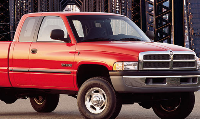
Ok so I did a 5" lift and 35" tires on my 01 ram sport 5.9L. I took the truck out on some trails this weekend, pulling out of the trails I noticed my brakes were almost non existent! A little while down the road they started to smell and smoke, and they were hot enough to boil water on contact. Anyone have any ideas on what brakes are out there that will handle larger tires and offroad abuse? Thanks for all the help guys!

Administrator


Joined: Apr 2010
Posts: 87,478
Likes: 4,223
From: Clayton MI
I would first make sure your brakes are functioning as they should. Sounds like you might have calipers hanging up, and getting hot, thus boiling the fluid...... brakes stop working shortly thereafter.
You should be able in install the larger single piston 3/4 ton brake calipers without doing anything else. 1 ton rear wheel cylinders are another cheap and easy one. Better quality brake pads is also a good plan.
You should be able in install the larger single piston 3/4 ton brake calipers without doing anything else. 1 ton rear wheel cylinders are another cheap and easy one. Better quality brake pads is also a good plan.


Administrator
Joined: Apr 2010
Posts: 87,478
Likes: 4,223
From: Clayton MI
If you stay within your weight rating for towing, and your brakes are in good condition, shouldn't be an issue. (also, downshifting is a good plan....)
Drilled rotors just give a really nice place for cracks to form. The original intention behind slotted/drilled rotors, was to give the gases produced under heavy braking a place to escape, to help reduce brake fade. With modern brake pad compounds, that is a lot less of an issue.
Drilled rotors just give a really nice place for cracks to form. The original intention behind slotted/drilled rotors, was to give the gases produced under heavy braking a place to escape, to help reduce brake fade. With modern brake pad compounds, that is a lot less of an issue.

Legend


Joined: May 2005
Posts: 8,663
Likes: 8
From: Central Oklahoma
If you stay within your weight rating for towing, and your brakes are in good condition, shouldn't be an issue. (also, downshifting is a good plan....)
Drilled rotors just give a really nice place for cracks to form. The original intention behind slotted/drilled rotors, was to give the gases produced under heavy braking a place to escape, to help reduce brake fade. With modern brake pad compounds, that is a lot less of an issue.
Drilled rotors just give a really nice place for cracks to form. The original intention behind slotted/drilled rotors, was to give the gases produced under heavy braking a place to escape, to help reduce brake fade. With modern brake pad compounds, that is a lot less of an issue.
Trending Topics

Grand Champion
Joined: Nov 2004
Posts: 6,099
Likes: 6
From: Colorado
Good drilled rotors are worth it, but you will pay seriously for it. One thing that most people don't realize is that the cheapo "performance drilled rotors" are really just an OEM grade rotor that has been drilled or slotted, not what it was designed for. An OEM grade rotor is made from gray iron (SAE specified J431 G3000), which is choosen primarily for its heat handling and vibration absorbtion properties. What drilling and slotting an OEM rotor does is makes it weaker then the original OEM rotor was when it was a solid unit.
A true drilled or slotted rotor (i.e. one that is designed to be drilled or slotted), should have something added to the material to make it stronger after it has been drilled or slotted. The most common added element is a chromium-nickel alloy, but molybdenum or vanadium are used too. It should also have a drill pattern that allows the rotor to retain as much strength as possible. Randomly drilled holes could result in weak areas once the force of the pad is applied to the rotor under load.
If you had a light weight car, and you only did daily driving, none of this would really matter. But keep in mind that we have full size Rams that weighs in excess of 5000 lbs. You may also happen to tow or haul loads, run larger then stock tires, and offroad. These are all things that will put additional stress on your rotors. This is when you have to decide if you really want to depend on an OEM grade rotor that has holes drilled in it.
I personally run slotted rotors that have chromium-nickel alloy added, made by Brembo. Because I tow a lot in the mountains, including very steep mountain passes, I would never run a drilled rotor. The slotted ones I have did make a very noticable difference in braking performance, and I recommend slotted rotors to anyone looking to improve thier braking performance. I also recommend a ceramic pad or a semi metallic because a slotted or drilled rotors will chew up a pad faster, and full metallics like to leave a lot of dust when this happens.
A true drilled or slotted rotor (i.e. one that is designed to be drilled or slotted), should have something added to the material to make it stronger after it has been drilled or slotted. The most common added element is a chromium-nickel alloy, but molybdenum or vanadium are used too. It should also have a drill pattern that allows the rotor to retain as much strength as possible. Randomly drilled holes could result in weak areas once the force of the pad is applied to the rotor under load.
If you had a light weight car, and you only did daily driving, none of this would really matter. But keep in mind that we have full size Rams that weighs in excess of 5000 lbs. You may also happen to tow or haul loads, run larger then stock tires, and offroad. These are all things that will put additional stress on your rotors. This is when you have to decide if you really want to depend on an OEM grade rotor that has holes drilled in it.
I personally run slotted rotors that have chromium-nickel alloy added, made by Brembo. Because I tow a lot in the mountains, including very steep mountain passes, I would never run a drilled rotor. The slotted ones I have did make a very noticable difference in braking performance, and I recommend slotted rotors to anyone looking to improve thier braking performance. I also recommend a ceramic pad or a semi metallic because a slotted or drilled rotors will chew up a pad faster, and full metallics like to leave a lot of dust when this happens.
Legend
Joined: May 2005
Posts: 8,663
Likes: 8
From: Central Oklahoma
Good drilled rotors are worth it, but you will pay seriously for it. One thing that most people don't realize is that the cheapo "performance drilled rotors" are really just an OEM grade rotor that has been drilled or slotted, not what it was designed for. An OEM grade rotor is made from gray iron (SAE specified J431 G3000), which is choosen primarily for its heat handling and vibration absorbtion properties. What drilling and slotting an OEM rotor does is makes it weaker then the original OEM rotor was when it was a solid unit.
A true drilled or slotted rotor (i.e. one that is designed to be drilled or slotted), should have something added to the material to make it stronger after it has been drilled or slotted. The most common added element is a chromium-nickel alloy, but molybdenum or vanadium are used too. It should also have a drill pattern that allows the rotor to retain as much strength as possible. Randomly drilled holes could result in weak areas once the force of the pad is applied to the rotor under load.
If you had a light weight car, and you only did daily driving, none of this would really matter. But keep in mind that we have full size Rams that weighs in excess of 5000 lbs. You may also happen to tow or haul loads, run larger then stock tires, and offroad. These are all things that will put additional stress on your rotors. This is when you have to decide if you really want to depend on an OEM grade rotor that has holes drilled in it.
I personally run slotted rotors that have chromium-nickel alloy added, made by Brembo. Because I tow a lot in the mountains, including very steep mountain passes, I would never run a drilled rotor. The slotted ones I have did make a very noticable difference in braking performance, and I recommend slotted rotors to anyone looking to improve thier braking performance. I also recommend a ceramic pad or a semi metallic because a slotted or drilled rotors will chew up a pad faster, and full metallics like to leave a lot of dust when this happens.
A true drilled or slotted rotor (i.e. one that is designed to be drilled or slotted), should have something added to the material to make it stronger after it has been drilled or slotted. The most common added element is a chromium-nickel alloy, but molybdenum or vanadium are used too. It should also have a drill pattern that allows the rotor to retain as much strength as possible. Randomly drilled holes could result in weak areas once the force of the pad is applied to the rotor under load.
If you had a light weight car, and you only did daily driving, none of this would really matter. But keep in mind that we have full size Rams that weighs in excess of 5000 lbs. You may also happen to tow or haul loads, run larger then stock tires, and offroad. These are all things that will put additional stress on your rotors. This is when you have to decide if you really want to depend on an OEM grade rotor that has holes drilled in it.
I personally run slotted rotors that have chromium-nickel alloy added, made by Brembo. Because I tow a lot in the mountains, including very steep mountain passes, I would never run a drilled rotor. The slotted ones I have did make a very noticable difference in braking performance, and I recommend slotted rotors to anyone looking to improve thier braking performance. I also recommend a ceramic pad or a semi metallic because a slotted or drilled rotors will chew up a pad faster, and full metallics like to leave a lot of dust when this happens.
Well stated, and to add to that I want to be a bad-as$ like you when I grow up


