


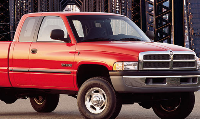
Speed for 4x4High


Administrator


Joined: Apr 2010
Posts: 87,549
Likes: 4,230
From: Clayton MI

If you need 4x4, then 'speed' shouldn't even be in the picture.  Theoretically though, you can shift into 4x4 at up to like 55mph..... So long as you aren't driving on high traction surfaces, conditions would be the only limit to how fast you wanna go.
Theoretically though, you can shift into 4x4 at up to like 55mph..... So long as you aren't driving on high traction surfaces, conditions would be the only limit to how fast you wanna go.

Thread Starter
|
Veteran
Joined: Apr 2019
Posts: 497
Likes: 4
Just be good to know if the blizzard hit the highway again and I'd have to make some progress then crawling home. I always stop to engage the 4x4 I didn't know you can pop it in on the fly ???

Record Breaker


Joined: Jan 2004
Posts: 1,433
Likes: 192
From: United States
Speed limits on 4hi are primarily urban legend, provided you're not on dry pavement.
Thread Starter
|
Veteran
Joined: Apr 2019
Posts: 497
Likes: 4
Urban legend ??? Lol so you mean there is no limit! ? 🤣
Record Breaker
Joined: Jan 2004
Posts: 1,433
Likes: 192
From: United States
There's little if any valid mechanical argument for a limit, yes. It essentially powers the front wheels the same way it powers the rear wheels.
We can discuss minutiae if anyone wants, although it varies by vehicle. For instance, sometimes the manufacturers don't try too hard to get front pinion angle perfect and thus vibes might occur at certain speeds, although AFAIK all 2nd Gens get a front CV so that should really help.
I've run 75mph on I-25 in 4hi S of Colo Spgs, albeit in a '97 PSD.....the systems are essentially identical but for D50 TTB which shouldn't be a significant variable for the purposes of the discussion. I've been in CO all my life and never practiced a "speed limit" (based upon mechanical restrictions) in 4hi in full-size trucks with part-time 4wd
That's just me, YMMV
We can discuss minutiae if anyone wants, although it varies by vehicle. For instance, sometimes the manufacturers don't try too hard to get front pinion angle perfect and thus vibes might occur at certain speeds, although AFAIK all 2nd Gens get a front CV so that should really help.
I've run 75mph on I-25 in 4hi S of Colo Spgs, albeit in a '97 PSD.....the systems are essentially identical but for D50 TTB which shouldn't be a significant variable for the purposes of the discussion. I've been in CO all my life and never practiced a "speed limit" (based upon mechanical restrictions) in 4hi in full-size trucks with part-time 4wd
That's just me, YMMV
Thread Starter
|
Veteran
Joined: Apr 2019
Posts: 497
Likes: 4
There's little if any valid mechanical argument for a limit, yes. It essentially powers the front wheels the same way it powers the rear wheels.
We can discuss minutiae if anyone wants, although it varies by vehicle. For instance, sometimes the manufacturers don't try too hard to get front pinion angle perfect and thus vibes might occur at certain speeds, although AFAIK all 2nd Gens get a front CV so that should really help.
I've run 75mph on I-25 in 4hi S of Colo Spgs, albeit in a '97 PSD.....the systems are essentially identical but for D50 TTB which shouldn't be a significant variable for the purposes of the discussion. I've been in CO all my life and never practiced a "speed limit" (based upon mechanical restrictions) in 4hi in full-size trucks with part-time 4wd
That's just me, YMMV
We can discuss minutiae if anyone wants, although it varies by vehicle. For instance, sometimes the manufacturers don't try too hard to get front pinion angle perfect and thus vibes might occur at certain speeds, although AFAIK all 2nd Gens get a front CV so that should really help.
I've run 75mph on I-25 in 4hi S of Colo Spgs, albeit in a '97 PSD.....the systems are essentially identical but for D50 TTB which shouldn't be a significant variable for the purposes of the discussion. I've been in CO all my life and never practiced a "speed limit" (based upon mechanical restrictions) in 4hi in full-size trucks with part-time 4wd
That's just me, YMMV
Cool. So im good to go as long as its not dry pavement . Thank you
Trending Topics

Grand Champion


Joined: May 2019
Posts: 5,172
Likes: 724
From: S.W. Indiana
Well, if you NEED 4X4, you ought to run no faster than 40 or 50. Merely because of conditions. If you listen to your machine, it will start to complain if you go too fast. As far as going down the road, I've gone into 4high at 30 before as things started to get sloppy. Generally, my '96 extended cab is pretty stable in 2wd. The gear ration in your front differential is slightly lower than your rear. If you have 3.55 in back, your front is 3.54. This is to keep the chain tight in the transfer case and keep the chain from over running.
Last edited by ol' grouch; Nov 8, 2022 at 08:13 AM. Reason: i kant spel wurth a durn
Thread Starter
|
Veteran
Joined: Apr 2019
Posts: 497
Likes: 4
Well, if you NEED 4X4, you ought to run no faster than 40 or 50. Merely because of conditions. If you listen to your machine, i will start to complain if you go too fast. As far as going down the road, I've gone into 4high at 30 before as things started to get sloppy. Generally, my '96 extended cab is pretty stable in 2wd. The gear ration in your front differential is slightly lower than your rear. If you have 3.55 in back, your front is 3.54. This is to keep the chain tight in the transfer case and keep the chain from over running.
Good to know. I have a 96 extended cab as well, but I swapped out for 4.10 gearing to accommodate the 33" tires
Record Breaker
Joined: Jan 2004
Posts: 1,433
Likes: 192
From: United States
The difference between 3.54 and 3.55 is so miniscule as to not matter at all and would easily be rendered mathematically useless by very slight differences in tire wear or air pressure.
This whole thing is urban legend, too. Any differences came from different manufacturers, ie Dana Spicer vs corporate (be it a Chrysler 9.25 or Ford 8.8 or whatever). Some manufacturers say tomato, some say tomahto, but whether you say your household outlets are 110V, 115V, or 120V it all refers to same industry standard.
This whole thing is urban legend, too. Any differences came from different manufacturers, ie Dana Spicer vs corporate (be it a Chrysler 9.25 or Ford 8.8 or whatever). Some manufacturers say tomato, some say tomahto, but whether you say your household outlets are 110V, 115V, or 120V it all refers to same industry standard.
Last edited by Keith_L; Nov 8, 2022 at 09:37 AM.