


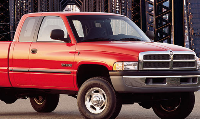
1996 46RE rebuild for towing


Thread Starter
|
Amateur
Joined: Jan 2025
Posts: 26
Likes: 2
From: Southern CA

PR1AWRet - thanks for the info. BTW, the link (https://d2q1ebiag300ih.cloudfront.ne...f?v=1534194758) doesn't work.
adukart - thanks for the advice on engine tips. I already have shorty JBA headers, CatBack Exhaust (flowmaster) and K&N drop in filter.
I need to fix the intake plenum gasket. this is why I am going to match port the intake manifold. Also, since the throttle body is off I may as well port it too.
As for the rockers and/or camshaft. I was going to wait and see how the transmission rebuild goes to see if I want to do more engine work.
I read up on regearing the axles. I've never done gears, so I am kinda nervous about it.
I was looking into possibly doing the 4.10's or 4.56's and going with a taller (33" or 35") tire.Again, I mostly tow with this truck, I offroad in it too.
Mostly desert trails. nothing aggressive. I also do some sand (Pismo Beach and Glamis) driving in it.
I tow my trailer into the sand as well. I understand that I want it to do everything, but it will probably not do any of them well. I was researching on upgrading my catalytic converter. I want to replace with a catalytic converter that flows more/better. its gotta stay CARB legal. Actually, I have been researching to put a 3" catalytic converter.
Does a 3" catalytic converter flow more than a 2.25" catalytic converter? Does a 3" catalytic converter just have a larger diameter inlet/outlet and flow the same?
Definitely going to give regearing more consideration.
Thanks again
adukart - thanks for the advice on engine tips. I already have shorty JBA headers, CatBack Exhaust (flowmaster) and K&N drop in filter.
I need to fix the intake plenum gasket. this is why I am going to match port the intake manifold. Also, since the throttle body is off I may as well port it too.
As for the rockers and/or camshaft. I was going to wait and see how the transmission rebuild goes to see if I want to do more engine work.
I read up on regearing the axles. I've never done gears, so I am kinda nervous about it.
I was looking into possibly doing the 4.10's or 4.56's and going with a taller (33" or 35") tire.Again, I mostly tow with this truck, I offroad in it too.
Mostly desert trails. nothing aggressive. I also do some sand (Pismo Beach and Glamis) driving in it.
I tow my trailer into the sand as well. I understand that I want it to do everything, but it will probably not do any of them well. I was researching on upgrading my catalytic converter. I want to replace with a catalytic converter that flows more/better. its gotta stay CARB legal. Actually, I have been researching to put a 3" catalytic converter.
Does a 3" catalytic converter flow more than a 2.25" catalytic converter? Does a 3" catalytic converter just have a larger diameter inlet/outlet and flow the same?
Definitely going to give regearing more consideration.
Thanks again
Last edited by MHisel; Jan 18, 2025 at 11:20 AM.
Thread Starter
|
Amateur
Joined: Jan 2025
Posts: 26
Likes: 2
From: Southern CA
I finished the overhaul. I have about 250 miles on it the shifts are quicker and from a stop, it takes slightly more throttle to move the truck.
these characteristics are are to due the high ratio band lever, zip kit, billet accumulator piston and 1800 rpm torque converter.
now going to save for ring and pinion upgrade.
these characteristics are are to due the high ratio band lever, zip kit, billet accumulator piston and 1800 rpm torque converter.
now going to save for ring and pinion upgrade.

Champion


Joined: Sep 2012
Posts: 4,873
Likes: 435
From: Central VA
I upgraded my cat to a 3" outlet several years ago. Also upgraded everything to 3" from the cat outlet on back. Listed below are the parts I used:
Dynomax UltraFlo Welded Muffler - 17233
Magnaflow Converter - 99047HM (dual 2" inlets, 3" outlet, front O2 sensor port)
3 - 3" band clamps (back of cat, front + rear of muffler)
1 - bung for rear O2 sensor
Took these parts to a local muffler shop and the operator used some new 3" pipe to fabricate the 3" tailpipe along with the exhaust piping between the muffler and the catalytic converter, in addition to welding a bug onto the converter outlet pipe for the rear O2 sensor.
The truck still runs fairly quiet with the 3" exhaust as long as I keep my foot out of the accelerator. The exhaust system performs well in my opinion.
With regard to your transmission rebuild, it takes more throttle to move the truck due to your higher 1800 rpm stall in the converter. When I ordered my torque converter and told the converter builder I was doing more towing, they set my stall to 1200 rpm.
As for gearing, I wouldn't consider doing that work myself. I know a guy that does gearing swaps locally, so I purchased all of the necessary materials and took them to him along with the truck to do the gearing swap. If you don't already have posi-traction in the rear differential, when the gearing swap is performed would be the best time to add that capability, since a carrier swap would be required. Lastly, since your truck is 4WD, you will need to swap the gearing for both the front and rear differentials to the same ratios or carnage will ensure when running in 4WD.
Dynomax UltraFlo Welded Muffler - 17233
Magnaflow Converter - 99047HM (dual 2" inlets, 3" outlet, front O2 sensor port)
3 - 3" band clamps (back of cat, front + rear of muffler)
1 - bung for rear O2 sensor
Took these parts to a local muffler shop and the operator used some new 3" pipe to fabricate the 3" tailpipe along with the exhaust piping between the muffler and the catalytic converter, in addition to welding a bug onto the converter outlet pipe for the rear O2 sensor.
The truck still runs fairly quiet with the 3" exhaust as long as I keep my foot out of the accelerator. The exhaust system performs well in my opinion.
With regard to your transmission rebuild, it takes more throttle to move the truck due to your higher 1800 rpm stall in the converter. When I ordered my torque converter and told the converter builder I was doing more towing, they set my stall to 1200 rpm.
As for gearing, I wouldn't consider doing that work myself. I know a guy that does gearing swaps locally, so I purchased all of the necessary materials and took them to him along with the truck to do the gearing swap. If you don't already have posi-traction in the rear differential, when the gearing swap is performed would be the best time to add that capability, since a carrier swap would be required. Lastly, since your truck is 4WD, you will need to swap the gearing for both the front and rear differentials to the same ratios or carnage will ensure when running in 4WD.
Last edited by AtomicDog; Mar 24, 2025 at 02:03 AM.

Administrator


Joined: Apr 2010
Posts: 87,548
Likes: 4,230
From: Clayton MI
I was always curious about the reasoning behind a low-stall converter for towing...... At lower RPM, the converter actually multiplies torque, so wouldn't that imply that at least a *slightly* higher than stock stall would actually be better for towing??
Champion
Joined: Sep 2012
Posts: 4,873
Likes: 435
From: Central VA
The claim from Precision New Hampton was that a lower stall speed would put more work on the motor and less stress on the transmission for towing. It does seem to help with getting the truck to move quicker at lower RPM when taking off with a heavy load. I have noticed that generally converter stall speeds for Dodge trucks seem to be in the lower rpm ranges than what I'm used to for vintage muscle cars.
Last edited by AtomicDog; Mar 24, 2025 at 10:31 AM.
Administrator
Joined: Apr 2010
Posts: 87,548
Likes: 4,230
From: Clayton MI
The claim from Precision New Hampton was that a lower stall speed would put more work on the motor and less stress on the transmission for towing. It does seem to help with getting the truck to move quicker at lower RPM when taking off with a heavy load. I have noticed that generally converter stall speeds for Dodge trucks seem to be in the lower rpm ranges than what I'm used to for vintage muscle cars.

Champion
Joined: Sep 2012
Posts: 4,873
Likes: 435
From: Central VA


Grand Champion
Joined: Feb 2015
Posts: 7,435
Likes: 578
Higher stall speed converters heat the fluid up faster. The more you tow the bigger the cooler you need regardless.
"Muscle" is what's under the hood, Some think all vintage cars of the muscle car era are "muscle cars" but that's not true. You could get a slant 6 or the 426 hemi in the same year car. Quite a bit of difference between the /6 and the hemi. And our trucks have all the nuts at the lower end so can't really compare the two.
170 Slant Six, A904-G, 1500-1700
198 Slant Six, A904-G, 1500-1700
225 Slant Six, A904-G, 1800-2000
225 Slant Six, A727-RG, 1450-1650
318 V8, A904-A, 2100-2320
318 V8, A727-A, 1750-1950
340-4bbl, A727-A, 2250-2450
383-2bbl, A727-B, 1850-2100
383-4bbl, A727-B, 2350-2650
440-4bbl, A727-B, 2000-2300
426-2 & 4bbl, A727-B, 2650-2850
I have noticed that generally converter stall speeds for Dodge trucks seem to be in the lower rpm ranges than what I'm used to for vintage muscle cars.
170 Slant Six, A904-G, 1500-1700
198 Slant Six, A904-G, 1500-1700
225 Slant Six, A904-G, 1800-2000
225 Slant Six, A727-RG, 1450-1650
318 V8, A904-A, 2100-2320
318 V8, A727-A, 1750-1950
340-4bbl, A727-A, 2250-2450
383-2bbl, A727-B, 1850-2100
383-4bbl, A727-B, 2350-2650
440-4bbl, A727-B, 2000-2300
426-2 & 4bbl, A727-B, 2650-2850
Champion
Joined: Sep 2012
Posts: 4,873
Likes: 435
From: Central VA
When I'm referring to "vintage muscle cars" of the '60s and '70s, I'm talking about the one's with high horsepower engines, enhanced gearing and other goodies. Thanks for clarifying for others that may not know.

Record Breaker
Joined: Jun 2011
Posts: 2,387
Likes: 41
From: Bismarck, ND
Lowering your gear ratios can help a motor that does make good low speed torque as well, such as those in our trucks, too move more weight easier. I'm thinking next month I'm putting in 4.56s in my v10.
MH - glad to hear the overhaul went well. I tried once and it was not successful lol.