


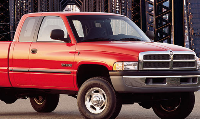
Whinning 1996 AC Compressor


Thread Starter
|
Rookie


Joined: Aug 2015
Posts: 62
Likes: 5

[QUOTE= I think you should try a new fan clutch.[/QUOTE]
I checked with O'Reilly's and they were able to find my purchase of a fan clutch back in 2014 with a lifetime guarantee. Got the new one and put it on, what a pain. When I first started the engine, the clutch was engaged, and I was thinking here we go again. But out on the road the engine didn't make it to 2,000 RPMs when the clutch disengaged, I was relieved.
I checked with O'Reilly's and they were able to find my purchase of a fan clutch back in 2014 with a lifetime guarantee. Got the new one and put it on, what a pain. When I first started the engine, the clutch was engaged, and I was thinking here we go again. But out on the road the engine didn't make it to 2,000 RPMs when the clutch disengaged, I was relieved.


Thread Starter
|
Rookie
Joined: Aug 2015
Posts: 62
Likes: 5
I talked to the mechanic today that installed the compressor because the clutch shot craps. I let him know about the noise when the AC is on above 2250 RPMs. With the OEM compressor, I had the same noise as when the new one, he said most likely it is the expansion valve or the filter screen in the line that is partly blocked, but wouldn't be able to check it without hooking up the gauges and running the RPMs up. If there is some function in the gauges, then yes, those two things need to be replaced. It will be a couple of weeks before he can get to it, so my fingers are crossed that he is right that the noise goes away, he also said I would have better cooling too.
Thread Starter
|
Rookie
Joined: Aug 2015
Posts: 62
Likes: 5
The mechanic put the guages on the system and couldn't find anything abnormal other than a high reading on the high side while the engine idled. We ran the engine up to and above 2250 RPMs when the system has a whining noise. He added some more oil, and it helped at idle but not at the higher RPMs. He is going to do some research.
Thread Starter
|
Rookie
Joined: Aug 2015
Posts: 62
Likes: 5
Put in a new orifice tube with no help, with the noise. O'Rielly Auto Parts has an orifice tube that cools better in hot weather and lowers high side pressure. It cools better, but still has the noise, maybe a bit less. Last thing to try was a receiver drier, that was the problem with the noise, or 90% of it. At 2250 RPMs, it is very faint, high side pressure is a lot less, and frosty in the cab.
Last edited by Rodney Shell; Aug 9, 2025 at 09:30 AM.
Thread Starter
|
Rookie
Joined: Aug 2015
Posts: 62
Likes: 5
I don't remember....  It's been a while since a did a water pump, or anything else on the front of a motor..... But, I *think* they were standard threads...... I just put a pipe wrench on the nut, and smacked it with a hammer to get it to break loose.... then it unthreaded by hand. (serp belt still in place.)
It's been a while since a did a water pump, or anything else on the front of a motor..... But, I *think* they were standard threads...... I just put a pipe wrench on the nut, and smacked it with a hammer to get it to break loose.... then it unthreaded by hand. (serp belt still in place.)Here is some background with coolant and the reservoir. I got the 1996 Ram 2500 V10 back in 2002 with 26k miles on it. With the coolant at the full line on the reservoir, if I went up through the gears (auto transmission) it would overfill the reservoir. At first I thought I had bad heads because it would draw down the coolant below the full line in the reservoir after the engine cooled off. I would add coolant up to the full line. The last time I added coolant I noticed the fender well was wet behind the reservoir, so I lowered the coolant down to the add mark.Not more problems with losing coolant.
After replacing the radiator cap it doesn't draw coolant back out of the reservoir, but after making sure the radiator is full and coolant at the add mark on the reservoir and driving the truck to where it is warmed up the reservoir has coolant up to the add mark just like it did with the old cap. But now after letting the engine cool down the extra coolant in the reservoir remains with the upper radiator hose collapsed. Like a dummy, I threw the old cap away and didn't notice the problem until after the trash was picked up. After the engine is cooled down, I would draw the coolant out of the reservoir from the full mark down to the add mark like it has been after figuring out the problem years ago. Coolant in the radiator would be low, and to fill it up where I have always run it in the past, it took the same amount of coolant I removed from the reservoir.
My question for you is, with the engine cold in your truck do you top off the radiator with coolant right up to the neck of the radiator cap? That is where I have always kept my coolant level in the radiator. Doing some research, some say the radiator cap is faulty for drawing the coolant back out of the reservoir.
The old cap was a 16 lb cap, and that is what I replaced it with.

Administrator


Joined: Apr 2010
Posts: 87,548
Likes: 4,230
From: Clayton MI
Bad radiator cap.
The reservoir should say "Full Hot".... I think. Coolant expands as it warms, so, it has to go somewhere.... That's what the reservoir is for.
If the upper hose is collapsing, rather then sucking fluid from the overflow, that's either the wrong cap, or simply a bad one.
The reservoir should say "Full Hot".... I think. Coolant expands as it warms, so, it has to go somewhere.... That's what the reservoir is for.
If the upper hose is collapsing, rather then sucking fluid from the overflow, that's either the wrong cap, or simply a bad one.
Thread Starter
|
Rookie
Joined: Aug 2015
Posts: 62
Likes: 5
Bad radiator cap.
The reservoir should say "Full Hot".... I think. Coolant expands as it warms, so, it has to go somewhere.... That's what the reservoir is for.
If the upper hose is collapsing, rather then sucking fluid from the overflow, that's either the wrong cap, or simply a bad one.
The reservoir should say "Full Hot".... I think. Coolant expands as it warms, so, it has to go somewhere.... That's what the reservoir is for.
If the upper hose is collapsing, rather then sucking fluid from the overflow, that's either the wrong cap, or simply a bad one.