


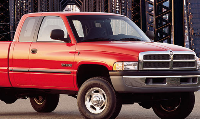
Truck is C-O-L-D Brrrrrrr


Thread Starter
|
Legend


Joined: May 2005
Posts: 8,663
Likes: 8
From: Central Oklahoma
 Truck is C-O-L-D Brrrrrrr
Winter has hit hard here in the OKC metro area and it really seems to be affecting my truck. I have the overhead console in my SLT and read it every morning to get the outside temperature. I have noticed that if the outside temperature is 40º or less, my truck will barely warm up beyond 165º. I am running a 195º thermostat on the engine with a brass 3-core radiator. When the truck warms up from being driven, the needle on the temperature gauge does not read beyond the location of the "2" in the 200º that is printed on the gauge. I am positive that the truck is firing on all 8-cylinders as performance is outstanding. I am curious why the truck would be so cold. I have plenty of anti-freeze in the radiator and the reservoir. The system has been completely burped of air pockets and when the truck is warming up I can hear liquid circulating under the dash as it is pushed through the heater core. Is there a chance that the temperature sensor on the intake is bad and not sending the corrected signal to the PCM?

Record Breaker
Joined: Jul 2006
Posts: 2,400
Likes: 1
From: Warren, NJ
RE: Truck is C-O-L-D Brrrrrrr
If you can hear coolant circulating through the heater core ... you've still got air in the system. A completely filled system should be silent. What you're hearing is air bubbles. That won't cause your cold problem though. Are you saying that the heater isn't puting out enough heat or that you're concerned that the engine itself isn't reaching proper operating temperature? That three core radiator is excellent for the heat of summer but can cause difficulties in the cold of winter.
Where are you getting the 165º reading from? My temp gauge reads about where your's does (IIRC) once it heats up and the heater (at full CW) will burn you out of the cab. I have to turn it to 1/2 setting to make it comfortable.
Where are you getting the 165º reading from? My temp gauge reads about where your's does (IIRC) once it heats up and the heater (at full CW) will burn you out of the cab. I have to turn it to 1/2 setting to make it comfortable.

Professional
Joined: Apr 2006
Posts: 127
Likes: 0
From: PA
RE: Truck is C-O-L-D Brrrrrrr
How much antifreeze are you running? I have a 31 Ford Model A and I run straight antifreeze in it so itwill run cool.If you don't have the right mixture that could be a reason. My Ram on the other hand TMS Bill is right I can hear water circulate through the heater core but I have volcano heat. How is yourfan clutch? Maybe you'removing too much air through the radiator and it is cooling off to quick. Ofcourse if the heat in the cab isgood a cool engine is a happy one!
Thread Starter
|
Legend
Joined: May 2005
Posts: 8,663
Likes: 8
From: Central Oklahoma
RE: Truck is C-O-L-D Brrrrrrr
I am guessing that I am running around 165º by the location of the needle on the gauge. I am also running a pre-mix solution of 50/50 antifreeze. The truck doesn't get that hot. If gurgling liquid means I have air in the system, then I guess I will have to burp my truck again. I also figured that a 3-core radiator would be a slight detriment in the colder months; however, Oklahoma doesn't get that cold for very long.


Hall Of Fame


Joined: Jan 2004
Posts: 12,946
Likes: 309
RE: Truck is C-O-L-D Brrrrrrr
if your not getting a code than your coolant temp is above the 165 deg threshold for there to be a problem. when I had mine, the "2" on the guage is about where it would aways stay and i ran the 180 t-stat.
Thread Starter
|
Legend
Joined: May 2005
Posts: 8,663
Likes: 8
From: Central Oklahoma
RE: Truck is C-O-L-D Brrrrrrr
Oh, and I forgot to add that the outcoming heat is not that hot. I typically point the temperature setting **** full blast and it just gets the truck comfortably warm and no hotter. It actually starts to get a little cooler. I know the dampers are working properly because the defroster works fine.
Trending Topics


Veteran
Joined: Dec 2005
Posts: 359
Likes: 0
From:
RE: Truck is C-O-L-D Brrrrrrr
Start with a cool engine. Park the truck with the front end up the hill and pull off the radiator cap. Run the truck until the thermostat opens up. You can watch the air bubblescome up. It may help to squeeze the radiator hose to get the air to move airout of the hose. You want thefront up the hill because thetrapped air will migrate towards the highest point. Once you don't see anymore air, top off the radiator (might want itto cool down a little), put the cap on, and you should be ready to go.
Note: Make sure your heat is turned all the way up so the coolant cirulates through the heater core also.
Note: Make sure your heat is turned all the way up so the coolant cirulates through the heater core also.