


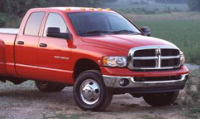
Bought a K&N Filter today


Thread Starter
|
Professional
Joined: Jun 2005
Posts: 183
Likes: 0
 Bought a K&N Filter today
Today i got bored so i decied to go out and buy one of these yippy K & N air filters i keep hearing about. I got to looking up horsepower increase. I want to know how much more horse it gives me. The website says its 2-4% horsepower increase for just the filter. I got 13.8. say 13. Can anyone explain why it says i will get a 13 horsepower increase from the $50 filter vs the whole $230 kit with only 10 horsepower increase. It doesn't sound right can anyone explain? By the way i dont have an exhaust yet, but there was just a little difference in power. No way its a whole 13 horse's.

 RE: Bought a K&N Filter today
A lot of people experience small losses with the K&N drop in filter in the stock hemi airbox. I tried it a couple of years ago with my '03 hemi and got a 3 tq and hp loss. Other folks have dyno'd about the same thing. My k&n filter had 600 miles on it and wasn't oil'd down. No matter how I did it on the dyno, it showed a small loss and was consistent each time I would swap it between the stock filter and make a pull.


Banned
Joined: Jan 2004
Posts: 10,136
Likes: 1
From:
RE: Bought a K&N Filter today
Mine showed absolutely no increase in HP on the dyno, as i tried to explain to some titan owning moron last week, over a fresh paper filter. The advantage really seems to be the fact that you don't have anything to throw away. Well, to me anyway.

Thread Starter
|
Professional
Joined: Jun 2005
Posts: 183
Likes: 0
RE: Bought a K&N Filter today
Well im terribly confused, but im afraid no one will be able to explain. How can they say a guranteed horsepower increase? Why would some trucks lose power from a "high flow" filter? I believe you all, dont get me wrong. I dont understand how they can market this then and ive heard so many happy people that like it and talk about how much improvement it has made. Has anyone had an increase in power with their ram from the filter? Could any of it have to do with that i dont have ehuast yet? So im getting more air in, but still not being abe to get it all out?
RE: Bought a K&N Filter today
Doesn't the marketing say "UP TO" 10% increase in power or whatever the % is? UP TO means 0 just as much as it means 100. Some vehicles respond well. Lets say Chevy and Fords.  I've seen drop in's do worse in more cars than good. As said above, what you get is a filter you never have to replace again. Just keep cleaning it. Can't go wrong with that.
I've seen drop in's do worse in more cars than good. As said above, what you get is a filter you never have to replace again. Just keep cleaning it. Can't go wrong with that.

Veteran
Joined: Feb 2005
Posts: 389
Likes: 0
From:
RE: Bought a K&N Filter today
I've used K&N on several vehicles but decided not to on my Ram. They let through too much dirt, especially if used off-road. I was always cleaning my intake, and never noticed a performance improvement. They did sound a little louder. I can buy about 6 paper filters for the cost of a K&N without the hassle of cleaning and reoiling the filter. I'm sure I won't even need the 6 as long as I own this vehicle.
Trending Topics

Professional
Joined: Mar 2005
Posts: 104
Likes: 0
From:
RE: Bought a K&N Filter today
I can explain, it's actually pretty straightforward.
First off, you have to understand that Dodge does a darn good job of tuning the RAMs at the factory. I'm not sure if you have the HEMI, but if you look at the setup they use with the stock air intake, the stock exhaust and so forth you'll notice it's all good quality stuff. When they advertise 345HP they mean it, and they have tuned the engine quite well to reach that (remember a 5.7L is still a small block, so we're talking around 1HP per CID which is always respectable). Also bear in mind there are two plugs per cylinder, an optimized computer, etc. Again, all good stuff right off the lot.
Now, when you go messing with the fuel/air and the exhaust, the timing, the octane and so forth, you're upsetting the setup Dodge intended, so the computer is going to try and compensate. It's probably thinning out the A/F ratio somewhat or even retarding the timing because it's detecting an abnormally larger volume of air coming into the intake (relatively speaking here). It's not realistic to expect just an air filter to improve performance in your RAM because of these factors.
What you need to consider is the whole package. That is, go with improved intake (air filter + cold air intake, etc.) AND exhaust (CAT-backs duals or whatever) AND a reprogrammed computer -- Hypertech, Superchips, etc. The programmer will override what the computer was trying to do with the stock programming and will yield the results the other bolt-on's were intended to bring, and ONLY then.
That's the nature of the beast with late-model cars and trucks in general, I believe. Upset the factory balance and you have to rely on aftermarket mods to put it all together.
One last note -- even with all the above mentioned mods, don't expect a huge increase. Maybe an extra 20-30 horses or so. Gotta ask yourself if several hundred bucks is worth it. (I have all those mods on my '03 Hemi and I do believe it was worth it, but I'm nuts...)
First off, you have to understand that Dodge does a darn good job of tuning the RAMs at the factory. I'm not sure if you have the HEMI, but if you look at the setup they use with the stock air intake, the stock exhaust and so forth you'll notice it's all good quality stuff. When they advertise 345HP they mean it, and they have tuned the engine quite well to reach that (remember a 5.7L is still a small block, so we're talking around 1HP per CID which is always respectable). Also bear in mind there are two plugs per cylinder, an optimized computer, etc. Again, all good stuff right off the lot.
Now, when you go messing with the fuel/air and the exhaust, the timing, the octane and so forth, you're upsetting the setup Dodge intended, so the computer is going to try and compensate. It's probably thinning out the A/F ratio somewhat or even retarding the timing because it's detecting an abnormally larger volume of air coming into the intake (relatively speaking here). It's not realistic to expect just an air filter to improve performance in your RAM because of these factors.
What you need to consider is the whole package. That is, go with improved intake (air filter + cold air intake, etc.) AND exhaust (CAT-backs duals or whatever) AND a reprogrammed computer -- Hypertech, Superchips, etc. The programmer will override what the computer was trying to do with the stock programming and will yield the results the other bolt-on's were intended to bring, and ONLY then.
That's the nature of the beast with late-model cars and trucks in general, I believe. Upset the factory balance and you have to rely on aftermarket mods to put it all together.
One last note -- even with all the above mentioned mods, don't expect a huge increase. Maybe an extra 20-30 horses or so. Gotta ask yourself if several hundred bucks is worth it. (I have all those mods on my '03 Hemi and I do believe it was worth it, but I'm nuts...)
Thread Starter
|
Professional
Joined: Jun 2005
Posts: 183
Likes: 0
RE: Bought a K&N Filter today
Thank you so much. I dont think it could have gotten explained better. I understand. Its hard to see after all those mods you think its only 30 horse gain. I would think after all them mods you'd be about 400 horse. Thanks to everyone for your reply's looks like i have alot of saving to do.
Professional
Joined: Mar 2005
Posts: 104
Likes: 0
From:
RE: Bought a K&N Filter today
I have to admit my estimate of BHP gains may be conservative. I guess I was thinking more along the lines of HP gains at the rear wheels.
Still, I just don't want you to get the impression the thing is gonna feel like a turbo Porsch after the mods. They DO make a nice difference, but not THAT drastic.
Good luck!
Still, I just don't want you to get the impression the thing is gonna feel like a turbo Porsch after the mods. They DO make a nice difference, but not THAT drastic.
Good luck!