


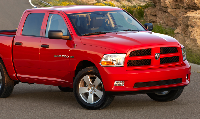
Got a call from AEM today about my truck on the dyno


Amateur
Joined: May 2009
Posts: 35
Likes: 0

Where are these reports? Do you have a link?
I want to see the oil analysis on a truck that used a K&N compared to a truck that did not use a K&N. The engines need to have the same miles, be the same type, etc. What I am saying is that I want to see a real experiment with the only variable being the filters.
What were the driving conditions of the truck tested? Was it in a sandy area or was it a city, suburbs, etc?
Bearings wear out over time anyway. Another question I have is how does an increase in dirt in the intake, intake manifold, and combustion chamber end up in the oil? I understand there is blow by, but an increase that causes bearing to fail means dirt is getting in the crank case.
I want to see the oil analysis on a truck that used a K&N compared to a truck that did not use a K&N. The engines need to have the same miles, be the same type, etc. What I am saying is that I want to see a real experiment with the only variable being the filters.
What were the driving conditions of the truck tested? Was it in a sandy area or was it a city, suburbs, etc?
Bearings wear out over time anyway. Another question I have is how does an increase in dirt in the intake, intake manifold, and combustion chamber end up in the oil? I understand there is blow by, but an increase that causes bearing to fail means dirt is getting in the crank case.
http://www.dieselplace.com/forum/sho...d.php?t=311714
High Silica from a cracked intake resonator. Same type of result.
http://www.dieselplace.com/forum/sho...d.php?t=209518
Obviously trucks with oem filters arent getting those results.
Amateur
Joined: May 2009
Posts: 35
Likes: 0
And to me it's somewhat revealing that when K&N does their testing that they do not do fine dust testing on gasoline engine filters. My suspicious side says that if they performed acceptably with the fine dust that they would use those results.
http://www.knfilters.com/efficiency_testing.htm
Under the parameters of the ISO test, the user may select the grade of test dust used. The content of the two most commonly used types of ISO test dust for air filters are as follows:
As has become customary in the automotive industry, we use Coarse Test Dust for gasoline engine air filters and Fine Test Dust for diesel engine air filters. This practice of using different grades of test dust developed because Diesel engines require higher levels of filtration because they operate at much higher compression and require finer tolerances than Gasoline engines.
http://www.knfilters.com/efficiency_testing.htm
Under the parameters of the ISO test, the user may select the grade of test dust used. The content of the two most commonly used types of ISO test dust for air filters are as follows:
As has become customary in the automotive industry, we use Coarse Test Dust for gasoline engine air filters and Fine Test Dust for diesel engine air filters. This practice of using different grades of test dust developed because Diesel engines require higher levels of filtration because they operate at much higher compression and require finer tolerances than Gasoline engines.
Our actual air filters when tested generally demonstrate a cumulative filtration efficiency of between 96% and 99%. All this testing we do allows us to guarantee our air filters provide all the protection your vehicle will ever need.


Veteran


Joined: Apr 2009
Posts: 422
Likes: 4
From: Indiana
May want to take a look at this before wasting money on an aftermarket filter setup.
http://www.duramax-diesel.com/spicer/index.htm
http://www.duramax-diesel.com/spicer/index.htm
 Like someone said before, tests can be manipulated to get the results they want. I'm sure if K&N did the test, they would win.

Champion
Joined: May 2009
Posts: 3,497
Likes: 1
From: MN
This report presents the results of an ISO 5011 test of several air filters designed for the GM Duramax Diesel. The test was independently performed under controlled conditions using a $285,000 machine at Testand Corp of Rhode Island (manufacturer of the machine). Arlen Spicer, a GM Duramax Diesel owner/enthusiast organized the test. Ken an employee of Testand offered to perform the tests at no charge.

Record Breaker
Joined: Feb 2009
Posts: 1,661
Likes: 1
From: Virginia Beach
Here you go, High silica and bearing metals. Truck has 26K on it.
http://www.dieselplace.com/forum/sho...d.php?t=311714
High Silica from a cracked intake resonator. Same type of result.
http://www.dieselplace.com/forum/sho...d.php?t=209518
Obviously trucks with oem filters arent getting those results.
http://www.dieselplace.com/forum/sho...d.php?t=311714
High Silica from a cracked intake resonator. Same type of result.
http://www.dieselplace.com/forum/sho...d.php?t=209518
Obviously trucks with oem filters arent getting those results.
Is it so obvious? Where is an oil analysis of a truck with a paper filter? I created an account to look at the analysis.

This is not proof though. It says maybe and probably. What if this guy has a crack in his resonator too?
I am still not a believer that the K&N is going to destroy my engine. I am going to keep using mine.
Amateur
Joined: May 2009
Posts: 35
Likes: 0
I don't think you read it. GM didn't have anything to do with the test
This report presents the results of an ISO 5011 test of several air filters designed for the GM Duramax Diesel. The test was independently performed under controlled conditions using a $285,000 machine at Testand Corp of Rhode Island (manufacturer of the machine). Arlen Spicer, a GM Duramax Diesel owner/enthusiast organized the test. Ken an employee of Testand offered to perform the tests at no charge.
This report presents the results of an ISO 5011 test of several air filters designed for the GM Duramax Diesel. The test was independently performed under controlled conditions using a $285,000 machine at Testand Corp of Rhode Island (manufacturer of the machine). Arlen Spicer, a GM Duramax Diesel owner/enthusiast organized the test. Ken an employee of Testand offered to perform the tests at no charge.
He also performed a diesel fuel additive lubricity test. He has made some amazing contributions to the duramax diesel community.
Amateur
Joined: May 2009
Posts: 35
Likes: 0
Is it so obvious? Where is an oil analysis of a truck with a paper filter? I created an account to look at the analysis.
This is not proof though. It says maybe and probably. What if this guy has a crack in his resonator too?
I am still not a believer that the K&N is going to destroy my engine. I am going to keep using mine.
This is not proof though. It says maybe and probably. What if this guy has a crack in his resonator too?
I am still not a believer that the K&N is going to destroy my engine. I am going to keep using mine.
http://www.dieselplace.com/forum/sho...d.php?t=155367
Good report with 17K on the oil,
http://www.dieselplace.com/forum/sho...d.php?t=262277
http://www.dieselplace.com/forum/sho...d.php?t=148267
Its a little hard to find good reports, people dont post when there isnt a problem.
Here is a sample with high iron but normal silica and bearing metals.
http://www.dieselplace.com/forum/sho...d.php?t=289228
Amateur
Joined: May 2009
Posts: 35
Likes: 0
Gas and diesel engines have a ton in common.
Amateur
Joined: May 2009
Posts: 35
Likes: 0
Did you happen to look and see who Stowes customers are? Might want to take a look
http://www.stoweenterprises.com/project.htm
The serious race guys use dynos like that, and there are several of them near me.
http://www.stoweenterprises.com/project.htm
The serious race guys use dynos like that, and there are several of them near me.
I suppose I can see the merit when it comes to racing engines. But honestly on a street car why bother? Take variances +-5% for what they are worth (nothing).