


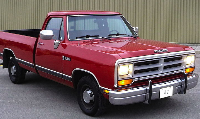
'87 D150 fuel lines


Thread Starter
|
Amateur
Joined: Jun 2011
Posts: 35
Likes: 0
From: Iowa
 '87 D150 fuel lines
I recently picked up a pretty clean 1987 D150 for my son's first vehicle. It's a regular cab 8ft bed 2wd truck. One of the issues is that the previous owner had the tank down and did some work but I assume the old steel fuel lines fell apart and they just ran rubber hose all the way up from the tank to the engine. I don't want to leave it all just rubber hose. I have been buying stuff for it from the LMC catalog and they have pre-bent sets of stainless fuel lines. Now in the catalog it doesn't seem they list the lines for the 2wd long box, just the short box. But they do for the 4wd long box.
My question is, is there a major difference between the lines for the 2wd vs the 4wd long box trucks?
link to the ad:
http://www.lmctruck.com/icatalog/dc/full.aspx?Page=20
My question is, is there a major difference between the lines for the 2wd vs the 4wd long box trucks?
link to the ad:
http://www.lmctruck.com/icatalog/dc/full.aspx?Page=20
Thread Starter
|
Amateur
Joined: Jun 2011
Posts: 35
Likes: 0
From: Iowa
You don't think there are any issues with differences in the frame crossmembers? I would think the frame setups between 2x4 and 4x4 would be ar least close enough to the same.

Administrator


Joined: Apr 2010
Posts: 87,403
Likes: 4,214
From: Clayton MI
For the lines from the tank, to the long line going to the front, I doubt there are any differences at all. (just the length of the line for long bed, vs. short bed.) Up front though, there *may* be some differences, (suspension mount points for sure...) but, I would expect that you would be able to finesse the lines into a usable position. Other option is to just get a roll of nickel/copper line, of the appropriate caliber, and just run the lines yourself. Probably be cheaper too.....

Legend

Joined: Jun 2009
Posts: 8,025
Likes: 72
From: orangeville ontario
there is really nothing wrong with rubber line. is rust that much of an issue in your neck of the woods? i would maybe suggest leaving the rubber lines unless you can 100% know your son is not going to wreck the vehicle. i would definitely go ss if i was restoring a truck but if it was going to get beat up or destroyed it is probably better off to leave what is there if it works or go the cheap route and get a roll of fuel line.
Thread Starter
|
Amateur
Joined: Jun 2011
Posts: 35
Likes: 0
From: Iowa
there is really nothing wrong with rubber line. is rust that much of an issue in your neck of the woods? i would maybe suggest leaving the rubber lines unless you can 100% know your son is not going to wreck the vehicle. i would definitely go ss if i was restoring a truck but if it was going to get beat up or destroyed it is probably better off to leave what is there if it works or go the cheap route and get a roll of fuel line.

Administrator
Joined: Apr 2010
Posts: 87,403
Likes: 4,214
From: Clayton MI
If the rubber line is rated for fuel, it'll last basically forever.
Trending Topics
Legend
Joined: Jun 2009
Posts: 8,025
Likes: 72
From: orangeville ontario
the rubber stuff usually outlasts the steel stuff in most case. most of the new fuel injection kits even come with it for that reason. it is not cheap for what it is and would have been cheaper to use regular steel line. about the only thing i would look at using SS or coated lines for either way is brake lines.
Thread Starter
|
Amateur
Joined: Jun 2011
Posts: 35
Likes: 0
From: Iowa
I appreciate all the replies! I will crawl under there this weekend and try to identify the line they ran for the fuel. Hopefully it is obviously labeled for fuel and not some cheap vacuum line run in it'a place. If I can't be certain I'll buy the pre-bent lines. I figure worst case if the SS lines don't quite make it I can get rubber line that for sure is gasoline rated to make up wherever the difference in the line ends.

Record Breaker
Joined: Apr 2013
Posts: 1,815
Likes: 56
From: Alberta
plastic lines are another option. you will need a forming tool to install the quick connects. Fast to install, inexpensive and they never rust. the only down size is you can't run tight bends.
I used to run rubber lines on the older stuff that ran lower fuel pressures...never have a problem with it. Even with the 58 psi of newer trucks I wouldn't have a problem with it. I just like the quick connects of the plastic systems.
if you want to run platic to metal they have specific compression unions made for this purpose.
I used to run rubber lines on the older stuff that ran lower fuel pressures...never have a problem with it. Even with the 58 psi of newer trucks I wouldn't have a problem with it. I just like the quick connects of the plastic systems.
if you want to run platic to metal they have specific compression unions made for this purpose.