


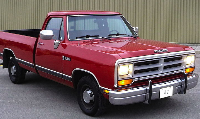
73 D100 318 Oil pressure question


Thread Starter
|
Registered User
Joined: Aug 2024
Posts: 5
Likes: 0
 73 D100 318 Oil pressure question
Like the title says i have a 74 dodge d100 with the small block 318 LA. I just had a question so at idle right now it’s 32 degrees fahrenheit and i just drove to work which is about a 45 minute drive with the average speed limit being 50, I am now sitting in my works parking lot and the oil pressure gauge shows that it’s 28-30 psi which i’m pretty sure before when it’s been warming it’s been closer to 40 psi at idle. I could be wrong and just overthinking it but is 28-30 psi normal for a 318 at idle? I have replaced the sensor itself already (a while ago probably a year or so) so i know it’s not a sensor issue. just wondering! thanks

Veteran


Joined: Aug 2024
Posts: 498
Likes: 66
From: West Texas
I think the 28 psi sounds great at hot idle, 25 would be fine .... if it was 20 ... well she aint no spring chicken but she does just fine ..... Some older engines from the 50's 5 psi at hot idle is fine.
Typically low oil pressure at idle is from worn bearings. ..... I would not call 28 psi at hot idle low. I would call that fine.
So what the heck is going on with 40psi at hot idle? Is this a brand new rebuilt with new bearings and just getting broke in? ... 40 seems high ... unless you have a high volume oil pump for racing .... which is a bad idea.
Are you sure your gauge and sender are correct? .... I would like to check it with a mechanical gauge to see if they match.
Curious what readings you get cruising at 50 mph.
Typically low oil pressure at idle is from worn bearings. ..... I would not call 28 psi at hot idle low. I would call that fine.
So what the heck is going on with 40psi at hot idle? Is this a brand new rebuilt with new bearings and just getting broke in? ... 40 seems high ... unless you have a high volume oil pump for racing .... which is a bad idea.
Are you sure your gauge and sender are correct? .... I would like to check it with a mechanical gauge to see if they match.
Curious what readings you get cruising at 50 mph.

Administrator


Joined: Apr 2010
Posts: 87,399
Likes: 4,214
From: Clayton MI
That's actually quite good for the age of the truck.  GM's take on it was: 10 PSI at idle, or better, and then an additional 10 psi per 1000 rpm up to around 70 psi max. (though most red lines were 5500 or so.)
GM's take on it was: 10 PSI at idle, or better, and then an additional 10 psi per 1000 rpm up to around 70 psi max. (though most red lines were 5500 or so.)

Veteran
Joined: Aug 2024
Posts: 498
Likes: 66
From: West Texas
I have replaced the sensor itself already (a while ago probably a year or so) so i know it’s not a sensor issue. just wondering!
I'm just not trustworthy of older gauges with a sensor.
Years ago I had a 1996 Ford explorer, while reading and researching the forums on it .... I found that their gauges sucked.
One guy claimed he had good oil pressure the needle was in the middle ... then you find out, if you had only 5psi it simply triggered the gauge and it read in the middle. Not a true reading of real psi.
Then the truck is 50 years old .... I would be interested in running a mechanical gauge even temporarily ... just to see if it matches with the original gauge in the dash.
28psi is perfect, when they claim it usually has 40psi .... that makes me wonder if we do not have some faulty equipment.
I'm just not trustworthy of older gauges with a sensor.
Years ago I had a 1996 Ford explorer, while reading and researching the forums on it .... I found that their gauges sucked.
One guy claimed he had good oil pressure the needle was in the middle ... then you find out, if you had only 5psi it simply triggered the gauge and it read in the middle. Not a true reading of real psi.
Then the truck is 50 years old .... I would be interested in running a mechanical gauge even temporarily ... just to see if it matches with the original gauge in the dash.
28psi is perfect, when they claim it usually has 40psi .... that makes me wonder if we do not have some faulty equipment.

Grand Champion


Joined: May 2019
Posts: 5,146
Likes: 721
From: S.W. Indiana
Like the title says i have a 74 dodge d100 with the small block 318 LA. I just had a question so at idle right now it’s 32 degrees fahrenheit and i just drove to work which is about a 45 minute drive with the average speed limit being 50, I am now sitting in my works parking lot and the oil pressure gauge shows that it’s 28-30 psi which i’m pretty sure before when it’s been warming it’s been closer to 40 psi at idle. I could be wrong and just overthinking it but is 28-30 psi normal for a 318 at idle? I have replaced the sensor itself already (a while ago probably a year or so) so i know it’s not a sensor issue. just wondering! thanks
I've had engines back then that I would have loved that pressure reading. Your pressure is just fine. It should read a little higher cold as the oil is stiffer. Once warmed up, it will come down a bit, but I'm pretty sure you're running multiweight oil so you really can't do better.
People are too used to newer engines that run thinner oil. If I still had a shop and you brought it in, I'd look at it and tell you it's fine, don't waste your money on what's NOT broken. It's doing what it is designed to do.
By the way, a high VOLUME oil pump is fine. It will compensate for worn bearings. A high PRESSURE oil pump will blow the seals out of a good engine and ruin it. You don't need either. As long as you change the oil and filter every 3000 miles, it will be just fine.
Veteran
Joined: Aug 2024
Posts: 498
Likes: 66
From: West Texas
@ol' grouch What would you say if they showed up at your shop with a hot engine and it had 40 psi at idle? ... just makes me scratch my head and say Hrmmm.
28 sounds fine, the week before it had 40.
IMHO, High volume oil pumps are fine for the correct application. On a stock engine, they will pump the oil so fast they will drain the pan and all the oil will be on the top end slowly draining back to the pan and the lower end will be starving for oil.
Now if you build a engine with a deep sump oil pan, do a little work to the oil ports to increase flow ... they are great.
If you have a bone stock engine and install one because it sounds cool ... probably not a great idea.
28 sounds fine, the week before it had 40.
IMHO, High volume oil pumps are fine for the correct application. On a stock engine, they will pump the oil so fast they will drain the pan and all the oil will be on the top end slowly draining back to the pan and the lower end will be starving for oil.
Now if you build a engine with a deep sump oil pan, do a little work to the oil ports to increase flow ... they are great.
If you have a bone stock engine and install one because it sounds cool ... probably not a great idea.
Trending Topics

Grand Champion

Joined: Feb 2015
Posts: 7,435
Likes: 578
Small blocks oiled well, Big blocks are another story. If you want to bump up the oil pressure Mopar Performance has a spring kit to do it.
Grand Champion
Joined: May 2019
Posts: 5,146
Likes: 721
From: S.W. Indiana
@ol' grouch What would you say if they showed up at your shop with a hot engine and it had 40 psi at idle? ... just makes me scratch my head and say Hrmmm.
28 sounds fine, the week before it had 40.
IMHO, High volume oil pumps are fine for the correct application. On a stock engine, they will pump the oil so fast they will drain the pan and all the oil will be on the top end slowly draining back to the pan and the lower end will be starving for oil.
Now if you build a engine with a deep sump oil pan, do a little work to the oil ports to increase flow ... they are great.
If you have a bone stock engine and install one because it sounds cool ... probably not a great idea.
28 sounds fine, the week before it had 40.
IMHO, High volume oil pumps are fine for the correct application. On a stock engine, they will pump the oil so fast they will drain the pan and all the oil will be on the top end slowly draining back to the pan and the lower end will be starving for oil.
Now if you build a engine with a deep sump oil pan, do a little work to the oil ports to increase flow ... they are great.
If you have a bone stock engine and install one because it sounds cool ... probably not a great idea.
In 50+ years of doing mechanical work, I don't install parts because they are cool. They go in for a reason. Nobody sees an oil pump. On the SB Chryslers it's inside under the distributor. I had an '84 W150 where the engine was just plain worn out. When it got to where it wouldn't start without ether, it was time to replace. I found a good running engine with about 90,000 miles and did a refresh. When I do a refresh, the engine gets a new timing set, distributor bushing, new expansion plugs all around after a block flush with them out, (You can usually fill a 5 gallon bucket with the sand and rust that flushes out) a high volume oil pump, water pump and valve cover gaskets replaced. The W150 ran another 160K with that engine until the frame finally failed at nearly 400K. A high volume pump will not drain the pan unless the engine has been run hot a couple of times and is coked up in the heads. That all gets checked when I do a refresh. When I ran a salvage yard, I had a wait list for refreshed engines, even though I charged double for one of them. I never had one come back either. Chevy, Ford and Mopars, mostly small blocks.
As for an operating engine (hot is overheated) at 40 psi, it would depend on the oil in it. 10W-40, it would be just fine. I usually ran that on 318's and never had any issues. Today's really thin oils were not around when the 318 was in its heyday. I even ran green bulk oil in glass bottles for years.
Last edited by ol' grouch; Dec 6, 2024 at 10:15 PM. Reason: i kant spel wurth a durn
Veteran
Joined: Aug 2024
Posts: 498
Likes: 66
From: West Texas
@ol' grouch maybe I'm just looking at things wrong or not explaining myself to original poster .... My first post I suggested to hookup a mechanical gauge if you want to know what your oil pressure is.
Let me try to explain it this way .... I'm slow, I should have thought of this earlier.
I have a daily driver 1991 chebby truck with a 350 and have driven it since 2018. It has a oil pressure gauge with a sending unit. I can tell you the gauge rides from middle to slightly above ... it actually does move a bit when above idle.
All these years of driving it, I do not know what the gauge is telling me .... I might have 40psi at idle on it ... (I have to look later) All I care is the gauge is moving and it has oil pressure.
The numbers on it like 30 or 40 are just a fairy tale, I believe the gauge is so inaccurate that I pay zero attention to what number it actually reads.
Mine always reads about the same hot or cold it idles at one position and raises about 10 psi with higher rpm. .... I have oil pressure and that's all I care about.
If I really want to know what the actual oil pressure is, I will have to connect a mechanical gauge to it and check that way .... I doubt it will be 40psi when hot and at idle.
I had a Ford that was the same way, I found out from a ASE Ford mechanic the sensor is just a trigger, if it sees 5 psi it will activate the gauge to 1/2 way ... nothing at all to do with the numbers on the gauge.
Just a fancy idiot light.
I have 2 Dodges, Caravan has a idiot light no gauge.
The pilot house has a mechanical gauge ... At hot idle it has about15psi and about 30-35psi' at high rpm Just fine for a 75 year old engine.
I would expect to see similar numbers with my 1991 chebby 350 and be perfectly happy with them.
Maybe I watch too many Hot Rodders on youtube .... I do not want to race, but interested in watching others build their cars and race them.
With a stock oil pump they can run the top end on the dry side when wound up to 6K rpm going down the 1/4 mile.
Or with a high volume pump and a stock pan they might run low on oil on the bottom end .... A deep sump pan fixes that.
Extreme cases but that is what I think about ... it applies to me if am out on a back dirt road and get stuck in the mud or snow and try revving the motor to get out .... I'm fine with a stock pump.
High volume pump is a tool to be used in the right places.
Let me try to explain it this way .... I'm slow, I should have thought of this earlier.
I have a daily driver 1991 chebby truck with a 350 and have driven it since 2018. It has a oil pressure gauge with a sending unit. I can tell you the gauge rides from middle to slightly above ... it actually does move a bit when above idle.
All these years of driving it, I do not know what the gauge is telling me .... I might have 40psi at idle on it ... (I have to look later) All I care is the gauge is moving and it has oil pressure.
The numbers on it like 30 or 40 are just a fairy tale, I believe the gauge is so inaccurate that I pay zero attention to what number it actually reads.
Mine always reads about the same hot or cold it idles at one position and raises about 10 psi with higher rpm. .... I have oil pressure and that's all I care about.
If I really want to know what the actual oil pressure is, I will have to connect a mechanical gauge to it and check that way .... I doubt it will be 40psi when hot and at idle.
I had a Ford that was the same way, I found out from a ASE Ford mechanic the sensor is just a trigger, if it sees 5 psi it will activate the gauge to 1/2 way ... nothing at all to do with the numbers on the gauge.
Just a fancy idiot light.
I have 2 Dodges, Caravan has a idiot light no gauge.
The pilot house has a mechanical gauge ... At hot idle it has about15psi and about 30-35psi' at high rpm Just fine for a 75 year old engine.
I would expect to see similar numbers with my 1991 chebby 350 and be perfectly happy with them.
Maybe I watch too many Hot Rodders on youtube .... I do not want to race, but interested in watching others build their cars and race them.
With a stock oil pump they can run the top end on the dry side when wound up to 6K rpm going down the 1/4 mile.
Or with a high volume pump and a stock pan they might run low on oil on the bottom end .... A deep sump pan fixes that.
Extreme cases but that is what I think about ... it applies to me if am out on a back dirt road and get stuck in the mud or snow and try revving the motor to get out .... I'm fine with a stock pump.
High volume pump is a tool to be used in the right places.