


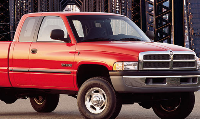
Truck Still Overheating


Thread Starter
|
Professional
Joined: Feb 2011
Posts: 127
Likes: 0

Does those steps sound right? What is the best way to get these air pockets out?
No, I have not flushed the system. I figured I flushed the system when I drained the radiator and did all the work. I did all the work you described all at the same time (no gears though). The cooling system worked wonderful before that; never a problem until I did this work. Again, it is not running totally hot all the way pegged out, just to around 230-240.

Administrator


Joined: Apr 2010
Posts: 87,565
Likes: 4,232
From: Clayton MI
Pretty close, the only thing I would add to that would be park the truck at as SEVERE an angle as your butt will tolerate.... (pucker factor....) with the passenger front being the highest point. If you have a spot nearby that will allow this, just drive there with the radiator cap loose, but, not off...... DO NOT OPEN THE RADIATOR WHEN HOT. You really won't like the results..... If it is far enough away that you want to leave the cap sealed, let the engine cool so there is no longer pressure in the upper radiator hose before opening up the system.
You might have to let it run for 15 to 30 minutes to get the bulk of the air out, and even at that, you might have to repeat the process in a day or so.
You might have to let it run for 15 to 30 minutes to get the bulk of the air out, and even at that, you might have to repeat the process in a day or so.

Thread Starter
|
Professional
Joined: Feb 2011
Posts: 127
Likes: 0
Pretty close, the only thing I would add to that would be park the truck at as SEVERE an angle as your butt will tolerate.... (pucker factor....) with the passenger front being the highest point. If you have a spot nearby that will allow this, just drive there with the radiator cap loose, but, not off...... DO NOT OPEN THE RADIATOR WHEN HOT. You really won't like the results..... If it is far enough away that you want to leave the cap sealed, let the engine cool so there is no longer pressure in the upper radiator hose before opening up the system.
You might have to let it run for 15 to 30 minutes to get the bulk of the air out, and even at that, you might have to repeat the process in a day or so.
You might have to let it run for 15 to 30 minutes to get the bulk of the air out, and even at that, you might have to repeat the process in a day or so.
I don't know if I quite understand one thing you when you said, "If it is far enough away that you want to leave the cap sealed, let the engine cool so there is no longer pressure in the upper radiator hose before opening up the system." Do you mean when the engine has cooled down enough, I take the cap completely off? Then what? What do you mean by "if it is far enough away?"
Last edited by bdj5773; Mar 13, 2011 at 10:46 PM.
Administrator
Joined: Apr 2010
Posts: 87,565
Likes: 4,232
From: Clayton MI
When you drive, the engine heats the coolant. (as you noticed.  ) Applying heat to a fluid in a closed system raises pressure. Your radiator cap limits that pressure to approximately 16PSI.
Without the cap in place, the coolant will expand instead. And quite possibly make a serious mess. (not to mention you have to replace it.....)
So, if it is close, and the engine won't get real hot. Just leave it loose.
If it is several miles away, don't do that. You will dump coolant. And the closed system will be under pressure. If you relieve that pressure while the engine is still hot..... (upper radiator hose nice and hard...) Two things happen.. First, if the coolant is hot enough, now that it is no longer under pressure..... it boils........ second thing that happens is, it expands....... RAPIDLY. So, you get a geyser of extremely hot, possibly boiling coolant blowing out everywhere, including on YOU. A VERY unpleasant experience. (you won't be using that hand for a few weeks... and skin grafts might also be in your future.....)
) Applying heat to a fluid in a closed system raises pressure. Your radiator cap limits that pressure to approximately 16PSI.Without the cap in place, the coolant will expand instead. And quite possibly make a serious mess.
(not to mention you have to replace it.....)So, if it is close, and the engine won't get real hot. Just leave it loose.
If it is several miles away, don't do that. You will dump coolant. And the closed system will be under pressure. If you relieve that pressure while the engine is still hot..... (upper radiator hose nice and hard...) Two things happen.. First, if the coolant is hot enough, now that it is no longer under pressure..... it boils........ second thing that happens is, it expands....... RAPIDLY. So, you get a geyser of extremely hot, possibly boiling coolant blowing out everywhere, including on YOU. A VERY unpleasant experience. (you won't be using that hand for a few weeks... and skin grafts might also be in your future.....)
Thread Starter
|
Professional
Joined: Feb 2011
Posts: 127
Likes: 0
Wouldn't this air pocket be there when running the truck without the thermostat (which I did and it ran cool), or does the air pocket just show up with the stat in?
Thread Starter
|
Professional
Joined: Feb 2011
Posts: 127
Likes: 0
When you drive, the engine heats the coolant. (as you noticed. ) Applying heat to a fluid in a closed system raises pressure. Your radiator cap limits that pressure to approximately 16PSI.
Without the cap in place, the coolant will expand instead. And quite possibly make a serious mess. (not to mention you have to replace it.....)
So, if it is close, and the engine won't get real hot. Just leave it loose.
If it is several miles away, don't do that. You will dump coolant. And the closed system will be under pressure. If you relieve that pressure while the engine is still hot..... (upper radiator hose nice and hard...) Two things happen.. First, if the coolant is hot enough, now that it is no longer under pressure..... it boils........ second thing that happens is, it expands....... RAPIDLY. So, you get a geyser of extremely hot, possibly boiling coolant blowing out everywhere, including on YOU. A VERY unpleasant experience. (you won't be using that hand for a few weeks... and skin grafts might also be in your future.....)
) Applying heat to a fluid in a closed system raises pressure. Your radiator cap limits that pressure to approximately 16PSI.Without the cap in place, the coolant will expand instead. And quite possibly make a serious mess.
(not to mention you have to replace it.....)So, if it is close, and the engine won't get real hot. Just leave it loose.
If it is several miles away, don't do that. You will dump coolant. And the closed system will be under pressure. If you relieve that pressure while the engine is still hot..... (upper radiator hose nice and hard...) Two things happen.. First, if the coolant is hot enough, now that it is no longer under pressure..... it boils........ second thing that happens is, it expands....... RAPIDLY. So, you get a geyser of extremely hot, possibly boiling coolant blowing out everywhere, including on YOU. A VERY unpleasant experience. (you won't be using that hand for a few weeks... and skin grafts might also be in your future.....)
Administrator
Joined: Apr 2010
Posts: 87,565
Likes: 4,232
From: Clayton MI
If you can do it in your yard....... take the cap completely off, park the truck at the rude angle, and let it run. You can watch the level in the radiator, sorta.... and see if you get any air out.
Keep in mind, the level will go UP some as the thermostat begins to open. Then it will suck it back down. You don't really see much other movement, but, if you put your hand on the upper radiator hose, near the radiator, it will get HOT when the thermostat is open.
Keep in mind, the level will go UP some as the thermostat begins to open. Then it will suck it back down. You don't really see much other movement, but, if you put your hand on the upper radiator hose, near the radiator, it will get HOT when the thermostat is open.
Thread Starter
|
Professional
Joined: Feb 2011
Posts: 127
Likes: 0
If you can do it in your yard....... take the cap completely off, park the truck at the rude angle, and let it run. You can watch the level in the radiator, sorta.... and see if you get any air out.
Keep in mind, the level will go UP some as the thermostat begins to open. Then it will suck it back down. You don't really see much other movement, but, if you put your hand on the upper radiator hose, near the radiator, it will get HOT when the thermostat is open.
Keep in mind, the level will go UP some as the thermostat begins to open. Then it will suck it back down. You don't really see much other movement, but, if you put your hand on the upper radiator hose, near the radiator, it will get HOT when the thermostat is open.

