


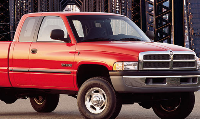
Extreme 4x4's Ram fuel saver episode.


Professional
Joined: Jul 2010
Posts: 148
Likes: 0
From: New York

I keep reading everyone's response to the tonneau covers articles and studies they have read or heard about. Well my two cents on the issue has to do with some real world experience. My truck has had a hard cover from A.R.E. almost from the start when I bought it back in 98. Hate to tell you guys but hasn't helped my mileage one bit. My truck has gotten about the same mileage over the years and its comparable with other trucks here... Just sayin

Administrator


Joined: Apr 2010
Posts: 87,483
Likes: 4,223
From: Clayton MI
I keep reading everyone's response to the tonneau covers articles and studies they have read or heard about. Well my two cents on the issue has to do with some real world experience. My truck has had a hard cover from A.R.E. almost from the start when I bought it back in 98. Hate to tell you guys but hasn't helped my mileage one bit. My truck has gotten about the same mileage over the years and its comparable with other trucks here... Just sayin


Captain
Joined: Feb 2011
Posts: 507
Likes: 0
Mythbusters did that one to! IIRC under 55 windows down is best over 55 A/C is best.

Rookie
Joined: Mar 2011
Posts: 52
Likes: 0
Removing the tailgate should improve mpg. The air coming over the cab at highway speeds hits it when it's there and acts like a sail fighting forward movement. Removing it also saves some wieght of course.
Leaving the tailgate on but in the down position is even worse than having it up. It increases the effective length of the bed and creates even more surface area for the wind coming over the cab (at highway speeds) to hit and slow you down.
Around town your better off with the windows down and the AC off. On the highway its better to have the AC on and the windows up. When your going highway speeds the extra drag of turning the compressor is almost a mute point since the engine is in its power band and revved up anyways. If you roll down the highway with your windows down on the otherhand, all that wind rushes into the cab and hits everything, causing major drag.
The juries still out on the electric fans, but I personally like them for their other benefits anyway.
Setting your timing as high as it will go without knocking is an easy way maximize performance.
A numerically lower gear ratio might yield better mpg, but it wouldn't be much fun to drive.
Leaving the tailgate on but in the down position is even worse than having it up. It increases the effective length of the bed and creates even more surface area for the wind coming over the cab (at highway speeds) to hit and slow you down.
Around town your better off with the windows down and the AC off. On the highway its better to have the AC on and the windows up. When your going highway speeds the extra drag of turning the compressor is almost a mute point since the engine is in its power band and revved up anyways. If you roll down the highway with your windows down on the otherhand, all that wind rushes into the cab and hits everything, causing major drag.
The juries still out on the electric fans, but I personally like them for their other benefits anyway.
Setting your timing as high as it will go without knocking is an easy way maximize performance.
A numerically lower gear ratio might yield better mpg, but it wouldn't be much fun to drive.
Administrator
Joined: Apr 2010
Posts: 87,483
Likes: 4,223
From: Clayton MI
Actually, for the tailgate, you are better off leaving it in place, and up. Reason being here is, airflow over the cab creates a circulating current inside and slightly above the bed. This acts as a 'barrier' to direct airflow from hitting the sail area of the raised tailgate. (stays above it instead.)
Leaving the tailgate down, creates a slipstream effect right behind the cab. Basically, an area of low pressure, that effectively 'pulls' the truck backward. The faster you go, the more drag it generates.
Isn't physics fun?
Leaving the tailgate down, creates a slipstream effect right behind the cab. Basically, an area of low pressure, that effectively 'pulls' the truck backward. The faster you go, the more drag it generates.
Isn't physics fun?
Rookie
Joined: Mar 2011
Posts: 52
Likes: 0
[quote=HeyYou;2483237]Actually, for the tailgate, you are better off leaving it in place, and up. Reason being here is, airflow over the cab creates a circulating current inside and slightly above the bed. This acts as a 'barrier' to direct airflow from hitting the sail area of the raised tailgate. (stays above it instead.)
I can see how that might be true, but I suspect the results might vary depending on whether you have a short bed, long bed, extended cab, etc. Where the air stream "hits" after passing over the cab will make all the difference in this case. A bigger cab (extended cab or four-door) would likely make the air stream "land" farther back than a single cab. In this case the tailgate in the upright position might act like a parachute (like dragsters use) and really hold you back. I suspect that results will vary greatly depending on make, model, year, bed length, and cab size. The effects will increase dramatically for every mph over 55 that you go as well.
I can see how that might be true, but I suspect the results might vary depending on whether you have a short bed, long bed, extended cab, etc. Where the air stream "hits" after passing over the cab will make all the difference in this case. A bigger cab (extended cab or four-door) would likely make the air stream "land" farther back than a single cab. In this case the tailgate in the upright position might act like a parachute (like dragsters use) and really hold you back. I suspect that results will vary greatly depending on make, model, year, bed length, and cab size. The effects will increase dramatically for every mph over 55 that you go as well.


Veteran
Joined: Mar 2010
Posts: 262
Likes: 0
From: Sioux Falls, SD
[QUOTE=bigo93bronco;2483334]
Really the only thing that will greatly effect the the results is the age of a truck. Any modern truck, that is, from the mid 80's on, has been wind tunnel tested to confirm the the numbers. There are a few exceptions to this, but for the most part it holds true. the size of the cab and bed really have very little to do with this. The truth of it seems back wards, but lots of number crunching and wind tunnel tests confirm it. Its the same principle as the so call vortex generators (i might have the name wrong here, anyone comment?) that are placed on the back of semi trailers.
For more info, see fluid mechanics.
Actually, for the tailgate, you are better off leaving it in place, and up. Reason being here is, airflow over the cab creates a circulating current inside and slightly above the bed. This acts as a 'barrier' to direct airflow from hitting the sail area of the raised tailgate. (stays above it instead.)
I can see how that might be true, but I suspect the results might vary depending on whether you have a short bed, long bed, extended cab, etc. Where the air stream "hits" after passing over the cab will make all the difference in this case. A bigger cab (extended cab or four-door) would likely make the air stream "land" farther back than a single cab. In this case the tailgate in the upright position might act like a parachute (like dragsters use) and really hold you back. I suspect that results will vary greatly depending on make, model, year, bed length, and cab size. The effects will increase dramatically for every mph over 55 that you go as well.
I can see how that might be true, but I suspect the results might vary depending on whether you have a short bed, long bed, extended cab, etc. Where the air stream "hits" after passing over the cab will make all the difference in this case. A bigger cab (extended cab or four-door) would likely make the air stream "land" farther back than a single cab. In this case the tailgate in the upright position might act like a parachute (like dragsters use) and really hold you back. I suspect that results will vary greatly depending on make, model, year, bed length, and cab size. The effects will increase dramatically for every mph over 55 that you go as well.
For more info, see fluid mechanics.