


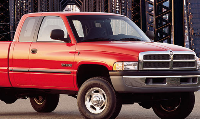
1999 Ram Low Brake Pedal


Thread Starter
|
Registered User
Joined: May 2011
Posts: 4
Likes: 0
 1999 Ram Low Brake Pedal
I am helping a friend trying to solve a low brake pedal issue. The condition is that the vehicle will not stop when you apply moderate to hard brake pedal pressure. In other words, the truck will coast to a stop in a panic situation and will not lock the front wheels. The pedal goes to the floor especially when standing on the pedal with 2 feet. The wheels will not lock in reverse as well. The truck does not pull to either side under braking. The ABS and Brake lights are off but do function during a bulb check.
Here are the specifics about the truck:
1999 Ram 1500 4x4, Extended Cab
5.2L
RWAL
Vehicle has a mild body lift and aftermarket rims but nothing outrageous.
Here is what has been replaced and why:
Brake Booster - replaced by previous owner for this problem
Rear Shoes, Front Pads, Front Rotors - all due for replacement
Brake Fluid - VERY dark, required replacement
Master Cylinder - An attempt to solve the issue, made no difference
I have checked the pushrod adjustment on the booster and it is OK. The rear shoes are adjusted correctly and the parking brake works. We have bled the system several times and seems to bleed OK (no bubbles at any wheel). We have even bled the combination valve and Rear ABS valve by opening the line and then pushing the pedal to the floor.
The only thing I am unsure about is the plunger on the top of the combination valve. All the service information I have read (including the factory manual) simply tells me the order in which to bleed the brakes. Do I need to do something special with the combination and/or ABS valve to properly bleed the system?
I thought the problem may be caused by a bad combination valve. However, I am hesitant to purchase one because a. I do want to throw any more parts at this truck and b. it is unavailable, even from the dealer (junkyard only).
Please let me know if you have any suggestions or comments. This has been very frustrating and I would like to get this problem solved.
Thanks.
BR
Here are the specifics about the truck:
1999 Ram 1500 4x4, Extended Cab
5.2L
RWAL
Vehicle has a mild body lift and aftermarket rims but nothing outrageous.
Here is what has been replaced and why:
Brake Booster - replaced by previous owner for this problem
Rear Shoes, Front Pads, Front Rotors - all due for replacement
Brake Fluid - VERY dark, required replacement
Master Cylinder - An attempt to solve the issue, made no difference
I have checked the pushrod adjustment on the booster and it is OK. The rear shoes are adjusted correctly and the parking brake works. We have bled the system several times and seems to bleed OK (no bubbles at any wheel). We have even bled the combination valve and Rear ABS valve by opening the line and then pushing the pedal to the floor.
The only thing I am unsure about is the plunger on the top of the combination valve. All the service information I have read (including the factory manual) simply tells me the order in which to bleed the brakes. Do I need to do something special with the combination and/or ABS valve to properly bleed the system?
I thought the problem may be caused by a bad combination valve. However, I am hesitant to purchase one because a. I do want to throw any more parts at this truck and b. it is unavailable, even from the dealer (junkyard only).
Please let me know if you have any suggestions or comments. This has been very frustrating and I would like to get this problem solved.
Thanks.
BR
Last edited by spec3racer; May 14, 2011 at 01:29 PM. Reason: Added information.

Administrator


Joined: Apr 2010
Posts: 87,409
Likes: 4,214
From: Clayton MI
Pedal height is generally most influenced by rear shoe adjustment. Question becomes, are the rear brakes working at all? If you jack up the rear of the truck, and hold the brake pedal, can you still turn the rear wheels? Might wanna check the fronts as well....
Any fault indicators on in the dash?
Does the pedal feel spongy? Or, is it firm once it starts actually doing something?
Any fault indicators on in the dash?
Does the pedal feel spongy? Or, is it firm once it starts actually doing something?
Thread Starter
|
Registered User
Joined: May 2011
Posts: 4
Likes: 0
The rear brakes are now working. The rear adjustment is correct, all the wheels lock up when on jack stands, and the parking brake holds.
No fault indicators on the dash. The pedal feels spongy, but after bleeding the system several times there are no bubbles in the fluid.
BR
No fault indicators on the dash. The pedal feels spongy, but after bleeding the system several times there are no bubbles in the fluid.
BR
Last edited by spec3racer; May 28, 2011 at 07:11 PM.
Administrator
Joined: Apr 2010
Posts: 87,409
Likes: 4,214
From: Clayton MI
Spongy pedal indicates there is still some air in the lines. (the rears are a real bear to get all the air out of.....)
Try this:
Grab a friend, park him in the drivers seat. (or her... doesn't matter. )
)
Have said friend pump the pedal three times to build pressure, and hold it.
You crack the bleeder open quickly, so the fluid squirts across the garage..... use the normal bleeding sequence.... and watch fluid level so it doesn't run empty.
Do that several times at each wheel.
What it does, is shock the air bubbles out. Much more effective than just stepping on the pedal with the valve open.
Try this:
Grab a friend, park him in the drivers seat. (or her... doesn't matter.
)Have said friend pump the pedal three times to build pressure, and hold it.
You crack the bleeder open quickly, so the fluid squirts across the garage..... use the normal bleeding sequence.... and watch fluid level so it doesn't run empty.
Do that several times at each wheel.
What it does, is shock the air bubbles out. Much more effective than just stepping on the pedal with the valve open.

Thread Starter
|
Registered User
Joined: May 2011
Posts: 4
Likes: 0
Spongy pedal indicates there is still some air in the lines. (the rears are a real bear to get all the air out of.....)
Try this:
Grab a friend, park him in the drivers seat. (or her... doesn't matter.)
Have said friend pump the pedal three times to build pressure, and hold it.
You crack the bleeder open quickly, so the fluid squirts across the garage..... use the normal bleeding sequence.... and watch fluid level so it doesn't run empty.
Do that several times at each wheel.
What it does, is shock the air bubbles out. Much more effective than just stepping on the pedal with the valve open.
Try this:
Grab a friend, park him in the drivers seat. (or her... doesn't matter.
)Have said friend pump the pedal three times to build pressure, and hold it.
You crack the bleeder open quickly, so the fluid squirts across the garage..... use the normal bleeding sequence.... and watch fluid level so it doesn't run empty.
Do that several times at each wheel.
What it does, is shock the air bubbles out. Much more effective than just stepping on the pedal with the valve open.
I have found a dealer who can get me the combination valve (5003-306AA) for $106. On a trip to a local junkyard I found 2 other Rams ('99 2500 and '00 2500) with combination valves, but the label on top was a different color and further research found it to be a different part number. I was tempted to purchase it to use for testing because everything will line up, but I think the valve is calibrated differently.
BR
Administrator
Joined: Apr 2010
Posts: 87,409
Likes: 4,214
From: Clayton MI
Combination valve isn't going to help you. All it does is limit pressure to the rears. (so you get the correct brake bias.)
Given that so much has been changed on the truck, I would be tempted to pull the booster/master cylinder, and verify that everything was put back in right. Still and all, a spongy pedal means air in the lines somewhere....... Or, a line that is about to pop.
Given that so much has been changed on the truck, I would be tempted to pull the booster/master cylinder, and verify that everything was put back in right. Still and all, a spongy pedal means air in the lines somewhere....... Or, a line that is about to pop.
Trending Topics
Thread Starter
|
Registered User
Joined: May 2011
Posts: 4
Likes: 0
Fixed!!
I replaced the combination valve (metering valve w/pressure switch) and Rear ABS valve with a junkyard unit. We bled the combination valve, then the RWAL valve, and the base brakes. The truck now has a good pedal and can lock the front wheels. The rear ABS comes on as well.