


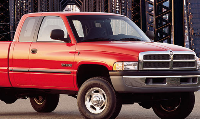
Which wheel cylinder for non-towing app?


Professional
Joined: Nov 2011
Posts: 189
Likes: 0
From: Canada

WEll, I guess it's not a secret I'm in favour of very solid brakes on my vehicles. So any upgrade that is cost effective and reasonable I'm probably in agreement with.
Some of you guys are right ... it's not cut and dried how your brakes are supposed to work. 99% of the time we naturally modulate the brake pedal somewhere short of lockup ... usually way short of lockup ... without thinking much about it. So, you always have more braking power than you need in an ordinary, heart-attack free day of driving.
Where we scare ourselves is when we actually come close to using all of our brakes, and find we're not that good at it. Really, a little practice is all you need to make hard stops as natural as easy stops.
If you think about it, in an ordinary stop you are always modulating the pedal. You don't hit them and keep your foot there; you let off a bit as the truck slows, for example. We do it without thinking or even being aware of what we're really doing with our foot. Humans are really good at repetitive things; our brains are always looking for things that it already knows how to do, and can just get us to do it without bothering to make us aware of it.
That's how a panic stop is supposed to work too ... if you hold it hard all the time it's eventually going to lock, because you need less braking as the vehicle slows from highway speeds to near stop; there's less inertia to corral as speed is scrubbed.
So a little practice and believe me, it will become almost easy. The "panic" part will make sure it doesn't get everyday easy, but there will be a degree of calm that will be impossible without practice. Maybe 7-10ths instead of 10-10ths terror.
When your scared ****less the brain isn't going to do the silly automatic thing on you like when all is as expected, but everything it already knows how to do it will definitely be doing ... it's faster than waiting for orders from you. So you will get better at not locking up the brakes, and maybe you'll be able to more easily concentrate on steering (or screaming, or both).
In a truck you need different braking than in a car, and in a car that you drive on the track you need different brakes than in a car you drive on the street. Track brakes must be very fade-resistant ... the 20th stop should be the same as the first.
Street brakes are different ... they only need to be able to handle one panic stop usually, with most vehicles. So fade is not really an issue; cold braking performance is. Most street pads are not particularly fade resistant, because there are other priorities that mean better overall performance to build into the pad material, and no brake pad is good at everything.
But a truck is different still. It's actually by far the most demanding braking application in a vehicle. Not only do you need good cold stopping power for panic stops, you need good fade performance for towing downhill or in descending twisty roads with a payload, as if the truck itself wasn't heavy enough, where you might be on the brakes relatively hard multiple times.
I don't know how many people have experienced fade. It's really scary in a truck. Each successive application takes more pressure, until some point ... it might be the sixth or seventh braking event over 5 or 10 minutes, that's typical of street pads ... no matter how hard you press the pedal it won't stop. It might not even slow.
With street pads there isn't much you can do to reduce fade. You can't run track pads on the street ... they're terrible cold. So you have to have a way to be able to apply high pressure ... much higher than a normal 1-event panic stop.
The wheel cylinder upgrade is one way to do that. Just my feelings on the idea ... I think it's a good move. But a few guys here mentioned that braking is a system ... really the calliper upgrade should be done as well.
***
That morbid post reminded me of a joke. May as well tell it, it's just as morbid.
"I want to die in my sleep like Grandpa, not yelling and screaming like the rest of the people in his car."
Some of you guys are right ... it's not cut and dried how your brakes are supposed to work. 99% of the time we naturally modulate the brake pedal somewhere short of lockup ... usually way short of lockup ... without thinking much about it. So, you always have more braking power than you need in an ordinary, heart-attack free day of driving.
Where we scare ourselves is when we actually come close to using all of our brakes, and find we're not that good at it. Really, a little practice is all you need to make hard stops as natural as easy stops.
If you think about it, in an ordinary stop you are always modulating the pedal. You don't hit them and keep your foot there; you let off a bit as the truck slows, for example. We do it without thinking or even being aware of what we're really doing with our foot. Humans are really good at repetitive things; our brains are always looking for things that it already knows how to do, and can just get us to do it without bothering to make us aware of it.
That's how a panic stop is supposed to work too ... if you hold it hard all the time it's eventually going to lock, because you need less braking as the vehicle slows from highway speeds to near stop; there's less inertia to corral as speed is scrubbed.
So a little practice and believe me, it will become almost easy. The "panic" part will make sure it doesn't get everyday easy, but there will be a degree of calm that will be impossible without practice. Maybe 7-10ths instead of 10-10ths terror.
When your scared ****less the brain isn't going to do the silly automatic thing on you like when all is as expected, but everything it already knows how to do it will definitely be doing ... it's faster than waiting for orders from you. So you will get better at not locking up the brakes, and maybe you'll be able to more easily concentrate on steering (or screaming, or both).
In a truck you need different braking than in a car, and in a car that you drive on the track you need different brakes than in a car you drive on the street. Track brakes must be very fade-resistant ... the 20th stop should be the same as the first.
Street brakes are different ... they only need to be able to handle one panic stop usually, with most vehicles. So fade is not really an issue; cold braking performance is. Most street pads are not particularly fade resistant, because there are other priorities that mean better overall performance to build into the pad material, and no brake pad is good at everything.
But a truck is different still. It's actually by far the most demanding braking application in a vehicle. Not only do you need good cold stopping power for panic stops, you need good fade performance for towing downhill or in descending twisty roads with a payload, as if the truck itself wasn't heavy enough, where you might be on the brakes relatively hard multiple times.
I don't know how many people have experienced fade. It's really scary in a truck. Each successive application takes more pressure, until some point ... it might be the sixth or seventh braking event over 5 or 10 minutes, that's typical of street pads ... no matter how hard you press the pedal it won't stop. It might not even slow.
With street pads there isn't much you can do to reduce fade. You can't run track pads on the street ... they're terrible cold. So you have to have a way to be able to apply high pressure ... much higher than a normal 1-event panic stop.
The wheel cylinder upgrade is one way to do that. Just my feelings on the idea ... I think it's a good move. But a few guys here mentioned that braking is a system ... really the calliper upgrade should be done as well.
***
That morbid post reminded me of a joke. May as well tell it, it's just as morbid.
"I want to die in my sleep like Grandpa, not yelling and screaming like the rest of the people in his car."
Last edited by Johnny2Bad; Apr 5, 2012 at 11:48 AM.


Professional
Joined: Apr 2008
Posts: 156
Likes: 0
From:
I don't know why you have to be so insulting. I would like to see a car pull out in front of you and watch how many times you pump the brakes before you collide.
The reason ABS was invented is not so much because drivers don't pump their brakes but because it is physically impossible to cycle braking at an effective rate.
And you have also failed to address my question. I would be happy if trolls like you all moved to Finland and froze your asses off after sliding off an icy road into a snow bank. And if you don't think that there are bad drivers in Finland then you truly are a fool.
The reason ABS was invented is not so much because drivers don't pump their brakes but because it is physically impossible to cycle braking at an effective rate.
And you have also failed to address my question. I would be happy if trolls like you all moved to Finland and froze your asses off after sliding off an icy road into a snow bank. And if you don't think that there are bad drivers in Finland then you truly are a fool.
LEARN TO DRIVE instead of watering down your brake system, it isn't rocket science.
Last edited by jmbishop; Apr 12, 2012 at 05:38 PM.

Legend


Joined: Jun 2009
Posts: 8,025
Likes: 72
From: orangeville ontario
what with all the rude comments on here lately?
stopping depends on more than just the wheel cylinders. when i first put my 81 on the road the brand new tires use to lock up and spin a lot more than they do now with 12,000km's on them. now the only time my truck lock up the brakes is on ice which we hopefully wont see any more of for another 8 months or so.
stopping depends on more than just the wheel cylinders. when i first put my 81 on the road the brand new tires use to lock up and spin a lot more than they do now with 12,000km's on them. now the only time my truck lock up the brakes is on ice which we hopefully wont see any more of for another 8 months or so.

Administrator


Joined: Apr 2010
Posts: 87,548
Likes: 4,230
From: Clayton MI
ABS was invented for folks that are NOT 'the best' drivers. Sure, most of us here know how to modulate our brakes, and know what 'effective stopping distance' is. however, gotta remember that better than 75% of the folks on the road view their vehicle as a 'transportation appliance'. They have no clue how it works, and no clue how to drive it effectively, beyond the bar basics. That pedal makes it go, that one makes it stop, generally...... These are the folks that when the chips are down, STAB the brake pedal, and stand on it with all their weight....... Your brakes are MOST affective at the point JUST BEFORE they lock, if you lock 'em up, you are sliding, and you can slide a hell of a lot further, than you would go with your brakes actually working as advertised. Thus, anti-lock brakes made their way to the automotive market.
Aircraft have had anti-lock brakes for decades..... gonna tell a pilot he doesn't know how to modulate his breaks, so he needs the "crutch" of ABS? Better wear a helmet.....
Aircraft have had anti-lock brakes for decades..... gonna tell a pilot he doesn't know how to modulate his breaks, so he needs the "crutch" of ABS? Better wear a helmet.....
Legend
Joined: Jun 2009
Posts: 8,025
Likes: 72
From: orangeville ontario
ya, abs does its job good but no abs can be fun.
http://www.youtube.com/watch?v=25W90...EA1B46D7A0C023
http://www.youtube.com/watch?v=25W90...EA1B46D7A0C023
Professional
Joined: Apr 2008
Posts: 156
Likes: 0
From:
ABS was invented for folks that are NOT 'the best' drivers. Sure, most of us here know how to modulate our brakes, and know what 'effective stopping distance' is. however, gotta remember that better than 75% of the folks on the road view their vehicle as a 'transportation appliance'. They have no clue how it works, and no clue how to drive it effectively, beyond the bar basics. That pedal makes it go, that one makes it stop, generally...... These are the folks that when the chips are down, STAB the brake pedal, and stand on it with all their weight....... Your brakes are MOST affective at the point JUST BEFORE they lock, if you lock 'em up, you are sliding, and you can slide a hell of a lot further, than you would go with your brakes actually working as advertised. Thus, anti-lock brakes made their way to the automotive market.
Aircraft have had anti-lock brakes for decades..... gonna tell a pilot he doesn't know how to modulate his breaks, so he needs the "crutch" of ABS? Better wear a helmet.....
Aircraft have had anti-lock brakes for decades..... gonna tell a pilot he doesn't know how to modulate his breaks, so he needs the "crutch" of ABS? Better wear a helmet.....

Legend
Joined: Jul 2011
Posts: 8,259
Likes: 4
From: Austin, TX
I upgrade the wheel cylinders on mine and have experienced no problems with lock up. I have not yeat towed anything as I installed the hitch while undertaking the leaning process (still ongoing) of paint and body work. But i do know that I will be pulling a car hauler with the truck. I did notice an imporvement in braking with the change. I see no down side.
Professional
Joined: Apr 2008
Posts: 156
Likes: 0
From:
I upgrade the wheel cylinders on mine and have experienced no problems with lock up. I have not yeat towed anything as I installed the hitch while undertaking the leaning process (still ongoing) of paint and body work. But i do know that I will be pulling a car hauler with the truck. I did notice an imporvement in braking with the change. I see no down side.
Administrator
Joined: Apr 2010
Posts: 87,548
Likes: 4,230
From: Clayton MI
Also, the rear wheel abs on these trucks is pretty much useless, even when it is supposedly working right......