When you click on links to various merchants on this site and make a purchase, this can result in this site earning a commission. Affiliate programs and affiliations include, but are not limited to, the eBay Partner Network.
2nd Gen Ram Tech1994-2001 Rams: This section is for TECHNICAL discussions only, that involve the 1994 through 2001 Rams. For any non-tech discussions, please direct your attention to the "General discussion/NON-tech" sub sections.
Awesome! Well I think I am about ready then. My parts come in on Tuesday and Friday. I suppose my last question would be do you know if I would have to lift my engine up on the 2WD to get the oil pan out or the braces, trans cover and starter should be enough to get it out? And lastly as far as the main rear seal goes, the one half that is up in the crackshaft area, I saw a video of a guy carefully using a tap to bang it out and then some needle nose pliers to get it out the rest of the way. Safe to say the installation is the same, carefully push it back in until both ends are flush, just being careful not to put it in backwards or shave it on the edges with a little bit of engine assembly on the part that touches the crank.
I do not know that as I never owned a 2wd. That is correct (everyone has their own way as I cover it in RTV in case it isn't manufactured right ask me how I found that once out lol) but you got the basics, no matter what you use be careful not to hurt the seal surface. One scratch and or could leak.
I do not know that as I never owned a 2wd. That is correct (everyone has their own way as I cover it in RTV in case it isn't manufactured right ask me how I found that once out lol) but you got the basics, no matter what you use be careful not to hurt the seal surface. One scratch and or could leak.
Hey Mopar quick question for you. Would it be ideal for all the gaskets I replace to apply RTV to the surface of the item for example, apply a small layer on the mating surface of the oil pan, stick the gasket on top of that, then a small layer where the pan goes back onto, so that effectively there is a coat on the top and bottom of everything? Can I do that for the timing cover gasket? I just primarily want to make sure I can prevent any potential leaks as best as possible by adding another layer of defense.
Or is it just one of those things where the RTV should only be applied to the bottom of the gasket and the top part of the gasket needs to remain clean other than some engine oil?
Make sure that you have clean mating surfaces for the gaskets. Then you can rub RTV on both sides of the gasket, do not make RTV bead on gasket because excess RTV eventually finds it way to places like oil pickup screen. Rubbing ensures that you have just enough sealant on gasket, but not inside the engine. This procedure applies mostly to cork and paper gaskets, rubber and rubberised gaskets don't need extra sealant, except small tab where gasket goes over the seam of two parts like front cover and engine block.
I only used RTV in the 'corners' where it wrapped around the rear main bearing cap. The good quality gaskets are viton, not cork, so, no additional sealer needed. No sealer of any kind on head gaskets. I only use a bit of RTV around the coolant ports on intake manifold gaskets.
Oh good to know.. thanks guys. I purchased all what appears to be rubber gaskets. They're all Fel-Pro and are blue in color. I will not go crazy with the RTV.. I was going to though so I figured I would ask lol.
Good Morning Y'all! Hope the coffee treating you well today. Sorry for the double post but just got my oil pump in today. Checked to make sure the thing could spin freely as mentioned in this thread. Doing some more research into fuel pressure I am now starting to understand why its such an important thing to have at the startup of the truck AKA priming the pump. I have a question about that, once I get it installed and everything back together for the most part, I read somewhere that you can pull the fuse to the ECU and crank the truck to get it to prime. Is that true? Or can I just unplug the spark plugs and crank the engine? What would be the easiest/safest way to prime it?
Also (back on my RTV BS. RTV should be my nickname) the pump came with what looks like a paper gasket. Might be cork. That would be a good call for both sides RTV, even though its housed in the oil pan?
When I installed a new oil pump on my truck, the instructions told me to pour some oil into the top of the pump before installation. That seemed perfectly reasonable, and wasn't difficult. (getting it back in place without pouring oil on my face was interesting.....) I just started the motor, and oil pressure came up almost instantly. If you are really paranoid, pull the ASD relay, that way, no power to coil, or injectors.
When I installed a new oil pump on my truck, the instructions told me to pour some oil into the top of the pump before installation. That seemed perfectly reasonable, and wasn't difficult. (getting it back in place without pouring oil on my face was interesting.....) I just started the motor, and oil pressure came up almost instantly. If you are really paranoid, pull the ASD relay, that way, no power to coil, or injectors.
Lol okay! No RTV on oil pump. I was wondering thanks HeyYou. Some of the videos had me paranoid and were talking about how you needed a drill with a super long extension to spin the inside of the oil pump to build pressure or your engine would blow up.. or crack the housing of the pump.. But I would think since it would have oil in it and its literally sitting in the oil pan like it is that it would not be THAT big of a deal.
Really excited to get to work on this. More parts coming in today.
Priming tool is nice, but, on an installed engine on these trucks, almost impossible to do. Just ain't enough room to get everything in there. And getting the pump drive out (goes between oil pump and distributor) is also a major pita. Getting it back in in the right position is another PITA.......
If I was doing new bearings and such, I would consider attempting the priming tool, but, just for a pump change? Nope. Not necessary.
Soooo.. I make a thread that says no issues and Karma bit me.. I got my new thermostat and dist cap and rotor today, so I was going to crank the truck up and move it into the garage to get ready. Charged the battery over night, turn the key, all electronics come on good sign. Crank the truck, it fires up without any hesitation except it dies if I let go of the gas. It dies around 800 RPM's. If I keep my foot on the gas peddle it stays running and I got it up to about 3000 RPM's with no issue, a little stutter if I let go of the peddle but nothing crazy.
I have started the truck several times to keep everything flowing but this time it sat for about 2 or 3 weeks while out of state. The gas in it however is about 4 months old... my money is on bad gas. No CEL's.
Not sure if its worth noting but I only ran it for a min or two, there was white smoke coming out of the passenger side valve cover. Upon closer look it appears it was burning off oil, but the gasket is much worse than I thought. I am not so sure it will be that much of an issue since I am replacing all of that anyway but I think I know have to drop the gas tank completely to remove the old fuel. Unless maybe I can use a pump of some kind (the old tube and blow trick eh?)
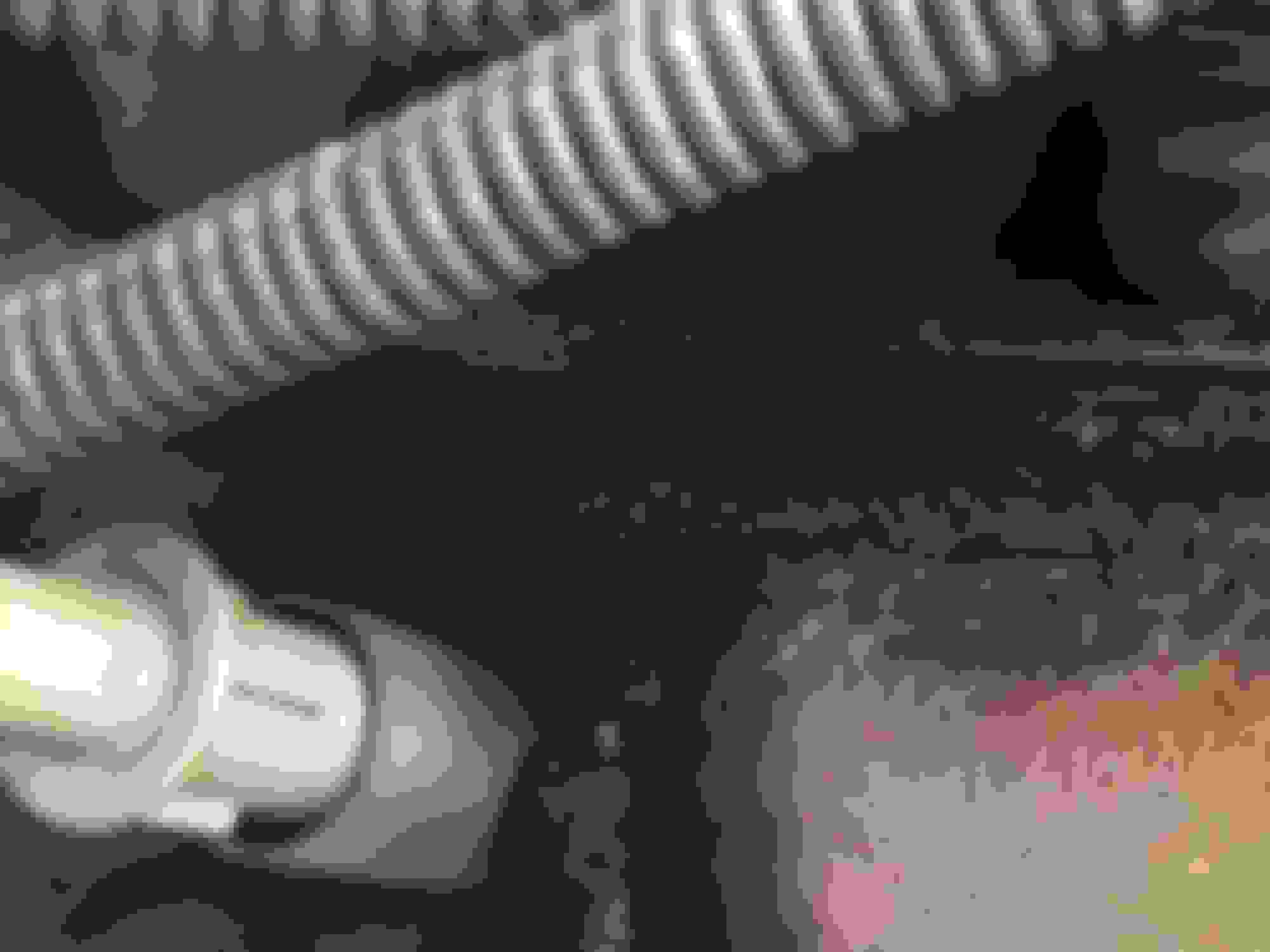
Anyway thought Id give y'all an update instead of making a new thread. Will probably just update this thread with pictures of the old stuff and what I replace on here. I have attached what the gasket looks like at the valve cover. Not pretty at all.





 Just ain't enough room to get everything in there. And getting the pump drive out (goes between oil pump and distributor) is also a major pita. Getting it back in in the right position is another PITA.......