


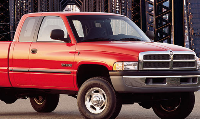
2nd gen. 5.2l ram 1500 - no start - need some help!


Thread Starter
|
Amateur
Joined: Dec 2021
Posts: 25
Likes: 0

in the most simplest terms, feel like it could be related to possible timing or as mentioned earlier (fuel sync). It’s truly troubling that you can no longer trust the quality of replacement components.
this has been a tough one and I hesitate to take it to a mechanic which can turn into the same thing them just thrown parts at it until it’s fixed costing me a fortune. With that said, I really do appreciate the feedback I’m getting here on the forum before I start to lose my direction.
thanks again all.

Grand Champion


Joined: Feb 2015
Posts: 7,435
Likes: 578
cap /rotor with new plugs.
When the cam sensor was replaced this can be done without moving or removing the distributor. IF it was moved or removed the fuel sync needs to be set.
I hesitate to take it to a mechanic which can turn into the same thing them just thrown parts at it until it’s fixed costing me a fortune.
Thread Starter
|
Amateur
Joined: Dec 2021
Posts: 25
Likes: 0
What plugs are you using?
When the cam sensor was replaced this can be done without moving or removing the distributor. IF it was moved or removed the fuel sync needs to be set.
If you take it to a mechanic that has a scanner that reads live data there should be no "guessing" what parts to throw at it. How long has this issue been happening? Is it possible it has bad fuel? Have you tried spraying starting fluid down the throttle body and see what happens?
When the cam sensor was replaced this can be done without moving or removing the distributor. IF it was moved or removed the fuel sync needs to be set.
If you take it to a mechanic that has a scanner that reads live data there should be no "guessing" what parts to throw at it. How long has this issue been happening? Is it possible it has bad fuel? Have you tried spraying starting fluid down the throttle body and see what happens?
Yes, when the cam sensor was replaced the cap/wires were just moved out of the way to install. The distributor was not moved in any way. So unless the replacement cam sensor is defective I think we’re good there.
Agreed, I also thought of bad gas (since the tank was just filled the day before). However, there is NO effort to start utilizing starting fluid. Also, as a precaution added a can of dry gas as well.
Currently, the only scan tool I have access to is one of those Blue Diver. It not been real cooperative in effort to get real time data especially when it only just seems to be cranking. If I do get it to work better or access to another scanner is there something in particular that you would be looking for?
Important note: this is a manual transmission. The reason I bring this up, is there are two different Crank Sensors (one for the manual transmission has a cream colored electrical connector we’re the auto has a black colored).
the first one I purchased was for an auto even though they said it would fit - returned.
purchased a second one (correct for manual) but the wiring color was reversed - didn’t trust, but tried. Didn’t make a difference - trashed.
lastly, I purchased, what I’d call on the expensive side with good reviews even for the manual transmission but returned as it made no difference.
one of the key take always, related to the Crank Sensor, is I’m still unsure what’s correct as what I should see if ohm’d out. I do recall when comparing my original with a new one (can’t remember which one but it was correct for manual) it didn’t seem to match…this was one time I thought I found the problem but, no.
I currently have the original one back in the vehicle. I’m not sure what most people see when these Crank Sensors fail: no spark, intermittent spark, etc. I’d love eliminate this out of the troubleshooting mix but can’t say I’m Comfortable doing so at this point. Would consider purchasing another brand that people suggest or factory if I could truly determine it was bad.
I must continue to say I really appreciate everyone’s time and feedback on this one.


Record Breaker


Joined: Dec 2018
Posts: 1,082
Likes: 170
As for the scan tool question, these older trucks don't volunteer much information over the OBD2 port. Chrysler chose a very slow one wire interface for the required OBD2 functionality and there is another bus (SCI) that is faster and has more functionality. Unfortunately that means you'd need a "shop level" tool as the run of the mill OBD2 readers simply don't talk on that bus. However it sounds your problem is so fundamental that a better scan tool might not help.
If it doesn't even try to start on starting fluid I'd suspect the ignition. Check that the distributor is spinning and double/triple check that the rotor points to the notch when cylinder 1 is at TDC on the compression stroke. That should also get the fuel sync set ballpark within the limits.
If it doesn't even try to start on starting fluid I'd suspect the ignition. Check that the distributor is spinning and double/triple check that the rotor points to the notch when cylinder 1 is at TDC on the compression stroke. That should also get the fuel sync set ballpark within the limits.


Thread Starter
|
Amateur
Joined: Dec 2021
Posts: 25
Likes: 0
As for the scan tool question, these older trucks don't volunteer much information over the OBD2 port. Chrysler chose a very slow one wire interface for the required OBD2 functionality and there is another bus (SCI) that is faster and has more functionality. Unfortunately that means you'd need a "shop level" tool as the run of the mill OBD2 readers simply don't talk on that bus. However it sounds your problem is so fundamental that a better scan tool might not help.
If it doesn't even try to start on starting fluid I'd suspect the ignition. Check that the distributor is spinning and double/triple check that the rotor points to the notch when cylinder 1 is at TDC on the compression stroke. That should also get the fuel sync set ballpark within the limits.
If it doesn't even try to start on starting fluid I'd suspect the ignition. Check that the distributor is spinning and double/triple check that the rotor points to the notch when cylinder 1 is at TDC on the compression stroke. That should also get the fuel sync set ballpark within the limits.
I'm confirm the dist has no movement. I like the idea about checking TDC. Just trying to find some more time and crossing my fingers for a decent day.
 . Thx.