


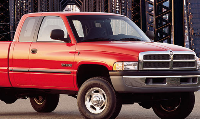
The Saga Of The Red Ram


Record Breaker

Joined: Jun 2011
Posts: 2,387
Likes: 41
From: Bismarck, ND

I kinda read it. Which after finding the specific post still has me wondering why aren't you going with the big mono blade? If you are already opening up the intake for the 52mm why not go even bigger? As rpm increases you need the extra cfm at the throttle body simply because you are moving closer to the sum of all the cylinders together simultaneously. You're trying to feed 408ci now. Also I had an air gap on my 98 up until I sold it, swapped it over to my shelby durango at that time. It was a great intake, except at low rpm high throttle load. It pulled way better on the interstate, 3rd gear 2800rpm 75mph, than the kegger. Just didn't punch off the line as hard at high throttle, which for you won't be an issue with 408ci and a cam. However whenever I get to my wrecked 98 durango project I'm doing the utasome port job and diverter wedge on the kegger. One thing you might want to look into is adding a oil splash guard for the intake. Utasome has one but I'm sure you could make your own. Keeps IAT temps down by keep the bottom of the intake from getting hot oil on it.


Thread Starter
|
Veteran


Joined: Jun 2014
Posts: 412
Likes: 26
I kinda read it. Which after finding the specific post still has me wondering why aren't you going with the big mono blade? If you are already opening up the intake for the 52mm why not go even bigger? As rpm increases you need the extra cfm at the throttle body simply because you are moving closer to the sum of all the cylinders together simultaneously. You're trying to feed 408ci now. Also I had an air gap on my 98 up until I sold it, swapped it over to my shelby durango at that time. It was a great intake, except at low rpm high throttle load. It pulled way better on the interstate, 3rd gear 2800rpm 75mph, than the kegger. Just didn't punch off the line as hard at high throttle, which for you won't be an issue with 408ci and a cam. However whenever I get to my wrecked 98 durango project I'm doing the utasome port job and diverter wedge on the kegger. One thing you might want to look into is adding a oil splash guard for the intake. Utasome has one but I'm sure you could make your own. Keeps IAT temps down by keep the bottom of the intake from getting hot oil on it.
The real answer here is I don't think it's worth the money. That piece of plastic if 600 freaking dollars, which is just ridiculous. A Hi-potek 52 or 53mm is half that cost (still overpriced), and frankly I don't think it's a big bang for the buck in reality. The Keg is going to be the primary flow restriction in this system, so you can get as much flow through the TB as you want, but if it backs up at the runner it doesn't matter. Also, this is a low RPM engine build, 5500 redline and it will rarely see that. Airflow gains are highly RPM dependent, so if I was spinning it up over 6000 on a regular basis, I'd be more concerned about this. I do plan on running a ported TB, but it's going to be the cheapest 52mm/53mm I can find. I might even port it myself.
Thomas Beyer's dyno tests show quite clearly that a magnum making 300 at the tire (about 380 crank) doesn't care at all between a ported 50mm vs 53mm (another video, not the one linked above). My 408 is going to have a fairly mild camshaft, so I don't expect it to make a whole lot more than that, somewhere around 1hp per cubic inch at the crank. Spending 600 dollars for MAYBE a couple numbers at the very tippy top of the RPM band on a non race vehicle doesn't make sense to me.
I do have the diverter and oil splash guard Marty sells, and plan on using them.
Last edited by Skeptic68W; Nov 1, 2024 at 01:05 PM.
Record Breaker
Joined: Jun 2011
Posts: 2,387
Likes: 41
From: Bismarck, ND
Oof, I want to say it was ~$400 for my mono blade a couple years ago, I can see the hesitation. I am interested to see how this plays out. I want to do my 98 durango with a SAS and similar motor setup to what you are doing. I don't know you stock motor's condition or if it was death flashed. Im going to say 187hp, 283ft lbs for the baseline.
Last edited by adukart; Nov 1, 2024 at 02:46 PM.
Thread Starter
|
Veteran
Joined: Jun 2014
Posts: 412
Likes: 26
Oof, I want to say it was ~$400 for my mono blade a couple years ago, I can see the hesitation. I am interested to see how this plays out. I want to do my 98 durango with a SAS and similar motor setup to what you are doing. I don't know you stock motor's condition or if it was death flashed. Im going to say 187hp, 293ft lbs.
No death flash. I've confirmed the timing situation with HP Tuners (made no adjustments, just logging). Condition is pretty good, just has some miles on it. Bore still had visible crosshatch a few years ago when I had the heads off, and it has strong and even compression across all 8. Heads were redone a few years ago with fresh valve job, so that all seals up good too. I expect it to make pretty much what it would have made new, give or take a couple numbers. The main issue that engine has besides just having nearly 200k on it, is a scored up crank. It hurt a rod bearing some time back and developd a small knock. I swapped in a used bearing to limp by for a while, so it runs fine, but it does need taken care of.

Grand Champion

Joined: May 2019
Posts: 5,172
Likes: 724
From: S.W. Indiana
Hughes jumped their price on the big gulps by a lot too. I'm hoping to convinced Thomas to machine mine for me, we will see what he says.
No death flash. I've confirmed the timing situation with HP Tuners (made no adjustments, just logging). Condition is pretty good, just has some miles on it. Bore still had visible crosshatch a few years ago when I had the heads off, and it has strong and even compression across all 8. Heads were redone a few years ago with fresh valve job, so that all seals up good too. I expect it to make pretty much what it would have made new, give or take a couple numbers. The main issue that engine has besides just having nearly 200k on it, is a scored up crank. It hurt a rod bearing some time back and developd a small knock. I swapped in a used bearing to limp by for a while, so it runs fine, but it does need taken care of.
No death flash. I've confirmed the timing situation with HP Tuners (made no adjustments, just logging). Condition is pretty good, just has some miles on it. Bore still had visible crosshatch a few years ago when I had the heads off, and it has strong and even compression across all 8. Heads were redone a few years ago with fresh valve job, so that all seals up good too. I expect it to make pretty much what it would have made new, give or take a couple numbers. The main issue that engine has besides just having nearly 200k on it, is a scored up crank. It hurt a rod bearing some time back and developd a small knock. I swapped in a used bearing to limp by for a while, so it runs fine, but it does need taken care of.
I put the Hughs kit on my '96 last year but looking at it, I could have reused my stock plenum plate with a good gasket and proper torquing on the bolts. Some were so tight I had to use a cheater pipe to get them loose and others I unbolted with my fingers. I try to stay in shape, but I'm not all THAT strong. Maybe even make a bracing bar to go long the edges.

Grand Champion


Joined: Feb 2015
Posts: 7,435
Likes: 578
I'm a bit confused why you are spending $$$ on the bottom end and leaving the top end basically stock? If you were building 400 big block would you put a 2bbl on or a 4bbl? Of course carbs/intakes are a lot cheaper for that then a magnum but you get the point. Sure better breathing will benefit the top end but will also help along the other rpm range.True duel exhaust or single? Same breathing scenario. Engine Masters did an episode on a Magnum with the kegger mod kit you can get from Utawesome. It made more power through out the whole rpm band over the stock kegger. Of course they start at 3K so you can't see what it does below that.

Administrator


Joined: Apr 2010
Posts: 87,548
Likes: 4,230
From: Clayton MI
I'm a bit confused why you are spending $$$ on the bottom end and leaving the top end basically stock? If you were building 400 big block would you put a 2bbl on or a 4bbl? Of course carbs/intakes are a lot cheaper for that then a magnum but you get the point. Sure better breathing will benefit the top end but will also help along the other rpm range.True duel exhaust or single? Same breathing scenario. Engine Masters did an episode on a Magnum with the kegger mod kit you can get from Utawesome. It made more power through out the whole rpm band over the stock kegger. Of course they start at 3K so you can't see what it does below that.
Thread Starter
|
Veteran
Joined: Jun 2014
Posts: 412
Likes: 26
I'm a bit confused why you are spending $$$ on the bottom end and leaving the top end basically stock? If you were building 400 big block would you put a 2bbl on or a 4bbl? Of course carbs/intakes are a lot cheaper for that then a magnum but you get the point. Sure better breathing will benefit the top end but will also help along the other rpm range.True duel exhaust or single? Same breathing scenario. Engine Masters did an episode on a Magnum with the kegger mod kit you can get from Utawesome. It made more power through out the whole rpm band over the stock kegger. Of course they start at 3K so you can't see what it does below that.
There are a couple of points I want to make about this.
The first is one that Heyyou touched on briefly, which is the purpose of the vehicle. This is a full size, quad cab, 4x4 truck that will be mostly a nice daily driver and occassionally tow things. It did both of those things reasonably well in stock form. However, what bothered me about it's stock performance was the abysmal passing power, so I am setting out to solve that problem while not giving up it's good qualities. The purpose is not to hit a certain power number, achieve a certain ET in the 1/4, or make the fastest truck on the block. These alternative goals, which just so happen to be the standard vision in hot rod land and one we've all been conditioned to think are right for every build, have major tradeoffs in cost, driveability, servicability, etc. There's a reason the OEMs don't build truck engines with 280@.050" cams, short intake runners, and super high compression. Because the use case for most vehicles has vastly different priorities. The goal of this project from my perspective is to build a vehicle that for all intents and purposes runs like an OE designed engine, but with considerably more grunt. Notice I didn't say maximized grunt. I want as much power as I can achieve, in the intended operating range, and without any of those particular tradeoffs that an OEM wouldn't make. I want the engine to live a very long service life, be dead nuts reliable and easy to service. Lets take camshafts for example. Especially with a 4" crank and eddy heads, I'm leaving a TON of peak hp on the table running such a mild camshaft (~220@.050). For the exact same money I am spending on this cam, I could have a much more radical camshaft made and easily be able to make 50+ additional numbers on the dyno. However, what do I have to trade in order to do that? Here is just one example:
Past a certain point, every degree of duration you add to a camshaft adds valve overlap. Overlap under 40* (using .006" numbers) will essentially operate like stock, and in fact the stock camshaft has roughly 40* of overlap. My selected camshaft will have around 42*, so damn near factory, but with 30* more duration and a .150" more lift. The maintenance of low overlap is accomplished by spreading the lobe separation. That means it's going to have good idle quality, high vacuum to run all the accessories, and it's not going to bleed a bunch of cylinder pressure. As that overlap goes up (and intake valve closing gets later) cylinder pressure falls, which directly reduces low speed torque production in a big way. This is why you hear people say you need to run a bigger converter with a bigger camshaft(bigger in camshaft land means more duration, not lift). It's because that lower cylinder pressure makes the engine run like **** at low RPMs and you need the converter to flash up and get into the operating range where it runs well to get moving. I did this on a camaro about 10 years ago, and let me tell you, even a relatively mild aftermarket converter (2800 stall speed) is MISERABLE in daily driver traffic. You have to dig deep into the pedal to get the thing moving, it feels like the transmission is slipping all the time, fuel economy goes to ****, it generates a ton of heat which cooks trans parts, and good luck towing something with that, it's going to suck. I'm not willing to make this trade, so my camshaft specs stay mild. I very specifically pushed the limits with the camshaft to maximize what I can get out of it...while maintaining that boundary with driveability.
You think I'm nuts on the intake side, you'll love this. The engine is going to wear stock cast iron exhaust manifolds. Why? Because headers leak, the thin wall of the tubing allows for a lot of audible valve clatter that I dislike (I've had headers on the truck before), and yet again...they're expensive. By the time I buy headers and a matching y pipe, I'm out up near a grand in cost and what exactly did I buy? Well...with a camshaft that has near stock overlap, not much, because headers primarily add power through scavenging during the overlap period.
Believe it or not, I've given this whole deal quite a hell of a lot of thought before dumping thousands of dollars into it. I think for what it is, and what I will have spent when it's all said and done, I'll be quite proud of the results.
Last edited by Skeptic68W; Nov 4, 2024 at 02:42 PM.
Administrator
Joined: Apr 2010
Posts: 87,548
Likes: 4,230
From: Clayton MI
I went with some inexpensive stainless shorties, and dead-soft aluminum gaskets. They don't leak, bolt directly to the stock y-pipe, add a bit of power, certainly better flow...... and the last set lasted almost 15 years.... (not sure exactly, as they were on the truck when I got on, and the receipt for them was several years prior to when I bought it.)
And yep, you can have the power in the bottom end, or up top, depends on what you want, and what you plan to do with the vehicle, for a truck, bottom end is where it's at, especially if you want to use it AS a truck. Cams for low-end torque tend to run out of breath over around 4500 or so, though I have seen them run as high as 5K.... but, the kegger itself runs out of breath around 4500 or so, so, matching a cam to that? Yep. Good plan.
And yep, you can have the power in the bottom end, or up top, depends on what you want, and what you plan to do with the vehicle, for a truck, bottom end is where it's at, especially if you want to use it AS a truck. Cams for low-end torque tend to run out of breath over around 4500 or so, though I have seen them run as high as 5K.... but, the kegger itself runs out of breath around 4500 or so, so, matching a cam to that? Yep. Good plan.
Thread Starter
|
Veteran
Joined: Jun 2014
Posts: 412
Likes: 26
I went with some inexpensive stainless shorties, and dead-soft aluminum gaskets. They don't leak, bolt directly to the stock y-pipe, add a bit of power, certainly better flow...... and the last set lasted almost 15 years.... (not sure exactly, as they were on the truck when I got on, and the receipt for them was several years prior to when I bought it.)
And yep, you can have the power in the bottom end, or up top, depends on what you want, and what you plan to do with the vehicle, for a truck, bottom end is where it's at, especially if you want to use it AS a truck. Cams for low-end torque tend to run out of breath over around 4500 or so, though I have seen them run as high as 5K.... but, the kegger itself runs out of breath around 4500 or so, so, matching a cam to that? Yep. Good plan.
And yep, you can have the power in the bottom end, or up top, depends on what you want, and what you plan to do with the vehicle, for a truck, bottom end is where it's at, especially if you want to use it AS a truck. Cams for low-end torque tend to run out of breath over around 4500 or so, though I have seen them run as high as 5K.... but, the kegger itself runs out of breath around 4500 or so, so, matching a cam to that? Yep. Good plan.