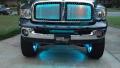
LED floor lights.........


I see what your saying. calculating the actual capacity and carrying current shouldn't be that hard....this is first semester stuff 
Secondly, using LED's I'd be surprised to come anywhere even close to adding another 1A to the circuit as a whole.
Third, I'll be replacing the dome light itself with an LED bulb, and the map lights with LED festoon bulbs.
The addition of extra LED's to the trucks wiring could help add the load needed for the system to work without giving me a "Lamp Out" warning, and without having to buy/add another resistor to the circuit.
However, I don't disagree, using a relay may very well be the way to go.
EDIT
Each LED I have 20mA, so every 5 would add an amp.
Secondly, using LED's I'd be surprised to come anywhere even close to adding another 1A to the circuit as a whole.
Third, I'll be replacing the dome light itself with an LED bulb, and the map lights with LED festoon bulbs.
The addition of extra LED's to the trucks wiring could help add the load needed for the system to work without giving me a "Lamp Out" warning, and without having to buy/add another resistor to the circuit.
However, I don't disagree, using a relay may very well be the way to go.
EDIT
Each LED I have 20mA, so every 5 would add an amp.
Last edited by GRNDPNDR; Nov 12, 2012 at 08:57 AM.

Champion
Joined: Aug 2006
Posts: 4,489
Likes: 4
From: New Jersey
Compensate for the length & size of wiring too, that adds negligible resistance but that existing circuit is designed for whats there, if you're replacing everything with LEDs you'll see a reduced draw, but I still wouldn't tap into the circuit to do anything except drive a Relay, but that's just me being **** about wiring.
Copper wire adds about 1ohm per 50-100ft depending on gauge.
10A might be serious overkill, but electronic relay's can be found in the 5A range, with a very low holding current and silent operation.
I may just build a box to allow me to plug lights in as needed, it would be simple and I have most of the parts. I'd half consider even throwing an Arduino in there to make the lights do various things.
10A might be serious overkill, but electronic relay's can be found in the 5A range, with a very low holding current and silent operation.
I may just build a box to allow me to plug lights in as needed, it would be simple and I have most of the parts. I'd half consider even throwing an Arduino in there to make the lights do various things.
Champion
Joined: Aug 2006
Posts: 4,489
Likes: 4
From: New Jersey
then what I would do is build yourself a relay and distribution block, where you run a fuse and a 4 AWG wire, then run a set of relays in series (or parallel depending on how you want it to work) with a switch hooked to the on/off of each relay, now you've effectively made a power distribution block that you can run everything from.
but remember to use a correctly sized fuse for each relay-ed circuit so you keep safety up there...
I would probably suggest just buying something that is already setup for this though as DIY style stuff can get very messy very quick....
http://www.ebay.com/itm/4-Way-Splash...-/170659276225
^ Something like that can help you keep it pretty neat and clean, and you can set it up with a power distribution block and a main fuse, plus a fuse after the relays for each circuit, to protect your electronics.
That's just how I would personally do it, and actually I will be using a relay holder like that one to wire up some aux lights that should be coming in today!
but remember to use a correctly sized fuse for each relay-ed circuit so you keep safety up there...
I would probably suggest just buying something that is already setup for this though as DIY style stuff can get very messy very quick....
http://www.ebay.com/itm/4-Way-Splash...-/170659276225
^ Something like that can help you keep it pretty neat and clean, and you can set it up with a power distribution block and a main fuse, plus a fuse after the relays for each circuit, to protect your electronics.
That's just how I would personally do it, and actually I will be using a relay holder like that one to wire up some aux lights that should be coming in today!
then what I would do is build yourself a relay and distribution block, where you run a fuse and a 4 AWG wire, then run a set of relays in series (or parallel depending on how you want it to work) with a switch hooked to the on/off of each relay, now you've effectively made a power distribution block that you can run everything from.
but remember to use a correctly sized fuse for each relay-ed circuit so you keep safety up there...
I would probably suggest just buying something that is already setup for this though as DIY style stuff can get very messy very quick....
http://www.ebay.com/itm/4-Way-Splash...-/170659276225
^ Something like that can help you keep it pretty neat and clean, and you can set it up with a power distribution block and a main fuse, plus a fuse after the relays for each circuit, to protect your electronics.
That's just how I would personally do it, and actually I will be using a relay holder like that one to wire up some aux lights that should be coming in today!
but remember to use a correctly sized fuse for each relay-ed circuit so you keep safety up there...
I would probably suggest just buying something that is already setup for this though as DIY style stuff can get very messy very quick....
http://www.ebay.com/itm/4-Way-Splash...-/170659276225
^ Something like that can help you keep it pretty neat and clean, and you can set it up with a power distribution block and a main fuse, plus a fuse after the relays for each circuit, to protect your electronics.
That's just how I would personally do it, and actually I will be using a relay holder like that one to wire up some aux lights that should be coming in today!
and I only say that because I can do the same thing, on a much smaller scale electronically, for about $25 or less in total.
I have a couple of small electronic reed relay's lying around already, I'd just need a project box, a bare PCB, and whatever else I decide to add to it
Like I mentioned, I'm considering building a box with a micro-controller to make the lights actually do something, possibly even sound to light for the hell of it.
as it is right now I'm just figuring out where/how I would like to add some other LED's, like cup holder lights. But that looks to be a bit differently done on the 2002 than on the later model as shown in the thread here.
Champion
Joined: Aug 2006
Posts: 4,489
Likes: 4
From: New Jersey
Good Luck, I made one of those sound activated controllers a few years back, getting the programming right was a real pain, too much coding for my taste, but that what the customer wanted so that's what he got...
I used an Aux Input from a set of outputs that I tapped in to on the car's stereo to control the sequence.
As for building your own Relay & Fuseblock into one, that's the easy part, just make sure you use sealed relays (at least 30A rated), I've seen a lot of people blow relays up b/c they use relays for indoor/in-cabin electronics but mount them in the engine bay.
If you really want a challenge I would suggest using a PLC type controller with "Electronic" relays and fuses. Like this:
http://www.performance-electronics.com/relay-board/
I made one of those in the past too, thing worked AWESOME!
Had to make my own plastic case for it though, but that was the easy part.
It had 10 Switches and was for a Formula SAE car for the team I helped start at my school. Controlled the following:
Brake Light, Fuel Pump (on/off only), Main Battery Power (on/off), Starter Motor, Radiator Fan, etc.
It worked great, I should make a smaller one for the truck one day will save me tons of time with wiring down the road.
I used an Aux Input from a set of outputs that I tapped in to on the car's stereo to control the sequence.
As for building your own Relay & Fuseblock into one, that's the easy part, just make sure you use sealed relays (at least 30A rated), I've seen a lot of people blow relays up b/c they use relays for indoor/in-cabin electronics but mount them in the engine bay.
If you really want a challenge I would suggest using a PLC type controller with "Electronic" relays and fuses. Like this:
http://www.performance-electronics.com/relay-board/
I made one of those in the past too, thing worked AWESOME!
Had to make my own plastic case for it though, but that was the easy part.
It had 10 Switches and was for a Formula SAE car for the team I helped start at my school. Controlled the following:
Brake Light, Fuel Pump (on/off only), Main Battery Power (on/off), Starter Motor, Radiator Fan, etc.
It worked great, I should make a smaller one for the truck one day will save me tons of time with wiring down the road.
Good Luck, I made one of those sound activated controllers a few years back, getting the programming right was a real pain, too much coding for my taste, but that what the customer wanted so that's what he got...
I used an Aux Input from a set of outputs that I tapped in to on the car's stereo to control the sequence.
As for building your own Relay & Fuseblock into one, that's the easy part, just make sure you use sealed relays (at least 30A rated), I've seen a lot of people blow relays up b/c they use relays for indoor/in-cabin electronics but mount them in the engine bay.
If you really want a challenge I would suggest using a PLC type controller with "Electronic" relays and fuses. Like this:
http://www.performance-electronics.com/relay-board/
I made one of those in the past too, thing worked AWESOME!
Had to make my own plastic case for it though, but that was the easy part.
It had 10 Switches and was for a Formula SAE car for the team I helped start at my school. Controlled the following:
Brake Light, Fuel Pump (on/off only), Main Battery Power (on/off), Starter Motor, Radiator Fan, etc.
It worked great, I should make a smaller one for the truck one day will save me tons of time with wiring down the road.
I used an Aux Input from a set of outputs that I tapped in to on the car's stereo to control the sequence.
As for building your own Relay & Fuseblock into one, that's the easy part, just make sure you use sealed relays (at least 30A rated), I've seen a lot of people blow relays up b/c they use relays for indoor/in-cabin electronics but mount them in the engine bay.
If you really want a challenge I would suggest using a PLC type controller with "Electronic" relays and fuses. Like this:
http://www.performance-electronics.com/relay-board/
I made one of those in the past too, thing worked AWESOME!
Had to make my own plastic case for it though, but that was the easy part.
It had 10 Switches and was for a Formula SAE car for the team I helped start at my school. Controlled the following:
Brake Light, Fuel Pump (on/off only), Main Battery Power (on/off), Starter Motor, Radiator Fan, etc.
It worked great, I should make a smaller one for the truck one day will save me tons of time with wiring down the road.
I'd use electronics to build my box, but it would be mounted inside, under the dash not in the engine bay, thus using electronics to save space.
I've done a fair bit of programming in the past.... I'm no expert by a long shot, but have a fairly good understanding. I'm using a microcontroller now for a school project so I just like to use what I've learned....
All very good ideas none-the-less, even though the topic has drifted from simple floor lighting into engineering light controllers and circuits in the truck
 .
.
Champion
Joined: Aug 2006
Posts: 4,489
Likes: 4
From: New Jersey
yeah that tends to happen... lol
I would avoid putting relays inside the cab, there are limited places to run wiring unless you are only using them for things that will be installed inside the cab, then it makes sense....
You can also save yourself some time and money by using DPDT Relays instead of SPST Relays, but it will also depend on what the amperage draw will be for each circuit.
I would avoid putting relays inside the cab, there are limited places to run wiring unless you are only using them for things that will be installed inside the cab, then it makes sense....
You can also save yourself some time and money by using DPDT Relays instead of SPST Relays, but it will also depend on what the amperage draw will be for each circuit.
yeah that tends to happen... lol
I would avoid putting relays inside the cab, there are limited places to run wiring unless you are only using them for things that will be installed inside the cab, then it makes sense....
You can also save yourself some time and money by using DPDT Relays instead of SPST Relays, but it will also depend on what the amperage draw will be for each circuit.
I would avoid putting relays inside the cab, there are limited places to run wiring unless you are only using them for things that will be installed inside the cab, then it makes sense....
You can also save yourself some time and money by using DPDT Relays instead of SPST Relays, but it will also depend on what the amperage draw will be for each circuit.
This stuff is no challenge for me. If I built such a box it would be only for interior lights anyway, and electronic relay's are tiny. I don't know if you've seen what I'm talking about, but they are barely 1/2" long, and 1/4" wide.
The entire circuit I speak of could fit nicely into a roughly 4"x4" project box........
And then I found this. pretty handy for STL but would still require my own relay's as an addon if I were building a "complete control box"
http://www.oznium.com/make-leds-flash-to-music
I just ordered all my light replacements from superbrightleds. Drop in replacements for all of the interior lights including the gauges.....as long as the threads here were accurate and I got the right ones.
So this will cover everything in the cab as far as stock lighting. I'm going to look at converting my window/lock switches to blue also, I just haven't gotten in there yet.
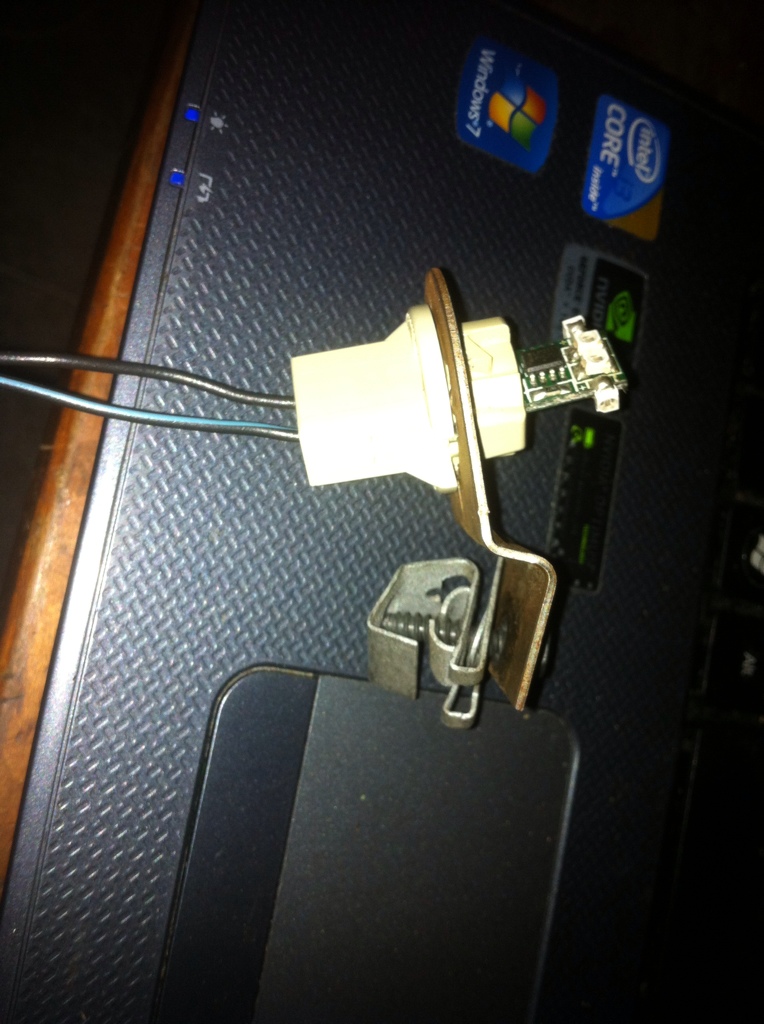
This weekend I will put the brackets I pulled from my cougar, into my truck so I can have proper floor lights. I'll just need to drill one single hole in a good location.
Two of these.