


Time to switch oils


 Time to switch oils
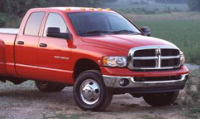
Well, my truck which I took delivery of on April 30, is at the 15,000 mile mark now. I have used Penzoil 10w-40 in it since day one. Now it will have Amsoil 5w-20 in it from here on out, with Mobil1 filters every 3000 miles. I fortunately have access to a state of the art oil analysis lab at work, so, lets see just how long this goes before it REALLY needs to be changed.

Record Breaker
Joined: Feb 2005
Posts: 2,192
Likes: 0
From:
RE: Time to switch oils
Cool, keep us updated.
Any reason why you used 10w40 for the first 15K miles? That is definitely not the *recommended* oil to use in your truck. As for me, mine is getting a steady diet of Castrol Syntec Blend with a Fram Tough Guard (the only Fram worth a damn) filter changed every 3K miles. Hope to change over to Mobil 1 at 15K miles. I'm right at 12K now and due for another, probably by the end of the month.
Any reason why you used 10w40 for the first 15K miles? That is definitely not the *recommended* oil to use in your truck. As for me, mine is getting a steady diet of Castrol Syntec Blend with a Fram Tough Guard (the only Fram worth a damn) filter changed every 3K miles. Hope to change over to Mobil 1 at 15K miles. I'm right at 12K now and due for another, probably by the end of the month.


Record Breaker
Joined: Feb 2005
Posts: 2,192
Likes: 0
From:
RE: Time to switch oils
How did the filter fail?
These filters are generally well made with a metal end cap, semisynthetic filter media, and silicone antidrain back valve. More than I can say for the rest of thier line.
These filters are generally well made with a metal end cap, semisynthetic filter media, and silicone antidrain back valve. More than I can say for the rest of thier line.
RE: Time to switch oils
I ran the 10w40 for the first 15k miles simply because that is what I have run in all my vehicles for years, and due to the everyday long distance driving (84 miles round trip each day) and the change frequency (2500miles), I felt it would be best for the break in.
Yes, I know, their made better now, and tighter tolerances, but old school wisdom still prevails. I guess I'm one of a dying breed. I want to replace my ATF+4 in the transfer case and trasnmission with NEO 75-90 synthetic too, but the jury is still out concerning that. It will definitely be going into the differentials when spring is here, too damn cold now!!! Supposed to be down to zero tonight. I run only MObil1 oil filters.
Yes, I know, their made better now, and tighter tolerances, but old school wisdom still prevails. I guess I'm one of a dying breed. I want to replace my ATF+4 in the transfer case and trasnmission with NEO 75-90 synthetic too, but the jury is still out concerning that. It will definitely be going into the differentials when spring is here, too damn cold now!!! Supposed to be down to zero tonight. I run only MObil1 oil filters.
Trending Topics

Veteran
Joined: Feb 2005
Posts: 389
Likes: 0
From:
RE: Time to switch oils
According to what I've read the reason most manufactures specifically say NOT to use 10w40 is because anything over 30wt is not required to contain the same level of friction modifiers and is not energy conserving certified by the A.P.I. It is A.P.I certified, but without the energy conserving label. Is it possible some old school wisdom is replaced by better wisdom?

Record Breaker
Joined: Sep 2004
Posts: 1,750
Likes: 0
RE: Time to switch oils
Fram tough gaurd stats and pics. If you look close they do in deed have cardcoard endcaps. The FRAM XG is the only Fram filter with synth. filter media and metal end caps.
o Cost $4.95 -- Advanced Auto
o ADBV material: Silicon
o Spring type: leaf
o Baseplate hole area: 0.227 sq/in
o Filter area: 274 sq/in; 46 pleats
o Center tube hole area: 1.26 sq/in
o Total Weight: 400 grams
o Filter and endcaps weight: 3 oz
o Average largest pore size: 41 µm
o Smallest pore size: 15 µm
o 30W 70F Oil flow @ 10psi: 5.7 fl. oz per minute
Summary
Excellent filtration capability; Lower than average flow; sub average construction.
Details
In the bubble test, it yielded results that were just as good or better than the PurolatorOne media regarding average largest pore size.
The Fram TG filter shares the smallest baseplate hole area as its brother, the Fram EG, at 0.227 sq/in. This is one of the few filters that has the silicon ADBV. However, the silicon ADBV in the Fram TG was much thinner than the WIX valve. Silicon is supposed to be less prone to harden after being subject to long exposure to hot oil.
Here is a picture of the baseplate and silicon ADBV.
The differences between this filter and the lower priced Fram EG is the silicon ADBV, 10 more pleats, 90 sq/in more filter area, and a slightly thicker filter material. The filter media was much more effective in the bubble testing than the Fram EG.
The other similar design the TG has with the EG is that it has cardboard or paper endcaps with an open hole on the bottom. The leaf spring plugs this hole.
Here is the leaf spring shown with the circular form to plug the bottom endcap hole and then the leaf spring plugging the endcap hole.
Here is the inside canister showing the hole size and pattern.
Information provided by Fram:
micron rating = PH5 and TG5 are nominal 10 micron
flow rating = PH5 & TG5 have a flow rate of 3 GPM
efficiency rating = PH5 (96% Single Pass Efficiency) & TG5 (98% SPE
[IMG]local://upfiles/8070/74A01521BE2049909A19A60E9A4799E6.jpg[/IMG]
[IMG]local://upfiles/8070/170FDB1AFA83468C96EF83632A012A60.jpg[/IMG]
[IMG]local://upfiles/8070/962AF21BD1BE4CB0BD2961EFF8000EFA.jpg[/IMG]
[IMG]local://upfiles/8070/359975173BA64FBD9FC85C1F500046D4.jpg[/IMG]
o Cost $4.95 -- Advanced Auto
o ADBV material: Silicon
o Spring type: leaf
o Baseplate hole area: 0.227 sq/in
o Filter area: 274 sq/in; 46 pleats
o Center tube hole area: 1.26 sq/in
o Total Weight: 400 grams
o Filter and endcaps weight: 3 oz
o Average largest pore size: 41 µm
o Smallest pore size: 15 µm
o 30W 70F Oil flow @ 10psi: 5.7 fl. oz per minute
Summary
Excellent filtration capability; Lower than average flow; sub average construction.
Details
In the bubble test, it yielded results that were just as good or better than the PurolatorOne media regarding average largest pore size.
The Fram TG filter shares the smallest baseplate hole area as its brother, the Fram EG, at 0.227 sq/in. This is one of the few filters that has the silicon ADBV. However, the silicon ADBV in the Fram TG was much thinner than the WIX valve. Silicon is supposed to be less prone to harden after being subject to long exposure to hot oil.
Here is a picture of the baseplate and silicon ADBV.
The differences between this filter and the lower priced Fram EG is the silicon ADBV, 10 more pleats, 90 sq/in more filter area, and a slightly thicker filter material. The filter media was much more effective in the bubble testing than the Fram EG.
The other similar design the TG has with the EG is that it has cardboard or paper endcaps with an open hole on the bottom. The leaf spring plugs this hole.
Here is the leaf spring shown with the circular form to plug the bottom endcap hole and then the leaf spring plugging the endcap hole.
Here is the inside canister showing the hole size and pattern.
Information provided by Fram:
micron rating = PH5 and TG5 are nominal 10 micron
flow rating = PH5 & TG5 have a flow rate of 3 GPM
efficiency rating = PH5 (96% Single Pass Efficiency) & TG5 (98% SPE
[IMG]local://upfiles/8070/74A01521BE2049909A19A60E9A4799E6.jpg[/IMG]
[IMG]local://upfiles/8070/170FDB1AFA83468C96EF83632A012A60.jpg[/IMG]
[IMG]local://upfiles/8070/962AF21BD1BE4CB0BD2961EFF8000EFA.jpg[/IMG]
[IMG]local://upfiles/8070/359975173BA64FBD9FC85C1F500046D4.jpg[/IMG]
