


Ride along with me...


Thread Starter
|
Captain

Joined: Oct 2005
Posts: 568
Likes: 8
From: The Summit, Queensland, Australia

I had planned to go to Sydney at the first opportunity I had from the middle of March. It was appropriate that I would have my weekend work somewhere along the path on the way down and then again on the way back, and I had that all arranged.
The plan was to take a spare A833 in case things didn’t work out – or to instal if the one in the van failed on the way – and to use the facilities at Bob Britton’s place to do the fabrication necessary to make the installation of the NV4500 work.
It was a matter of the greatest good fortune that this wasn’t to happen. The Coronavirus issue was starting to hit all around the world and our Prime Minister labelled it a ‘pandemic’ before anyone else. Suddenly, as a few Australians returning from overseas or stepping off cruise ships started to get very ill and die, he announced plans to put everything on hold.
My work ceased. “Send back your computer and other gear...” came the instructions. Financial packages were quickly made available to those in a position like me and much of the country went onto welfare payments. For this reason this post is largely restricted to mechanical things, but other people do come into it, some of whom we haven’t seen before.
Travel more than a few miles from home was severely restricted and the most curious things began happening…
Just as I was getting into the swing of things with the Men’s Shed, it closed too. It would not re-open for a couple of months.
So I got on with the job of making the most of what gear I had at home to do jobs relating to the conversion. And other projects. And the first thing I had to create was a proper workbench in a covered area just outside the kitchen window, built out of the steel frame of a table I had been using with additions coming from old shop shelving and assorted things I had lying around.
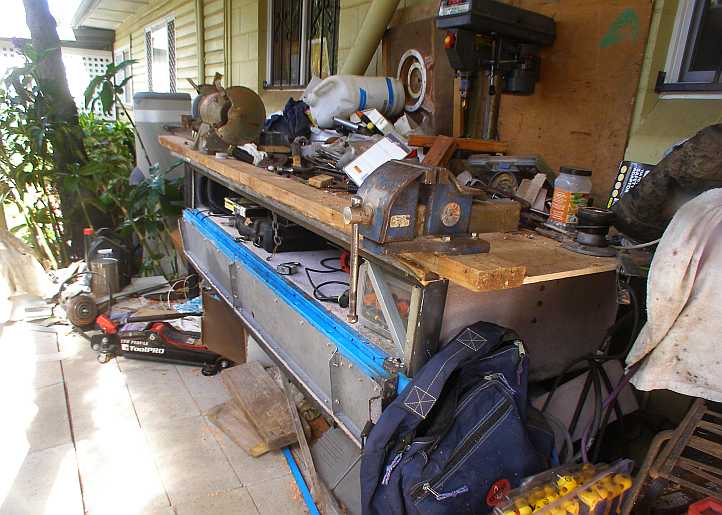
Home workshop bench. The need to carry on preparing things for the gearbox conversion led to me spending time creating this workbench and its lockable compartment for power tools.
I built in a locker beneath the front of the bench so I could secure power tools etc when I wasn’t home.
There was a lot to be done, but not everything could be satisfactorily done with my level of equipment. Of course, some things could be done at Ben’s workshop and one of the first was a little job just ensuring that the gearbox would have the best chance possible of being mounted correctly.
Sandra’s car had a head gasket which was weeping coolant out the side. It was running fine, of course, but losing coolant. Discussions with Ben established that it needed a newer type of gasket and it was at this time that Sandra decided that she didn’t trust me to do the job. Nevertheless, I acquired another head and arranged for Ben to recondition it ready for the job to be done. So the bellhousing went with me to Ben’s workshop for a quick grinding to ensure front and rear surfaces were parallel:
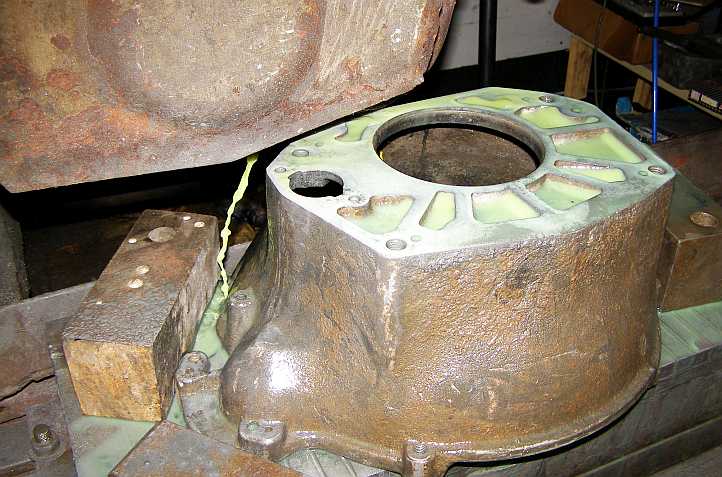
Machining bellhousing surface. Ben’s grinder made short work of doing this job, and doing it well.
While Ben was getting the head ready I used his cut-off saw to take the rear main journal and flywheel flange off a 318 crank which had a nasty dent in one of the journals from where a rod came apart:
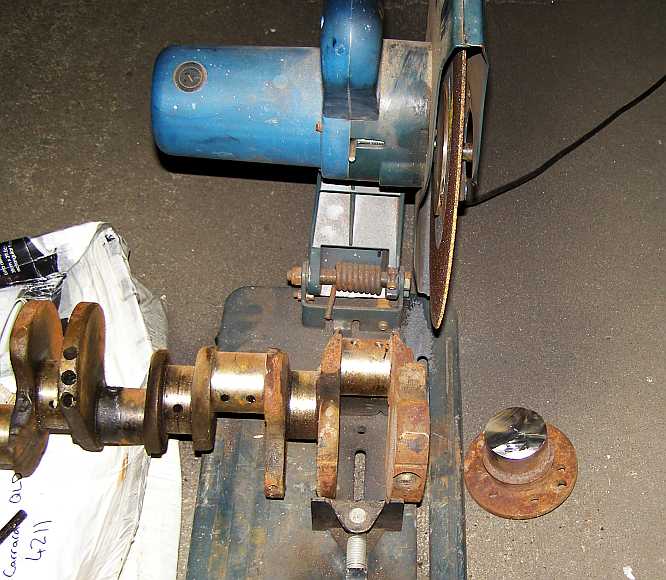
Giving the crank the chop. This crankshaft was damaged so making a part of it into a useful took was worthwhile.
The purpose of this was that I’d be using it as a mount to put a flywheel in a lathe – but that’s really a part of another project. I left Ben’s that evening with the head and the machined bellhousing and took it all home so the man Sandra had chosen to pay money to do the gasket would have the head there ready to go. The idea was that he could then do the job in one day without having to send the head away to be reconditioned.
But he finished up letting us down, of course, and had the car for two days anyway.
There were still some serious travel restrictions in place, crossing borders between states was difficult for most. But Bruce Ayers could do it and travelled through to his home in Brisbane with a truckload of his father’s old race car. He’d just purchased it back from the people who bought it back in the seventies.
On the way he called in on Bob Britton and, without reference to me, between then they decided that my new gearbox could accompany the race car home and I’d be able to pick it up from his place. So I now had the NV4500 in front of me and could more accurately assess what was required to fit it to the van.
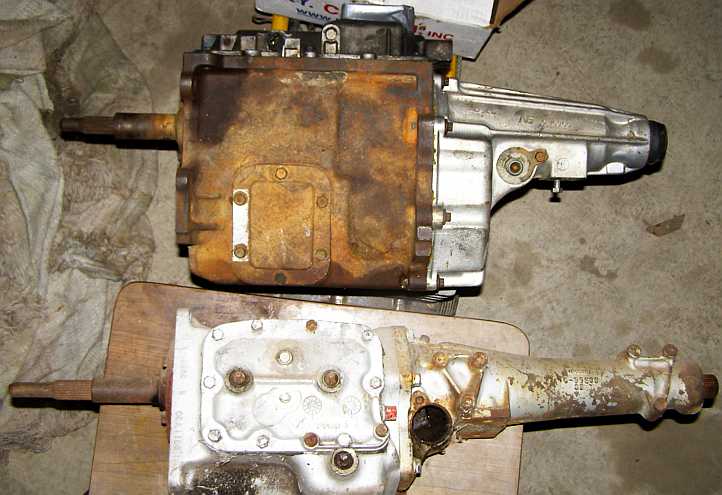
NV4500 versus A833. Once I could put the gearboxes side by side I was able to get a better idea of how big the job was.
I just kept looking at all the little jobs to be done and tried to attack them as I could. Realising that my plans for the conversion box I was making to enable the fitment of the clutch master cylinder included using two of the studs with which the driver’s seat was secured, I had to make some longer ones. And with lengthy threads required, I needed to get the threads started straight.
At this point I was in conversation with a very clever local enthusiast named Stuart Cornford, who got involved in all sorts of work rebuilding vintage cars. When I first went to see him he was making a replacement crankcase for a C-model Ford (about 1904 model single-cylinder):
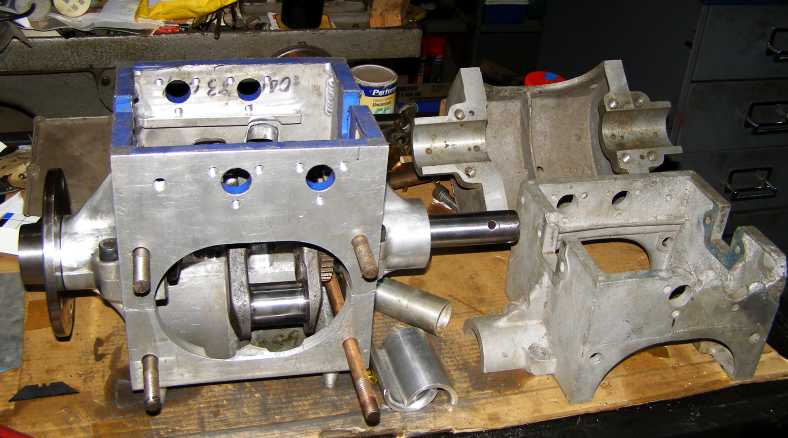
Replacement for Henry’s casting. The original crankcase was over a hundred years old, so it was reasonable to replace it with a new fabrication.
As I talked to him about this he suggested he could help by using his Coventry Die-Chaser to cut the thread. I bought the necessary 7/16” UNC bolts and he would start the 7/16” UNF threads on the other end once I’d removed the bolts’ heads…
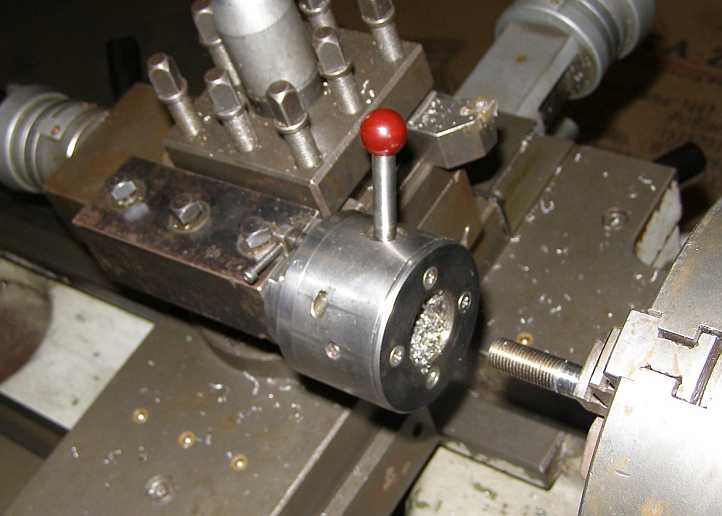
Die-chaser is quick! An accurately-cut new thread put into the stud was what I wanted, and I got it very quickly.
…and so another job was done. Just a little job, but the whole project is made up of lots and lots of little jobs. And while looking over the ‘little jobs’ I noticed that I’d been sent the wrong clutch plate and throwout bearing:
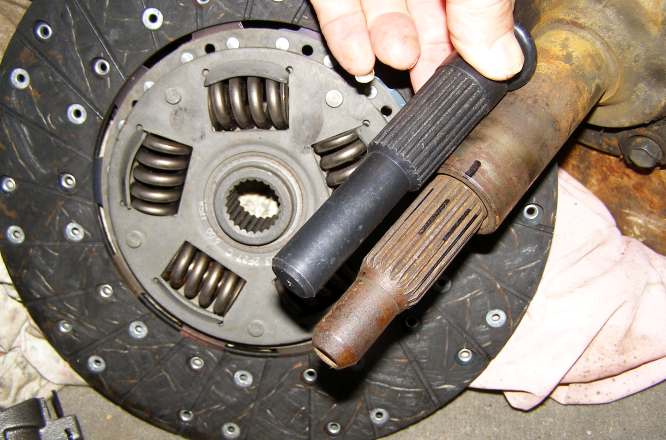
Wrong spline. More mistakes. I was sent the wrong clutch plate and throwout bearing and had to get fresh ones sent from the US.
That week I had a call from my cousin, Graham. “Gregory has passed away…” was the bad news. Gregory was his younger brother, just 68, and was living in Warwick. But all of his family, his children and grandchildren, lived in or near Taree. Fortunately the borders had opened up now and I planned a trip for his funeral. Naturally, I would go on to Sydney to see Bob Britton while I was there.
I arrived at the cemetery quite early, having slept in the Forester on the way down, and saw that the gravediggers had been doing their job. Greg was being buried next to his mother and father, though his mother’s grave is unmarked.
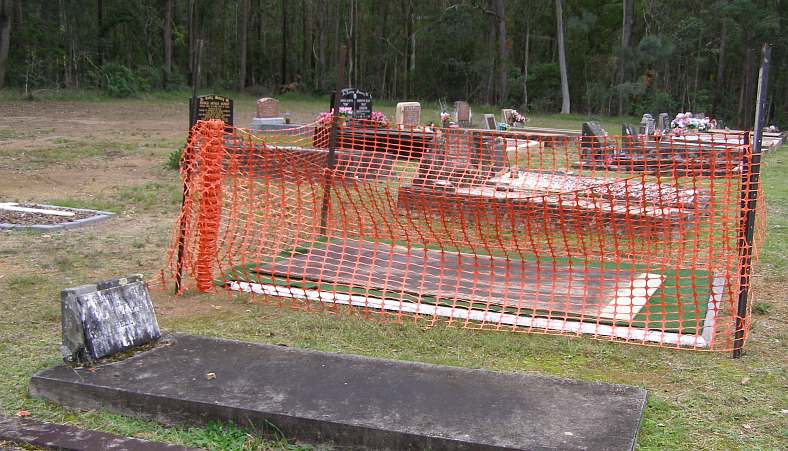
Greg’s grave. Out there at the place where so many of my relatives are buried, this hole in the ground had been prepared for my younger cousin.
As it would be a couple of hours before others were due to arrive, I decided to go and visit an old family friend. He was the junior electrician my father had employed to wire up our first house when I was a baby. George had recently lost his wife and someone had arranged for her photo to be screen-printed onto some cloth so he could still have her near him. Yes, he’s suffering from some dementia too…
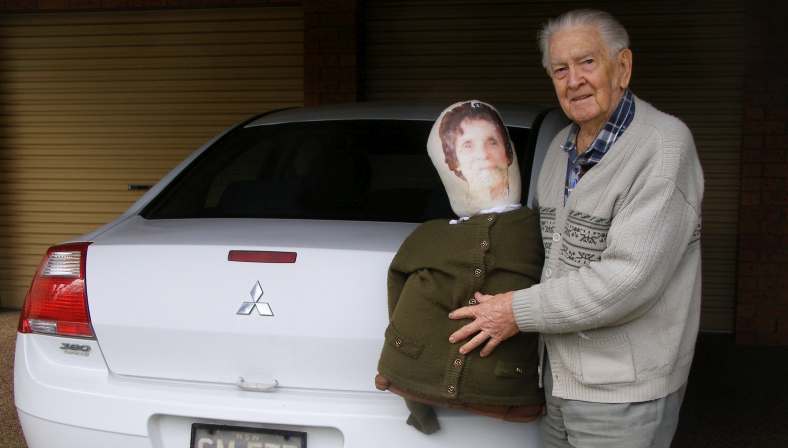
George and Betty. They’d been together for well over sixty years, I know all too well how George would be missing his wife.
The funeral upset me a bit. They tried hard, but the people who organised it all were latecomers in Greg’s life. Constantly the service mentioned how much he loved his mother, but they never realised she had always used her second name. So they referred to her repeatedly as Olga, though nobody knew her by any other name but Maude. We went to a local club afterwards for some light refreshments before I headed off in the general direction of Sydney and Bob’s place.
It was Friday night when I got there and I slept in one of Bob’s spare rooms. The next day was his regular day for visiting motor sport enthusiasts and we all enjoyed looking over the progress he’d been making with his Holden V6-powered Maserati 300S lookalike:
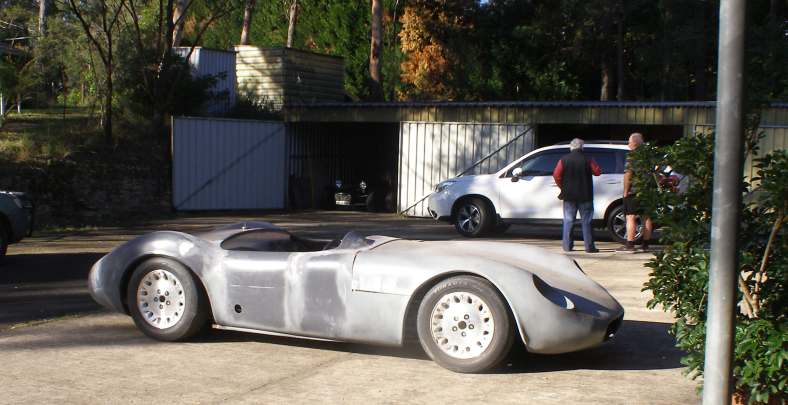
The Maserati look-alike. Progress had been made on this car since my last visit, though there was still much to do. Pat Clarke shows Marc Schagen his Forester in the background.
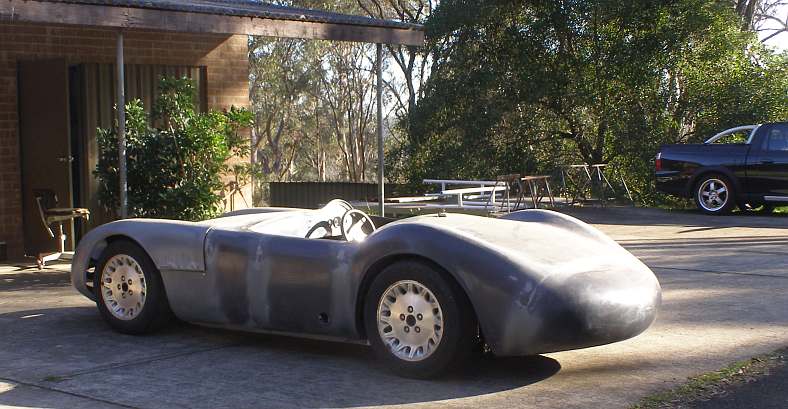
Classic lines. Spoiled by the modern alloy wheels? I don’t care, Bob’s done such a nice job of all his cars and they’re definitely built to a budget. In the background here is Marc’s 4WD Holden dual-cab utility.
Having enjoyed that interlude, I headed home, visiting Max Stahl on the way and also stopping a night at Bob Abberfield’s. Bob’s shed was making good progress and I helped him with the shelving under the bench:
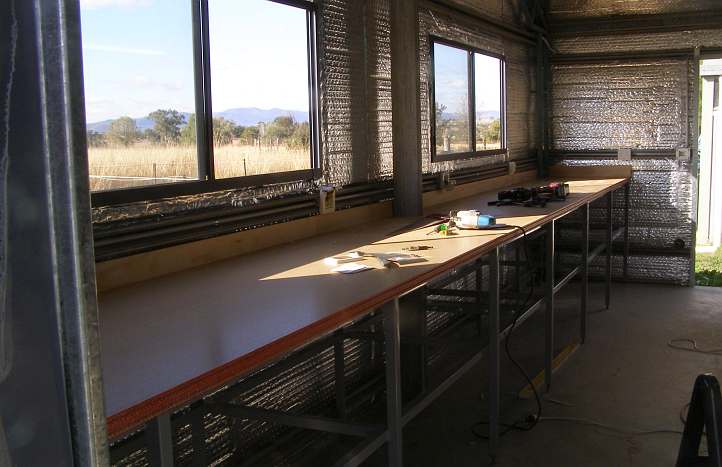
Bob’s bench. Nothing like mine! The new shed was taking shape with this bench and other shelving making it a useful workshop.
But I was keen to get home and back to preparing the bits needed to fit that NV4500. One job I had to tackle was making a gearlever, the stub supplied was only a few inches long and had a 16mm x 1.5mm thread. I ascertained that this was the same thread as was used on Falcon tie-rod ends and so I relieved a wreck of a couple of these and cut one up to make a coupler to a piece I had in mind to reduce the size to 14mm. This meant another visit to Stuart so he could use his 16 x 1.5 diechaser on yet another bolt I’d picked up which had the thread I wanted at the other end and was 16mm in the shank at the other.
Well, not everyone has the things I do lying around, so using a Peugeot tie rod for the next section of the lever will very likely make it the only one so occupied in the world:
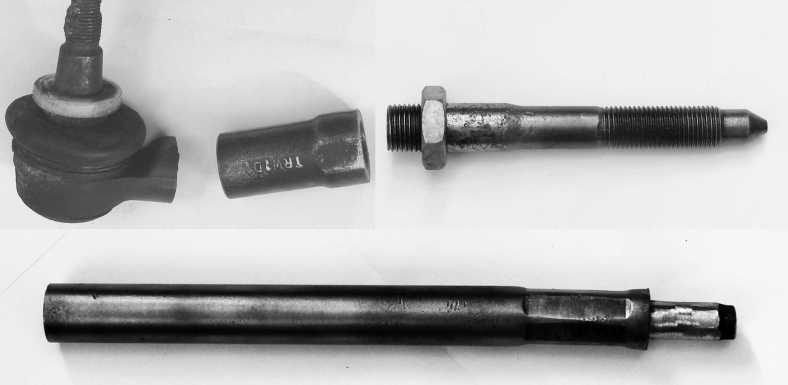
Gearlever bits. Using a part of a Falcon tie-rod end as a coupler to screw onto the stub lever, I had Stuart start a 16mm thread on a stepped bolt which had a 14mm thread at the other end. From there I’ve used a Peugeot tie-rod…
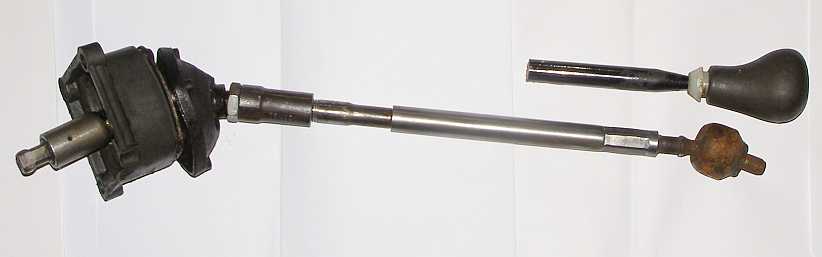
Trial assembly. …before I butchered the top end of the Peugeot tie-rod. I still have to cut threads in further and when I know how long the lever has to be I’ll adjust lengths of the pieces to suit, the final ‘adjustment’ being to the tubular section of the Mazda gearstick.
The final step will be to weld the tubular top of a Mazda 626 gearstick to the exposed end of the Peugeot tie rod, but that will have to wait until I know what length is needed. In other words, until the gearbox is in the van.
Bugging me about all of this is the plastic housing in which the gearlever mounts. It was cracked…
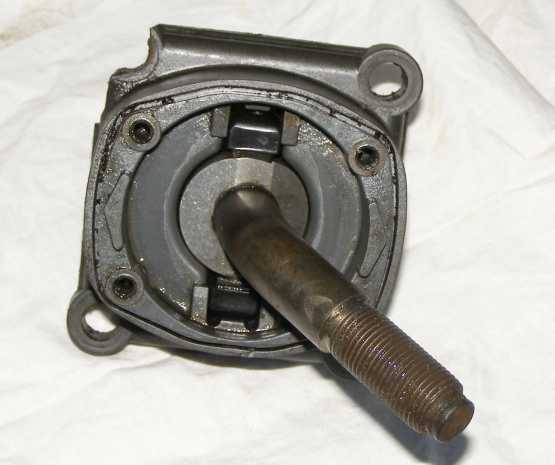
Broken mount. Good old twentieth-century plastic! Not good enough, it seems, so plans were put in place to find something out of which I could make a better job of it.
…and obviously it’s a weak point, so I started thinking about making a replacement out of something more robust. But I was now ready to decide how I’d like the lever stub bent for optimum placement in the van and a visit to Ben saw the oxy-acetylene torch do its stuff to enable that to happen:
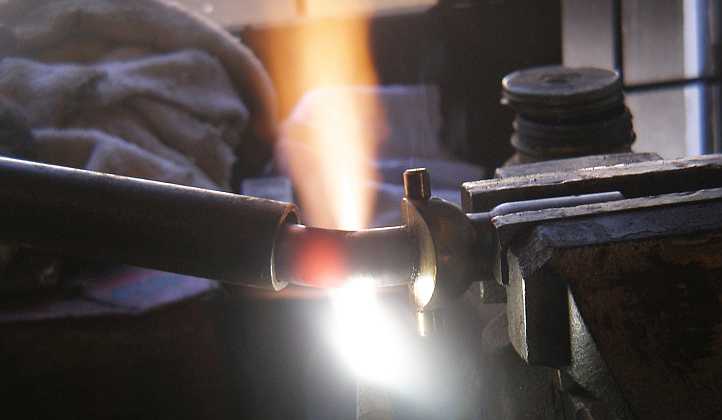
Getting the right direction. The lever was originally intended for a pickup, so I needed to put a different angle on it for use in the van.
Sandra’s rear shock absorbers were a very simple job compared to what I was doing and so I fitted them one day.
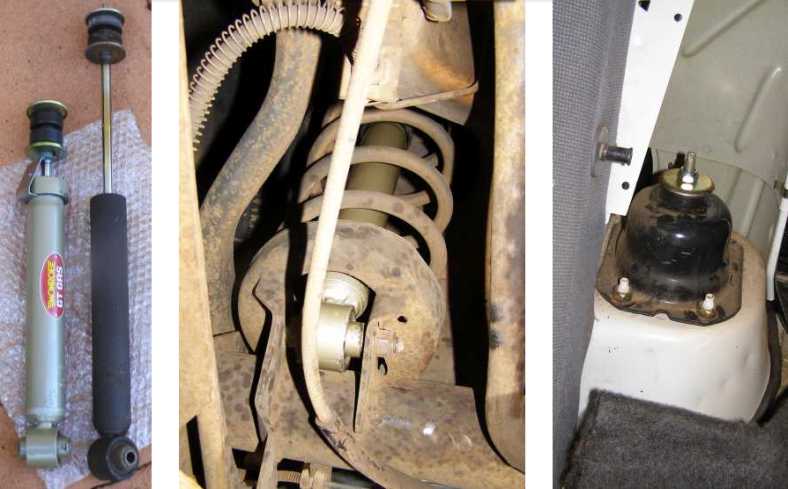
Monroe GT Gas. I was able to use my old contacts to get a good price on these so we could stabilise the rear end of Sandra’s car. Reaching some of the nuts and bolts required some persistence.
Lots of things were going on. I had to think about the Forester engines as those cars had to be nicely mobile when work started up again, so to that end I bought a set of 1mm oversize pistons (and and the attendant rings, seals, gaskets and torque-to-yield bolts) and started thinking about pulling the one which had blown head gaskets apart. When the pistons arrived they did look nice:
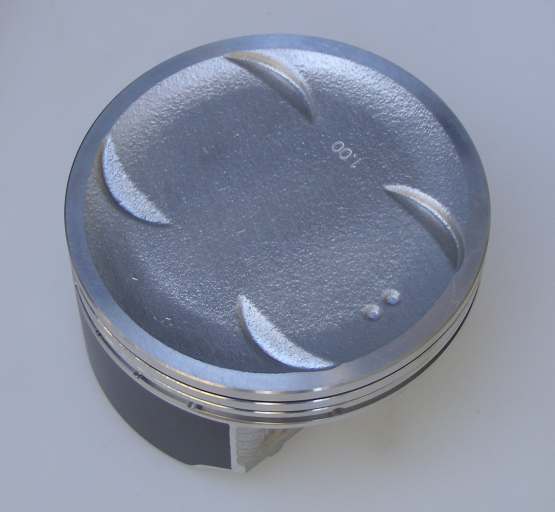
Bigger pistons. These were obtained so that I could get Ben to bore the green Forester’s original engine out to the maximum overbore size.
But that job still had to wait for an opportunity to happen. The Men’s Shed was now available again and two days a week I was there using the lathe and making things. I worked out, for instance, that the input shaft of the NV4500 didn’t reach into the normal spigot bush in the back of the crank, so that piece of crank I cut off at Ben’s was about to become handy as reference as I made up a support to carry a longer spigot bush back further towards the gearbox:
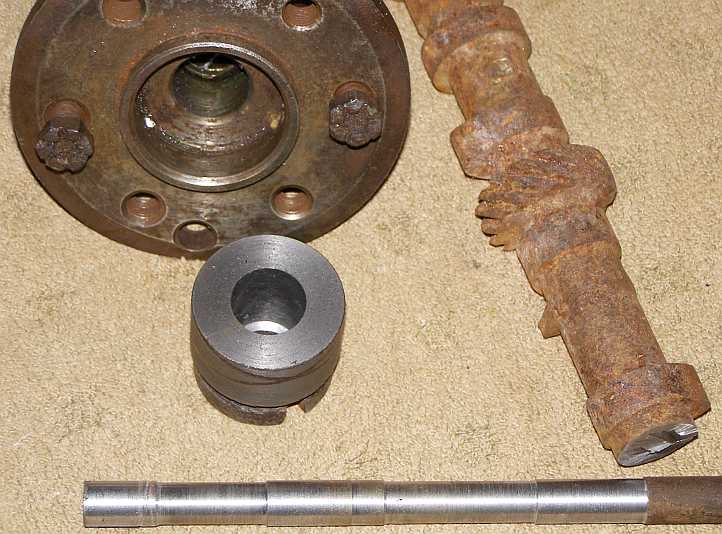
Spigot and dowels. After cutting the front boss from the rusty Peugeot I machined it to be an interference fit inside the larger counterbore at the back of the crank.
I had quite some trouble finding just the right piece of steel to machine up to make this, but I found a rusty Peugeot camshaft among my junk and it had a front boss just the right size for the job. I was concurrently experimenting with making some offset dowels as these are recommended for Mopar gearbox fitment, so they’re shown in embryonic form in that photo too. And putting it all together…
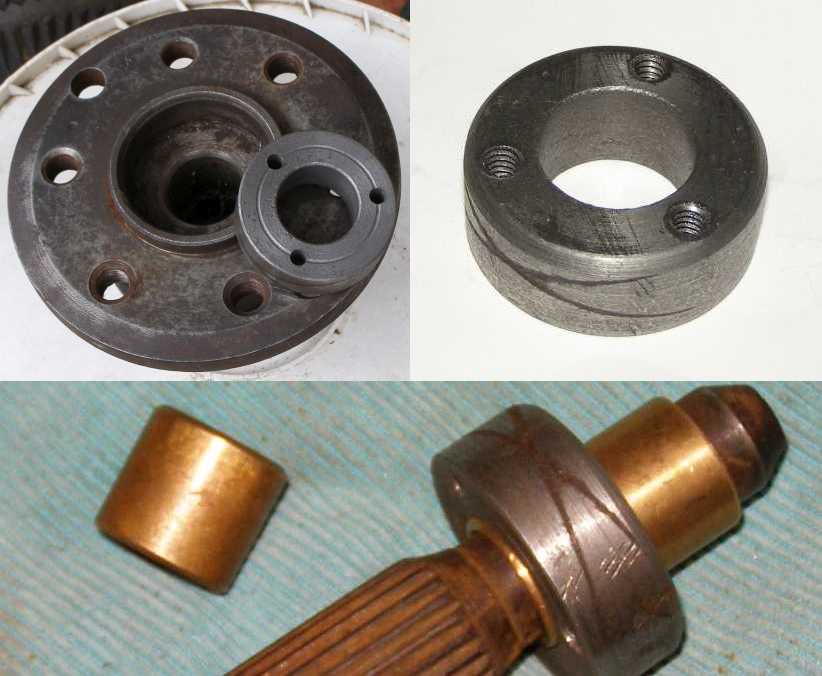
Extending the spigot bush. As that was machined to be a tight fit, I realised that it might one day have to be removed, so I’ve drilled and tapped three holes which will enable me to screw bolts in there to push it out. Meanwhile I acquired a longer than standard brass bush nominally of the correct internal and external dimensions and finished the bore in the support to make it a neat fit too. Finally, linishing the inside of the brass bush gave the required 0.005” clearance on the spigot.
This was only possible because I was able to spend time on the lathes at the Men’s Shed. This organisation is proliferating around Australia and there are actually four Men’s Sheds within 13 miles of home. Of course, it’s the one that’s 13 miles away which has the abundance of metal-working gear while most of the others are largely restricted to wood-working.
I’d never actually operated a lathe previously, but on my first day there I got the necessary instruction to enable me to start work. Whenever I needed assistance, I found Nicol…
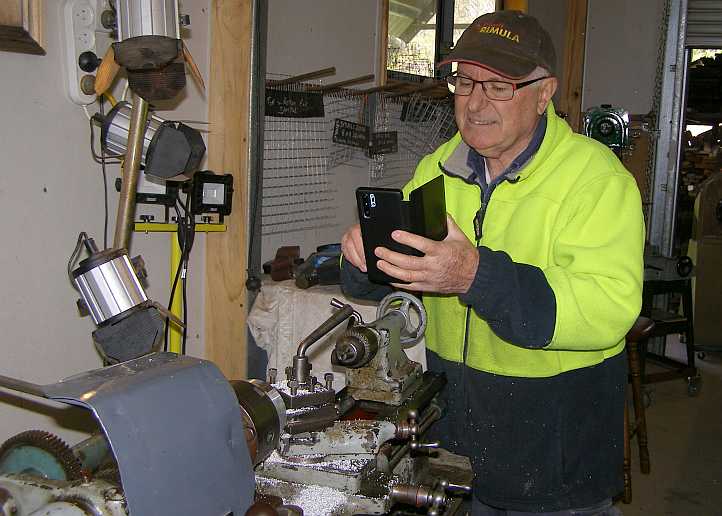
Nicol. A high-class machinist and instructor, Nick is here taking a progress photo of a tricky job he’s doing on the Hercus lathe.
…willing and ready to guide me. Apart from being quite an experienced machinist (to tool room standard, I’d suggest), Nick is an articulate and knowledgeable man whose past life includes time spent as a Barrister. The youngest of the Men’s Shed members is Nathan, an enthusiastic man in his early fifties who has his own lathe at home too, and experiments with all sorts of things including casting in aluminium:
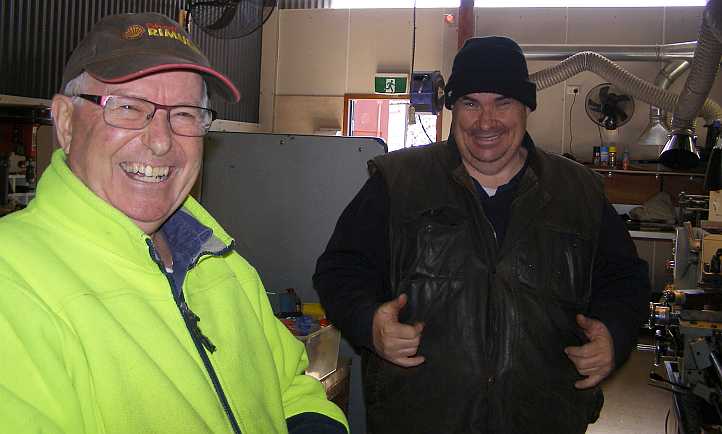
And Nathan. Nick gets a good laugh out of Nathan’s antics on a Winter’s day. An extrovert, Nathan keeps us all on our toes.
The prosperity of the Men’s Shed in its formative years was assisted by a problem with birds. The Indian Mynah bird has invaded our area and is causing havoc among native birds. Trapping them to reduce their numbers became a popular pastime and the Men’s Shed has a team who’ve created a lot of traps for that purpose. They sell them for $50 each and they definitely work, but it’s a need which has fallen off lately, only occasional orders having to be satisfied…
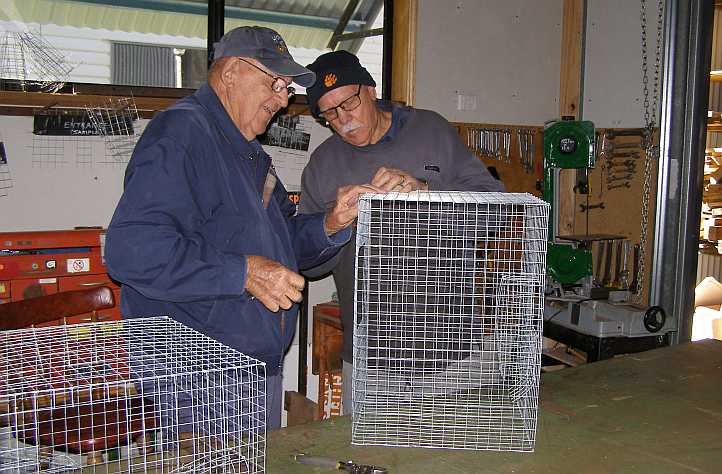
The Mynah Bird trap. Keeping their two mornings a week busy, these members assemble a bird trap. The Men’s Shed has sold many hundreds of these traps.
A few months earlier I’d helped my friend, Jaime, with some front suspension work on his Ford Territory. He was doing it up so he could sell it, but when he mentioned the price I figured it might be a good deal for me. So it joined my fleet, I thought temporarily:
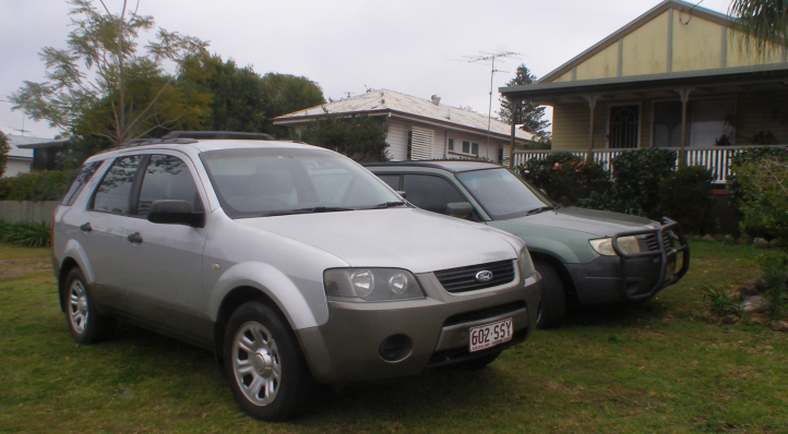
Territory arrives. The Ford Territory sits alongside the green Forester out front of our home. It wasn’t a vehicle I’d ordinarily buy.
My reasoning was that I’d be back at work before long and I could take the tax break on my mileage allowance using it as one of my work vehicles and come out ahead. Otherwise it was not my cup of tea – it’s a Ford, it’s automatic and I’d seen how questionable the build of the front suspension was.
The other Ford in the household, Sandra’s car, received a nice treat about this time:
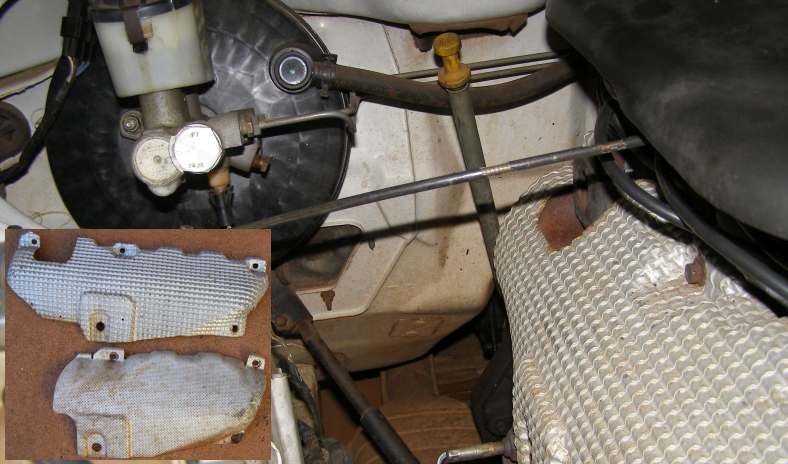
Extended heat shield. A year or more before this I’d had to replace the plastic brake power booster which cops a lot of heat from the exhaust. The inset here shows how the heat shield used to end before any protection was afforded to the power booster.
This is from the later model which is fitted with the same version of the engine as the Territory, the 24-valve twin overhead cam six that’s grown from the original Falcon 144 six origins. It is a very impressive final stage in that engine’s development, by the way.
The version of the engine in Sandra’s 1994 model is four litres and has an alloy cylinder head with a single overhead camshaft. This followed three versions of the engine (from about 1979 to 1993) which had crossflow heads, one of them iron then followed by two versions in aluminium, all of them with displacements ranging from 3.3 litres to four litres.
Of course, because it’s grown like topsy there is a problem with access to ancillaries in some versions, mainly the distributor. Most of these problems were overcome with the twin-cam model and they gained a good reputation for power and reliability.
The position with my work, however, would soon make it clear that I’d be relying on the Territory even more, and a new kind of work would see me travelling to new destinations and seeing new sights…
The plan was to take a spare A833 in case things didn’t work out – or to instal if the one in the van failed on the way – and to use the facilities at Bob Britton’s place to do the fabrication necessary to make the installation of the NV4500 work.
It was a matter of the greatest good fortune that this wasn’t to happen. The Coronavirus issue was starting to hit all around the world and our Prime Minister labelled it a ‘pandemic’ before anyone else. Suddenly, as a few Australians returning from overseas or stepping off cruise ships started to get very ill and die, he announced plans to put everything on hold.
My work ceased. “Send back your computer and other gear...” came the instructions. Financial packages were quickly made available to those in a position like me and much of the country went onto welfare payments. For this reason this post is largely restricted to mechanical things, but other people do come into it, some of whom we haven’t seen before.
Travel more than a few miles from home was severely restricted and the most curious things began happening…
Just as I was getting into the swing of things with the Men’s Shed, it closed too. It would not re-open for a couple of months.
So I got on with the job of making the most of what gear I had at home to do jobs relating to the conversion. And other projects. And the first thing I had to create was a proper workbench in a covered area just outside the kitchen window, built out of the steel frame of a table I had been using with additions coming from old shop shelving and assorted things I had lying around.
Home workshop bench. The need to carry on preparing things for the gearbox conversion led to me spending time creating this workbench and its lockable compartment for power tools.
I built in a locker beneath the front of the bench so I could secure power tools etc when I wasn’t home.
There was a lot to be done, but not everything could be satisfactorily done with my level of equipment. Of course, some things could be done at Ben’s workshop and one of the first was a little job just ensuring that the gearbox would have the best chance possible of being mounted correctly.
Sandra’s car had a head gasket which was weeping coolant out the side. It was running fine, of course, but losing coolant. Discussions with Ben established that it needed a newer type of gasket and it was at this time that Sandra decided that she didn’t trust me to do the job. Nevertheless, I acquired another head and arranged for Ben to recondition it ready for the job to be done. So the bellhousing went with me to Ben’s workshop for a quick grinding to ensure front and rear surfaces were parallel:
Machining bellhousing surface. Ben’s grinder made short work of doing this job, and doing it well.
While Ben was getting the head ready I used his cut-off saw to take the rear main journal and flywheel flange off a 318 crank which had a nasty dent in one of the journals from where a rod came apart:
Giving the crank the chop. This crankshaft was damaged so making a part of it into a useful took was worthwhile.
The purpose of this was that I’d be using it as a mount to put a flywheel in a lathe – but that’s really a part of another project. I left Ben’s that evening with the head and the machined bellhousing and took it all home so the man Sandra had chosen to pay money to do the gasket would have the head there ready to go. The idea was that he could then do the job in one day without having to send the head away to be reconditioned.
But he finished up letting us down, of course, and had the car for two days anyway.
There were still some serious travel restrictions in place, crossing borders between states was difficult for most. But Bruce Ayers could do it and travelled through to his home in Brisbane with a truckload of his father’s old race car. He’d just purchased it back from the people who bought it back in the seventies.
On the way he called in on Bob Britton and, without reference to me, between then they decided that my new gearbox could accompany the race car home and I’d be able to pick it up from his place. So I now had the NV4500 in front of me and could more accurately assess what was required to fit it to the van.
NV4500 versus A833. Once I could put the gearboxes side by side I was able to get a better idea of how big the job was.
I just kept looking at all the little jobs to be done and tried to attack them as I could. Realising that my plans for the conversion box I was making to enable the fitment of the clutch master cylinder included using two of the studs with which the driver’s seat was secured, I had to make some longer ones. And with lengthy threads required, I needed to get the threads started straight.
At this point I was in conversation with a very clever local enthusiast named Stuart Cornford, who got involved in all sorts of work rebuilding vintage cars. When I first went to see him he was making a replacement crankcase for a C-model Ford (about 1904 model single-cylinder):
Replacement for Henry’s casting. The original crankcase was over a hundred years old, so it was reasonable to replace it with a new fabrication.
As I talked to him about this he suggested he could help by using his Coventry Die-Chaser to cut the thread. I bought the necessary 7/16” UNC bolts and he would start the 7/16” UNF threads on the other end once I’d removed the bolts’ heads…
Die-chaser is quick! An accurately-cut new thread put into the stud was what I wanted, and I got it very quickly.
…and so another job was done. Just a little job, but the whole project is made up of lots and lots of little jobs. And while looking over the ‘little jobs’ I noticed that I’d been sent the wrong clutch plate and throwout bearing:
Wrong spline. More mistakes. I was sent the wrong clutch plate and throwout bearing and had to get fresh ones sent from the US.
That week I had a call from my cousin, Graham. “Gregory has passed away…” was the bad news. Gregory was his younger brother, just 68, and was living in Warwick. But all of his family, his children and grandchildren, lived in or near Taree. Fortunately the borders had opened up now and I planned a trip for his funeral. Naturally, I would go on to Sydney to see Bob Britton while I was there.
I arrived at the cemetery quite early, having slept in the Forester on the way down, and saw that the gravediggers had been doing their job. Greg was being buried next to his mother and father, though his mother’s grave is unmarked.
Greg’s grave. Out there at the place where so many of my relatives are buried, this hole in the ground had been prepared for my younger cousin.
As it would be a couple of hours before others were due to arrive, I decided to go and visit an old family friend. He was the junior electrician my father had employed to wire up our first house when I was a baby. George had recently lost his wife and someone had arranged for her photo to be screen-printed onto some cloth so he could still have her near him. Yes, he’s suffering from some dementia too…
George and Betty. They’d been together for well over sixty years, I know all too well how George would be missing his wife.
The funeral upset me a bit. They tried hard, but the people who organised it all were latecomers in Greg’s life. Constantly the service mentioned how much he loved his mother, but they never realised she had always used her second name. So they referred to her repeatedly as Olga, though nobody knew her by any other name but Maude. We went to a local club afterwards for some light refreshments before I headed off in the general direction of Sydney and Bob’s place.
It was Friday night when I got there and I slept in one of Bob’s spare rooms. The next day was his regular day for visiting motor sport enthusiasts and we all enjoyed looking over the progress he’d been making with his Holden V6-powered Maserati 300S lookalike:
The Maserati look-alike. Progress had been made on this car since my last visit, though there was still much to do. Pat Clarke shows Marc Schagen his Forester in the background.
Classic lines. Spoiled by the modern alloy wheels? I don’t care, Bob’s done such a nice job of all his cars and they’re definitely built to a budget. In the background here is Marc’s 4WD Holden dual-cab utility.
Having enjoyed that interlude, I headed home, visiting Max Stahl on the way and also stopping a night at Bob Abberfield’s. Bob’s shed was making good progress and I helped him with the shelving under the bench:
Bob’s bench. Nothing like mine! The new shed was taking shape with this bench and other shelving making it a useful workshop.
But I was keen to get home and back to preparing the bits needed to fit that NV4500. One job I had to tackle was making a gearlever, the stub supplied was only a few inches long and had a 16mm x 1.5mm thread. I ascertained that this was the same thread as was used on Falcon tie-rod ends and so I relieved a wreck of a couple of these and cut one up to make a coupler to a piece I had in mind to reduce the size to 14mm. This meant another visit to Stuart so he could use his 16 x 1.5 diechaser on yet another bolt I’d picked up which had the thread I wanted at the other end and was 16mm in the shank at the other.
Well, not everyone has the things I do lying around, so using a Peugeot tie rod for the next section of the lever will very likely make it the only one so occupied in the world:
Gearlever bits. Using a part of a Falcon tie-rod end as a coupler to screw onto the stub lever, I had Stuart start a 16mm thread on a stepped bolt which had a 14mm thread at the other end. From there I’ve used a Peugeot tie-rod…
Trial assembly. …before I butchered the top end of the Peugeot tie-rod. I still have to cut threads in further and when I know how long the lever has to be I’ll adjust lengths of the pieces to suit, the final ‘adjustment’ being to the tubular section of the Mazda gearstick.
The final step will be to weld the tubular top of a Mazda 626 gearstick to the exposed end of the Peugeot tie rod, but that will have to wait until I know what length is needed. In other words, until the gearbox is in the van.
Bugging me about all of this is the plastic housing in which the gearlever mounts. It was cracked…
Broken mount. Good old twentieth-century plastic! Not good enough, it seems, so plans were put in place to find something out of which I could make a better job of it.
…and obviously it’s a weak point, so I started thinking about making a replacement out of something more robust. But I was now ready to decide how I’d like the lever stub bent for optimum placement in the van and a visit to Ben saw the oxy-acetylene torch do its stuff to enable that to happen:
Getting the right direction. The lever was originally intended for a pickup, so I needed to put a different angle on it for use in the van.
Sandra’s rear shock absorbers were a very simple job compared to what I was doing and so I fitted them one day.
Monroe GT Gas. I was able to use my old contacts to get a good price on these so we could stabilise the rear end of Sandra’s car. Reaching some of the nuts and bolts required some persistence.
Lots of things were going on. I had to think about the Forester engines as those cars had to be nicely mobile when work started up again, so to that end I bought a set of 1mm oversize pistons (and and the attendant rings, seals, gaskets and torque-to-yield bolts) and started thinking about pulling the one which had blown head gaskets apart. When the pistons arrived they did look nice:
Bigger pistons. These were obtained so that I could get Ben to bore the green Forester’s original engine out to the maximum overbore size.
But that job still had to wait for an opportunity to happen. The Men’s Shed was now available again and two days a week I was there using the lathe and making things. I worked out, for instance, that the input shaft of the NV4500 didn’t reach into the normal spigot bush in the back of the crank, so that piece of crank I cut off at Ben’s was about to become handy as reference as I made up a support to carry a longer spigot bush back further towards the gearbox:
Spigot and dowels. After cutting the front boss from the rusty Peugeot I machined it to be an interference fit inside the larger counterbore at the back of the crank.
I had quite some trouble finding just the right piece of steel to machine up to make this, but I found a rusty Peugeot camshaft among my junk and it had a front boss just the right size for the job. I was concurrently experimenting with making some offset dowels as these are recommended for Mopar gearbox fitment, so they’re shown in embryonic form in that photo too. And putting it all together…
Extending the spigot bush. As that was machined to be a tight fit, I realised that it might one day have to be removed, so I’ve drilled and tapped three holes which will enable me to screw bolts in there to push it out. Meanwhile I acquired a longer than standard brass bush nominally of the correct internal and external dimensions and finished the bore in the support to make it a neat fit too. Finally, linishing the inside of the brass bush gave the required 0.005” clearance on the spigot.
This was only possible because I was able to spend time on the lathes at the Men’s Shed. This organisation is proliferating around Australia and there are actually four Men’s Sheds within 13 miles of home. Of course, it’s the one that’s 13 miles away which has the abundance of metal-working gear while most of the others are largely restricted to wood-working.
I’d never actually operated a lathe previously, but on my first day there I got the necessary instruction to enable me to start work. Whenever I needed assistance, I found Nicol…
Nicol. A high-class machinist and instructor, Nick is here taking a progress photo of a tricky job he’s doing on the Hercus lathe.
…willing and ready to guide me. Apart from being quite an experienced machinist (to tool room standard, I’d suggest), Nick is an articulate and knowledgeable man whose past life includes time spent as a Barrister. The youngest of the Men’s Shed members is Nathan, an enthusiastic man in his early fifties who has his own lathe at home too, and experiments with all sorts of things including casting in aluminium:
And Nathan. Nick gets a good laugh out of Nathan’s antics on a Winter’s day. An extrovert, Nathan keeps us all on our toes.
The prosperity of the Men’s Shed in its formative years was assisted by a problem with birds. The Indian Mynah bird has invaded our area and is causing havoc among native birds. Trapping them to reduce their numbers became a popular pastime and the Men’s Shed has a team who’ve created a lot of traps for that purpose. They sell them for $50 each and they definitely work, but it’s a need which has fallen off lately, only occasional orders having to be satisfied…
The Mynah Bird trap. Keeping their two mornings a week busy, these members assemble a bird trap. The Men’s Shed has sold many hundreds of these traps.
A few months earlier I’d helped my friend, Jaime, with some front suspension work on his Ford Territory. He was doing it up so he could sell it, but when he mentioned the price I figured it might be a good deal for me. So it joined my fleet, I thought temporarily:
Territory arrives. The Ford Territory sits alongside the green Forester out front of our home. It wasn’t a vehicle I’d ordinarily buy.
My reasoning was that I’d be back at work before long and I could take the tax break on my mileage allowance using it as one of my work vehicles and come out ahead. Otherwise it was not my cup of tea – it’s a Ford, it’s automatic and I’d seen how questionable the build of the front suspension was.
The other Ford in the household, Sandra’s car, received a nice treat about this time:
Extended heat shield. A year or more before this I’d had to replace the plastic brake power booster which cops a lot of heat from the exhaust. The inset here shows how the heat shield used to end before any protection was afforded to the power booster.
This is from the later model which is fitted with the same version of the engine as the Territory, the 24-valve twin overhead cam six that’s grown from the original Falcon 144 six origins. It is a very impressive final stage in that engine’s development, by the way.
The version of the engine in Sandra’s 1994 model is four litres and has an alloy cylinder head with a single overhead camshaft. This followed three versions of the engine (from about 1979 to 1993) which had crossflow heads, one of them iron then followed by two versions in aluminium, all of them with displacements ranging from 3.3 litres to four litres.
Of course, because it’s grown like topsy there is a problem with access to ancillaries in some versions, mainly the distributor. Most of these problems were overcome with the twin-cam model and they gained a good reputation for power and reliability.
The position with my work, however, would soon make it clear that I’d be relying on the Territory even more, and a new kind of work would see me travelling to new destinations and seeing new sights…
Last edited by Ray Bell; Feb 25, 2022 at 02:04 AM.
Thread Starter
|
Captain
Joined: Oct 2005
Posts: 568
Likes: 8
From: The Summit, Queensland, Australia
At this time I had decided, as mentioned, on a path of having both Foresters ready for work when it resumed. But for the moment there was still a need to keep an eye on regular maintenance, which meant that I had to change the timing belt on one of them:
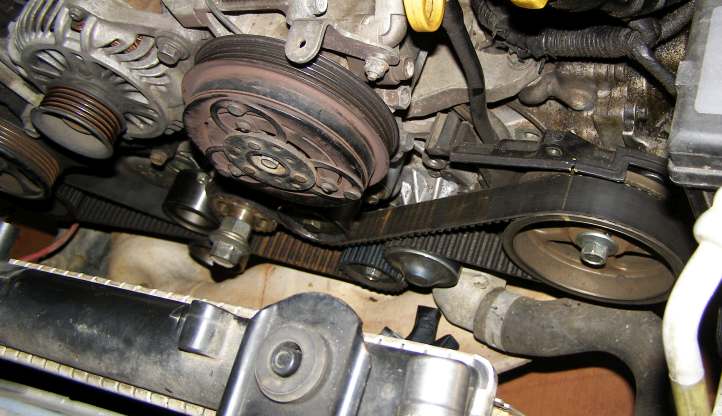
Time for a change. These need to be changed every 80,000 miles and I had one on the original engine which had – if it had been replaced when it should have been – only done about 20,000. So an hour or two was spent on this job.
Then a chance encounter at the wrecking yard led me to hedge my bets a little. I spotted a Forester of the same model there which had been very well looked after right up until someone gave it a solid hit in the left rear corner. I negotiated a deal which included me being able to do the work.
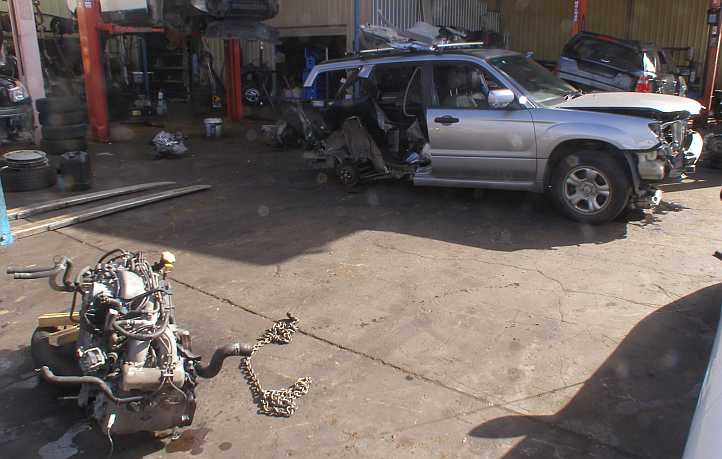
Spare engine acquired. I like to do the work myself to be sure I know nothing is damaged, which is something which can’t be said for the back of this Forester. As it was an automatic it lacked a flywheel and clutch.
In this way I knew nothing would be damaged, nor wires cut, as the engine was extracted. I also got the radiator and fan assembly and three good tyres, handy spares. But this was purely a stop-gap in case there was a delay in rebuilding one of the others.
The need to get the original engines of each of the cars into good shape saw me planning in some time at the shed tearing them down. The first one was the poor green car’s engine, which had suffered blown head gaskets. When the heads came off it was clear that the bores had suffered as expected and that buying those pistons had been a good move…
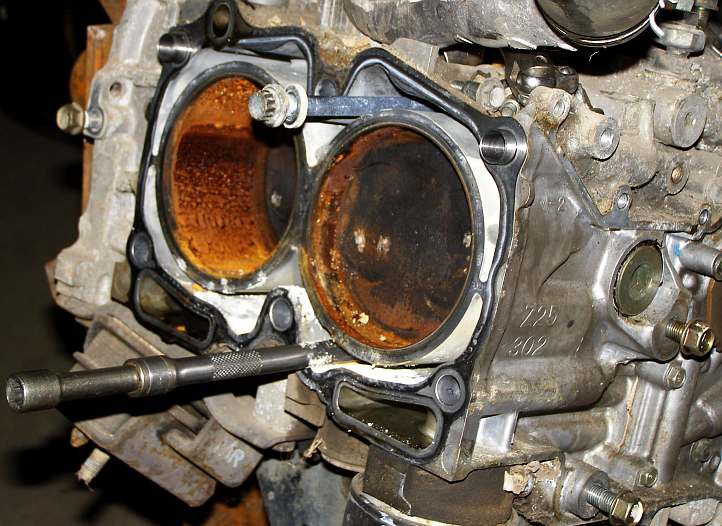
Rusty bores. With the heads off to reveal the state of the bores, I soon learned how the crankcase halves were bolted together, including the bolts with their heads in the bottom of the water jacket! They’re in the process of being removed here.
…but it was also a steep learning curve for me as I found out how these engines were put together. There was the arrangement by which the piston pins had to come out, with portals at each end of the block(s) that needed to be uncovered. When one pin was lined up for removal a pair of long-nose pliers was used to remove the circlip. Then a rod was pushed through from the other end, which was clear as the rod angle at that point got it out of the way, to poke the pins out the end of the block.
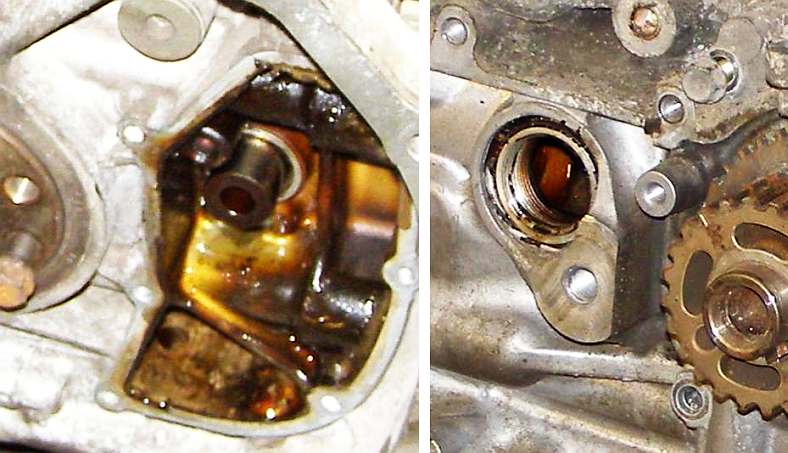
Piston pin removal. The crankcase can’t be split until the pistons come off the rods, so this method is employed. Pistons can be removed after the crankcase is dismantled.
Splitting the crankcase halves apart – without resorting to things which would damage the joint surface – was just one of the tricky bits as dowels and silicone sealant don’t want to let go easily. But I got it apart:
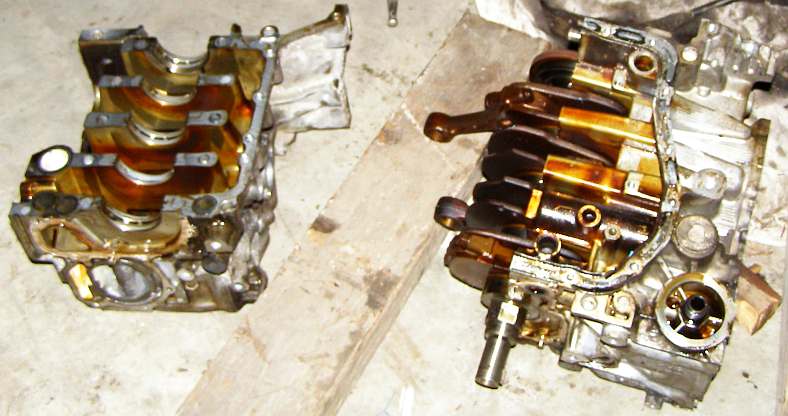
Crankcase comes apart. The crank and rods remain in one half as the other has come off – which didn’t happen easily. The very white round hole in the section on the left is the passage for coolant between the halves of this very complicated bit of casting.
Through this period I’d been waiting patiently for some more things to come from America. They’d been sent in two flat-rate boxes through USPS and tracking showed they took a little time to get from Kentucky to Chicago but they sat there for a long time. Eventually one parcel arrived…
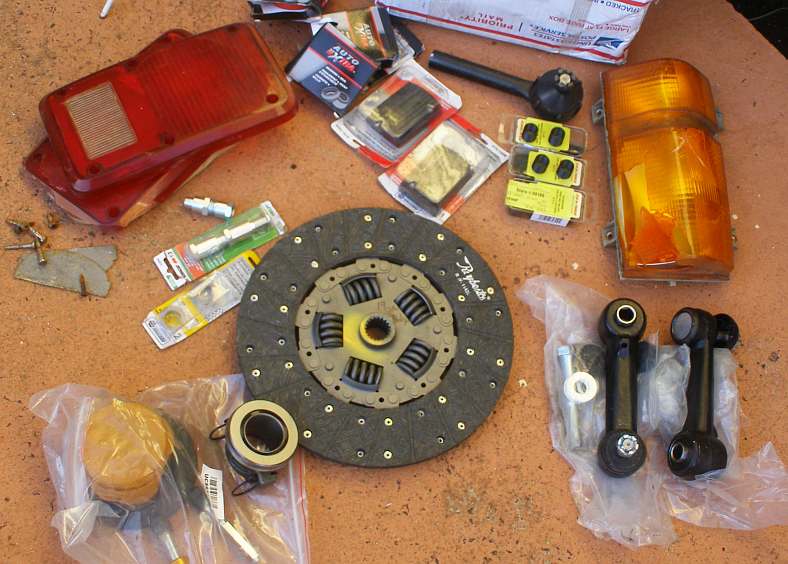
Damaged goods. The first box arrived with the clutch plate and throwout, part of the drag link, spark plug inserts, pedal rubbers, idler arms, a Chevy concentric clutch slave cylinder and throwout bearing, some seals and the damaged lenses.
…and I was far from delighted with the state of the tail light and parking light lenses, which had been damaged in transit.
These parcels originated with the fact that I’d been sent the wrong clutch plate and throwout bearing, so I figured that I should take advantage of the shipping arrangement to get other things, one of which included a drag link which wouldn’t fit in the box. I understood that the one I ordered had screw-in ends, but it was a one-piece unit and so I had it cut down for shipping.
Among the things I’d had included were spark plug thread inserts, so I took a trip to Ben’s so he could have these and so I could take the Subaru crankcase there for machining. While I was there I had a look at a Hemi 6 head he had in for a bit of work:
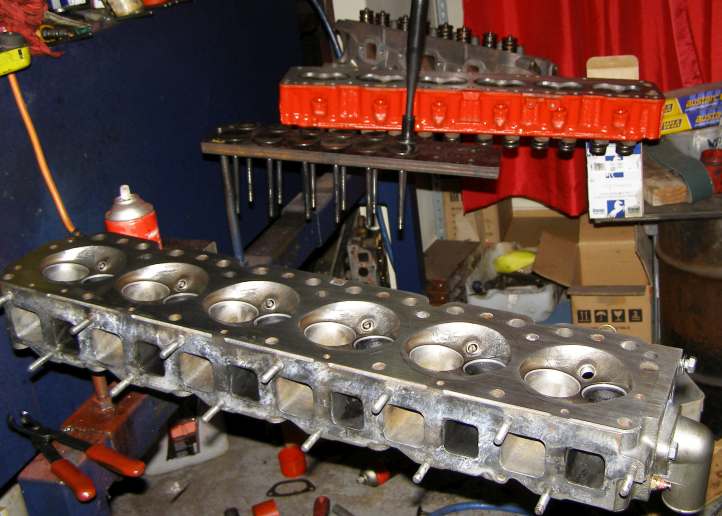
Hemi 6 cylinder head. Ben gets all sorts of work at his shop, so a Hemi 6 head job was not unusual. In the background is a Holden head, something he sees lots of.
The other job arising from that parcel was to get the 11” clutch plate changed to a 10½” to suit the flywheel and clutch on my 360 engine. This was a job for Jim Berry so I found a 10½” clutch plate from my supply which had the same rivet pattern where it joined onto the centre. Jim was soon able to do his stuff with it.
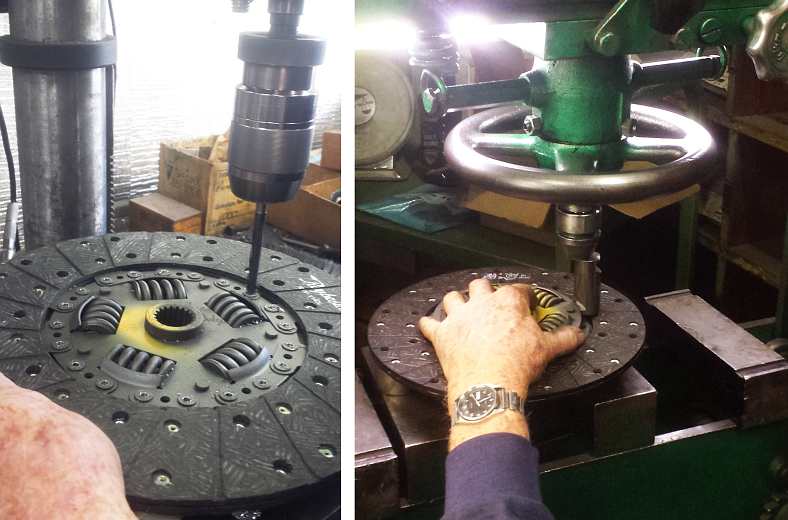
Changing the clutch plate size. Having found a smaller clutch plate with the same rivet pattern as the 11” plate with the 19-spline centre, Jim Berry set about changing them over. It was a very expensive clutch plate.
This meant another trip to the shed, and while I was there the next-door neighbour came in to see me. “I’m having a garage sale next weekend,” he said, “if you’ve got anything to sell you’re welcome to put it out with my stuff.”
So I planned out the weekend. I would go down there and get the ’73 pickup going, drive it up in front of the shed and put a ‘for sale’ sign on it. And while I awaited eager buyers I’d spend my time pulling the second Subaru engine apart. Its bores were in good shape, having done only 163,000kms or so…
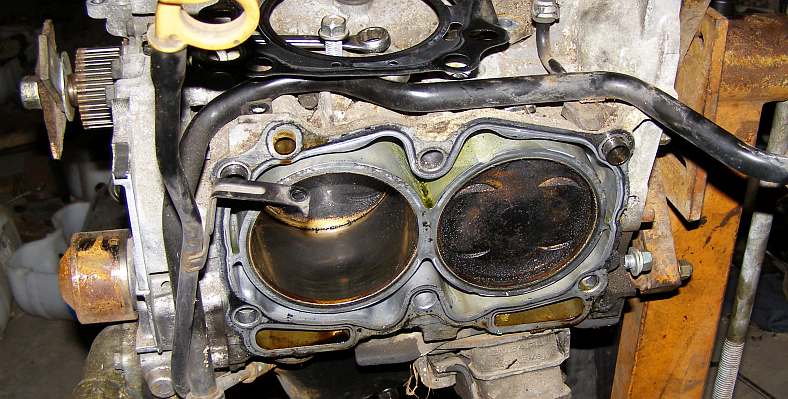
In better shape. No new pistons would be needed for this engine, it was a real shame it had to be pulled apart.
…but the bearings had suffered:
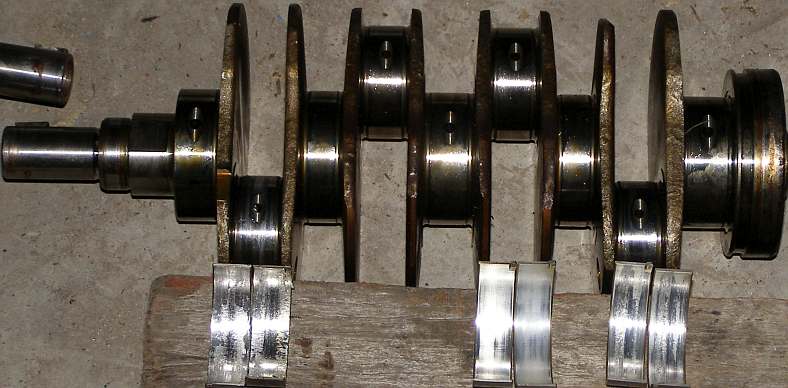
Bearings damaged. I expected this result as I dismantled the engine, but the concern was whether or not the crankshaft would need grinding.
When Ben checked the crank he pronounced it was undamaged, so with no need for pistons this will be a much less expensive rebuild than the other.
Meanwhile, several people came along and looked at the pickup, with three expressing a desire to own it. But one of those looking at it was the friend of a man named Tapio from the Gold Coast who’d looked at it a year or more earlier. He told me at the time he rented vehicles out to movie makers who needed American vehicles for use in movies made on the Gold Coast and said he’d phone me. Now his friend got my phone number to pass on to Tapio because he’d lost my number.
And as I made all these trips between Toowoomba and The Summit I encountered other kinds of cars and other kinds of people. I usually made a stop at the Rest Area at Allora when going one way or the other, and one afternoon I encountered a gentleman who enjoyed Historic Racing with this little car:
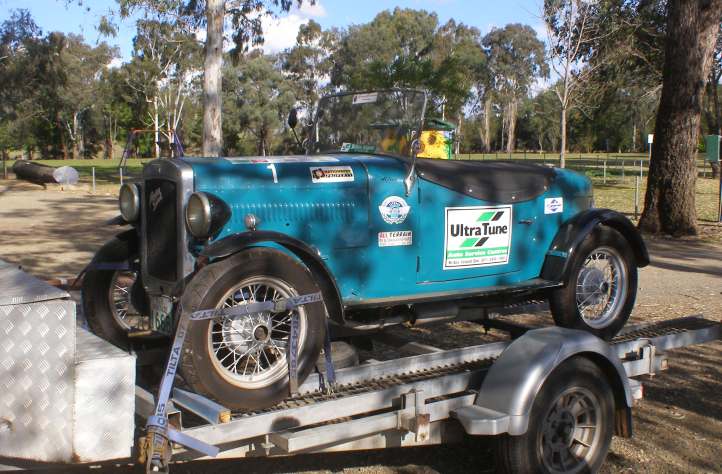
Austin 7 racer. Not my cup of tea, but many people do get a kick out of making little cars like these perform better than the makers envisaged.
Little side-valve engines with two-bearing crankshafts sound a bit pedestrian to me, but some people simply delight in making them quick and even reliable.
Still the Men’s Shed was getting regular visits, the two mornings a week being filled with getting little jobs done. One of the projects I was working slowly towards fruition during this period was preparing to adapt A833 gearboxes to the Hemi 6 engine, and I had a big of a shortcut to help me get this done.
The Hemi 6 came with a modified version of the Borg-Warner 35 automatic transmission and it sported a separate torque converter housing. This housing is a bit over an inch shallower than the regular Chrysler manual bellhousing, that meant I could get a casting done to use as a sandwich plate between that housing and the A833. Now I was making the drilling jigs for those castings.
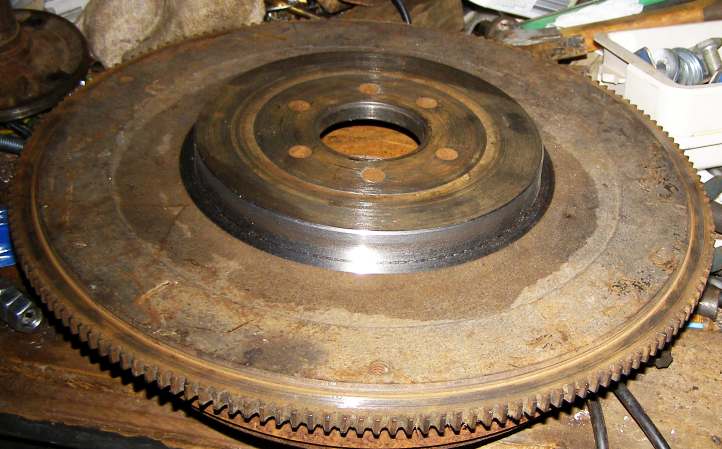
Truck flywheel. A stepped flywheel from a 318 truck engine provided me with something large enough I could use as a face plate when the time comes to put castings on the lathe for machining.
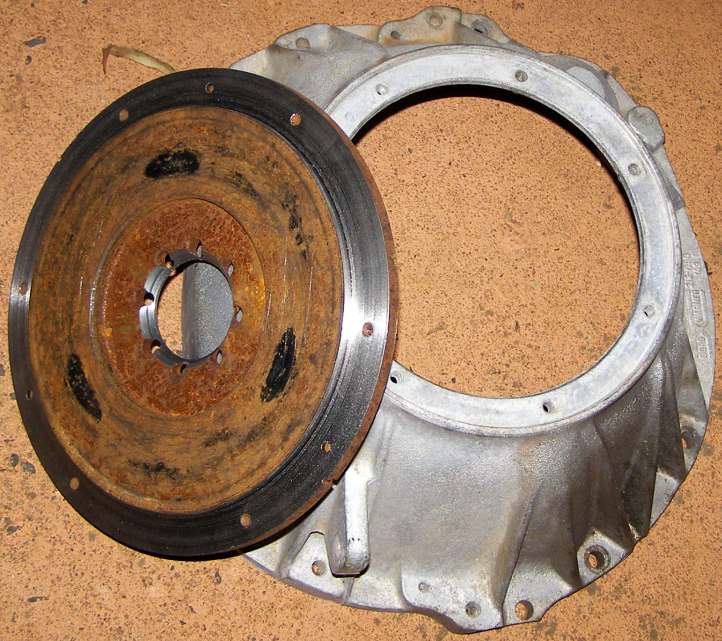
Old flywheel repurposed. This is a Mopar flywheel of some kind, sent to me ‘in error’ by someone I bought other gear from when I was importing a lot of A833s and associated parts. I machined it so it would locate in the step in the back of the housing to enable me to accurately drill the bolt pattern which, in turn, would be transferred to the sandwich plate once machined.
Of course, this kind of thing was really a means of filling in my time at the Men’s Shed. Learning more as I went, eventually I would gain a lot of skills there. But as the time went on it became more difficult to see the path ahead of me for the work I’d been doing, and after six months of my income being government subsidised, that subsidy was reduced. Ahead was the prospect that it would end.
I had to look for other work to do, work which fitted into my ‘skill set’ and the men at the Men’s Shed actually gave me the clue. One of them suggested I take on pilot or escort work, escorting oversize loads on the highways, as he had done for a while.
The thought was good, I made enquiries and was introduced to Dennis Barber, who was still working at this. It required that I complete a questionnaire at the Motor Registry with no fewer than 23 correct answers out of 25, then there would be a fee, and then I’d be licensed. It took me three attempts to get the answers right (they were different questions each time) and after I’d paid the fee there was a three-week wait for the licence to come through.
And then I had to prepare a vehicle for the job. That would be the Territory. But in the meantime the second of the two parcels from America had arrived:
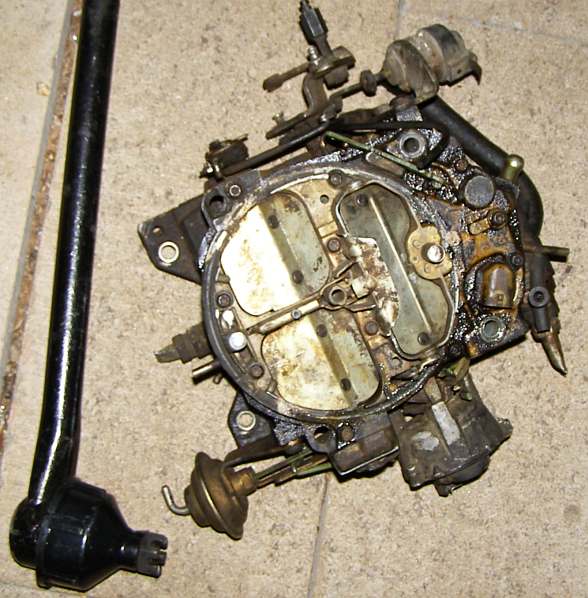
Another Quadrajet. My spare engine for the B350 didn’t have a carburettor, so getting another Quadrajet while I was shipping stuff wasn’t a bad idea. The other end of that drag link came in this parcel too.
By the beginning of November I was working on the Territory project. The first thing was I had to fit fog lights to serve as wig-wag lights, necessary when escorting a load more than 15’ wide…
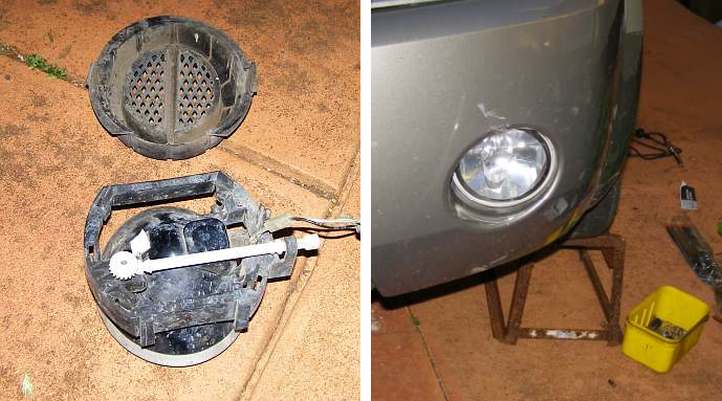
Fog lights. Further reason to be unhappy with the Territory. Fog lights clip into mouldings in the back of the plastic bumper bar. The little grille is the ‘hole filler’ for cars without the fog lights.
I purchased a frame owned by Dennis which was fitted with the roof sign and rotating beacons as well as the two aerials for UHF radios required for this work. I thought, “This will be easy, just clamp that onto the bars across the roof!”
Then I looked closely at the situation. The bars clip into stainless steel rails running along each side of the roof, I looked even more closely and found there were just five 6mm countersunk stainless steel screws along each side of the roof holding these down.
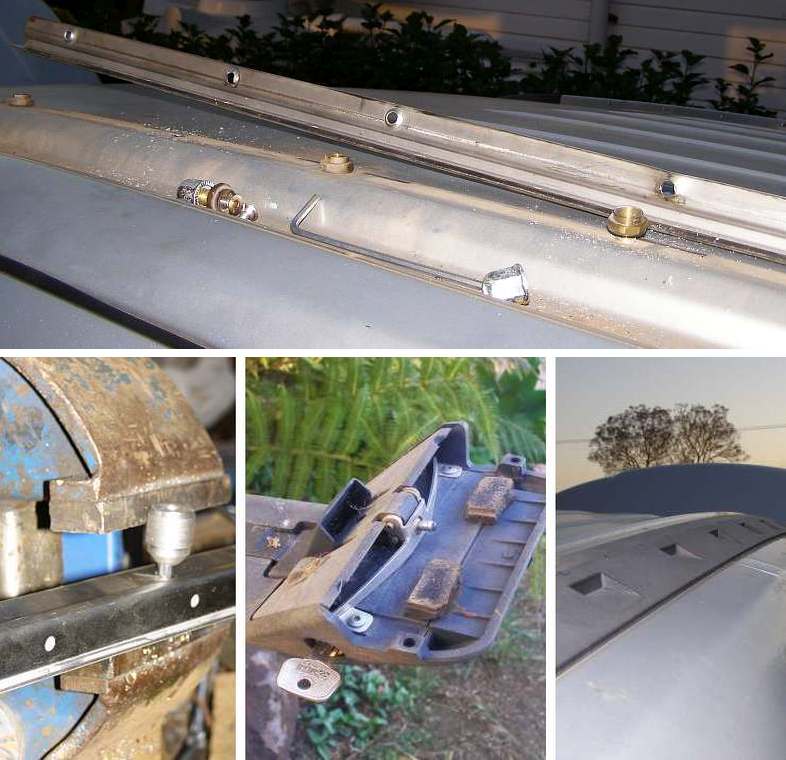
The rooftop dilemma. I quickly decided that five screws wouldn’t be enough, so I went back to the wrecking yard and got more of the brass bolts that anchor the screws. But I had to make up a device for dimpling the rail once I’d drilled it. And then I found that a little 5mm pin mounted in plastic held the bars into the rails. But, with the plastic trim it all looked so solid and neat!
The process of working through this wasn’t endearing me to the Ford design staff. I was thinking about me driving along with the big sign fixed to the bars, then having that withstand the force of wind of an oncoming pantechnicon doing 60mph! My next step, then, was to make a better, stronger bar with more fixings to take that load.
I kept on thinking about all of this as I was dealing with Tapio, who phoned me a couple of days after the garage sale. Yes, he wanted to buy the pickup, he came up and met me at the shed and we started the negotiation. I wanted $5,200 (just what it cost me landed in Australia) and he suggested that I might like to take a couple of vans the same as mine in part trade.
“Vans the same as mine?” We had to have a conversation about this. He assured me he had two vans, they might be older models, but they had 360s and 727s, but they’d been severely rusted and he’d cut the upper bodies off them. I took a trip to the Gold Coast to look at them and we came to a deal which included me taking possession of his two vans:
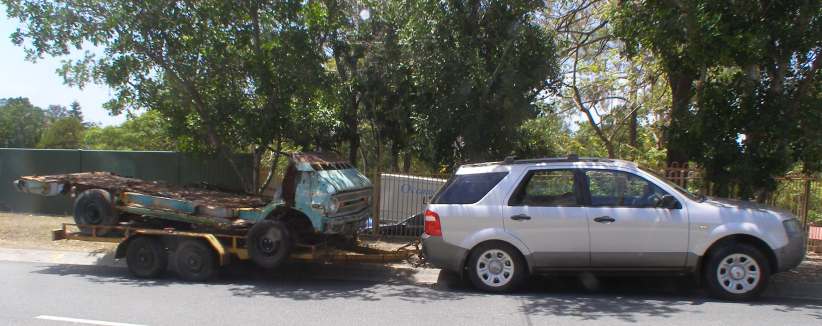
Picking up a ‘van’. Borrowing a trailer from a friend at the Men’s Shed, a second trip to the Gold Coast saw us struggle to get what was left of one van on board. Some wheels were shed in the process.
While I was at Tapio’s I saw that he indeed had a number of American vehicles, not to mention several Rolls-Royces, which had seen service in the movie-making business.
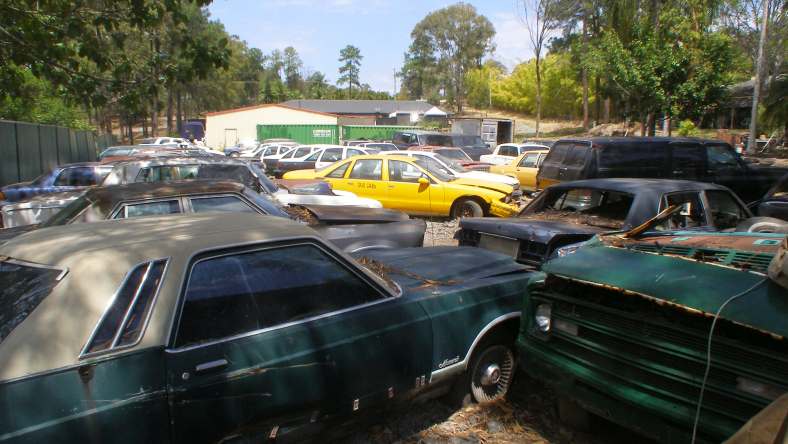
Stock for movie use. Looking past the front of the second van, Tapio’s backyard was simply full of cars he’d once used to provide movie producers with materials they needed in their work.
The Territory had no trouble dragging this load over the mountains to my shed, but I certainly had trouble getting the relic off the trailer. I had already established that neither 360 turned over, but those blocks are rare in Australia and, therefore, in some demand. I just had the job ahead of me of parting-out the rusty relics (without contracting tetanus along the way…) to be able to realise the value of the parts.
A few days later Tapio used his tilt-tray truck to deliver the second one to me and took possession of the pickup. They were placed on a concrete pad at the rear of the old factory where I rent my shed:
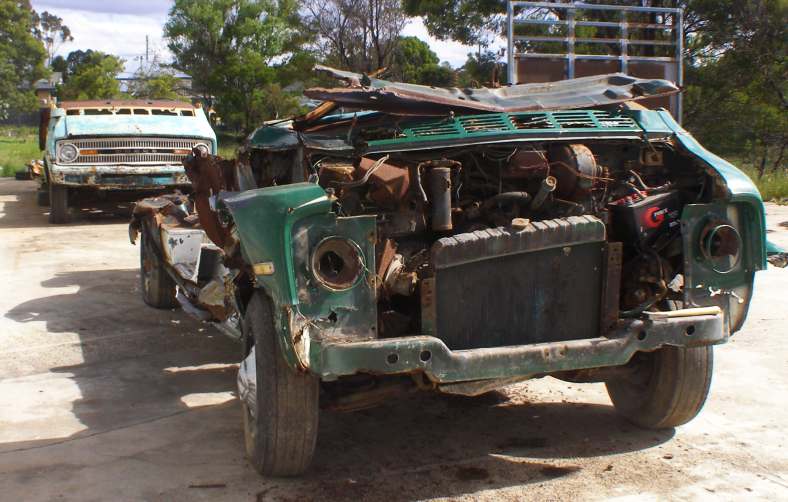
Both wrecks in place. Ready for the dismantling that I’d do in my quest to find things worth having or saleable, the landlord was going to get testy while I was carrying out this work.
A day or later Tapio phoned me, “You know how that pickup didn’t go properly?” he began, “well, I found the problem. It was only getting half-throttle!” I wished I’d known that back in the Sierra Nevada!
Then two days later his phone called me again. “Is this the man who sold Tapio the pickup?” a youngish female voice asked. When I replied that I was, the young lady identified herself as Tapio's grand daughter and continued, “Well, Tapio died of a heart attack last night and we want to know if you want to buy it back.”
Shocked, I didn’t take time to think it through, but I didn’t accept her offer. We never discussed price or anything and I will always go on wondering if I should have made a silly offer and bought it back. After all, it had roused a bit of interest when it was out front of the shed for the garage sale.
But I didn’t. I had plenty on my plate, but I still found time most weeks to go around to the Car Club’s workshop on Wednesday afternoons and see what projects were being worked on.
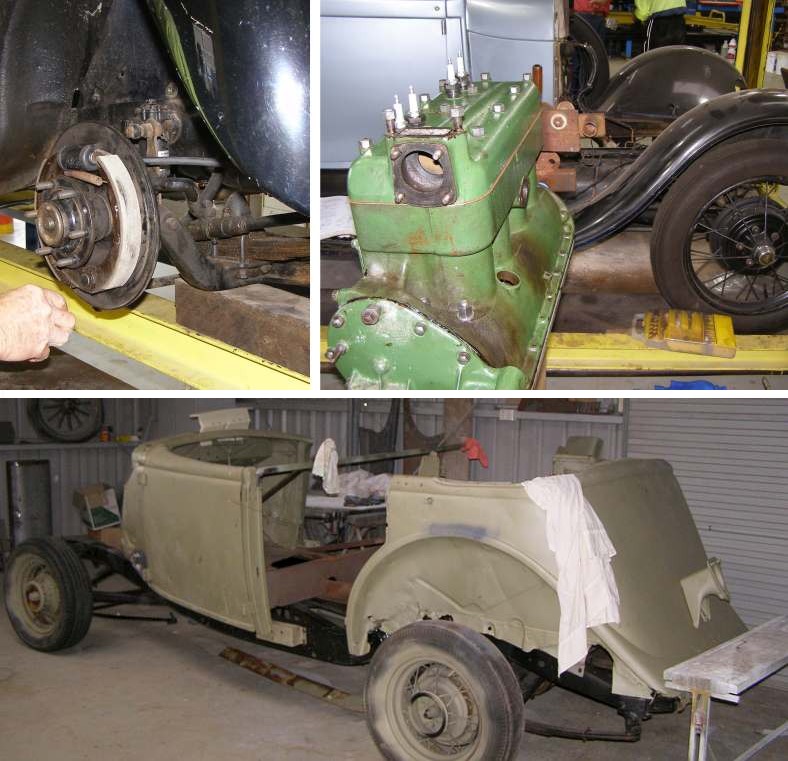
Car Club projects. The brakes of a forties Morris 8 receive attention while the engine of an A-model Ford is awaiting placement in the restored chassis. And in the paint preparation room there was a ’35 Ford Phaeton getting loving attention and some primer.
And as I drove home from the Men’s Shed one day I noticed a truck parked at Highfields with a load of these:
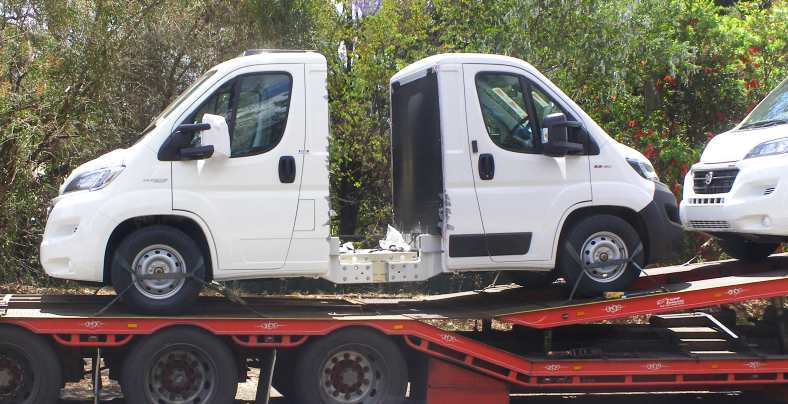
Fiat stubs. Fiat’s front wheel drive Ducato is used in a lot of applications, particularly motorhomes. So they supply them with a stub of a chassis ready for body-builders to extend and complete.
Then, in November, an opportunity presented itself for me to take a break to pursue other things. While travel into New South Wales had been so commonplace for me previously, it was now five months since my last trip and, though there were strict rules about where I could go due to Covid outbreaks in Sydney, I would be able to make a trip South.
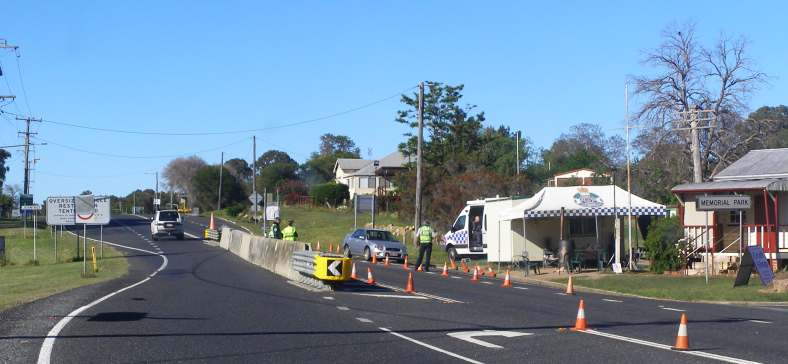
Border control. Movement between the states was severely restricted during the Covid lockdowns. This is the border control which was charged with stopping people without the appropriate pass entering Queensland from New South Wales on the New England Highway at Wallangarra.
I obtained the necessary permit, which would allow me to get back home, and set off with a good knowledge of where I could and couldn’t go while there. I was keen to see the Bolivia Hill diversion bridge progressing:
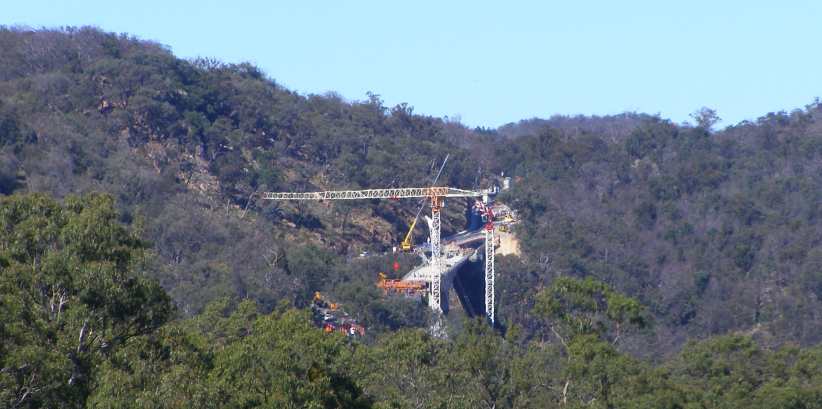
Bolivia Hill progress. From afar I could see that the bridge was far more complete than the last time I’d seen it. No doubt construction was slowed by the pandemic, all the same.
I was to enter the Sydney area from the Hawkesbury corner as this was not declared a ‘hot spot’ by the Queensland Government. So it meant a trip down the Putty Road, which starts out from Singleton and passes over the Mount Thorley coal mine:
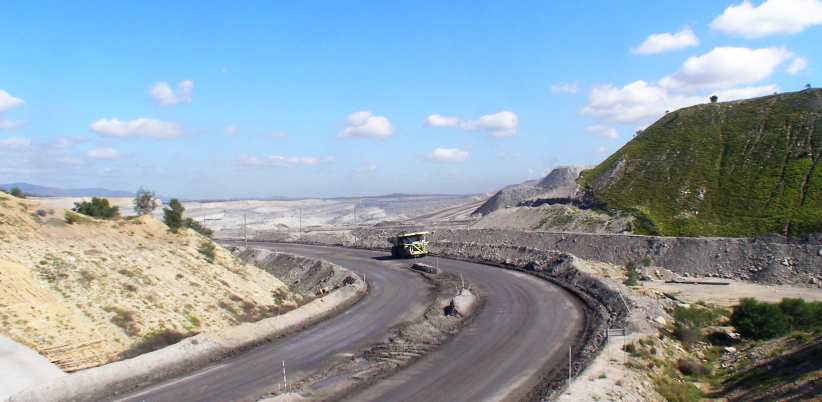
Coal mine. There’s a bridge over this access road in the mine, I stopped to get a photo of the massive open-cut mine and the dump truck.
After that, the road twists about a lot through mountainous sandstone country. I’ts an interesting drive and this time I decided to take a few photos on the way. Here’s the route from Singleton to Bob Winley’s place and then on to Bob Britton’s:
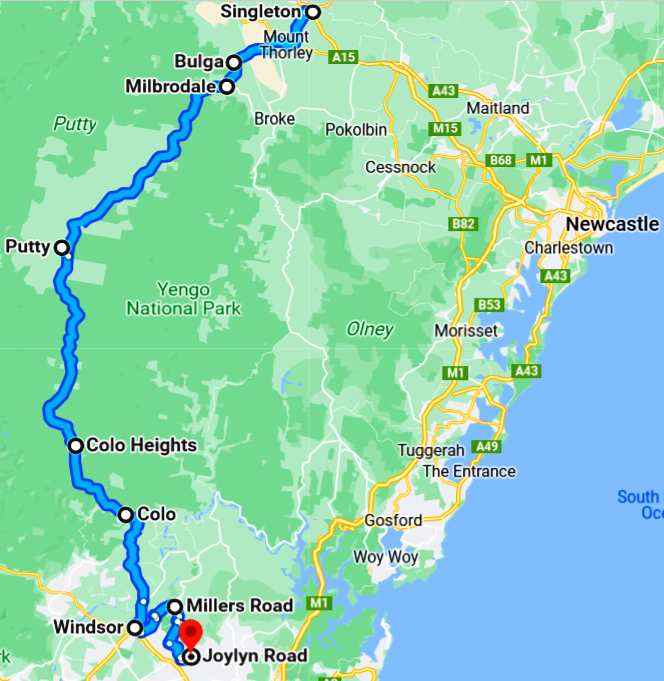
The ‘opportunity’ I mentioned related to a family event on the Sunday, but naturally enough I would take in a Saturday afternoon with Bob Britton and his visitors…
Time for a change. These need to be changed every 80,000 miles and I had one on the original engine which had – if it had been replaced when it should have been – only done about 20,000. So an hour or two was spent on this job.
Then a chance encounter at the wrecking yard led me to hedge my bets a little. I spotted a Forester of the same model there which had been very well looked after right up until someone gave it a solid hit in the left rear corner. I negotiated a deal which included me being able to do the work.
Spare engine acquired. I like to do the work myself to be sure I know nothing is damaged, which is something which can’t be said for the back of this Forester. As it was an automatic it lacked a flywheel and clutch.
In this way I knew nothing would be damaged, nor wires cut, as the engine was extracted. I also got the radiator and fan assembly and three good tyres, handy spares. But this was purely a stop-gap in case there was a delay in rebuilding one of the others.
The need to get the original engines of each of the cars into good shape saw me planning in some time at the shed tearing them down. The first one was the poor green car’s engine, which had suffered blown head gaskets. When the heads came off it was clear that the bores had suffered as expected and that buying those pistons had been a good move…
Rusty bores. With the heads off to reveal the state of the bores, I soon learned how the crankcase halves were bolted together, including the bolts with their heads in the bottom of the water jacket! They’re in the process of being removed here.
…but it was also a steep learning curve for me as I found out how these engines were put together. There was the arrangement by which the piston pins had to come out, with portals at each end of the block(s) that needed to be uncovered. When one pin was lined up for removal a pair of long-nose pliers was used to remove the circlip. Then a rod was pushed through from the other end, which was clear as the rod angle at that point got it out of the way, to poke the pins out the end of the block.
Piston pin removal. The crankcase can’t be split until the pistons come off the rods, so this method is employed. Pistons can be removed after the crankcase is dismantled.
Splitting the crankcase halves apart – without resorting to things which would damage the joint surface – was just one of the tricky bits as dowels and silicone sealant don’t want to let go easily. But I got it apart:
Crankcase comes apart. The crank and rods remain in one half as the other has come off – which didn’t happen easily. The very white round hole in the section on the left is the passage for coolant between the halves of this very complicated bit of casting.
Through this period I’d been waiting patiently for some more things to come from America. They’d been sent in two flat-rate boxes through USPS and tracking showed they took a little time to get from Kentucky to Chicago but they sat there for a long time. Eventually one parcel arrived…
Damaged goods. The first box arrived with the clutch plate and throwout, part of the drag link, spark plug inserts, pedal rubbers, idler arms, a Chevy concentric clutch slave cylinder and throwout bearing, some seals and the damaged lenses.
…and I was far from delighted with the state of the tail light and parking light lenses, which had been damaged in transit.
These parcels originated with the fact that I’d been sent the wrong clutch plate and throwout bearing, so I figured that I should take advantage of the shipping arrangement to get other things, one of which included a drag link which wouldn’t fit in the box. I understood that the one I ordered had screw-in ends, but it was a one-piece unit and so I had it cut down for shipping.
Among the things I’d had included were spark plug thread inserts, so I took a trip to Ben’s so he could have these and so I could take the Subaru crankcase there for machining. While I was there I had a look at a Hemi 6 head he had in for a bit of work:
Hemi 6 cylinder head. Ben gets all sorts of work at his shop, so a Hemi 6 head job was not unusual. In the background is a Holden head, something he sees lots of.
The other job arising from that parcel was to get the 11” clutch plate changed to a 10½” to suit the flywheel and clutch on my 360 engine. This was a job for Jim Berry so I found a 10½” clutch plate from my supply which had the same rivet pattern where it joined onto the centre. Jim was soon able to do his stuff with it.
Changing the clutch plate size. Having found a smaller clutch plate with the same rivet pattern as the 11” plate with the 19-spline centre, Jim Berry set about changing them over. It was a very expensive clutch plate.
This meant another trip to the shed, and while I was there the next-door neighbour came in to see me. “I’m having a garage sale next weekend,” he said, “if you’ve got anything to sell you’re welcome to put it out with my stuff.”
So I planned out the weekend. I would go down there and get the ’73 pickup going, drive it up in front of the shed and put a ‘for sale’ sign on it. And while I awaited eager buyers I’d spend my time pulling the second Subaru engine apart. Its bores were in good shape, having done only 163,000kms or so…
In better shape. No new pistons would be needed for this engine, it was a real shame it had to be pulled apart.
…but the bearings had suffered:
Bearings damaged. I expected this result as I dismantled the engine, but the concern was whether or not the crankshaft would need grinding.
When Ben checked the crank he pronounced it was undamaged, so with no need for pistons this will be a much less expensive rebuild than the other.
Meanwhile, several people came along and looked at the pickup, with three expressing a desire to own it. But one of those looking at it was the friend of a man named Tapio from the Gold Coast who’d looked at it a year or more earlier. He told me at the time he rented vehicles out to movie makers who needed American vehicles for use in movies made on the Gold Coast and said he’d phone me. Now his friend got my phone number to pass on to Tapio because he’d lost my number.
And as I made all these trips between Toowoomba and The Summit I encountered other kinds of cars and other kinds of people. I usually made a stop at the Rest Area at Allora when going one way or the other, and one afternoon I encountered a gentleman who enjoyed Historic Racing with this little car:
Austin 7 racer. Not my cup of tea, but many people do get a kick out of making little cars like these perform better than the makers envisaged.
Little side-valve engines with two-bearing crankshafts sound a bit pedestrian to me, but some people simply delight in making them quick and even reliable.
Still the Men’s Shed was getting regular visits, the two mornings a week being filled with getting little jobs done. One of the projects I was working slowly towards fruition during this period was preparing to adapt A833 gearboxes to the Hemi 6 engine, and I had a big of a shortcut to help me get this done.
The Hemi 6 came with a modified version of the Borg-Warner 35 automatic transmission and it sported a separate torque converter housing. This housing is a bit over an inch shallower than the regular Chrysler manual bellhousing, that meant I could get a casting done to use as a sandwich plate between that housing and the A833. Now I was making the drilling jigs for those castings.
Truck flywheel. A stepped flywheel from a 318 truck engine provided me with something large enough I could use as a face plate when the time comes to put castings on the lathe for machining.
Old flywheel repurposed. This is a Mopar flywheel of some kind, sent to me ‘in error’ by someone I bought other gear from when I was importing a lot of A833s and associated parts. I machined it so it would locate in the step in the back of the housing to enable me to accurately drill the bolt pattern which, in turn, would be transferred to the sandwich plate once machined.
Of course, this kind of thing was really a means of filling in my time at the Men’s Shed. Learning more as I went, eventually I would gain a lot of skills there. But as the time went on it became more difficult to see the path ahead of me for the work I’d been doing, and after six months of my income being government subsidised, that subsidy was reduced. Ahead was the prospect that it would end.
I had to look for other work to do, work which fitted into my ‘skill set’ and the men at the Men’s Shed actually gave me the clue. One of them suggested I take on pilot or escort work, escorting oversize loads on the highways, as he had done for a while.
The thought was good, I made enquiries and was introduced to Dennis Barber, who was still working at this. It required that I complete a questionnaire at the Motor Registry with no fewer than 23 correct answers out of 25, then there would be a fee, and then I’d be licensed. It took me three attempts to get the answers right (they were different questions each time) and after I’d paid the fee there was a three-week wait for the licence to come through.
And then I had to prepare a vehicle for the job. That would be the Territory. But in the meantime the second of the two parcels from America had arrived:
Another Quadrajet. My spare engine for the B350 didn’t have a carburettor, so getting another Quadrajet while I was shipping stuff wasn’t a bad idea. The other end of that drag link came in this parcel too.
By the beginning of November I was working on the Territory project. The first thing was I had to fit fog lights to serve as wig-wag lights, necessary when escorting a load more than 15’ wide…
Fog lights. Further reason to be unhappy with the Territory. Fog lights clip into mouldings in the back of the plastic bumper bar. The little grille is the ‘hole filler’ for cars without the fog lights.
I purchased a frame owned by Dennis which was fitted with the roof sign and rotating beacons as well as the two aerials for UHF radios required for this work. I thought, “This will be easy, just clamp that onto the bars across the roof!”
Then I looked closely at the situation. The bars clip into stainless steel rails running along each side of the roof, I looked even more closely and found there were just five 6mm countersunk stainless steel screws along each side of the roof holding these down.
The rooftop dilemma. I quickly decided that five screws wouldn’t be enough, so I went back to the wrecking yard and got more of the brass bolts that anchor the screws. But I had to make up a device for dimpling the rail once I’d drilled it. And then I found that a little 5mm pin mounted in plastic held the bars into the rails. But, with the plastic trim it all looked so solid and neat!
The process of working through this wasn’t endearing me to the Ford design staff. I was thinking about me driving along with the big sign fixed to the bars, then having that withstand the force of wind of an oncoming pantechnicon doing 60mph! My next step, then, was to make a better, stronger bar with more fixings to take that load.
I kept on thinking about all of this as I was dealing with Tapio, who phoned me a couple of days after the garage sale. Yes, he wanted to buy the pickup, he came up and met me at the shed and we started the negotiation. I wanted $5,200 (just what it cost me landed in Australia) and he suggested that I might like to take a couple of vans the same as mine in part trade.
“Vans the same as mine?” We had to have a conversation about this. He assured me he had two vans, they might be older models, but they had 360s and 727s, but they’d been severely rusted and he’d cut the upper bodies off them. I took a trip to the Gold Coast to look at them and we came to a deal which included me taking possession of his two vans:
Picking up a ‘van’. Borrowing a trailer from a friend at the Men’s Shed, a second trip to the Gold Coast saw us struggle to get what was left of one van on board. Some wheels were shed in the process.
While I was at Tapio’s I saw that he indeed had a number of American vehicles, not to mention several Rolls-Royces, which had seen service in the movie-making business.
Stock for movie use. Looking past the front of the second van, Tapio’s backyard was simply full of cars he’d once used to provide movie producers with materials they needed in their work.
The Territory had no trouble dragging this load over the mountains to my shed, but I certainly had trouble getting the relic off the trailer. I had already established that neither 360 turned over, but those blocks are rare in Australia and, therefore, in some demand. I just had the job ahead of me of parting-out the rusty relics (without contracting tetanus along the way…) to be able to realise the value of the parts.
A few days later Tapio used his tilt-tray truck to deliver the second one to me and took possession of the pickup. They were placed on a concrete pad at the rear of the old factory where I rent my shed:
Both wrecks in place. Ready for the dismantling that I’d do in my quest to find things worth having or saleable, the landlord was going to get testy while I was carrying out this work.
A day or later Tapio phoned me, “You know how that pickup didn’t go properly?” he began, “well, I found the problem. It was only getting half-throttle!” I wished I’d known that back in the Sierra Nevada!
Then two days later his phone called me again. “Is this the man who sold Tapio the pickup?” a youngish female voice asked. When I replied that I was, the young lady identified herself as Tapio's grand daughter and continued, “Well, Tapio died of a heart attack last night and we want to know if you want to buy it back.”
Shocked, I didn’t take time to think it through, but I didn’t accept her offer. We never discussed price or anything and I will always go on wondering if I should have made a silly offer and bought it back. After all, it had roused a bit of interest when it was out front of the shed for the garage sale.
But I didn’t. I had plenty on my plate, but I still found time most weeks to go around to the Car Club’s workshop on Wednesday afternoons and see what projects were being worked on.
Car Club projects. The brakes of a forties Morris 8 receive attention while the engine of an A-model Ford is awaiting placement in the restored chassis. And in the paint preparation room there was a ’35 Ford Phaeton getting loving attention and some primer.
And as I drove home from the Men’s Shed one day I noticed a truck parked at Highfields with a load of these:
Fiat stubs. Fiat’s front wheel drive Ducato is used in a lot of applications, particularly motorhomes. So they supply them with a stub of a chassis ready for body-builders to extend and complete.
Then, in November, an opportunity presented itself for me to take a break to pursue other things. While travel into New South Wales had been so commonplace for me previously, it was now five months since my last trip and, though there were strict rules about where I could go due to Covid outbreaks in Sydney, I would be able to make a trip South.
Border control. Movement between the states was severely restricted during the Covid lockdowns. This is the border control which was charged with stopping people without the appropriate pass entering Queensland from New South Wales on the New England Highway at Wallangarra.
I obtained the necessary permit, which would allow me to get back home, and set off with a good knowledge of where I could and couldn’t go while there. I was keen to see the Bolivia Hill diversion bridge progressing:
Bolivia Hill progress. From afar I could see that the bridge was far more complete than the last time I’d seen it. No doubt construction was slowed by the pandemic, all the same.
I was to enter the Sydney area from the Hawkesbury corner as this was not declared a ‘hot spot’ by the Queensland Government. So it meant a trip down the Putty Road, which starts out from Singleton and passes over the Mount Thorley coal mine:
Coal mine. There’s a bridge over this access road in the mine, I stopped to get a photo of the massive open-cut mine and the dump truck.
After that, the road twists about a lot through mountainous sandstone country. I’ts an interesting drive and this time I decided to take a few photos on the way. Here’s the route from Singleton to Bob Winley’s place and then on to Bob Britton’s:
The ‘opportunity’ I mentioned related to a family event on the Sunday, but naturally enough I would take in a Saturday afternoon with Bob Britton and his visitors…
Last edited by Ray Bell; Mar 2, 2022 at 02:12 AM.
Thread Starter
|
Captain
Joined: Oct 2005
Posts: 568
Likes: 8
From: The Summit, Queensland, Australia
I first travelled the Putty Road in 1965 as a passenger in a Holden EH station wagon. That vehicle was towing a TVR Grantura on a trailer and we were en route to Lakeside racing circuit North of Brisbane. The driver was a young man on his way to becoming an Australian Road Racing Champion, Kevin Bartlett.
But prior to that I had heard much about this road. Workmates who came from the New England area talked about rapid trips home for weekends, getting up to great speed on a road almost free of traffic in those days when open road speed limits didn’t exist. And I knew that trucks used it to get a quicker run than they would struggling with traffic on the main highway between Sydney and Newcastle prior to the expressway being (progressively) built from the early-sixties.
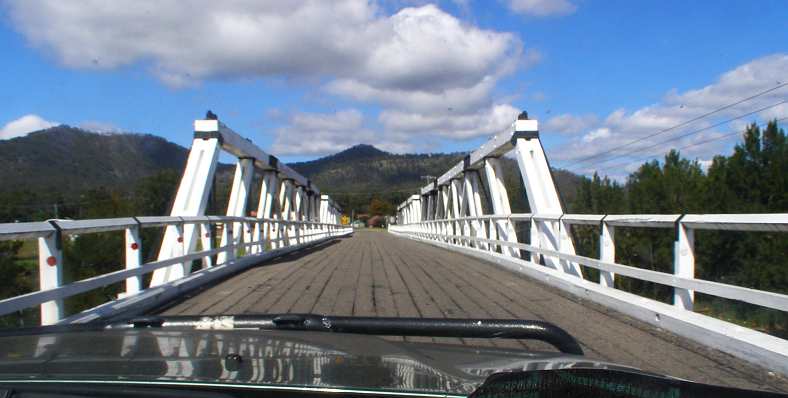
Bulga bridge. Once past the coalmine area, it’s the little town of Bulga which signals the real start of the Putty Road these days. This narrow bridge leads to a 90° bend into the brief ‘main street’ of Bulga.
A hotel is the main building in the town, of course, and as one heads out of town the Police Station is there on the right. For a distance there are long sweeping curves between farms in relatively flat country all the way to Milbrodale.
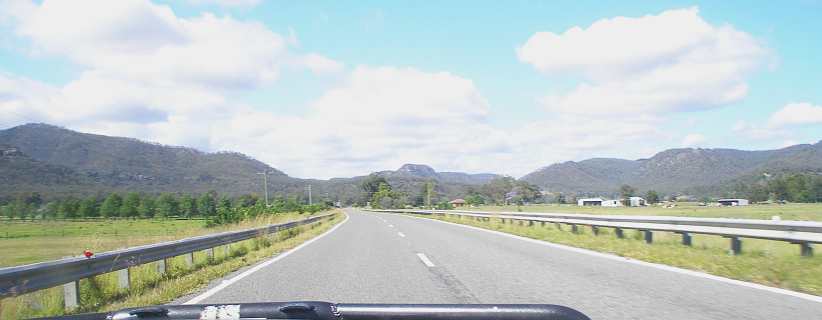
Flats to Milbrodale. With the coming mountainous areas in the background, this stretch is easy going with nothing to impede one’s progress.
Quickly the setting for this road changed from the meanderings it had made through the open-cut coal mines heading down from Singleton. Cleaner and greener, it quickly gets the traveller on his way. And at Milbrodale there’s a reminder of more of what the road used to be:
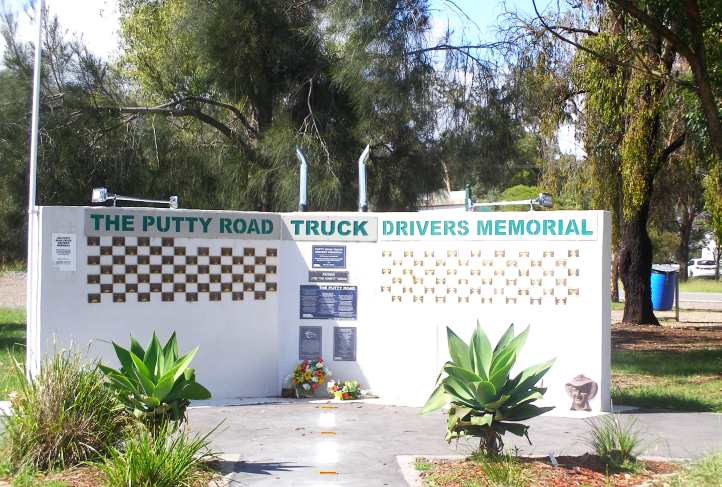
Milbrodale Memorial. This memorial wall remembers no fewer than forty-one truck drivers who’ve perished on this road. It was, as I said, a quicker way, but it was also a way used by some who weren’t as keen about complying with the laws as they might be.
There is more detail about the memorial on the internet, simply google ‘Putty Road truckdrivers memorial wall’.
It isn’t far from Milbrodale to where the real flavour of the Putty Road begins to confront you in earnest. After a little more swift running, a warning sign comes up to tell motorcyclists to reduce their speed and that’s quickly followed by the first of many ‘speed advisory’ signs for a lower-speed corner…
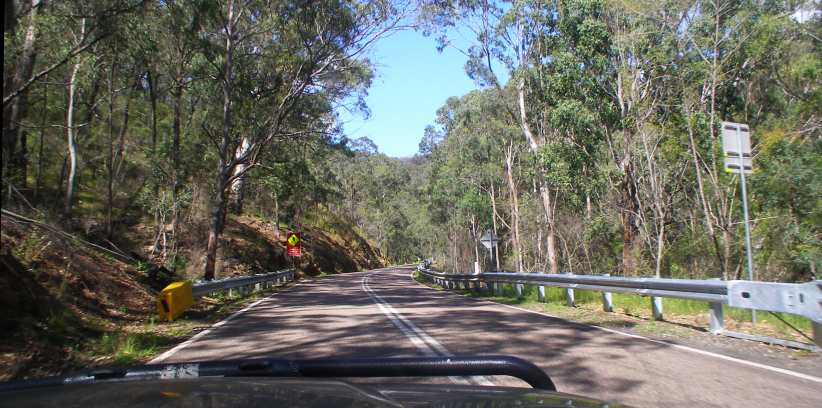
Into the hills. The motorcycle warning sign is seen here, the speed advisory sign has blended into the background, but the bend in the road that starts the serious twists and turns of the Putty Road can clearly be seen.
…as the road lines up alongside Darkey Creek, which it follows for several miles. Sometimes we drive to the left of the creek, others we cross to the right. The first crossing is at this bridge, which becomes something of a landmark to regular users of this road:
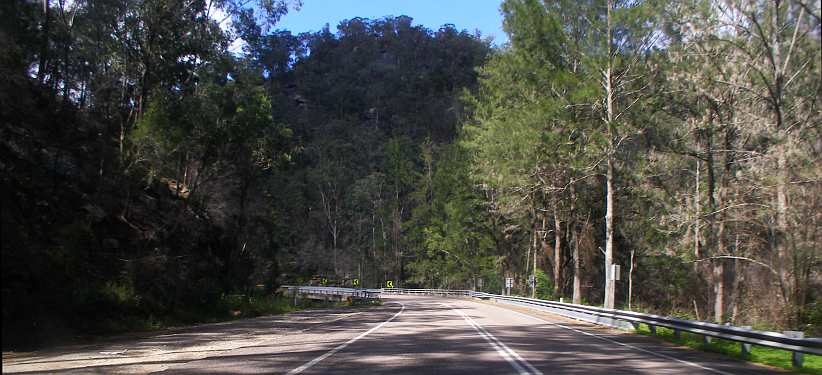
Crossing Darkey Creek. To this point the corners have been mid-range to fast, then the curve over this bridge leads to a much tighter stretch.
A sandstone wall on the right and Armco railing on the left confines the road right through this stretch. Short straights and lots of corners are there to be enjoyed by enthusiastic drivers, dreaded by those not so keen, while Darkey Creek is down there to the left while some tall straight trees stand out in a place where darkness in the foliage provides camouflage for most things.
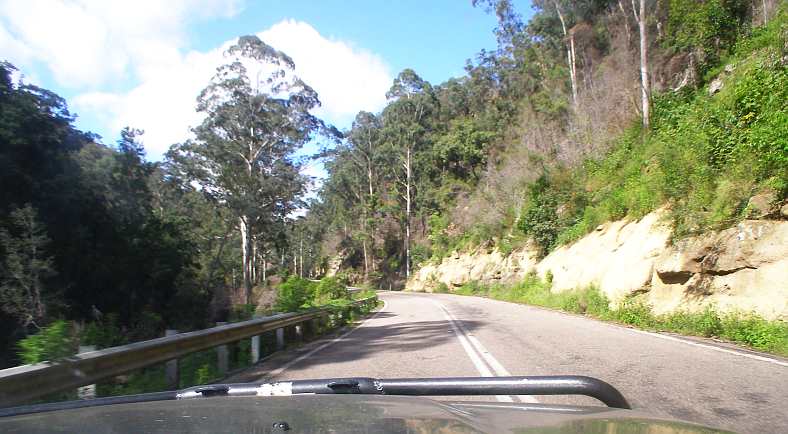
Flattering to deceive? If all the corners on this stretch were like this it wouldn’t daunt the faint-hearted so much, but there is much more to come.
Like so many parts of the Putty Road, one has to admire the road-builders who’ve carved this path out of sandstone and in time turned it into a decent road.
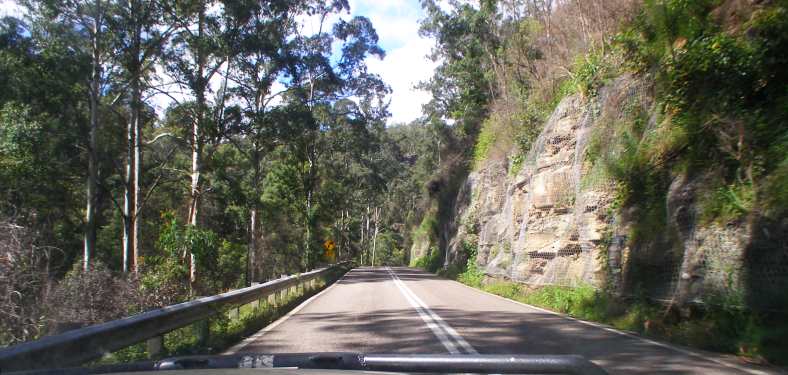
Slow corners. As the road levels off at the top of this straight there’s a bend to the right which has a speed advisory sign of 45kmh and there’s no room for error.
And periodically there is a need for the maintenance crews to come in and keep it intact…
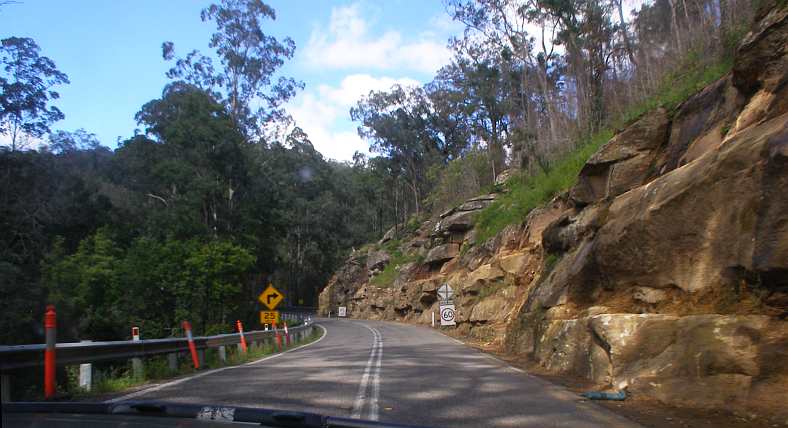
Maintenance needed. The creek has apparently tried to claim some of the support strata here, bringing out the workers charged with keeping the road usable.
…so that their ‘Road Works’ speed limit is much closer to the speed recommended for the next bend – 25kmh. While a few of the corners are marked for 25kmh and 35kmh, others are a bit quicker:
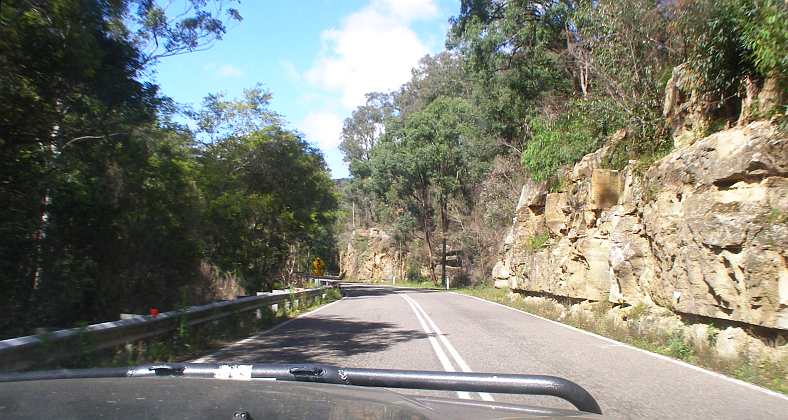
Faster? Keeping up the pressure here, we now strike a series of bends with an advised speed of 55kmh. These can easily be attacked at 50mph, but once again there is no room for error.
All of this has been distinctly a climb, then the elevation eased up for a bit and the road crosses Darkey Creek three times in succession, so that the creek is on the right. And with a bit more climbing the creek is no longer such a close part of the scenery. The road has been carved higher because we have to get over the hill to reach the next stage. But right now we’re still climbing…
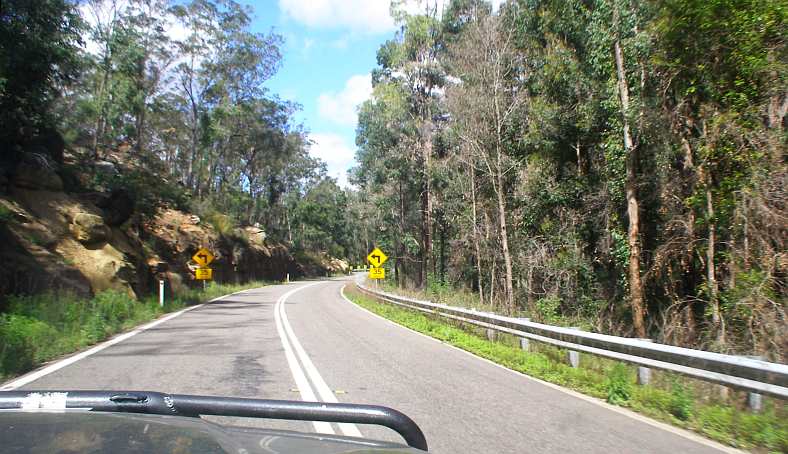
Tight left. Now the creek’s on the right and the sandstone on the left, but the corners (this one signed at 35kmh) keep on coming just the same.
…and there’s a passing lane coming up too:
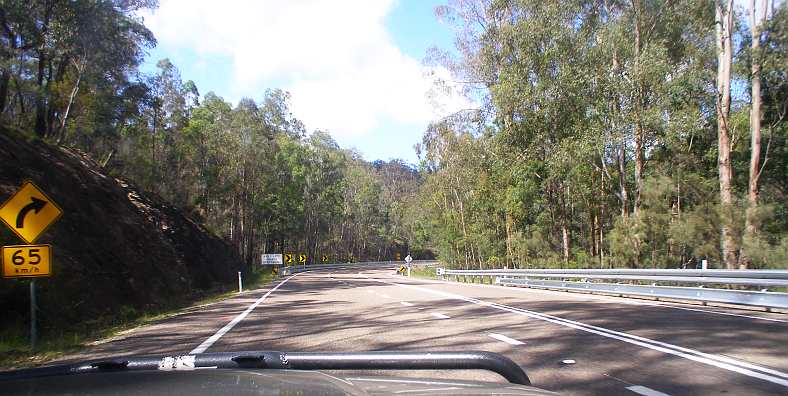
Welcome sight. This passing lane is a feature of this climb, so welcome when one has caught up to slower vehicles, particularly trucks.
Sometimes, of course, you find you’re not the quickest traveller on the road. And so the passing lane is to someone else’ advantage. In this case a bike has caught and passed me:
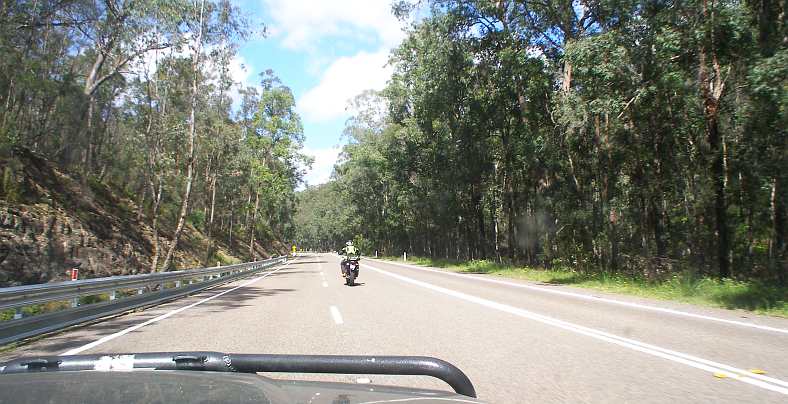
Bike territory. Motorcyclists have found the light traffic and the style of this road to their liking. And the provision of the extra railing below the Armco at the left shows that the authorities have thought of them too.
The passing lane ended too soon on this run, as I caught up to this truck as the top of the climb neared. But the downhill run should help him once he got around the coming slow bend:
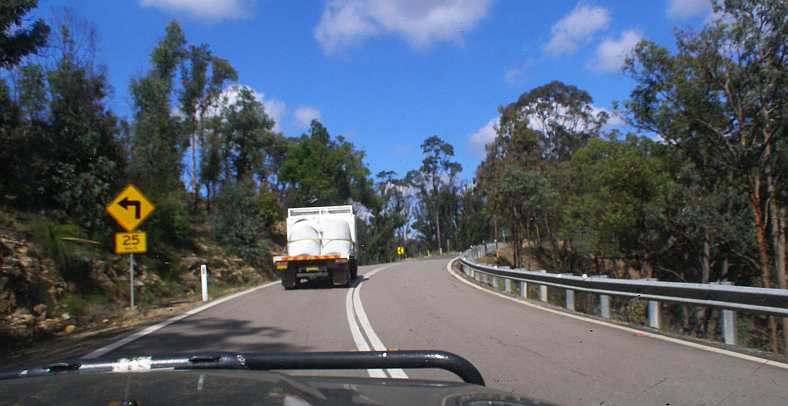
Catching a truck. Not a big truck, not many of them are seen on this road these days. Very likely making a delivery to one of the farms in Howes Valley, just ahead.
It was on that following descent that Janet and I once stopped to help a motorcyclist. He’d got a bee in his helmet and as he was distracted by that had hit a bump mid-corner and come off his bike. We were all headed North that trip and somehow he’d picked up his bike and got it off the road, then he pretty much collapsed. He had a friend following who was helping, and after we arrived another driver pulled up.
While the poor motorcyclist lay on the ground between the road and the Armco this jerk decided his heart had stopped and he started pounding his chest! We soon stopped that and he left and another driver going by offered to stop at Bulga and call an ambulance. When the ambulance arrived they decided to call a helicopter to take this bloke out of there, the police were there too and at one stage I was asked to drive the police car down to the area where the chopper had landed.
As it turned out, the whole lot was a bit of a wasted effort as he wasn’t really hurt, possibly in shock more than anything, but it’s another of those little adventures on the Putty Road.
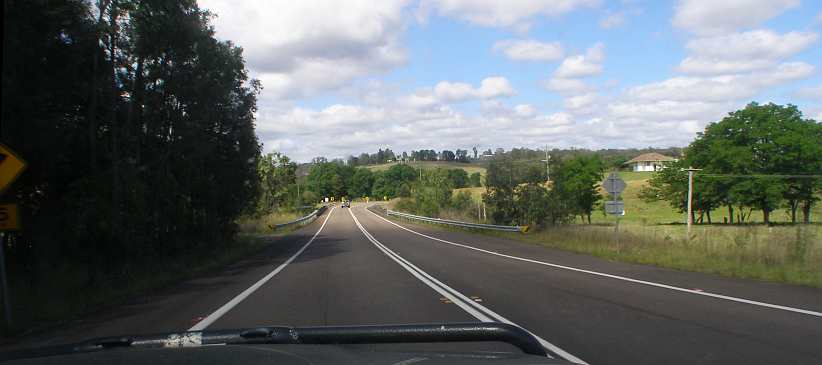
Howes Valley. After crossing that stretch of mountains, there was some easy going through an area called Howes Valley. Along here there are a number of farms and some get-away-from-it-all homes.
Some sweeping bends are presented in this stretch, interspersed with a couple of twists over hills. It’s one of the few places along the road that you are aware that people actually live here. The bottom of this hill sees a couple of ess-bends over a bridge, these can be ‘challenging’ at speed but no real problem.
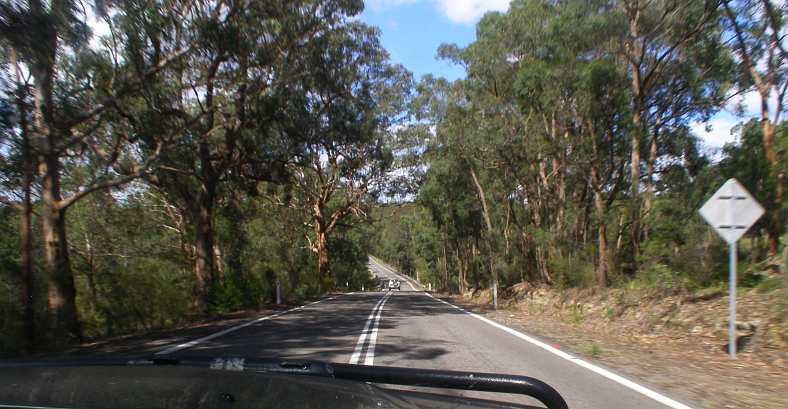
More trees. No, there’s no shortage of trees along the Putty Road! They rush by unnoticed as more attention is concentrated on watching what the road will throw up next.
We’re now quite some distance into the drive. Perhaps forty miles out of Singleton and most trips seeing very little traffic. In fact, I recall several trips from South to North where I’ve started on the road after 10:30 on a Sunday night and seen one – yes, just one! – oncoming vehicle in the whole hundred miles.
Someone pointed out once that there wouldn’t be many roads anywhere which start so close to a capital city (about 42 miles from the centre of Sydney) and are so uninhabited for such a long distance. And speaking of distance, for a long time this place…
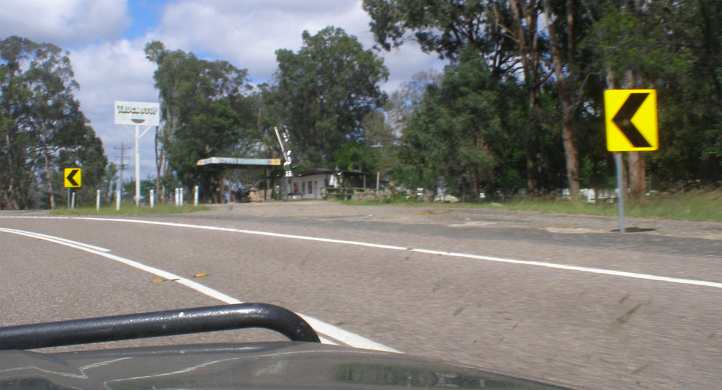
Halfway Roadhouse. Now ruined by fire, this roadhouse was everyone’s stopping point along the Putty Road for a very long time. I previously posted a photo of the van parked in front on its inaugural trip home from Sydney.
…provided travellers with refreshments and a place to rest. But once it was burned down there was nowhere to stop between Colo Heights and Bulga until the Grey Gums (also shown previously, about 8 miles further South) opened.
The next mystery about the Putty Road is this:
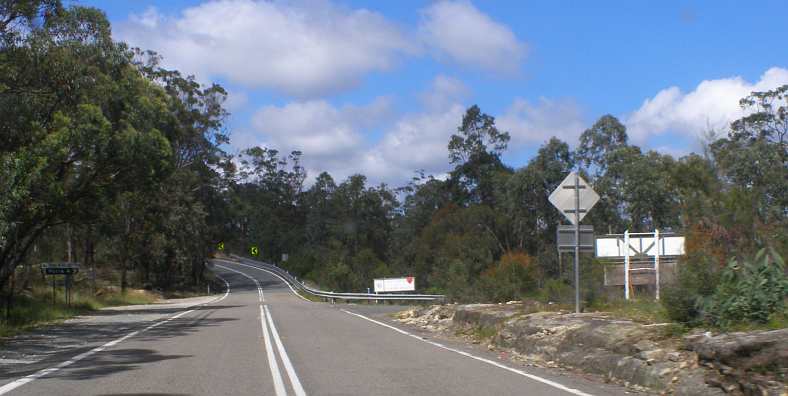
Putty Valley Road. The locality of Putty is actually a few miles off the road. A run down this road takes you to a row of mailboxes, but you see little else.
So how did early settlers find this place? Why did they come here, so far from everything in the days of the horse and cart, to create their farms? What kind of people were they?
The answers I don’t have, though I suppose I could ask my cousin and get some ideas. His mother was born here and used to visit family from time to time. They lived near Taree and she used to get a train to Singleton and then hire a taxi to come out to their farm – at a time when the Putty Road was gravel and little-used.
Once the twists of this section are covered, and there are many, some long straights come up…
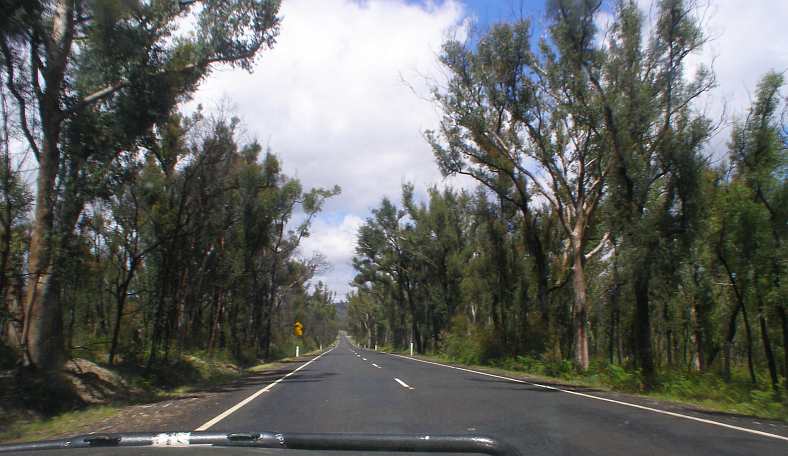
Long straight. I guess these are the parts of the road which enabled those quick trips of my friends (and assorted trucks) in the sixties and early seventies. Note that the trees here are recovering from recent bushfires.
…which enable the average speed to rise appreciably. It’s no wonder that the motorcyclists like getting out here, the variety the road offers plus the lack of traffic. And on the subject of those trees, this is an opportunity to show how eucalypt trees regenerate from fires.
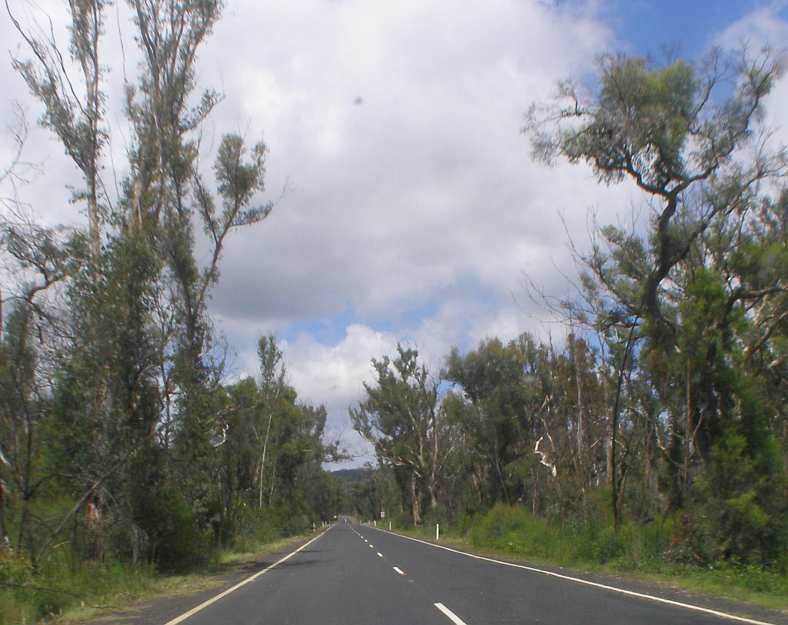
Foliage regeneration. Compare the trees in this pic with those of the earlier pictures, particularly the ones after the Howes Valley picture. Note that new growth is coming directly from the trunks and larger boughs of the trees to give them their needed transpiration.
Trees, of course, cannot survive without their leaf foliage, it’s their means of breathing. So once the foliage is burned off the smaller branches, the tree sends out new shoots to get leaves working to keep them alive quite quickly.
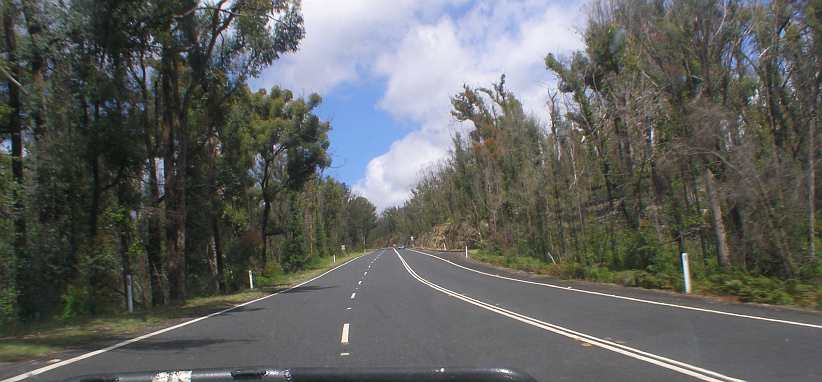
Steep climb. I have strong memories of this hill, too. A steep climb with a passing lane provided, it’s a bit of a landmark for regular drivers on the road.
Once, back in 1990, Janet and I were travelling through and came across a roadblock at the top of this hill. Cars had been pulled up for some time and we learned that a semi-trailer had crashed at the bottom of the hill. We waited it out for about two hours that morning. I feel sure this would have been one of the names on that memorial.
Winding its way across the top of the sandstone plateau, the road finds its path through the bush, soon showing signs that human habitation might be near. We’re now nearing the little village of Colo Heights.
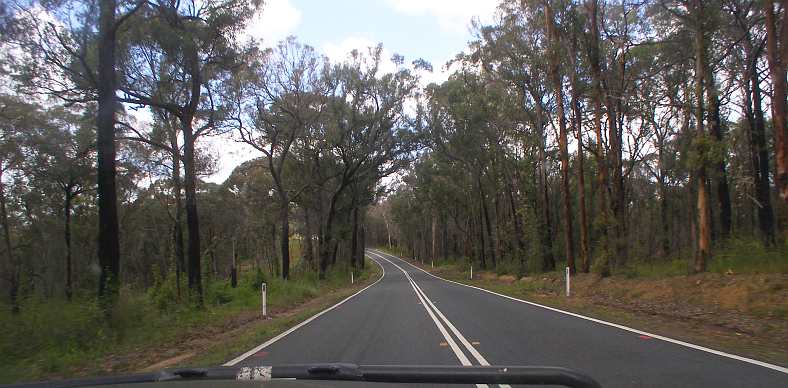
Towards Colo Heights. Fast open sweeps following the contours and between the trees lead towards the cluster of homes, a school and a shop that service the area.
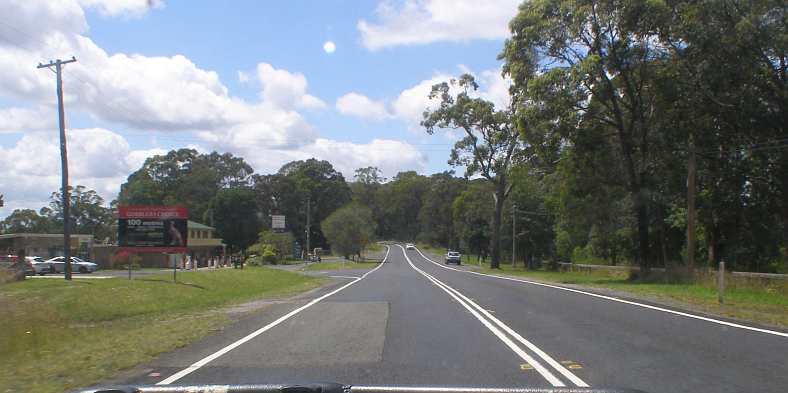
Colo Heights store. Fuel is available here, too, but most stopping here would be after refreshments. The school is to the right and caters for children up to about 11 years old. Others get a bus to Windsor.
Soon after this we travel along a narrow section of the plateau, with severe drops into the valleys on each side. Then there’s the steep descent into Colo…
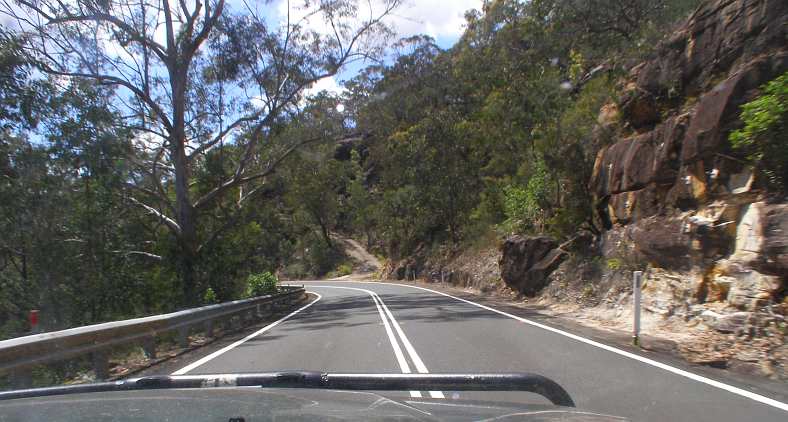
Steep descent. Yet another section with Armco on one side and a sandstone cliff on the other, the bends get tighter as we go further down the steep hill to Colo.
…where there’s a camping area and the river invites swimming.
And after crossing the bridge and climbing yet another steep and tight piece of road we once again travel along the top of a plateau:
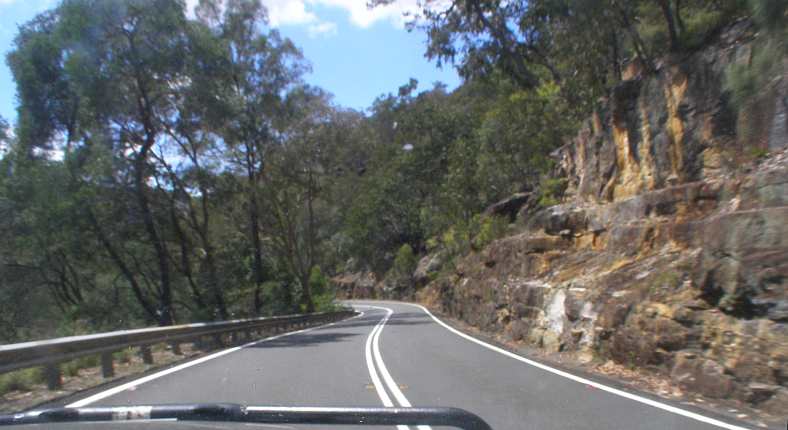
More winding. The nature of the plateau demands that the road wind from one place to another, the placement of the cliffs and fences to the left and right changing periodically.
Finally we reach a point where a road goes off to the right to Kurrajong. The final ten or twelve miles of the road is littered with little farmlets, though it’s still carving its way through sandstone obstacles occasionally, it goes through the growing village of Wilberforce and then alongside the Nepean River to the Windsor Bridge:
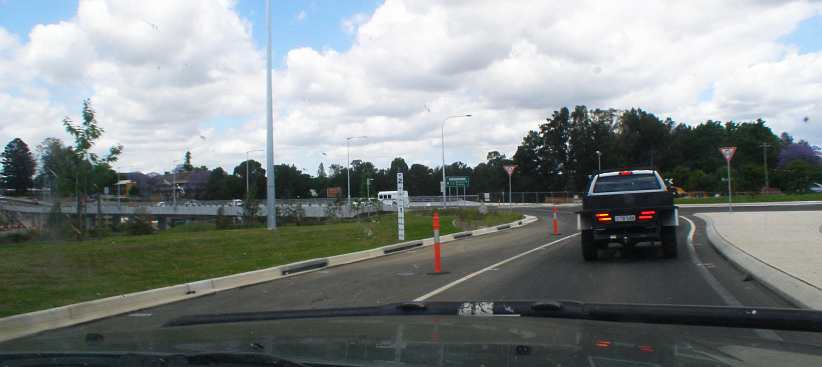
Windsor Bridge. Recently replaced, but not flood-proofed, this signals our arrival at Windsor and the end of the Putty Road. Also the start of heavy traffic.
From here it would not be far to Bob Winley’s place and a very interesting day at Bob Britton’s…
But prior to that I had heard much about this road. Workmates who came from the New England area talked about rapid trips home for weekends, getting up to great speed on a road almost free of traffic in those days when open road speed limits didn’t exist. And I knew that trucks used it to get a quicker run than they would struggling with traffic on the main highway between Sydney and Newcastle prior to the expressway being (progressively) built from the early-sixties.
Bulga bridge. Once past the coalmine area, it’s the little town of Bulga which signals the real start of the Putty Road these days. This narrow bridge leads to a 90° bend into the brief ‘main street’ of Bulga.
A hotel is the main building in the town, of course, and as one heads out of town the Police Station is there on the right. For a distance there are long sweeping curves between farms in relatively flat country all the way to Milbrodale.
Flats to Milbrodale. With the coming mountainous areas in the background, this stretch is easy going with nothing to impede one’s progress.
Quickly the setting for this road changed from the meanderings it had made through the open-cut coal mines heading down from Singleton. Cleaner and greener, it quickly gets the traveller on his way. And at Milbrodale there’s a reminder of more of what the road used to be:
Milbrodale Memorial. This memorial wall remembers no fewer than forty-one truck drivers who’ve perished on this road. It was, as I said, a quicker way, but it was also a way used by some who weren’t as keen about complying with the laws as they might be.
There is more detail about the memorial on the internet, simply google ‘Putty Road truckdrivers memorial wall’.
It isn’t far from Milbrodale to where the real flavour of the Putty Road begins to confront you in earnest. After a little more swift running, a warning sign comes up to tell motorcyclists to reduce their speed and that’s quickly followed by the first of many ‘speed advisory’ signs for a lower-speed corner…
Into the hills. The motorcycle warning sign is seen here, the speed advisory sign has blended into the background, but the bend in the road that starts the serious twists and turns of the Putty Road can clearly be seen.
…as the road lines up alongside Darkey Creek, which it follows for several miles. Sometimes we drive to the left of the creek, others we cross to the right. The first crossing is at this bridge, which becomes something of a landmark to regular users of this road:
Crossing Darkey Creek. To this point the corners have been mid-range to fast, then the curve over this bridge leads to a much tighter stretch.
A sandstone wall on the right and Armco railing on the left confines the road right through this stretch. Short straights and lots of corners are there to be enjoyed by enthusiastic drivers, dreaded by those not so keen, while Darkey Creek is down there to the left while some tall straight trees stand out in a place where darkness in the foliage provides camouflage for most things.
Flattering to deceive? If all the corners on this stretch were like this it wouldn’t daunt the faint-hearted so much, but there is much more to come.
Like so many parts of the Putty Road, one has to admire the road-builders who’ve carved this path out of sandstone and in time turned it into a decent road.
Slow corners. As the road levels off at the top of this straight there’s a bend to the right which has a speed advisory sign of 45kmh and there’s no room for error.
And periodically there is a need for the maintenance crews to come in and keep it intact…
Maintenance needed. The creek has apparently tried to claim some of the support strata here, bringing out the workers charged with keeping the road usable.
…so that their ‘Road Works’ speed limit is much closer to the speed recommended for the next bend – 25kmh. While a few of the corners are marked for 25kmh and 35kmh, others are a bit quicker:
Faster? Keeping up the pressure here, we now strike a series of bends with an advised speed of 55kmh. These can easily be attacked at 50mph, but once again there is no room for error.
All of this has been distinctly a climb, then the elevation eased up for a bit and the road crosses Darkey Creek three times in succession, so that the creek is on the right. And with a bit more climbing the creek is no longer such a close part of the scenery. The road has been carved higher because we have to get over the hill to reach the next stage. But right now we’re still climbing…
Tight left. Now the creek’s on the right and the sandstone on the left, but the corners (this one signed at 35kmh) keep on coming just the same.
…and there’s a passing lane coming up too:
Welcome sight. This passing lane is a feature of this climb, so welcome when one has caught up to slower vehicles, particularly trucks.
Sometimes, of course, you find you’re not the quickest traveller on the road. And so the passing lane is to someone else’ advantage. In this case a bike has caught and passed me:
Bike territory. Motorcyclists have found the light traffic and the style of this road to their liking. And the provision of the extra railing below the Armco at the left shows that the authorities have thought of them too.
The passing lane ended too soon on this run, as I caught up to this truck as the top of the climb neared. But the downhill run should help him once he got around the coming slow bend:
Catching a truck. Not a big truck, not many of them are seen on this road these days. Very likely making a delivery to one of the farms in Howes Valley, just ahead.
It was on that following descent that Janet and I once stopped to help a motorcyclist. He’d got a bee in his helmet and as he was distracted by that had hit a bump mid-corner and come off his bike. We were all headed North that trip and somehow he’d picked up his bike and got it off the road, then he pretty much collapsed. He had a friend following who was helping, and after we arrived another driver pulled up.
While the poor motorcyclist lay on the ground between the road and the Armco this jerk decided his heart had stopped and he started pounding his chest! We soon stopped that and he left and another driver going by offered to stop at Bulga and call an ambulance. When the ambulance arrived they decided to call a helicopter to take this bloke out of there, the police were there too and at one stage I was asked to drive the police car down to the area where the chopper had landed.
As it turned out, the whole lot was a bit of a wasted effort as he wasn’t really hurt, possibly in shock more than anything, but it’s another of those little adventures on the Putty Road.
Howes Valley. After crossing that stretch of mountains, there was some easy going through an area called Howes Valley. Along here there are a number of farms and some get-away-from-it-all homes.
Some sweeping bends are presented in this stretch, interspersed with a couple of twists over hills. It’s one of the few places along the road that you are aware that people actually live here. The bottom of this hill sees a couple of ess-bends over a bridge, these can be ‘challenging’ at speed but no real problem.
More trees. No, there’s no shortage of trees along the Putty Road! They rush by unnoticed as more attention is concentrated on watching what the road will throw up next.
We’re now quite some distance into the drive. Perhaps forty miles out of Singleton and most trips seeing very little traffic. In fact, I recall several trips from South to North where I’ve started on the road after 10:30 on a Sunday night and seen one – yes, just one! – oncoming vehicle in the whole hundred miles.
Someone pointed out once that there wouldn’t be many roads anywhere which start so close to a capital city (about 42 miles from the centre of Sydney) and are so uninhabited for such a long distance. And speaking of distance, for a long time this place…
Halfway Roadhouse. Now ruined by fire, this roadhouse was everyone’s stopping point along the Putty Road for a very long time. I previously posted a photo of the van parked in front on its inaugural trip home from Sydney.
…provided travellers with refreshments and a place to rest. But once it was burned down there was nowhere to stop between Colo Heights and Bulga until the Grey Gums (also shown previously, about 8 miles further South) opened.
The next mystery about the Putty Road is this:
Putty Valley Road. The locality of Putty is actually a few miles off the road. A run down this road takes you to a row of mailboxes, but you see little else.
So how did early settlers find this place? Why did they come here, so far from everything in the days of the horse and cart, to create their farms? What kind of people were they?
The answers I don’t have, though I suppose I could ask my cousin and get some ideas. His mother was born here and used to visit family from time to time. They lived near Taree and she used to get a train to Singleton and then hire a taxi to come out to their farm – at a time when the Putty Road was gravel and little-used.
Once the twists of this section are covered, and there are many, some long straights come up…
Long straight. I guess these are the parts of the road which enabled those quick trips of my friends (and assorted trucks) in the sixties and early seventies. Note that the trees here are recovering from recent bushfires.
…which enable the average speed to rise appreciably. It’s no wonder that the motorcyclists like getting out here, the variety the road offers plus the lack of traffic. And on the subject of those trees, this is an opportunity to show how eucalypt trees regenerate from fires.
Foliage regeneration. Compare the trees in this pic with those of the earlier pictures, particularly the ones after the Howes Valley picture. Note that new growth is coming directly from the trunks and larger boughs of the trees to give them their needed transpiration.
Trees, of course, cannot survive without their leaf foliage, it’s their means of breathing. So once the foliage is burned off the smaller branches, the tree sends out new shoots to get leaves working to keep them alive quite quickly.
Steep climb. I have strong memories of this hill, too. A steep climb with a passing lane provided, it’s a bit of a landmark for regular drivers on the road.
Once, back in 1990, Janet and I were travelling through and came across a roadblock at the top of this hill. Cars had been pulled up for some time and we learned that a semi-trailer had crashed at the bottom of the hill. We waited it out for about two hours that morning. I feel sure this would have been one of the names on that memorial.
Winding its way across the top of the sandstone plateau, the road finds its path through the bush, soon showing signs that human habitation might be near. We’re now nearing the little village of Colo Heights.
Towards Colo Heights. Fast open sweeps following the contours and between the trees lead towards the cluster of homes, a school and a shop that service the area.
Colo Heights store. Fuel is available here, too, but most stopping here would be after refreshments. The school is to the right and caters for children up to about 11 years old. Others get a bus to Windsor.
Soon after this we travel along a narrow section of the plateau, with severe drops into the valleys on each side. Then there’s the steep descent into Colo…
Steep descent. Yet another section with Armco on one side and a sandstone cliff on the other, the bends get tighter as we go further down the steep hill to Colo.
…where there’s a camping area and the river invites swimming.
And after crossing the bridge and climbing yet another steep and tight piece of road we once again travel along the top of a plateau:
More winding. The nature of the plateau demands that the road wind from one place to another, the placement of the cliffs and fences to the left and right changing periodically.
Finally we reach a point where a road goes off to the right to Kurrajong. The final ten or twelve miles of the road is littered with little farmlets, though it’s still carving its way through sandstone obstacles occasionally, it goes through the growing village of Wilberforce and then alongside the Nepean River to the Windsor Bridge:
Windsor Bridge. Recently replaced, but not flood-proofed, this signals our arrival at Windsor and the end of the Putty Road. Also the start of heavy traffic.
From here it would not be far to Bob Winley’s place and a very interesting day at Bob Britton’s…

Thread Starter
|
Captain
Joined: Oct 2005
Posts: 568
Likes: 8
From: The Summit, Queensland, Australia
You picked a really good time to comment on our weather...
These photos show the roundabout above over the past two days. Well, not the roundabout itself, but waters swirling over the roundabout as the Hawkesbury River does its best to drain extreme levels of rainfall from the sodden Blue Mountains and areas in the Cumberland Basin further South.
First, looking back over the scene, the road I've driven down to get to this point is clearly seen on the left side of the river, back behind some trees. It's clear that for a considerable distance it will be impassable when the waters rise further, as will the road off to the left.
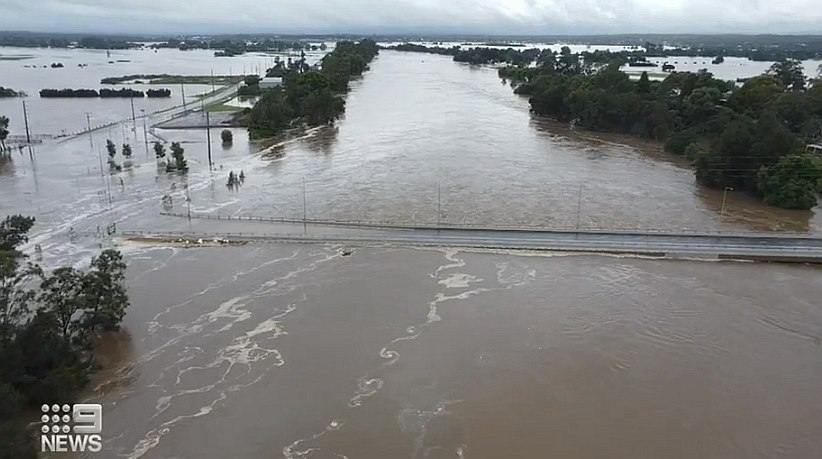
Early inundation. Light flooding of the roundabout and the roads onto it are evident here as the river begins to get serious about rising. This 9News helicopter view gives a good appreciation of the setting.
Given time, the waters rose further. People complained that they were promised when the new bridge was built that it wouldn't flood, but that's not true. It was never intended to be a flood-free bridge because there was no point, the areas on the Western side of the river would still be underwater and it would require the construction of ten miles or more of elevated road to escape that.
The website about the building of the bridge reckoned on reducing flooding experienced with the older, lower level (2.8 metres below the new bridge's Western end) bridge from once in two years to once in three, and for flood events to close the bridge an average of 19 hours when it flooded rather than 43 hours.
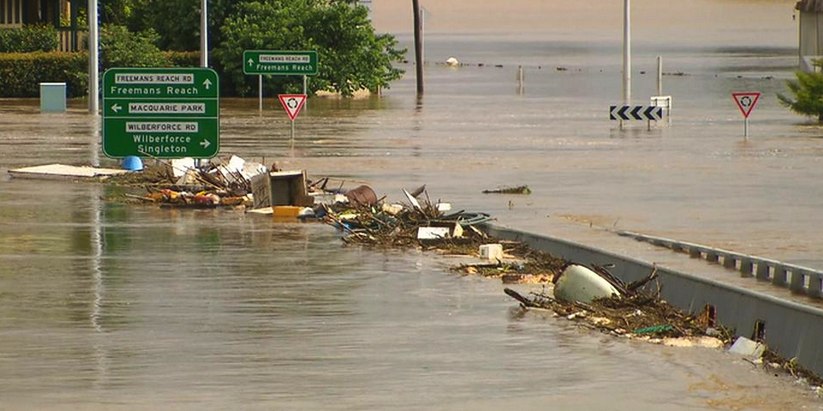
New Windsor Bridge in flood. The roundabout is still out there, this is taken from the other side of the river looking down on the bridge as it progressively goes under on March 7, 2022.
A day later it was deeper in this exceptional demonstration of catastrophic flooding. It was caused by an extreme rain event first seen in Brisbane, where it inundated tens of thousands of homes, in Lismore where it went 2.4 metres (that's 8') deeper than the highest flood in recorded history, and now it was making its mark in Sydney.
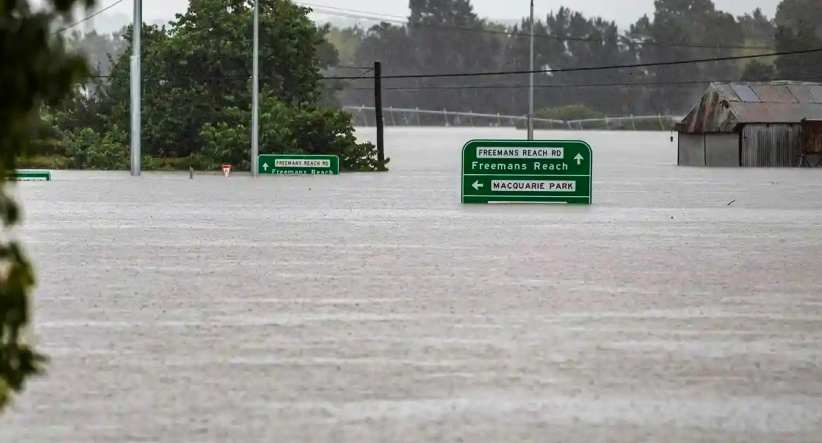
Different angle. A day later the depth has increased, as can be judged by the signs in the picture. The flooding has been as devastating along the NSW and Queensland coastlines as the fires were two and a half years earlier.
I certainly wouldn't have made this trip during a rain event of this type.
These photos show the roundabout above over the past two days. Well, not the roundabout itself, but waters swirling over the roundabout as the Hawkesbury River does its best to drain extreme levels of rainfall from the sodden Blue Mountains and areas in the Cumberland Basin further South.
First, looking back over the scene, the road I've driven down to get to this point is clearly seen on the left side of the river, back behind some trees. It's clear that for a considerable distance it will be impassable when the waters rise further, as will the road off to the left.
Early inundation. Light flooding of the roundabout and the roads onto it are evident here as the river begins to get serious about rising. This 9News helicopter view gives a good appreciation of the setting.
Given time, the waters rose further. People complained that they were promised when the new bridge was built that it wouldn't flood, but that's not true. It was never intended to be a flood-free bridge because there was no point, the areas on the Western side of the river would still be underwater and it would require the construction of ten miles or more of elevated road to escape that.
The website about the building of the bridge reckoned on reducing flooding experienced with the older, lower level (2.8 metres below the new bridge's Western end) bridge from once in two years to once in three, and for flood events to close the bridge an average of 19 hours when it flooded rather than 43 hours.
New Windsor Bridge in flood. The roundabout is still out there, this is taken from the other side of the river looking down on the bridge as it progressively goes under on March 7, 2022.
A day later it was deeper in this exceptional demonstration of catastrophic flooding. It was caused by an extreme rain event first seen in Brisbane, where it inundated tens of thousands of homes, in Lismore where it went 2.4 metres (that's 8') deeper than the highest flood in recorded history, and now it was making its mark in Sydney.
Different angle. A day later the depth has increased, as can be judged by the signs in the picture. The flooding has been as devastating along the NSW and Queensland coastlines as the fires were two and a half years earlier.
I certainly wouldn't have made this trip during a rain event of this type.
Thread Starter
|
Captain
Joined: Oct 2005
Posts: 568
Likes: 8
From: The Summit, Queensland, Australia
After spending the night at Bob Winley’s place I took the short drive around to Bob Britton’s place. Along the way I was amused by this sight:
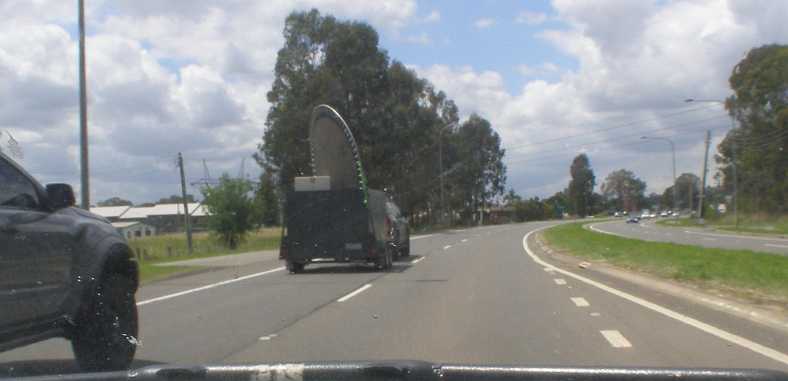
Trampoline transit. I guess it’s something I would have done myself, but it’s pretty unusual to see such a thing on the road these days.
At least the traffic was light and it didn’t take long to get to Bob’s. I found him sitting in the sun in his courtyard, as he likes to do, and I sat there with him for a while before we moved inside.
We talked and looked at some photos and books. It was the first I’d seen of Bob since he had a fairly lengthy stint in hospital and he was no longer the same as he had been. He hadn’t even taken the time to get changed after arising that morning.
He’d lost more strength and some mobility, he no longer got up each morning to go down to the workshop, he’d even started watching some television to while away the hours which had previously seen him busily working on his creations.
After a while, as we were talking, we heard noises outside. As different people were expected to arrive we just awaited the sight of someone walking through the door, but after a while with no such arrivals I went outside to find that Wayne Seabrook had a little surprise for Bob:
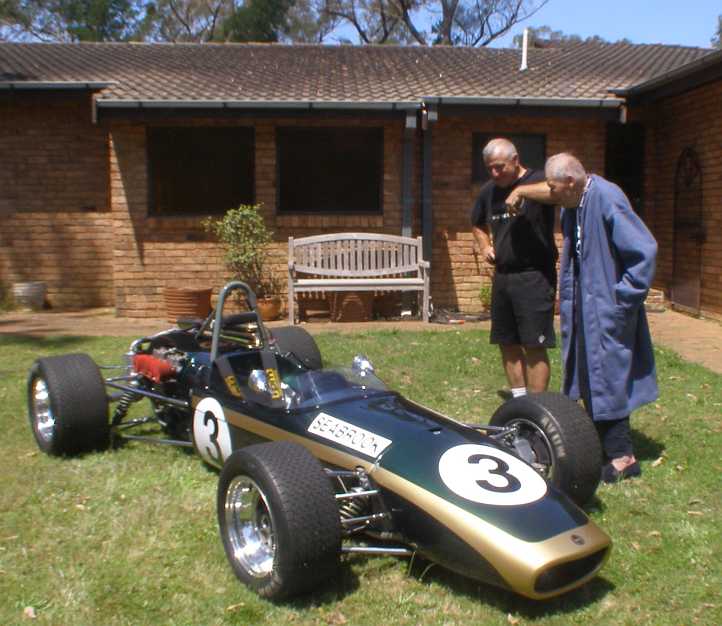
Wayne arrives. Wayne had decided to surprise Bob by showing him his car, which he’d just finished restoring. Here he’s describing one of the problems he had with the restoration.
Yes, he’d unloaded the car from his trailer all by himself so it would be just sitting on the lawn when Bob came out. It’s a car Bob built back in the late sixties and has had plenty of changes over the years.
Before too long some ‘early starters’ for Bob’s afternoon gathering joined us…
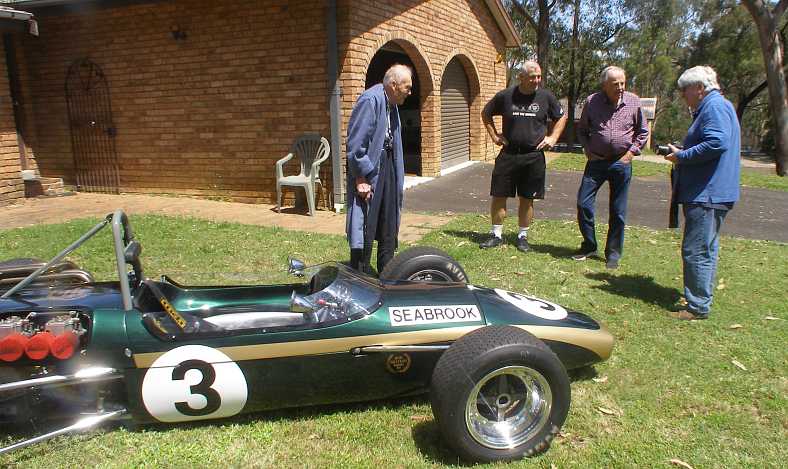
Spencer and Pat join in. Pat Clarke explains something to the small group, listening intently is Spencer Martin, the 1967 Australian “Gold Star” Champion.
…with former Australian Champion driver, Spencer Martin, being the first to turn up. Spencer doesn’t usually turn out for Bob’s Saturday afternoon gatherings, usually paying regular personal visits, but came this day because he’s a friend of Wayne’s.
The afternoon was enjoyable, others came and went and all made the most of the opportunity to learn from the various discussions. Spencer and Wayne ultimately left, and the others, and I had made the most of a long day with Bob and these interesting characters.
I went back to Bob Winley’s then plotted my course avoiding – as best I could – places I wasn’t allowed to go under the Covid-19 travel limitations. This involved some interesting roads I got to know back in my youth, when I lived at Middle Dural, but the memory was sometimes dim and there had been some changes in places.
I was planning to spend the night on the road, ‘camping’ in the Forester at the ‘Twin Caltexes’ not far from where Tuggerah is marked on this map…
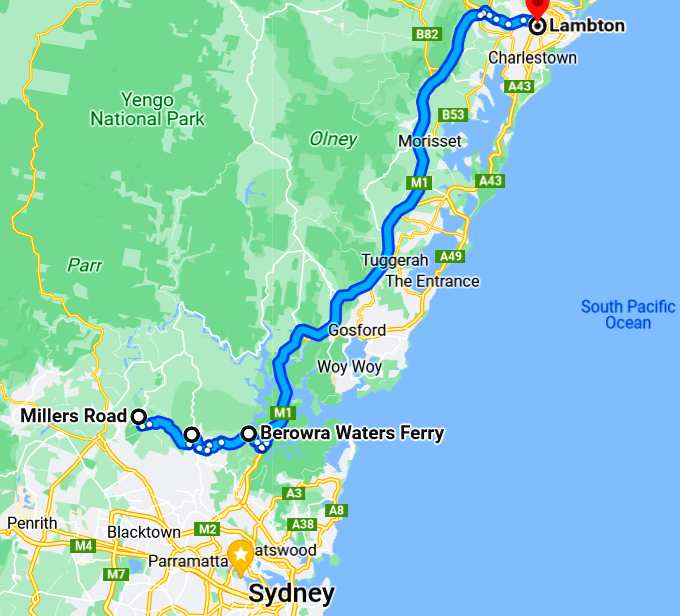
This path led me to the Berowra Waters Ferry, which crosses one of the waterways off Broken Bay – Berowra Waters. It was, naturally enough, well into the night when I started the course which is carved through the sandstone country, concerned for a little while that the ferry might not run through the night.
Again, it was a case of dim memory, for I’d been planning to drive through Galston Gorge but taken a wrong turn. Neveertheless, I arrived at the ferry…
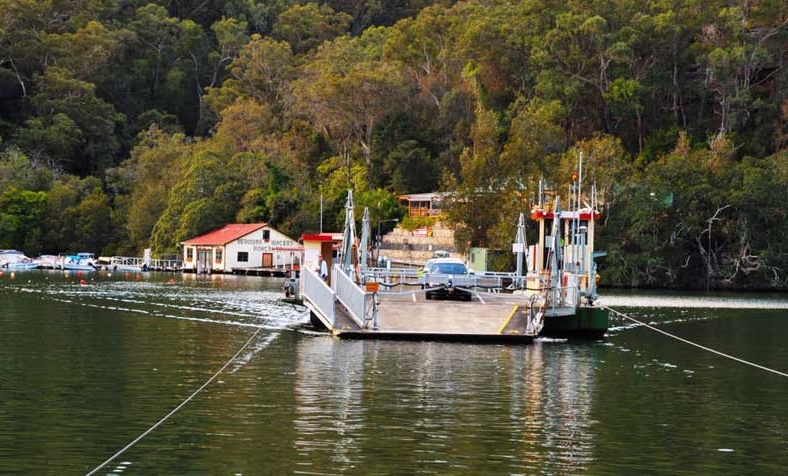
Berowra Waters Ferry. Not my pic, of course, but sourced from the internet. After a wait while the ferry master brought the craft across to me, I would be the only one on the ferry for my trip.
…and after a short wait was able to enjoy the solace as the subdued diesel engine hauled the cables through their wheels to pull us across the water, a light splashing marking our progress and the cliffs and darkness around us created a calm.
After breakfasting at the roadhouse at which I’d camped, I drove on and found my way to the meeting at the Lambton Bowling Club.
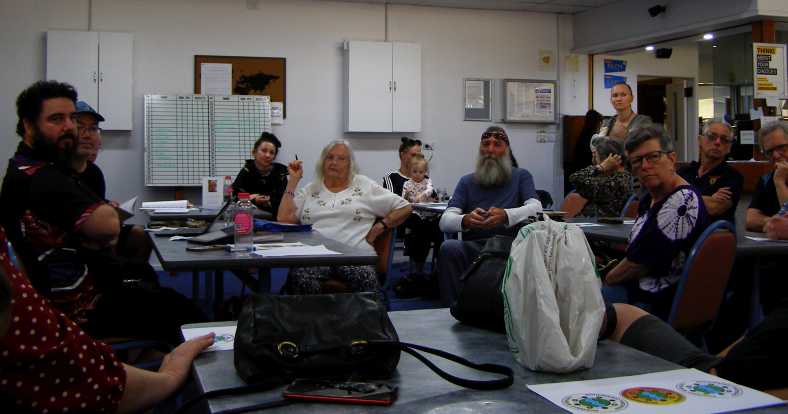
The Family Meeting. This was the Annual General Meeting and there was some spirited discussion as well as voting for office bearers for the coming year.
Like a few other members of the ‘family’ I find it hard to get to their meetings. In past times I’ve always been working weekends and their meetings were always held on weekends. Due to Covid-19, of course, I wasn’t working during this period, but Covid travel restrictions kept me from others and led to the abandonment of still more.
To elaborate, the ‘family’ comprises the descendants of Annie Butler, an Aboriginal girl who paired up with William McClymont in the nineteenth century. Naturally enough, those descendants have spread far and wide and this group seeks to keep them in contact with one another, largely through internet connections. My paternal grandmother was a grand-daughter of Annie and William.
From the meeting I headed off towards the New England Highway, arrangements having been made to visit Max and Christine Stahl and Bob and Elaine Abberfield on my way home.
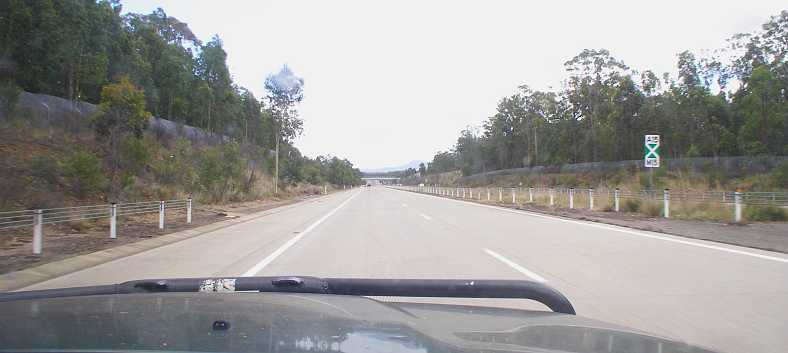
New road is fast. Though the Hunter Expressway is limited to 110kmh (a little over 68mph) it bypasses a lot of little towns to get traffic clear of the more settled Hunter Valley areas.
I had lunch at Singleton and at Ravensworth I noticed that the old school residence in which Norm Smith’s family had lived when he was very young, and which burned down a year or so earlier, was being ‘remembered’ with some minor reconstruction and cleaning:
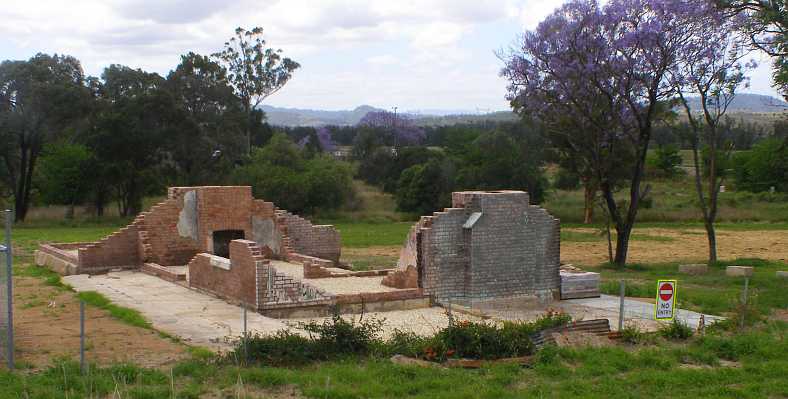
Heritage keeping. Apparently the school residence is of significant value to the local area’s history and money and energy is being put into making sure it’s remembered.
From this point on I travelled the same road as I did on the way down. Further along the highway I got into a string of cars and noticed that someone ahead of me had been a bit slack about securing his trailer’s wire cage tailgate:
Swinging in the breeze. I did try, once I got alongside this rig, to let the driver know, but he went on oblivious of the danger he was creating.
After paying Max and Christine a brief visit, I went on to Bob Abberfield’s place, where I stayed the night. Bob was advancing with the completion of his big workshop and storage shed…
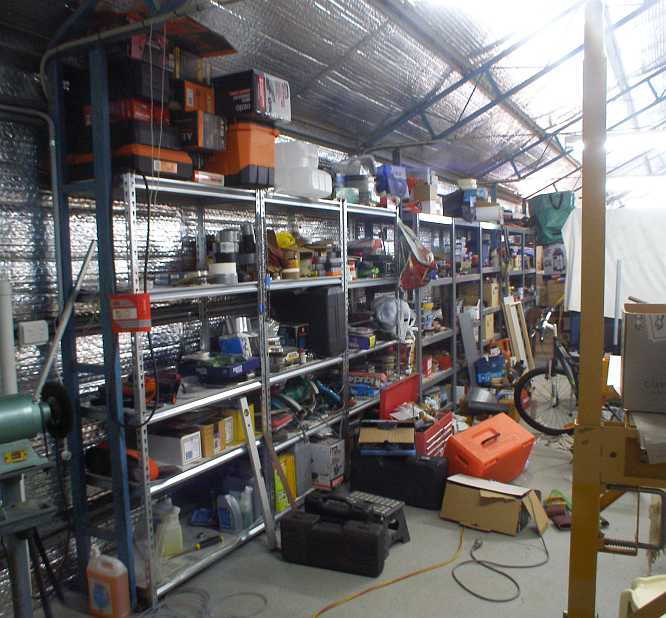
Shelves filling. Moving more and more gear in from the old garage and a storage container, Bob was getting much better organised.
…where order was beginning to show. There was still a long way to go, however, even though lighting was installed and the bench was completed:
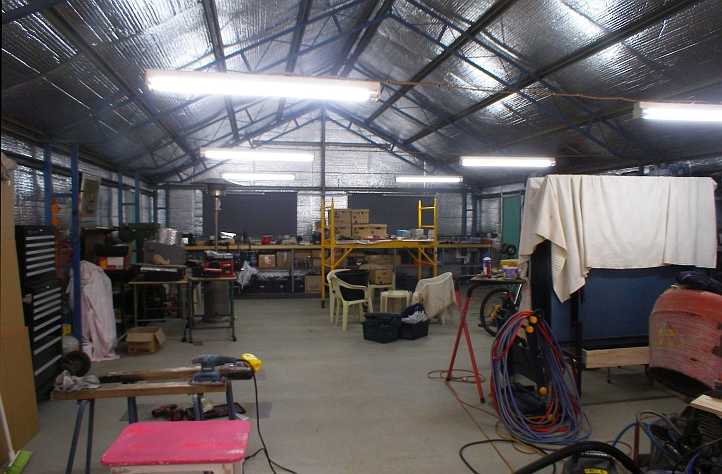
Still a lot to be done. Anyone who’s ever moved a workshop will understand – Bob’s being a bit meticulous with it all as he’s got a lot of gear and wants to be able to find things. But it would still take a while.
Another 20 miles or so up the highway I got a couple of pics of Valiant station wagons out front of the home of the local Mopar fancier:
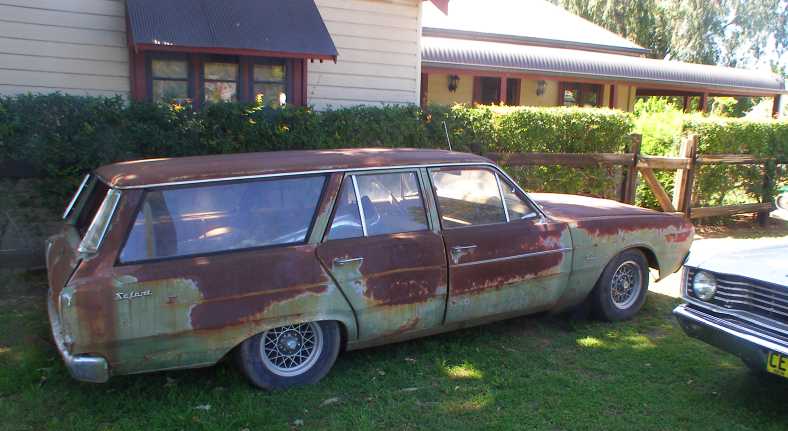
Needs attention. This one is a VG model, which came out in 1970. The first model to carry the Hemi 6 engine, it still had the 4” PCD wheels. Australian Valiant wagons carried the ‘Safari’ name.
The white car alongside is a VE model, pretty much identical to the 1968 Dodge Dart. But the other Safari there was a nice looking restoration:
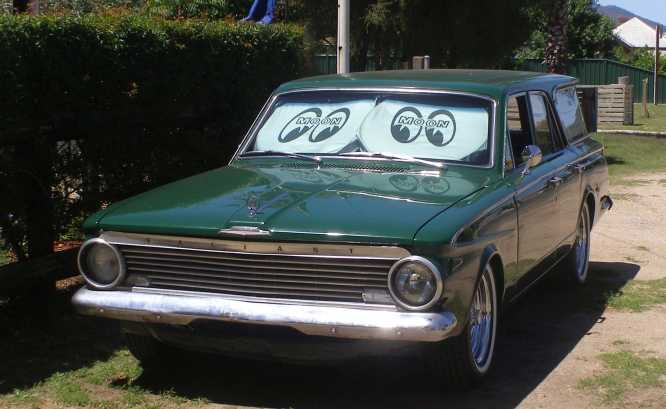
AP5 Safari. This would have had a Slant 6 originally, I didn’t stop to ask about what’s under the bonnet now, but the oversize wheels indicate that it might have something more in there.
And so I drove on, by early afternoon I was able to get another view of progress at the Bolivia Hill bridgeworks…
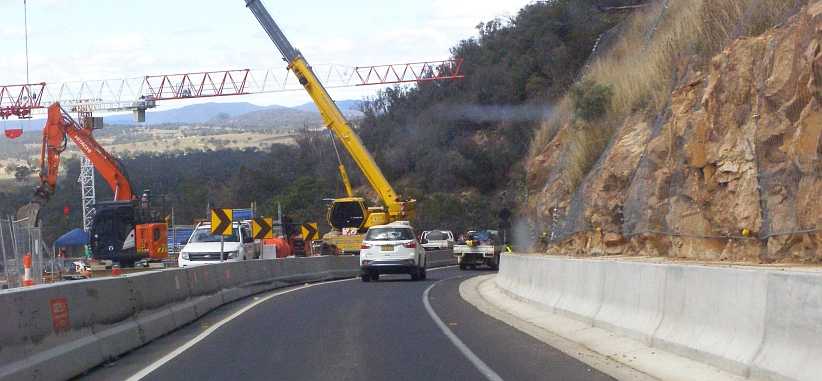
Bolivia Hill progress. The bridgeworks that would ultimately enable to gap in the hillside to be bypassed were going on with traffic getting just one lane to take turns in passing the works.
…and by evening I was home again.
The immediate project I had to get on with was to strip out the hulks of the two vans I’d taken in trade, which meant a lot of angle grinder cutting and eventually a job for my engine crane.
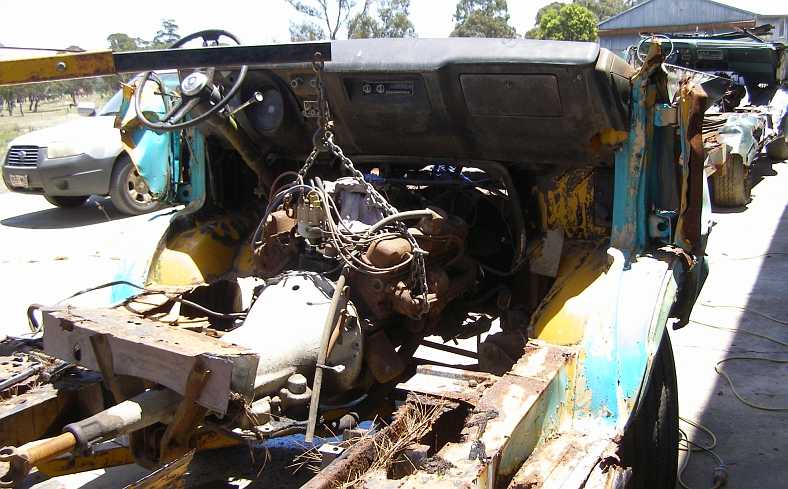
360 released. Not only a 360, but also a 727 being lifted out of the older of the two rusty wrecks. I don’t imagine many vans had their mechanicals pulled out this way.
I cut the crossmembers and kept the sections as I had plans to use it in the planning of the gearbox mount I had to make to put the NV4500 into my van.
I also got the two Dana 60 rear ends for potential future use in place of the 9¼” rear end in the B350 and these had been removed from the wrecks first:
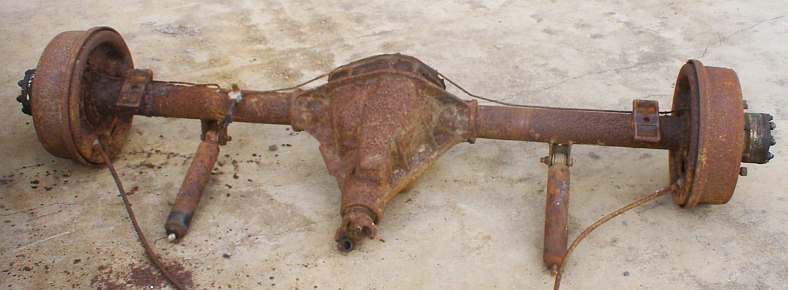
Dana 60 rear end. Heavy gear! Though the brake shoes were rusted onto the drums – or on three out of four drums – the potential for these to improve my van impressed me.
The next stage with these wrecks was to ensure they took up less space on the concrete pad I was using, which was not ‘officially’ a part of my designated area at the shed complex.
I arranged for the truck operator who leased another section of the sheds to stack them with his forklift as soon as I got the front brakes off them along with one of the steering boxes.
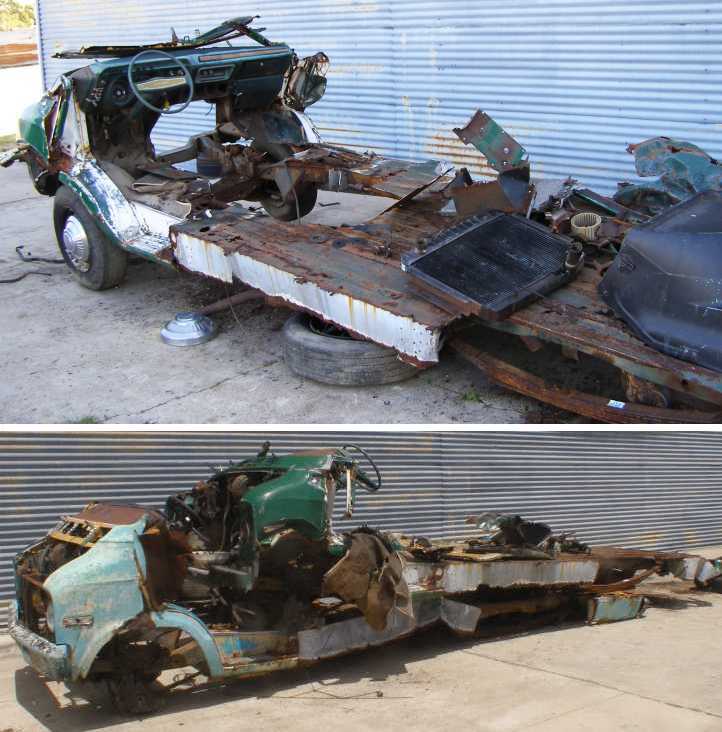
Stripped and stacked. Progressively I was getting anything I thought was of value off the wrecks, once I felt I had enough they were stacked ready for removal.
I noted that one of them had a nice array of switches which might be handy to have and I made sure I had lots of wiring loom sections. I even took out the instrument panels in case someone might like to have them as a bar display or something.
Then the scrap metal people were given their turn…
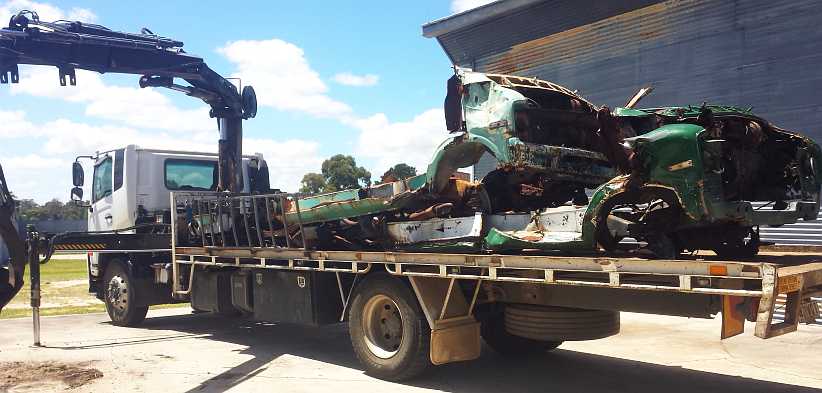
Going away. I had them stacked also with a view to making it easy to get them onto a tilt-tray but the scrap merchants sent this truck with a big claw-crane and lifted them on one by one.
…and they paid me some real handy money for the rust piles I had left for them. Among the bits I had kept, as mentioned, were the sections of crossmember from each of the van which had supported those 727s:
Sample piece. The plan was to use these to allow me to fabricate the new larger-and-wider mount for the rear of the NV4500 gearbox. As this fabrication would all take place at home, about 90 miles away from where the van was, a piece of the crossmember was to be very handy to have on hand.
Note the red line on the ‘sample’ as well – this was a piece which would have to be cut from the crossmember in the van to allow clearance over the larger rear section of the 5-speed gearbox. So the pieces I had to work with would also give me all the help I needed in fabricating braces to go inside the van’s crossmember to replace the strength to be cut out of the lower part.
And amidst all of this I returned to maintaining my regular visits to the Men’s Shed each Monday and Thursday morning. I was machining up parts for the conversion and doing other jobs I needed to get done and enjoying the company of people with like pursuits.
One of these people was Jim Scott. He’d taken advantage of the relaxation of the Covid travel rules to run down to Victoria with his car trailer and retrieve the remains of a Jowett Jupiter. Jowett was a British brand and their Jupiter sports model used the underpinnings of the 1500cc Javelin sedan.
Jupiter remains. Jim’s Jupiter arrived from Victoria looking like this. The rocker covers and front of the flat-four engine can be seen, also the alloy block sections and the cast iron cylinder heads.
This car had been on a property where a severe grass fire went through, hence there was a lot of damage to the aluminium body panels as well as other components, tyres and so on. Jim took wheels with usable tyres down to bolt on for the trip.
Fire damage. Fires don’t leave alloy body panels in good shape when they pass through, and while the photo also shows the basic sporting lines of the car, it also shows how it’s suffered through the flames.
Seats and wiring also sustained damage, instruments and cables as well. Jim’s optimism in taking on this project reflects a long-held desire to own a Jupiter to garage alongside his very nicely restored Javelin. But the work to be done will make a huge joblist:
Front panels. More scorching from the flames, more damage, more work to be done up front. It’s certainly not a job to take on lightly.
A visit by my stepson from my marriage to Janet took place as January, 2021, arrived. His kids jumped into the pool and had some fun…
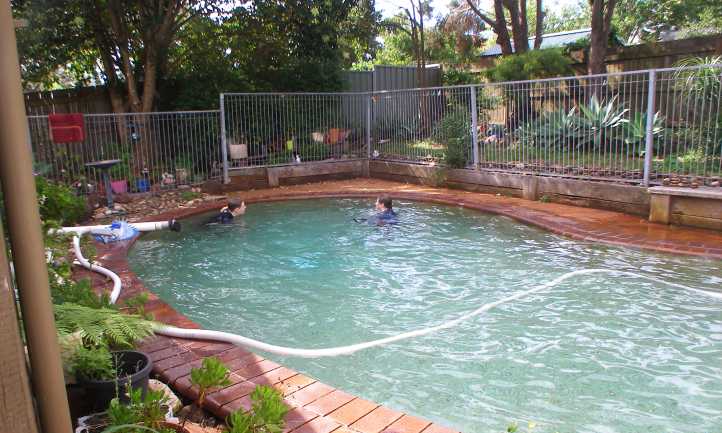
Kids in the pool. Lachlan and Bethany were very happy to don their swimming gear and make use of our backyard swimming pool.
…and later we all went to a local lookout where a lot of work is being done to pathways and gardens for a look at the scenery:
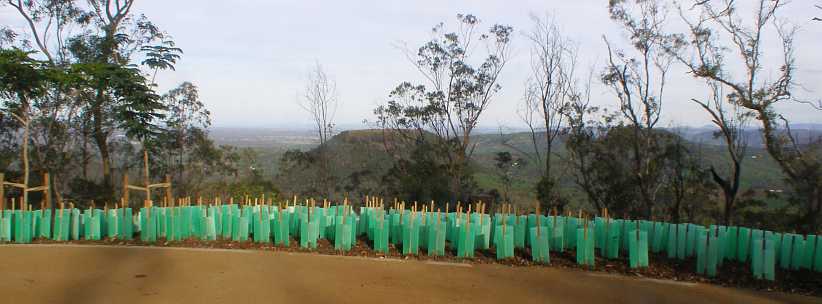
Local vista. With Toowoomba being on top of the range with an escarpment on our East, views like this are to be seen from a few local places.
Their visit was just for one afternoon, but it was nice to spend a little time with them again, something I haven’t been able to do much at all since his mother’s death.
And, of course, there was a little job to be done to Sandra’s car. The plastic lens had come away from her left front indicator light and I had to glue that back together for her.
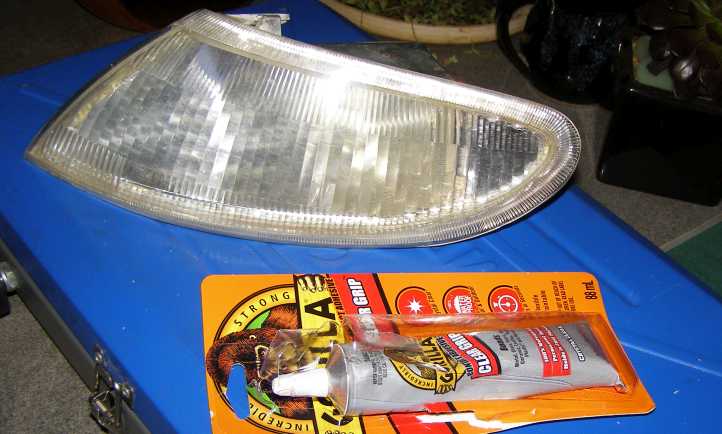
Indicator rejoined. I’m normally wary of most glues, but I was assured that this one would do the job just fine. Time alone will tell.
And the time was passing by since I’d obtained the licence to do the wide load escorting work. I had to start concentrating on getting the Ford Territory equipped so I could go out and earn some much-needed cash…
Trampoline transit. I guess it’s something I would have done myself, but it’s pretty unusual to see such a thing on the road these days.
At least the traffic was light and it didn’t take long to get to Bob’s. I found him sitting in the sun in his courtyard, as he likes to do, and I sat there with him for a while before we moved inside.
We talked and looked at some photos and books. It was the first I’d seen of Bob since he had a fairly lengthy stint in hospital and he was no longer the same as he had been. He hadn’t even taken the time to get changed after arising that morning.
He’d lost more strength and some mobility, he no longer got up each morning to go down to the workshop, he’d even started watching some television to while away the hours which had previously seen him busily working on his creations.
After a while, as we were talking, we heard noises outside. As different people were expected to arrive we just awaited the sight of someone walking through the door, but after a while with no such arrivals I went outside to find that Wayne Seabrook had a little surprise for Bob:
Wayne arrives. Wayne had decided to surprise Bob by showing him his car, which he’d just finished restoring. Here he’s describing one of the problems he had with the restoration.
Yes, he’d unloaded the car from his trailer all by himself so it would be just sitting on the lawn when Bob came out. It’s a car Bob built back in the late sixties and has had plenty of changes over the years.
Before too long some ‘early starters’ for Bob’s afternoon gathering joined us…
Spencer and Pat join in. Pat Clarke explains something to the small group, listening intently is Spencer Martin, the 1967 Australian “Gold Star” Champion.
…with former Australian Champion driver, Spencer Martin, being the first to turn up. Spencer doesn’t usually turn out for Bob’s Saturday afternoon gatherings, usually paying regular personal visits, but came this day because he’s a friend of Wayne’s.
The afternoon was enjoyable, others came and went and all made the most of the opportunity to learn from the various discussions. Spencer and Wayne ultimately left, and the others, and I had made the most of a long day with Bob and these interesting characters.
I went back to Bob Winley’s then plotted my course avoiding – as best I could – places I wasn’t allowed to go under the Covid-19 travel limitations. This involved some interesting roads I got to know back in my youth, when I lived at Middle Dural, but the memory was sometimes dim and there had been some changes in places.
I was planning to spend the night on the road, ‘camping’ in the Forester at the ‘Twin Caltexes’ not far from where Tuggerah is marked on this map…
This path led me to the Berowra Waters Ferry, which crosses one of the waterways off Broken Bay – Berowra Waters. It was, naturally enough, well into the night when I started the course which is carved through the sandstone country, concerned for a little while that the ferry might not run through the night.
Again, it was a case of dim memory, for I’d been planning to drive through Galston Gorge but taken a wrong turn. Neveertheless, I arrived at the ferry…
Berowra Waters Ferry. Not my pic, of course, but sourced from the internet. After a wait while the ferry master brought the craft across to me, I would be the only one on the ferry for my trip.
…and after a short wait was able to enjoy the solace as the subdued diesel engine hauled the cables through their wheels to pull us across the water, a light splashing marking our progress and the cliffs and darkness around us created a calm.
After breakfasting at the roadhouse at which I’d camped, I drove on and found my way to the meeting at the Lambton Bowling Club.
The Family Meeting. This was the Annual General Meeting and there was some spirited discussion as well as voting for office bearers for the coming year.
Like a few other members of the ‘family’ I find it hard to get to their meetings. In past times I’ve always been working weekends and their meetings were always held on weekends. Due to Covid-19, of course, I wasn’t working during this period, but Covid travel restrictions kept me from others and led to the abandonment of still more.
To elaborate, the ‘family’ comprises the descendants of Annie Butler, an Aboriginal girl who paired up with William McClymont in the nineteenth century. Naturally enough, those descendants have spread far and wide and this group seeks to keep them in contact with one another, largely through internet connections. My paternal grandmother was a grand-daughter of Annie and William.
From the meeting I headed off towards the New England Highway, arrangements having been made to visit Max and Christine Stahl and Bob and Elaine Abberfield on my way home.
New road is fast. Though the Hunter Expressway is limited to 110kmh (a little over 68mph) it bypasses a lot of little towns to get traffic clear of the more settled Hunter Valley areas.
I had lunch at Singleton and at Ravensworth I noticed that the old school residence in which Norm Smith’s family had lived when he was very young, and which burned down a year or so earlier, was being ‘remembered’ with some minor reconstruction and cleaning:
Heritage keeping. Apparently the school residence is of significant value to the local area’s history and money and energy is being put into making sure it’s remembered.
From this point on I travelled the same road as I did on the way down. Further along the highway I got into a string of cars and noticed that someone ahead of me had been a bit slack about securing his trailer’s wire cage tailgate:
Swinging in the breeze. I did try, once I got alongside this rig, to let the driver know, but he went on oblivious of the danger he was creating.
After paying Max and Christine a brief visit, I went on to Bob Abberfield’s place, where I stayed the night. Bob was advancing with the completion of his big workshop and storage shed…
Shelves filling. Moving more and more gear in from the old garage and a storage container, Bob was getting much better organised.
…where order was beginning to show. There was still a long way to go, however, even though lighting was installed and the bench was completed:
Still a lot to be done. Anyone who’s ever moved a workshop will understand – Bob’s being a bit meticulous with it all as he’s got a lot of gear and wants to be able to find things. But it would still take a while.
Another 20 miles or so up the highway I got a couple of pics of Valiant station wagons out front of the home of the local Mopar fancier:
Needs attention. This one is a VG model, which came out in 1970. The first model to carry the Hemi 6 engine, it still had the 4” PCD wheels. Australian Valiant wagons carried the ‘Safari’ name.
The white car alongside is a VE model, pretty much identical to the 1968 Dodge Dart. But the other Safari there was a nice looking restoration:
AP5 Safari. This would have had a Slant 6 originally, I didn’t stop to ask about what’s under the bonnet now, but the oversize wheels indicate that it might have something more in there.
And so I drove on, by early afternoon I was able to get another view of progress at the Bolivia Hill bridgeworks…
Bolivia Hill progress. The bridgeworks that would ultimately enable to gap in the hillside to be bypassed were going on with traffic getting just one lane to take turns in passing the works.
…and by evening I was home again.
The immediate project I had to get on with was to strip out the hulks of the two vans I’d taken in trade, which meant a lot of angle grinder cutting and eventually a job for my engine crane.
360 released. Not only a 360, but also a 727 being lifted out of the older of the two rusty wrecks. I don’t imagine many vans had their mechanicals pulled out this way.
I cut the crossmembers and kept the sections as I had plans to use it in the planning of the gearbox mount I had to make to put the NV4500 into my van.
I also got the two Dana 60 rear ends for potential future use in place of the 9¼” rear end in the B350 and these had been removed from the wrecks first:
Dana 60 rear end. Heavy gear! Though the brake shoes were rusted onto the drums – or on three out of four drums – the potential for these to improve my van impressed me.
The next stage with these wrecks was to ensure they took up less space on the concrete pad I was using, which was not ‘officially’ a part of my designated area at the shed complex.
I arranged for the truck operator who leased another section of the sheds to stack them with his forklift as soon as I got the front brakes off them along with one of the steering boxes.
Stripped and stacked. Progressively I was getting anything I thought was of value off the wrecks, once I felt I had enough they were stacked ready for removal.
I noted that one of them had a nice array of switches which might be handy to have and I made sure I had lots of wiring loom sections. I even took out the instrument panels in case someone might like to have them as a bar display or something.
Then the scrap metal people were given their turn…
Going away. I had them stacked also with a view to making it easy to get them onto a tilt-tray but the scrap merchants sent this truck with a big claw-crane and lifted them on one by one.
…and they paid me some real handy money for the rust piles I had left for them. Among the bits I had kept, as mentioned, were the sections of crossmember from each of the van which had supported those 727s:
Sample piece. The plan was to use these to allow me to fabricate the new larger-and-wider mount for the rear of the NV4500 gearbox. As this fabrication would all take place at home, about 90 miles away from where the van was, a piece of the crossmember was to be very handy to have on hand.
Note the red line on the ‘sample’ as well – this was a piece which would have to be cut from the crossmember in the van to allow clearance over the larger rear section of the 5-speed gearbox. So the pieces I had to work with would also give me all the help I needed in fabricating braces to go inside the van’s crossmember to replace the strength to be cut out of the lower part.
And amidst all of this I returned to maintaining my regular visits to the Men’s Shed each Monday and Thursday morning. I was machining up parts for the conversion and doing other jobs I needed to get done and enjoying the company of people with like pursuits.
One of these people was Jim Scott. He’d taken advantage of the relaxation of the Covid travel rules to run down to Victoria with his car trailer and retrieve the remains of a Jowett Jupiter. Jowett was a British brand and their Jupiter sports model used the underpinnings of the 1500cc Javelin sedan.
Jupiter remains. Jim’s Jupiter arrived from Victoria looking like this. The rocker covers and front of the flat-four engine can be seen, also the alloy block sections and the cast iron cylinder heads.
This car had been on a property where a severe grass fire went through, hence there was a lot of damage to the aluminium body panels as well as other components, tyres and so on. Jim took wheels with usable tyres down to bolt on for the trip.
Fire damage. Fires don’t leave alloy body panels in good shape when they pass through, and while the photo also shows the basic sporting lines of the car, it also shows how it’s suffered through the flames.
Seats and wiring also sustained damage, instruments and cables as well. Jim’s optimism in taking on this project reflects a long-held desire to own a Jupiter to garage alongside his very nicely restored Javelin. But the work to be done will make a huge joblist:
Front panels. More scorching from the flames, more damage, more work to be done up front. It’s certainly not a job to take on lightly.
A visit by my stepson from my marriage to Janet took place as January, 2021, arrived. His kids jumped into the pool and had some fun…
Kids in the pool. Lachlan and Bethany were very happy to don their swimming gear and make use of our backyard swimming pool.
…and later we all went to a local lookout where a lot of work is being done to pathways and gardens for a look at the scenery:
Local vista. With Toowoomba being on top of the range with an escarpment on our East, views like this are to be seen from a few local places.
Their visit was just for one afternoon, but it was nice to spend a little time with them again, something I haven’t been able to do much at all since his mother’s death.
And, of course, there was a little job to be done to Sandra’s car. The plastic lens had come away from her left front indicator light and I had to glue that back together for her.
Indicator rejoined. I’m normally wary of most glues, but I was assured that this one would do the job just fine. Time alone will tell.
And the time was passing by since I’d obtained the licence to do the wide load escorting work. I had to start concentrating on getting the Ford Territory equipped so I could go out and earn some much-needed cash…
Thread Starter
|
Captain
Joined: Oct 2005
Posts: 568
Likes: 8
From: The Summit, Queensland, Australia
Two things were bugging me about preparing the Ford Territory for the escorting work...
The first one was the fragility of the mounts on the roof of the vehicle, the second was the wiring required to make all the bits I’d bought from Dennis Barber work out. The wiring loom with it, I finally determined, had to be set aside and I’d work it out for myself.
But, down to brass tacks… or actually brass bolts, having had a couple snap off when reassembling after preparing things so there’d be an extra two bolts on each side of the roof, I had to find an engineering solution.
The problem is easily seen in this photo:
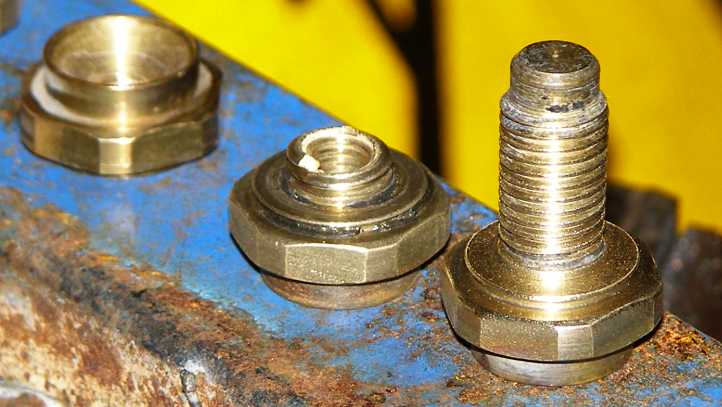
Ford’s brass bolts. Inverted for the purpose of the photo, the complete bolt to the right shows how it’s got a blind bottom to it to prevent water leakage into the car. Next to it is one which has broken, the 6mm thread inside a 10mm thread not leaving much metal to hold when the nut’s done up.
The inverted taper in the head of the bolt is for the countersunk screws – and the dimpled stainless steel rail – to seat. My plan was to fit longer screws down inside the bolt which would give it some strength when the nut from below was done up. This necessitated drilling and tapping further down into the bolts…
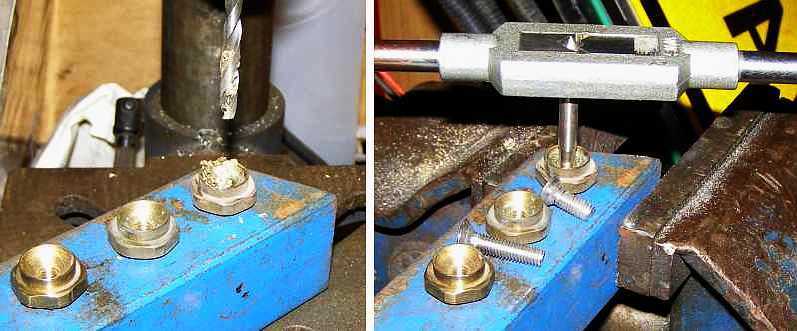
Drilling and tapping. Setting the bolts up in a piece of tube, I drilled the hole deeper three at a time and then tapped them so 10mm longer screws would go in there.
…but taking care not to go through the bottom. The drill was marked for the depth and the stop on the machine was set. The job went smoothly and I was a lot happier with the arrangement.
Meantime, Sandra had been propagating plants to sell. The front verandah was set up as a display area and she put up a cloth sign to let people know. There were also signs erected at each end of the street.
Plants for sale. A wide variety of plants, some in flower, some succulents, some bulb-based, Sandra likes her gardening and it showed here.
And more plants. The plastic cutlery sticking out of the soil is what she used to carry the prices.
I think, though she has never told me, that the whole thing was a big disappointment. Not much was sold and a lot of effort had gone into preparing things.
I had other things on my mind, of course, the second issue which had been bugging me. I’d decided to set up the radios and the battery ‘power distribution’ unit in an alloy suitcase. This way it could all be readily moved from vehicle to vehicle when I brought the Dodge on line for this work. A lot of wiring from those discarded vans was used to get the colour-coded wiring and switches from one of them were also utilised.
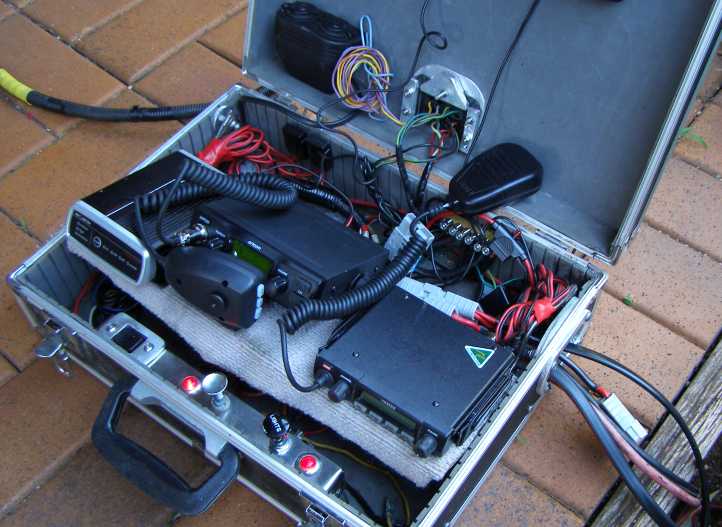
Case for radios and switchgear. The units sit on a shelf which lifts up, the control switches are at the front and under the shelf is a maze of wiring, connectors and fuses.
The black rocker switch to the left is for the actuators which raise and lower the roof sign, the headlight switch operates the rotating amber lights on the roof when pulled out to its first stop, then it works both those and wig-wag lights when pulled all the way out. The other switch is yet to be utilised, but it’s there if needed.
Another Dodge component takes the wiring to the items the switches control:
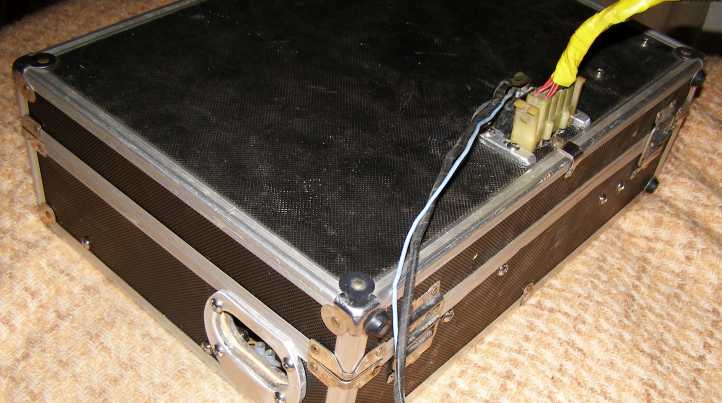
Connectors. Getting the power out of the case fell to the Dodge firewall connectors, while pieces of aluminium plate were hand-cut to brace the holes and retain the components.
This was all a lot of work. The hole on this end is seen in the previous picture as the point at which the three pairs of high-load main cables enter the case. The Anderson connectors can also be seen in that first picture. I used a lot of small stainless steel screws and nuts to put it all together, even bracing the hinges on the case as they’d never stand up with the case having to be open in use.
I finished fabricating that stronger cross-bar for the roof and started screwing things together up there after I’d planned and drilled the holes for all the wires to go through the ridge in the roof and be covered by the plastic trim. Yes, I made sure it was all waterproof.
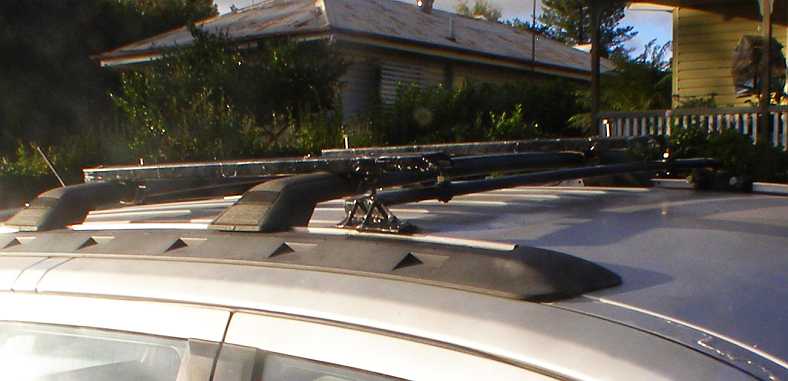
Taking shape on the roof. The steel cross-bar in place, its two secure 5mm stainless steel pins each end being estimated to be capable of holding things in place up front while the plastic-mounted original cross-bars merely carried the weight of the sign and lights.
So the actual frame with the rotating lights and the sign is still to go on atop the longitudinal tubes mounted on the roof rack. But still I was nervous and I finally swallowed hard and drilled two more holes into the ridges in the roof.
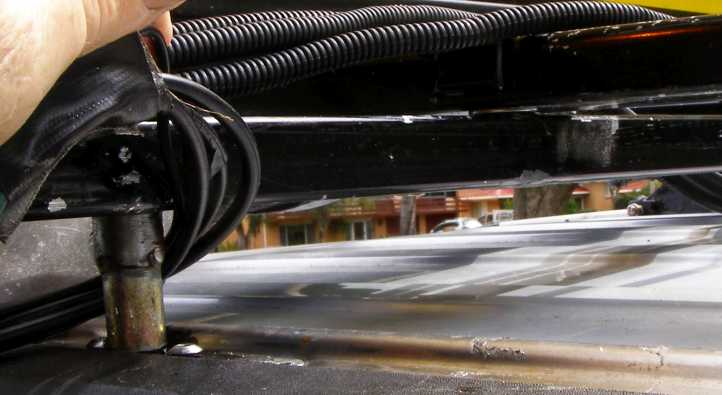
Extra strength. Another cross-bar which bolts to the longitudinal tubes is fixed to the roof by 10mm stainless steel bolts. Underneath the load is spread by the use of quarter-inch thick aluminium plates.
And so I kept on progressing until it was ready to go. And just as I was pretty much ready to go, on February 13 I was offered my first job!
Dennis, who’d sold me the sign and setup, had a call from an agent in Victoria who suddenly needed a pilot to take care of a job from Goondiwindi to Ouyen in North-Western Victoria:
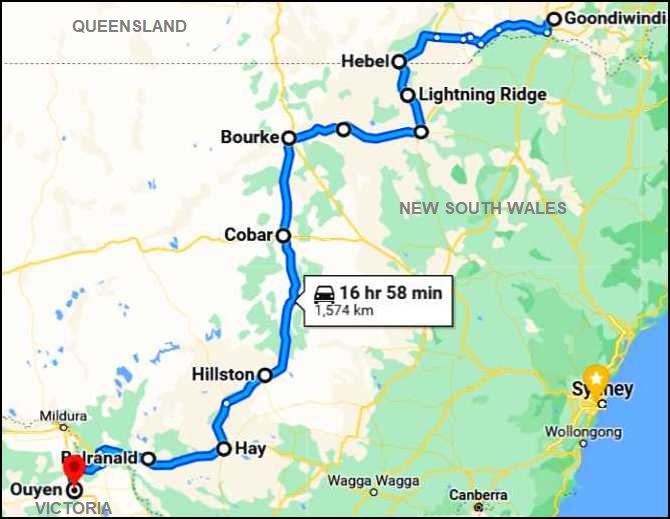
But Dennis was tied up with another job and had the agent call me.
How this had come to be such a ‘rush job’ was that the people who’d booked the transport didn’t think the machine being moved was as wide as it turned out to be. So three hours after getting the call I was just outside Goondiwindi meeting the truck driver and being told which way we were going. One spot we passed by will be familiar:
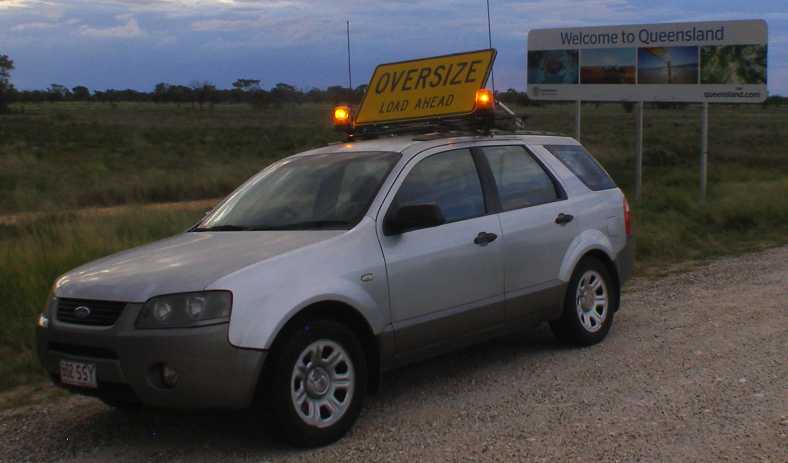
Territory at the border. I asked the driver to stop and let me get this shot so I could send it to Reilly. It’s near Hebel where he’d got locked out of his Subaru.
The driver was actually very happy that I’d been able to do the job. He’d been in the invidious position of being stuck in Goondiwindi for a couple of days and he wanted to get home to his family.
That night we camped at a Rest Area just near Lightning Ridge and I drove us into town to get a meal at the Bowling Club I’d frequented a few times three years earlier. Afterwards I slipped into the bed I’d made up in the back of the Territory and had instructions to be ready to go at first light in the morning. Fortunately I was up a little earlier…
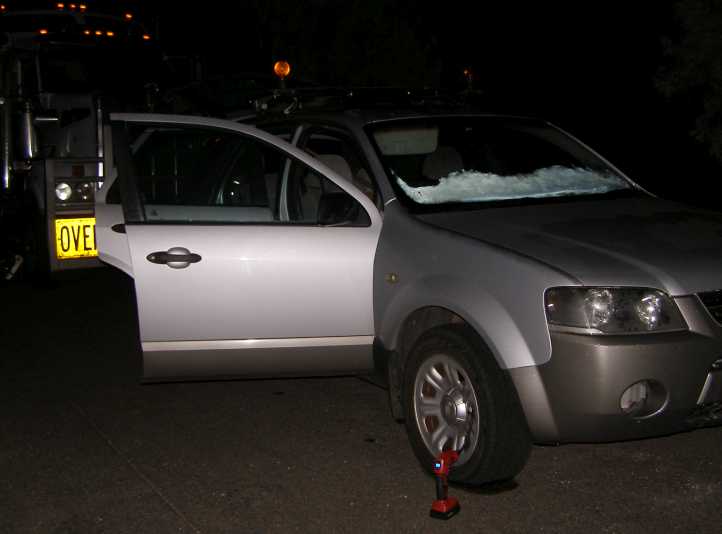
Flat tyre. Heavy frosting in the windscreen is evidence that I slept in the vehicle, while my trusty Aldi 20-volt tyre pump is set to put enough pressure into the tyre to get me mobile.
…as there was a tyre problem. In the end it was necessary to put the spare on and I’d have to get this puncture repaired as we went through Bourke.
Endless plains. The green of the season was comforting after all the brown of the drought the last time I’d been through this country, but the path we took included miles and miles of flat country.
We got our breakfast after a couple of hours on the road, this was at Brewarrina which is the second town on the map between Lightning Ridge and Bourke. Lunch was at Cobar, by which time I was learning just how heavy the fuel consumption was with the sign up and a stiff headwind.
Though I refuelled at Bourke, I was getting nervous about the fuel situation as we neared Hay. The service stations there are on the Western side of town but my ‘mileage still left’ indicator was indicating zero before we got to town. And just as we came into town I radioed back to the driver that I was out of fuel and would be pulling up to syphon in one of my jerry cans.
Naturally I bought some more fuel when we got through town and we drove on to Balranald before stopping for the night. Then next morning we crossed the border – the Murray River – and drove past lots of orchards before getting to the destination at Ouyen.
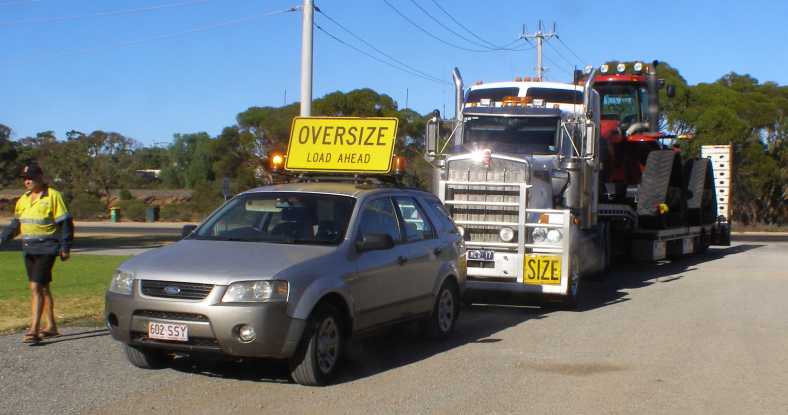
First job complete. We arrived at the farm machinery dealer’s place with everything intact and, for me, the satisfaction of completing my first job in my new vocation.
I hung around while the driver unloaded the tractor from the truck, which had a trailer which opened up hydraulically so it could carry wider loads. I would soon learn that there’s an enormous variety of these specialised trailers operating and I’d be escorting many of them over the coming months.
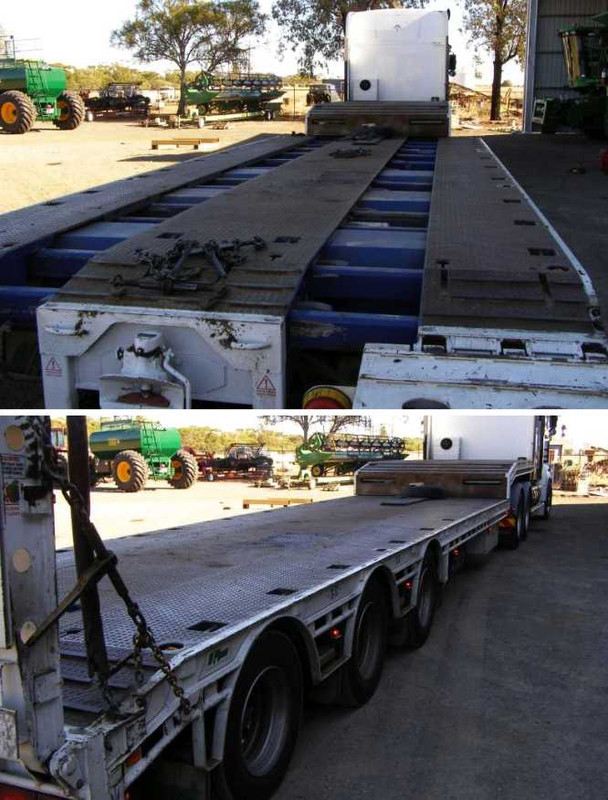
Widened trailer. After unloading, the trailer had to be closed up to its normal width. This particular one retained the original wheel track no matter how wide the trailer was set.
With the job done, I refuelled locally and started the drive home. Well over a thousand miles away. On the way I picked up a gear linkage part and some tools from my shed. While driving the green Forester around I’d been enjoying the nice firm gearchange, but jumping into the silver one it was immediately obvious something was wrong as there was so much slop in the sideways movement of the lever.
It required some innovation to get it apart…
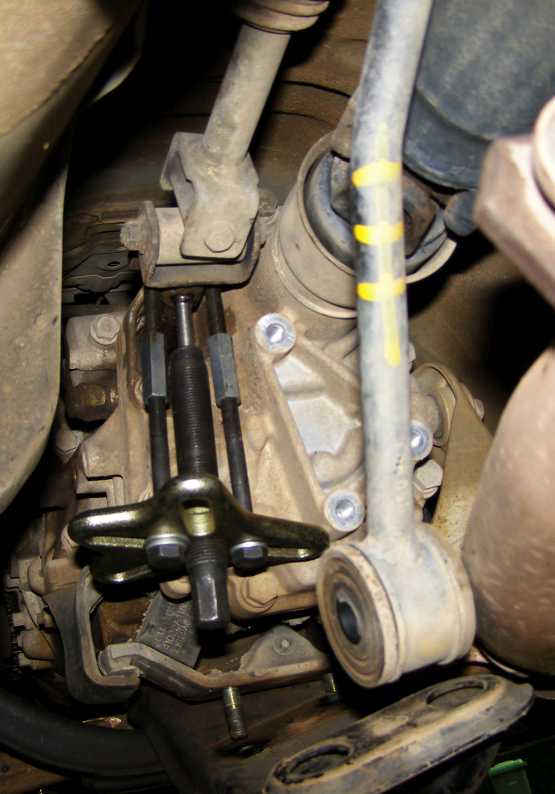
Puller improvisation. The roll pin holding the linkage parts onto the rod into the gearbox required the use of some extra bits I made up for the puller.
A number of bits had to be unbolted to get in the right position to operate the puller. The two pressings which support the rear of the gearbox, the bracket which holds the rod which acts as a brace back to the base of the gearlever mechanism. That’s the three bolt-holes you can see on the back of the box and the rod with a heavy rubber bush hanging down, I tried at first to just drop that rod, but the bracket was still in my way.
The part I was replacing was virtually a universal joint made of tubing, bushes and so on:
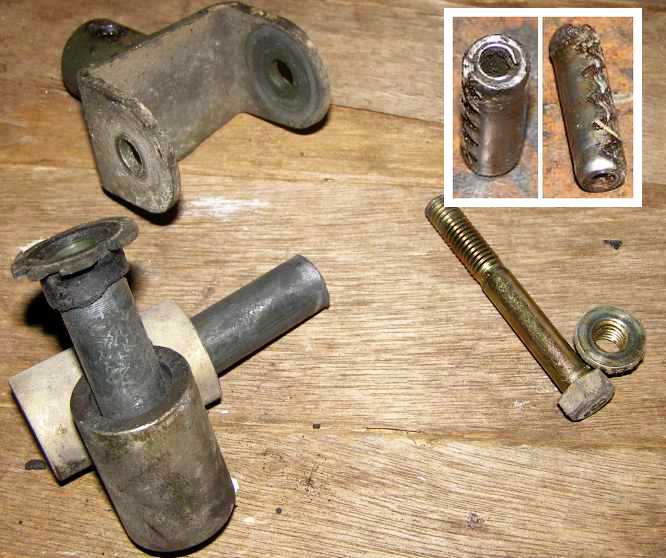
Gearchange ‘universal’. The roll pin I was having to remove was substantial (see insets) and was two roll pins in one with an inner pin. The worn out bushes are clearly seen.
Some people might have tried to knock that pin out with a hammer and punch, but I figured that might be too much shock loading on the aluminium housing into which the rod in the gearbox fed. Anyway, it might have made some more work for me to set up the extra tooling for the puller, but the job got done and the gearchange is now excellent.
Other people were also working on their cars…
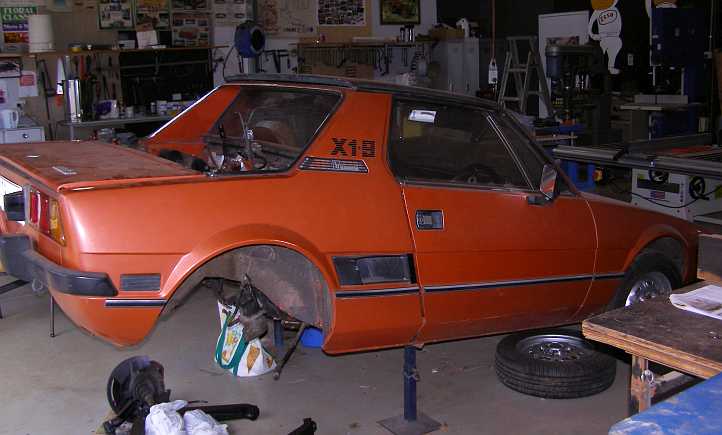
Bertone X1-9 rebuild. This was at the Car Club workshop, where the owner was housing the car while doing a comprehensive rebuild on many parts to ensure it will eventually become a reliable unit for club runs, perhaps everyday usage.
…like this Bertone X1-9. It came from a deceased estate, if I recall, and had been out of use for many years. It had however, been garaged and didn’t suffer deterioration in the body.
The Car Club’s own 1922 Hudson was coming along, too. A team of helpers work on this each Wednesday at the Club’s ‘workshop day’ and many have honed trades from engine building, aluminium panel work and fine woodworking to painting on this project.
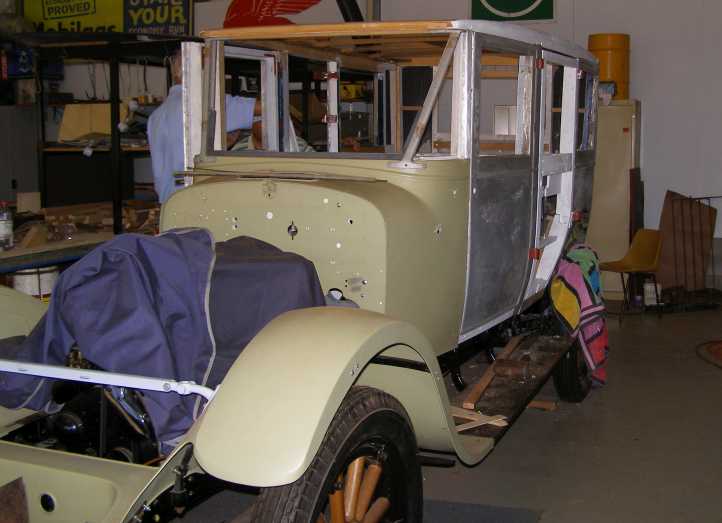
1922 Hudson project. This car had been gifted to the Men’s Shed, but was then passed on to the Car Club as it was too big a project for the Men’s Shed. The bodywork is mostly aluminium panelling over timber frames.
Another couple of owner-member jobs were there the day I called in…
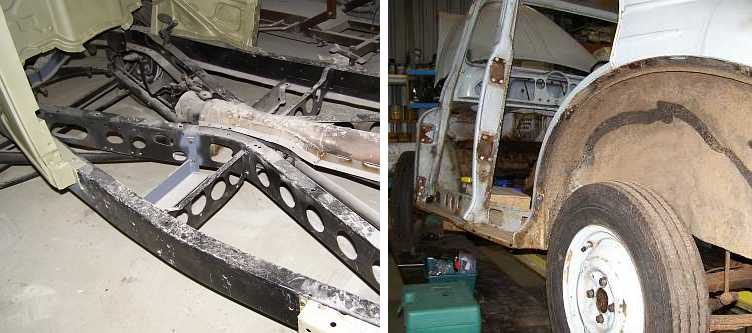
Ford and Morris. The ’35 Ford Phaeton was reaching a well-advanced stage while the Morris Minor was still to be dismantled for a ground-up body job.
Getting back to the work side of things, I still had to fit wig-wag lights to the Territory. I’d purchased a pair of foglights from a wreck locally and I worked out a way to fit some LED globes to them, now it was time to get them onto the car. I’d be needing these on jobs where we had a load wider than 4.5 metres (14’ 9”) in Queensland, but they aren’t to be used in NSW.
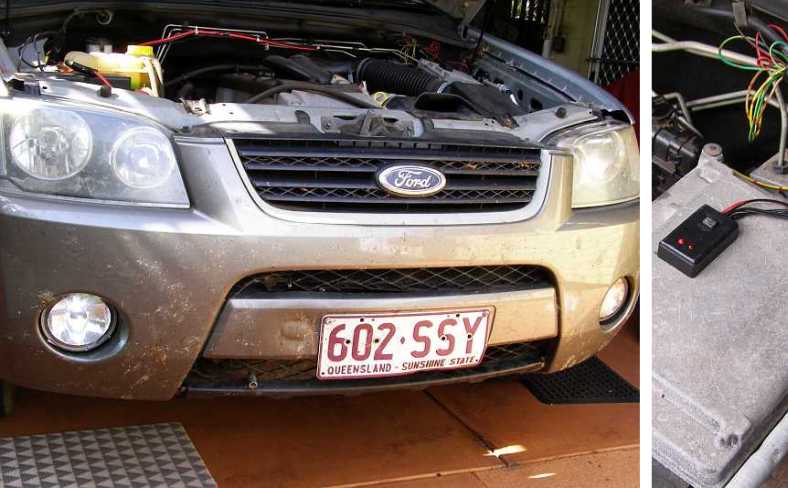
Wig-wag lights. The foglights simply clip into the back of the bumper and are operated via the little black box I’ve attached to the ECU box under the bonnet.
I’d laboured to find a way to get a wig-wag controller economically. Dennis had simply paid an auto electrician to do the job for him, but I went hunting and found this little controller on eBay for about $18. The lights have to flash alternately left and right. This unit give ten options for the flashing so it’s a good thing. I can even use them as straight fog lights.
It had been almost three weeks since I’d done the first job before I got another. And it was through the same agent, who requested that I not let anyone know how I’d got the job. Intriguing, but nothing for me to worry about.
The call told me that there was a job which would be leaving Cunnamulla at daylight the next morning, they needed someone to accompany it to Cockburn the South Australian border near Broken Hill. Then that pilot would spend the next day travelling back to Barringun to pick up the second load to take across NSW again and then go on to Olympic Dam near Woomera in South Australia.
I announced to Sandra what was happening, explaining how lucrative the job should be and that I’d be away for the best part of a week. So it first entailed driving almost 500 miles to Cunnamulla…
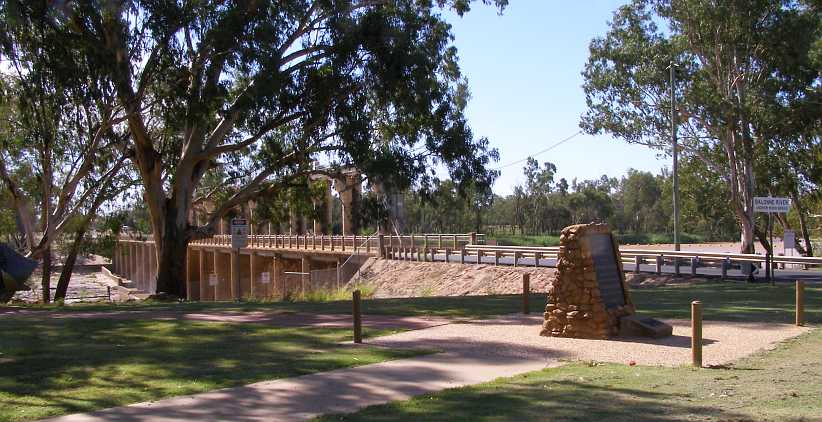
St George and the Balonne weir. There was a little time for me to do a bit of sightseeing after I stopped for fuel and food at St George.
The highway crossed the Balonne River at this weir, while the monument is to Major Thomas Mitchell, who in 1846 located the spot to cross the river and established the town. I sat in the shade and ate my lunch, but I couldn’t hang around too long as there was still some mileage to cover.
Outback. Not long after St George, this sign notified travellers they were in the ‘outback’ at last. Not that it changed much.
And the miles passed by, the Territory’s twin-cam inline six singing away as we went. It was still daylight when I reached the end of the Balonne Highway, but there wasn’t a lot of light left as I swung to the right to go looking for the people with whom I’d be working over the next few days.
End of the Balonne. I felt I did well getting all the way out there in the daylight, this sign confirming I’d just about reached my destination. But I did have the sun in my eyes for the last part of that drive.
I soon found the Rest Area just South of Cunnamulla where the two trucks there with the wide loads and the other pilots were camped for the nigh. The loads were the chassis section of mining dump trucks and were probably just over the 5.5-metre width which would require police escorts to join us in NSW, whereas the police escort with us at this point would only go the few kilometres to the border. I don’t know what was involved, really, but they were calling it as 5.4-metres through NSW.
Immediately I got there I introduced myself to other pilots and the truck drivers. And just as immediately I was being quizzed about which agent had sent me. Strange. The lead pilot on the truck I’d travel with – I was to go second in that convoy – was a woman who seemed to be running the whole show, her boyfriend was the driver of the truck we were escorting.
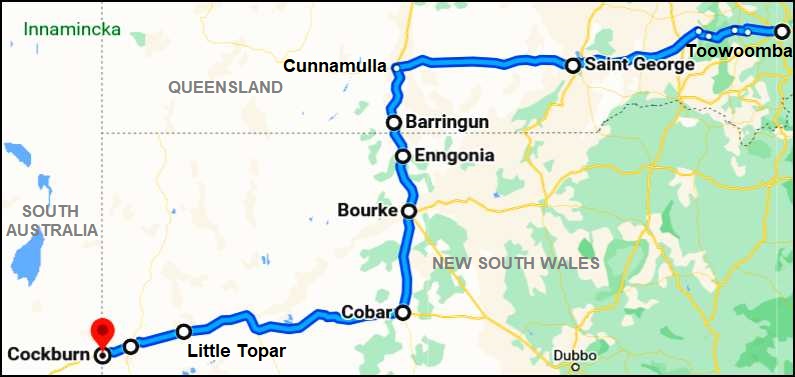
My second piloting job. A long drive to Cunnamulla and then a day and a half driving to Cockburn with the load, a dump truck chassis.
I cooked up some dinner as I talked to a couple of the pilots, they all went to bed pretty early, but they’d also been on the road since daylight that day. And even in late Summer the days are long. We awoke the next morning and I was instructed to be waiting at the border and ready to get up to speed and drop into place in front of the truck as the Queensland police car dropped off.
A stop at Bourke for fuel, we then had lunch at Cobar…
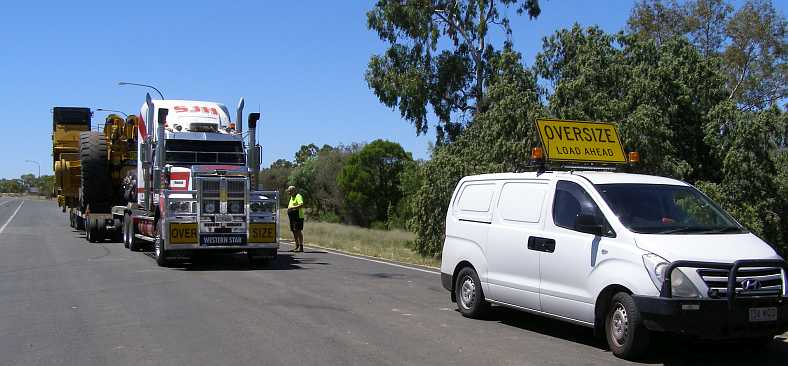
Lunch break. A half-hour stop for lunch sees the lead pilot’s van and the truck parked at this lay-by on the Western edge of the town.
That afternoon we reached Little Topar. I felt we had enough daylight left (we aren’t permitted to travel after sundown) to get to Broken Hill, but everyone else liked stopping here.
I refuelled and bought dinner as the last daylight hours wasted away. Bearing in mind that I’d have to drive all the way back to Barringun the next day after staying with them to Cockburn, I was a bit miffed about this.
There are ‘Wide Load Bypasses’ in some towns, which pilots and the truck drivers soon learn about. There was one at Bourke, another at Cobar and then a complicated one at Broken Hill. Turning onto this latter one, our truck ripped a trailer tyre on the kerbing and we were held up there for a little while.
And at Cockburn, as suddenly as I’d joined the queue I was radioed, “Okay Ray, drop off here and don’t waste any time getting back for the next load in the morning!”
It seemed I had a lot to learn about this business…
The first one was the fragility of the mounts on the roof of the vehicle, the second was the wiring required to make all the bits I’d bought from Dennis Barber work out. The wiring loom with it, I finally determined, had to be set aside and I’d work it out for myself.
But, down to brass tacks… or actually brass bolts, having had a couple snap off when reassembling after preparing things so there’d be an extra two bolts on each side of the roof, I had to find an engineering solution.
The problem is easily seen in this photo:
Ford’s brass bolts. Inverted for the purpose of the photo, the complete bolt to the right shows how it’s got a blind bottom to it to prevent water leakage into the car. Next to it is one which has broken, the 6mm thread inside a 10mm thread not leaving much metal to hold when the nut’s done up.
The inverted taper in the head of the bolt is for the countersunk screws – and the dimpled stainless steel rail – to seat. My plan was to fit longer screws down inside the bolt which would give it some strength when the nut from below was done up. This necessitated drilling and tapping further down into the bolts…
Drilling and tapping. Setting the bolts up in a piece of tube, I drilled the hole deeper three at a time and then tapped them so 10mm longer screws would go in there.
…but taking care not to go through the bottom. The drill was marked for the depth and the stop on the machine was set. The job went smoothly and I was a lot happier with the arrangement.
Meantime, Sandra had been propagating plants to sell. The front verandah was set up as a display area and she put up a cloth sign to let people know. There were also signs erected at each end of the street.
Plants for sale. A wide variety of plants, some in flower, some succulents, some bulb-based, Sandra likes her gardening and it showed here.
And more plants. The plastic cutlery sticking out of the soil is what she used to carry the prices.
I think, though she has never told me, that the whole thing was a big disappointment. Not much was sold and a lot of effort had gone into preparing things.
I had other things on my mind, of course, the second issue which had been bugging me. I’d decided to set up the radios and the battery ‘power distribution’ unit in an alloy suitcase. This way it could all be readily moved from vehicle to vehicle when I brought the Dodge on line for this work. A lot of wiring from those discarded vans was used to get the colour-coded wiring and switches from one of them were also utilised.
Case for radios and switchgear. The units sit on a shelf which lifts up, the control switches are at the front and under the shelf is a maze of wiring, connectors and fuses.
The black rocker switch to the left is for the actuators which raise and lower the roof sign, the headlight switch operates the rotating amber lights on the roof when pulled out to its first stop, then it works both those and wig-wag lights when pulled all the way out. The other switch is yet to be utilised, but it’s there if needed.
Another Dodge component takes the wiring to the items the switches control:
Connectors. Getting the power out of the case fell to the Dodge firewall connectors, while pieces of aluminium plate were hand-cut to brace the holes and retain the components.
This was all a lot of work. The hole on this end is seen in the previous picture as the point at which the three pairs of high-load main cables enter the case. The Anderson connectors can also be seen in that first picture. I used a lot of small stainless steel screws and nuts to put it all together, even bracing the hinges on the case as they’d never stand up with the case having to be open in use.
I finished fabricating that stronger cross-bar for the roof and started screwing things together up there after I’d planned and drilled the holes for all the wires to go through the ridge in the roof and be covered by the plastic trim. Yes, I made sure it was all waterproof.
Taking shape on the roof. The steel cross-bar in place, its two secure 5mm stainless steel pins each end being estimated to be capable of holding things in place up front while the plastic-mounted original cross-bars merely carried the weight of the sign and lights.
So the actual frame with the rotating lights and the sign is still to go on atop the longitudinal tubes mounted on the roof rack. But still I was nervous and I finally swallowed hard and drilled two more holes into the ridges in the roof.
Extra strength. Another cross-bar which bolts to the longitudinal tubes is fixed to the roof by 10mm stainless steel bolts. Underneath the load is spread by the use of quarter-inch thick aluminium plates.
And so I kept on progressing until it was ready to go. And just as I was pretty much ready to go, on February 13 I was offered my first job!
Dennis, who’d sold me the sign and setup, had a call from an agent in Victoria who suddenly needed a pilot to take care of a job from Goondiwindi to Ouyen in North-Western Victoria:
But Dennis was tied up with another job and had the agent call me.
How this had come to be such a ‘rush job’ was that the people who’d booked the transport didn’t think the machine being moved was as wide as it turned out to be. So three hours after getting the call I was just outside Goondiwindi meeting the truck driver and being told which way we were going. One spot we passed by will be familiar:
Territory at the border. I asked the driver to stop and let me get this shot so I could send it to Reilly. It’s near Hebel where he’d got locked out of his Subaru.
The driver was actually very happy that I’d been able to do the job. He’d been in the invidious position of being stuck in Goondiwindi for a couple of days and he wanted to get home to his family.
That night we camped at a Rest Area just near Lightning Ridge and I drove us into town to get a meal at the Bowling Club I’d frequented a few times three years earlier. Afterwards I slipped into the bed I’d made up in the back of the Territory and had instructions to be ready to go at first light in the morning. Fortunately I was up a little earlier…
Flat tyre. Heavy frosting in the windscreen is evidence that I slept in the vehicle, while my trusty Aldi 20-volt tyre pump is set to put enough pressure into the tyre to get me mobile.
…as there was a tyre problem. In the end it was necessary to put the spare on and I’d have to get this puncture repaired as we went through Bourke.
Endless plains. The green of the season was comforting after all the brown of the drought the last time I’d been through this country, but the path we took included miles and miles of flat country.
We got our breakfast after a couple of hours on the road, this was at Brewarrina which is the second town on the map between Lightning Ridge and Bourke. Lunch was at Cobar, by which time I was learning just how heavy the fuel consumption was with the sign up and a stiff headwind.
Though I refuelled at Bourke, I was getting nervous about the fuel situation as we neared Hay. The service stations there are on the Western side of town but my ‘mileage still left’ indicator was indicating zero before we got to town. And just as we came into town I radioed back to the driver that I was out of fuel and would be pulling up to syphon in one of my jerry cans.
Naturally I bought some more fuel when we got through town and we drove on to Balranald before stopping for the night. Then next morning we crossed the border – the Murray River – and drove past lots of orchards before getting to the destination at Ouyen.
First job complete. We arrived at the farm machinery dealer’s place with everything intact and, for me, the satisfaction of completing my first job in my new vocation.
I hung around while the driver unloaded the tractor from the truck, which had a trailer which opened up hydraulically so it could carry wider loads. I would soon learn that there’s an enormous variety of these specialised trailers operating and I’d be escorting many of them over the coming months.
Widened trailer. After unloading, the trailer had to be closed up to its normal width. This particular one retained the original wheel track no matter how wide the trailer was set.
With the job done, I refuelled locally and started the drive home. Well over a thousand miles away. On the way I picked up a gear linkage part and some tools from my shed. While driving the green Forester around I’d been enjoying the nice firm gearchange, but jumping into the silver one it was immediately obvious something was wrong as there was so much slop in the sideways movement of the lever.
It required some innovation to get it apart…
Puller improvisation. The roll pin holding the linkage parts onto the rod into the gearbox required the use of some extra bits I made up for the puller.
A number of bits had to be unbolted to get in the right position to operate the puller. The two pressings which support the rear of the gearbox, the bracket which holds the rod which acts as a brace back to the base of the gearlever mechanism. That’s the three bolt-holes you can see on the back of the box and the rod with a heavy rubber bush hanging down, I tried at first to just drop that rod, but the bracket was still in my way.
The part I was replacing was virtually a universal joint made of tubing, bushes and so on:
Gearchange ‘universal’. The roll pin I was having to remove was substantial (see insets) and was two roll pins in one with an inner pin. The worn out bushes are clearly seen.
Some people might have tried to knock that pin out with a hammer and punch, but I figured that might be too much shock loading on the aluminium housing into which the rod in the gearbox fed. Anyway, it might have made some more work for me to set up the extra tooling for the puller, but the job got done and the gearchange is now excellent.
Other people were also working on their cars…
Bertone X1-9 rebuild. This was at the Car Club workshop, where the owner was housing the car while doing a comprehensive rebuild on many parts to ensure it will eventually become a reliable unit for club runs, perhaps everyday usage.
…like this Bertone X1-9. It came from a deceased estate, if I recall, and had been out of use for many years. It had however, been garaged and didn’t suffer deterioration in the body.
The Car Club’s own 1922 Hudson was coming along, too. A team of helpers work on this each Wednesday at the Club’s ‘workshop day’ and many have honed trades from engine building, aluminium panel work and fine woodworking to painting on this project.
1922 Hudson project. This car had been gifted to the Men’s Shed, but was then passed on to the Car Club as it was too big a project for the Men’s Shed. The bodywork is mostly aluminium panelling over timber frames.
Another couple of owner-member jobs were there the day I called in…
Ford and Morris. The ’35 Ford Phaeton was reaching a well-advanced stage while the Morris Minor was still to be dismantled for a ground-up body job.
Getting back to the work side of things, I still had to fit wig-wag lights to the Territory. I’d purchased a pair of foglights from a wreck locally and I worked out a way to fit some LED globes to them, now it was time to get them onto the car. I’d be needing these on jobs where we had a load wider than 4.5 metres (14’ 9”) in Queensland, but they aren’t to be used in NSW.
Wig-wag lights. The foglights simply clip into the back of the bumper and are operated via the little black box I’ve attached to the ECU box under the bonnet.
I’d laboured to find a way to get a wig-wag controller economically. Dennis had simply paid an auto electrician to do the job for him, but I went hunting and found this little controller on eBay for about $18. The lights have to flash alternately left and right. This unit give ten options for the flashing so it’s a good thing. I can even use them as straight fog lights.
It had been almost three weeks since I’d done the first job before I got another. And it was through the same agent, who requested that I not let anyone know how I’d got the job. Intriguing, but nothing for me to worry about.
The call told me that there was a job which would be leaving Cunnamulla at daylight the next morning, they needed someone to accompany it to Cockburn the South Australian border near Broken Hill. Then that pilot would spend the next day travelling back to Barringun to pick up the second load to take across NSW again and then go on to Olympic Dam near Woomera in South Australia.
I announced to Sandra what was happening, explaining how lucrative the job should be and that I’d be away for the best part of a week. So it first entailed driving almost 500 miles to Cunnamulla…
St George and the Balonne weir. There was a little time for me to do a bit of sightseeing after I stopped for fuel and food at St George.
The highway crossed the Balonne River at this weir, while the monument is to Major Thomas Mitchell, who in 1846 located the spot to cross the river and established the town. I sat in the shade and ate my lunch, but I couldn’t hang around too long as there was still some mileage to cover.
Outback. Not long after St George, this sign notified travellers they were in the ‘outback’ at last. Not that it changed much.
And the miles passed by, the Territory’s twin-cam inline six singing away as we went. It was still daylight when I reached the end of the Balonne Highway, but there wasn’t a lot of light left as I swung to the right to go looking for the people with whom I’d be working over the next few days.
End of the Balonne. I felt I did well getting all the way out there in the daylight, this sign confirming I’d just about reached my destination. But I did have the sun in my eyes for the last part of that drive.
I soon found the Rest Area just South of Cunnamulla where the two trucks there with the wide loads and the other pilots were camped for the nigh. The loads were the chassis section of mining dump trucks and were probably just over the 5.5-metre width which would require police escorts to join us in NSW, whereas the police escort with us at this point would only go the few kilometres to the border. I don’t know what was involved, really, but they were calling it as 5.4-metres through NSW.
Immediately I got there I introduced myself to other pilots and the truck drivers. And just as immediately I was being quizzed about which agent had sent me. Strange. The lead pilot on the truck I’d travel with – I was to go second in that convoy – was a woman who seemed to be running the whole show, her boyfriend was the driver of the truck we were escorting.
My second piloting job. A long drive to Cunnamulla and then a day and a half driving to Cockburn with the load, a dump truck chassis.
I cooked up some dinner as I talked to a couple of the pilots, they all went to bed pretty early, but they’d also been on the road since daylight that day. And even in late Summer the days are long. We awoke the next morning and I was instructed to be waiting at the border and ready to get up to speed and drop into place in front of the truck as the Queensland police car dropped off.
A stop at Bourke for fuel, we then had lunch at Cobar…
Lunch break. A half-hour stop for lunch sees the lead pilot’s van and the truck parked at this lay-by on the Western edge of the town.
That afternoon we reached Little Topar. I felt we had enough daylight left (we aren’t permitted to travel after sundown) to get to Broken Hill, but everyone else liked stopping here.
I refuelled and bought dinner as the last daylight hours wasted away. Bearing in mind that I’d have to drive all the way back to Barringun the next day after staying with them to Cockburn, I was a bit miffed about this.
There are ‘Wide Load Bypasses’ in some towns, which pilots and the truck drivers soon learn about. There was one at Bourke, another at Cobar and then a complicated one at Broken Hill. Turning onto this latter one, our truck ripped a trailer tyre on the kerbing and we were held up there for a little while.
And at Cockburn, as suddenly as I’d joined the queue I was radioed, “Okay Ray, drop off here and don’t waste any time getting back for the next load in the morning!”
It seemed I had a lot to learn about this business…
Last edited by Ray Bell; May 13, 2022 at 06:24 PM.
Thread Starter
|
Captain
Joined: Oct 2005
Posts: 568
Likes: 8
From: The Summit, Queensland, Australia
The bluntness of the call left me wondering, but I knew what I had to do. The woman who’d made the call had not shown me the kind of respect I should have had, but there was no point worrying about that, she was on her way now to Olympic Dam, hundreds of miles into the South Australian desert.
That day’s work had begun with being ready as the sun came up…
Sunrise at Little Topar. The rising sun found me ready to get on with the job, I had a big day ahead of me.
…and I was despatched after over two hours on the road. Now, with over 500 miles to do I could be facing a long day. In fact, I did have a bit of a look around Broken Hill and Wilcannia but kept the Territory humming along so that I was nearly back to the Queensland border when the sun was setting:
Enngonia sunset. I was just North of Enngonia when the sun started to drop out of the Western sky. It was dark by the time I made the border, where the next load was waiting for me.
At the border hamlet of Barringun I found the crew settling in after driving down from further North. These machines were being moved from Mackay, over on the coast, and travelled through Barcaldine and Augathella before branching down to this route, which was well inland.
I joined the others and had a meal at the little pub, then we each went off to sleep in our vehicles and prepared for an early departure in the morning. I was probably somewhat remiss in not taking photos there and the next shot I got was when we pulled up mid-morning at North Bourke for breakfast. Well, I’d had some cereal before we got moving, but these drivers tend to do a couple of hours driving before they have their first feed of the day.
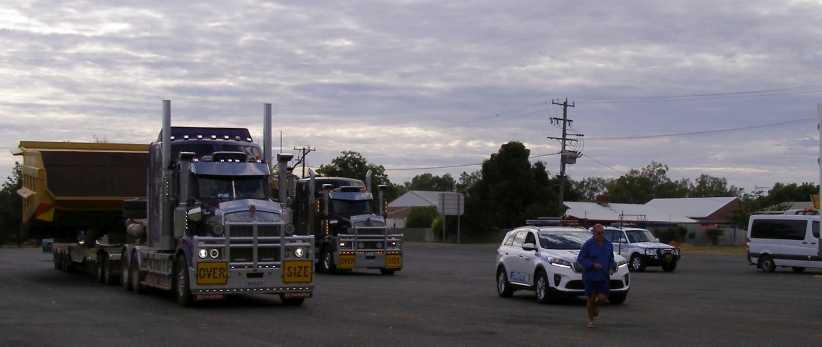
North Bourke. This large paved area at North Burke had plenty of room for both trucks to pull up while they caught up on their physical needs.
Having taken the two chassis/axle/engine parts of them, these loads were the tipper bodies and thus wider. So through NSW they would require a police escort as well as three pilot vehicles per truck, hence the two police vehicles in that picture. The wheels, incidentally, had travelled on a regular truck without the need for an escort.
Onward we travelled, I refuelled at Bourke and we had lunch again at Cobar. Some places along the way didn’t offer much in the way of a view:
Flat and barren. Once we hit the Barrier Highway, heading West out of Cobar towards Broken Hill, we often saw expanses like this.
Through Wilcannia, where the old bridge has been crowded out by the new…
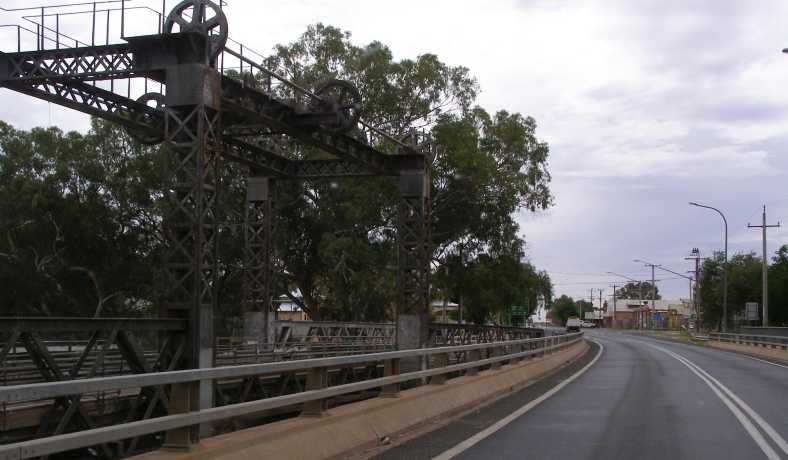
Wilcannia bridges. A relic of the times when transport through this part of the country was largely by paddle-wheeled steam-powered boats, the lift section of the bridge was a design for its times.
…and we once more struck out for Little Topar. Along the way I became acquainted with the determination some drivers seem to have to not adhere to the rules. They’re supposed to take note of pilot vehicles, but there was to be one every so often who would defy us and only take note when the police car came in from behind the second pilot vehicle. Which was me.
One Porsche actually drove under the protruding side of the tipper body, so this would be the subject of discussion when we reached Little Topar.
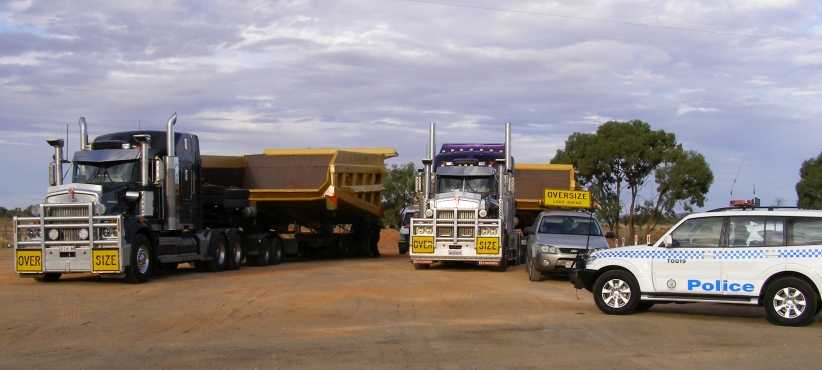
Little Topar encampment. The size of the tipper bodies shows up here in the dirt parking area at Little Topar. We had plenty of time for conversation.
The other drivers and the two police officers were happy to stop here for the night, I would have preferred to keep going as there was plenty of light and we’d easily have made it through Broken Hill. But I wasn’t making those decisions.
In the morning we cruised on through and stopped at Cockburn, parking in a large gravel stopping bay right at the border. The trucks had to await a South Australian police contingent there and I then found out – quite the contrary to the original instructions I had on this job – that this was the end of my run.
I was expecting to accompany this crew all the way to Olympic Dam, so I was missing out on a significant slice of income and also the opportunity to stop off again at places where I’d been when doing the drug survey in 2019.
So I made the drive back home at a bit more leisurely pace. I stopped in at a large wrecking yard on the outskirts of Broken hill…
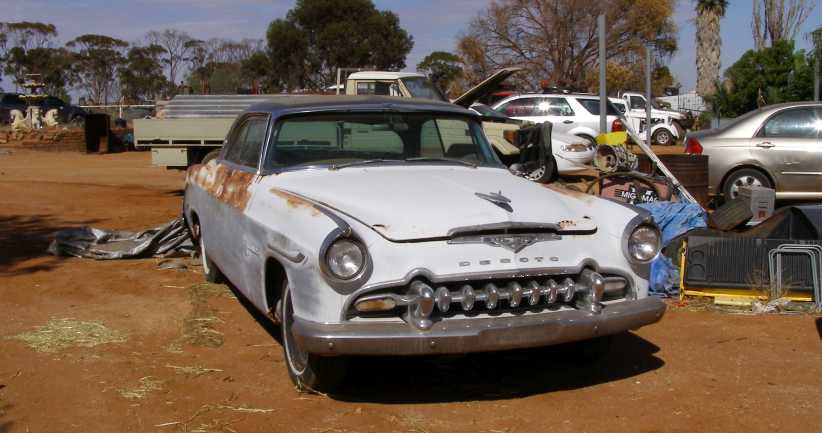
An unusual car. This model of De Soto never sold in Australia, we had a rebadged Plymouth (in a 4-door version only) 1954 Plymouth to fill the role of De Soto and also Dodge until 1957. So it was a rare find way out here in the bush.
…where it seemed the place was no longer in business and I certainly didn’t find anyone present.
In discussing this trip with my friend, Graeme Baird, he mentioned that there was a rest area which had a children’s playground. “Who would be travelling out there with kids in the car?” he kept asking, but the playground was there at the Spring Hills Rest Area not far out of Broken hill.
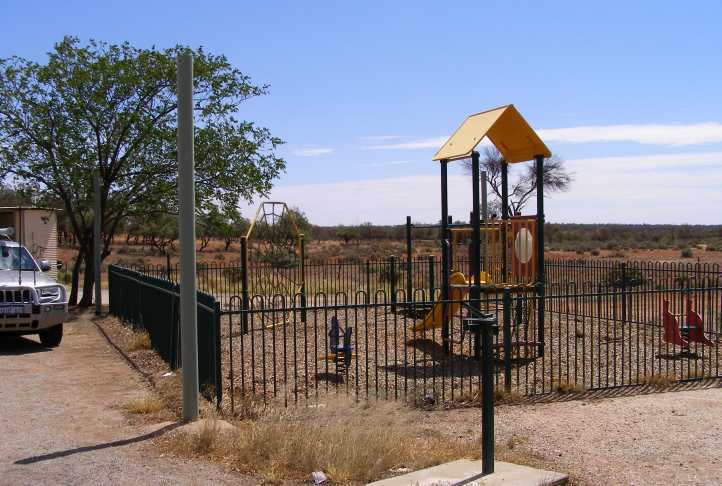
Tatty playground. Looking neglected, this playground is seen by some as a bit of an anomaly at a roadside rest area in this countryside. The tall posts at each corner indicate it once had a shadecloth cover
My next stop was at Wilcannia, where the worms were biting and I chased up a bite to eat at the local service station:
Lunch stop. Just a country service station, but with some hot food available. The young man who served me echoed my views of the apparent lethargy of the local populace.
The appearance of the country changes frequently along these roads. Sometimes, as pictured earlier, there’s just nothing, other times trees. For some distance there was a scrubby type of bush which was sitting on barren ground, everything down low having been eaten out by feral goats.
Scrubby country. This kind of scrub, while it makes a change from rough grassy plain, isn’t of much value except to hide the ever-growing number of wild goats. Two of the goats are seen on the side of the road just ahead in this pic.
Goats rarely cross the road when vehicles are coming, though if a family cross there might be a straggling kid which misses out on a safe crossing. In this way they differ from kangaroos, but ’roos aren’t so often seen during daylight.
I was about 30 miles East of Wilcannia when I took that pic, then just a couple of miles further along I saw yet another playground in a rest area. In fact, it stood out the front of the rest area and it still had its shadecloth cover:
Covering intact. Keeping the sun off youngsters, the shadecloth cover has been retained on this playground. It’s quite a large and well-used rest area.
Another thirty miles took me past the Emmdale Roadhouse, very much like the Little Topar establishment, but there was precious little else on the road into Cobar.
It’s a long road. There are lots of straight lines like this on the Barrier Highway and not a lot of elevation changes on the hills.
From Cobar I headed to Nyngan, and while looking around there I spotted another of the pilots I’d been working with. He was at a bit of a loss as to which road to take and I suggested he take the path I was following, which was to take me through Warren…
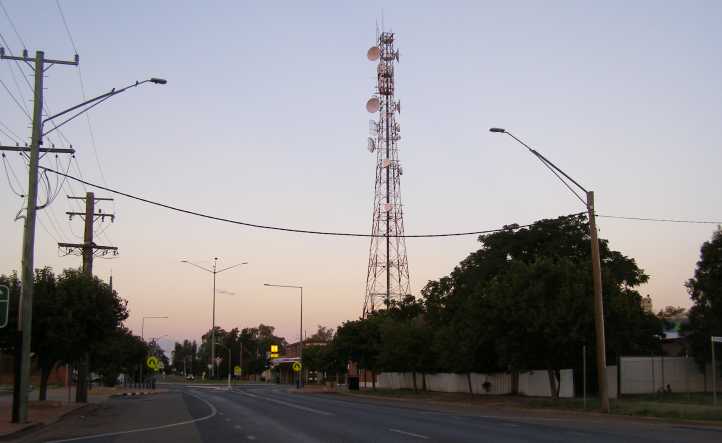
Tower at Warren. Communications are vital in these areas and the tower over the Post Office at Nyngan is similar to others in towns in far flung corners of the country.
…and onto the road to Gilgandra. From there the Newell Highway was my path to Coonabarabran, where I camped on the side of the road.
When I woke up, which was pretty early, I turned on the radio and soon heard the news that the Newell was blocked in both directions near Narrabri by a bad accident. As I headed towards Narrabri I kept calling trucks heading South to try to ascertain whether or not the blockage was far enough North of Narrabri to allow me to turn off the Newell and head across to Bingara on the Mount Kaputar road. Fortunately it was.
After breakfast at the Narrabri McDonalds I pressed on with my new directional plan, instead of going straight home I would now head across country and pay Phil Jones a visit in Ashford.
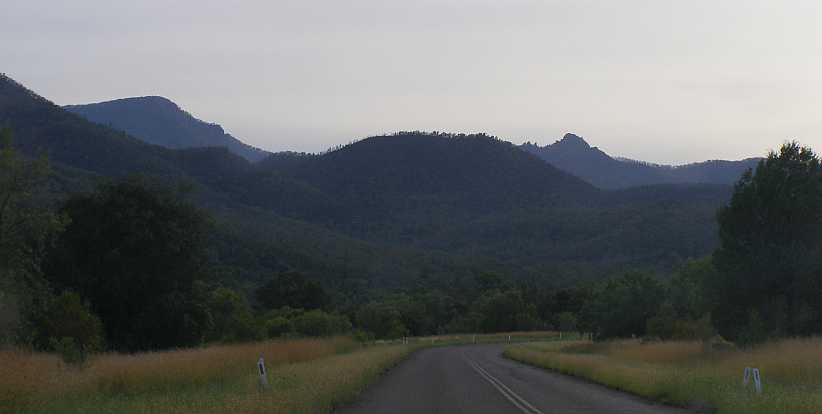
Towards Mt Kaputar. Just out of Narrabri, this range has b een thrust up out of the otherwise flat plains. Mt Kaputar is a volcanic formation somewhat similar, but much smaller than, the Devil’s Tower in Wyoming.
It’s always a quiet run on this road and Bingara is similarly a quiet little town. I hadn’t ever seen this before, however…
Bingara signs. This little bakery has apparently drawn on the old ‘Kinkara’ tea trademark, which was very similar.
The day was bright and the road almost empty, but there can always be a surprise for the traveller along the way. And so it was when I pulled up to use the amenities at the small rest area just outside of Bingara.
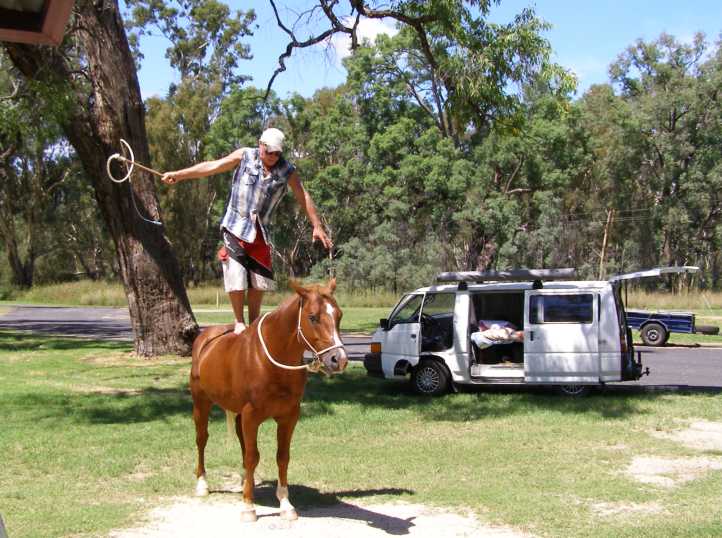
Practising his art. This man and his horse were camped at the rest area and gave us a demonstration of their little act.
From here I drove on and visited Phil, a cup of coffee and a couple of biscuits, then headed off via Mingoola to my shed. It was an opportunity to pick up a few things to take home as I continued to labour over the gearbox modification to my van.
On Wednesday afternoon, then, I was able to go around to the car club workshop and see how things were progressing there. The woodworking crew had made great progress with the door frames and all four doors were in place:
Hudson doors. With the old-time window-winding mechanisms in place, the doors now needed their outer skins and inner trim to be completed.
That car, of course, is the Club’s own project. But members were working on their own cars too, with some serious jobs being undertaken.
Morris Minor resto. Roy is a keen Morris Minor enthusiast and this car is one of three Minors he owns. It’s here shown being pulled right down so the bodywork can be repaired and repainted, a job which would take many months.
The Club has all the facilities, including a spray booth, sandblasting gear, all kinds of metal working gear and a wide range of tools, all of which are available for members to use on their own cars. On one of the two hoists this day there was another Morris, the predecessor to the Minor, the Morris 8…
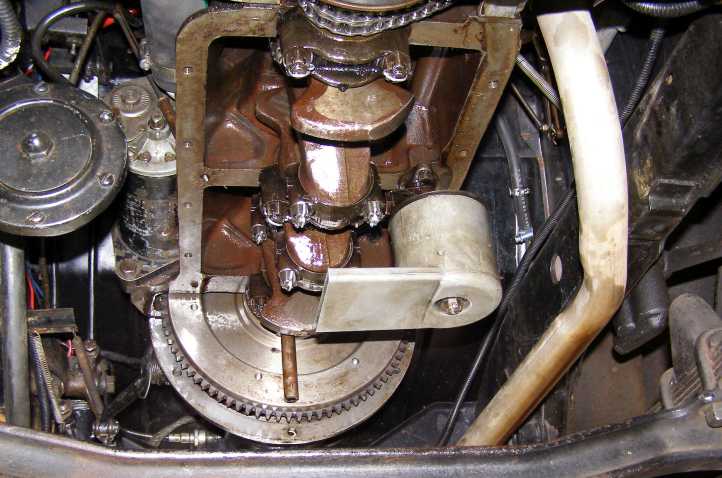
Old style. Such things as split (cotter) pins in the bolts retaining the main bearing and big-end bearing caps and that beam front axle, this Morris 8 has been another labour of love.
Cast aluminium sump. Not a pressed steel sump (pan), the cast alloy gives the engine a touch of class. Though some would prefer more power from the side-valve unit of just 918cc – 55.8 cubic inches. It delivered almost 30hp.
A bigger car was the 1935 Ford Phaeton, which was making progress and had the body primed and mounted on the chassis:
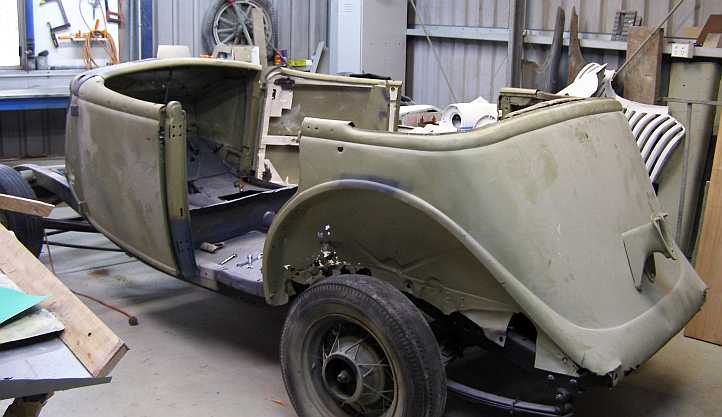
Progress on the Ford. Not a common body style, the 4-door Phaeton, usually called a ‘Tourer’ in Australia, was getting its share of attention.
Two weeks later I had planned to make a run down to Sydney to visit Bob Britton for his Saturday afternoon ‘open house’. The occasion was the arrangement for the Peugeot Car Club members to visit him and, in particular, a member of that club who’s went to school with my son.
It was also a weekend of a scheduled gathering of our ‘Family’ and they were due to meet the following day at Bulahdelah, about 150 miles North of Sydney. So I felt it important to make the trip. You can understand, then, that I was more than mildly disappointed about having to pass up a lucrative piloting trip to Cairns offered to me at the last minute!
Sadly, I took no pictures of this visit, the whole weekend being literally a washout due to flooding rains which fell. These started on the Thursday and in some areas they just kept on coming. As a result of this the Peugeot Club called off their visit to Bob’s, but three members still went along.
One of them was young David, and it was good to see him again. Another was a gregarious lady who drove a red Peugeot 208CC, saying she’d waited all her life to have a red convertible. I told her Bob had a red convertible too, and took her down to the shed and showed her the little red racing car there. She sat in it and I took a picture of her in it with her camera, she was supposed to send me the pic but unfortunately didn’t. Or it would be on this page.
Maintenance required. Strange that I took no pics at Bob’s, nor during the trip down, but this gushing dislocated downpipe got my attention on a very wet day.
After going to Bob’s I had dinner with Bob Winley at a Club in Riverstone where he knew the artists performing. I then drove off to be somewhere North of Sydney and in a position for the meeting in the morning. Breakfast was at McDonalds near Gosford, where the downpipe picture was shot (that’s my Subaru in the background) and the word came through that the meeting would be held on Zoom due to flooding. In fact, in many areas they flooding was so severe that it was rated as ‘100-year’ flooding.
I set up my laptop on a table in the shopping centre at Singleton, where they had wi-fi, and we enjoyed the contact in that form rather than just abandoning the meeting. From there I headed home with a quick visit with Max and Christine at Scone and a stop at my shed
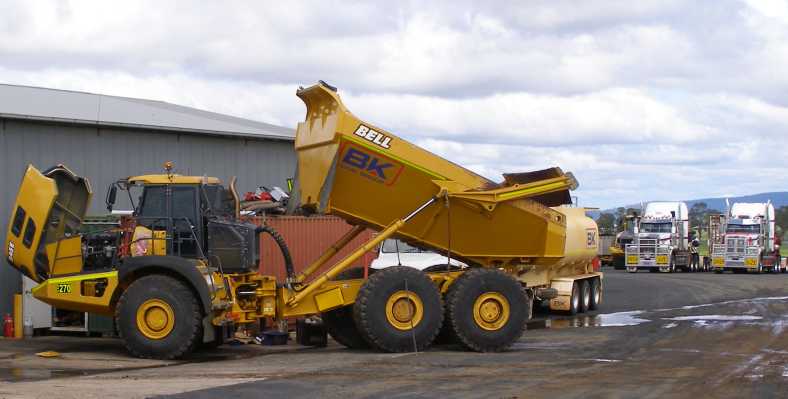
Bell articulated dump truck. Back at work. One nice job I got was to pilot one of those trucks in the background with one of the dump trucks in the foreground.
This was the first job I’d done for the BK Group, they have hundreds of machines they hire out to mining companies. This time, however, I arrived on time only to find out that the machine wasn’t ready to go.
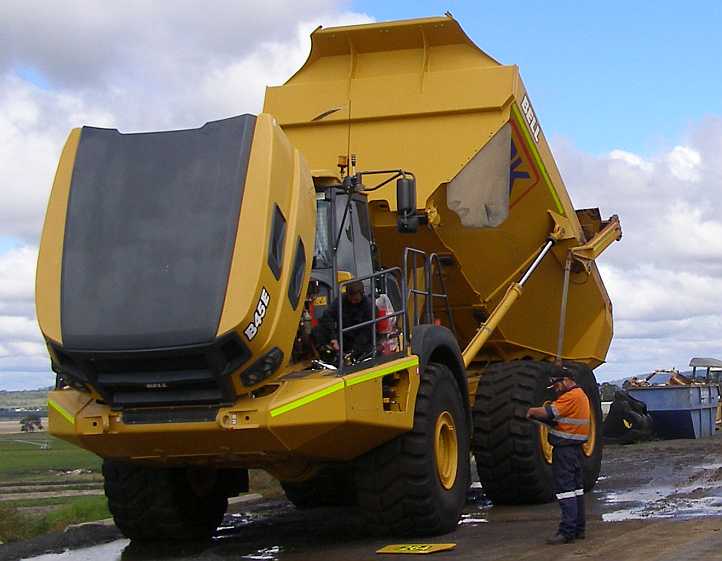
Inspection required. The mining industry requires stringent inspections take place on equipment like this and this machine was thought to be okay. But the inspectors had to come back and a three-hour delay was the result.
They’re built in South Africa, which surprised me, and are very sophisticated in their driveline – driving by all six wheels. And the truck driver, Mick, turned out to be a very amiable bloke with whom I would enjoy a number of trips over the ensuing months.
Because of the delayed start we had to abandon all hope of making the whole 300-mile trip that day. We were going to a gold mine near a town called Cracow, which is almost a ghost town as the original gold mining efforts became unprofitable many years ago. I planned to make a round trip of it so I could visit Glendon Perkins in Kingaroy on the way home:
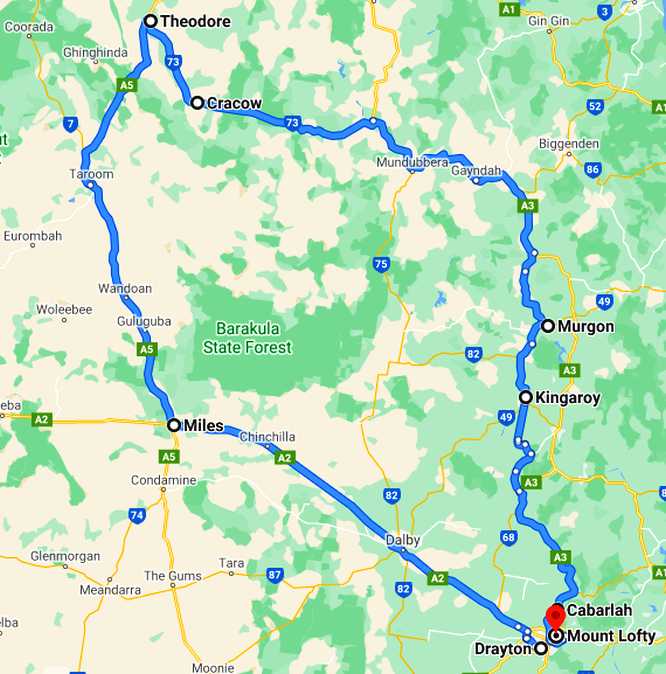
That night we got to Miles. We camped alongside the railway just across from the main street and walked to a pub to get a meal. This was the last I would see of roads I had travelled before as this trip became the first one I would do that would take me into what’s loosely referred to as ‘Central Queensland’. Over the coming months I’d be learning all about the many roads into and out of the area, but for now I was only thinking about the circuit I’d make out of this job…
That day’s work had begun with being ready as the sun came up…
Sunrise at Little Topar. The rising sun found me ready to get on with the job, I had a big day ahead of me.
…and I was despatched after over two hours on the road. Now, with over 500 miles to do I could be facing a long day. In fact, I did have a bit of a look around Broken Hill and Wilcannia but kept the Territory humming along so that I was nearly back to the Queensland border when the sun was setting:
Enngonia sunset. I was just North of Enngonia when the sun started to drop out of the Western sky. It was dark by the time I made the border, where the next load was waiting for me.
At the border hamlet of Barringun I found the crew settling in after driving down from further North. These machines were being moved from Mackay, over on the coast, and travelled through Barcaldine and Augathella before branching down to this route, which was well inland.
I joined the others and had a meal at the little pub, then we each went off to sleep in our vehicles and prepared for an early departure in the morning. I was probably somewhat remiss in not taking photos there and the next shot I got was when we pulled up mid-morning at North Bourke for breakfast. Well, I’d had some cereal before we got moving, but these drivers tend to do a couple of hours driving before they have their first feed of the day.
North Bourke. This large paved area at North Burke had plenty of room for both trucks to pull up while they caught up on their physical needs.
Having taken the two chassis/axle/engine parts of them, these loads were the tipper bodies and thus wider. So through NSW they would require a police escort as well as three pilot vehicles per truck, hence the two police vehicles in that picture. The wheels, incidentally, had travelled on a regular truck without the need for an escort.
Onward we travelled, I refuelled at Bourke and we had lunch again at Cobar. Some places along the way didn’t offer much in the way of a view:
Flat and barren. Once we hit the Barrier Highway, heading West out of Cobar towards Broken Hill, we often saw expanses like this.
Through Wilcannia, where the old bridge has been crowded out by the new…
Wilcannia bridges. A relic of the times when transport through this part of the country was largely by paddle-wheeled steam-powered boats, the lift section of the bridge was a design for its times.
…and we once more struck out for Little Topar. Along the way I became acquainted with the determination some drivers seem to have to not adhere to the rules. They’re supposed to take note of pilot vehicles, but there was to be one every so often who would defy us and only take note when the police car came in from behind the second pilot vehicle. Which was me.
One Porsche actually drove under the protruding side of the tipper body, so this would be the subject of discussion when we reached Little Topar.
Little Topar encampment. The size of the tipper bodies shows up here in the dirt parking area at Little Topar. We had plenty of time for conversation.
The other drivers and the two police officers were happy to stop here for the night, I would have preferred to keep going as there was plenty of light and we’d easily have made it through Broken Hill. But I wasn’t making those decisions.
In the morning we cruised on through and stopped at Cockburn, parking in a large gravel stopping bay right at the border. The trucks had to await a South Australian police contingent there and I then found out – quite the contrary to the original instructions I had on this job – that this was the end of my run.
I was expecting to accompany this crew all the way to Olympic Dam, so I was missing out on a significant slice of income and also the opportunity to stop off again at places where I’d been when doing the drug survey in 2019.
So I made the drive back home at a bit more leisurely pace. I stopped in at a large wrecking yard on the outskirts of Broken hill…
An unusual car. This model of De Soto never sold in Australia, we had a rebadged Plymouth (in a 4-door version only) 1954 Plymouth to fill the role of De Soto and also Dodge until 1957. So it was a rare find way out here in the bush.
…where it seemed the place was no longer in business and I certainly didn’t find anyone present.
In discussing this trip with my friend, Graeme Baird, he mentioned that there was a rest area which had a children’s playground. “Who would be travelling out there with kids in the car?” he kept asking, but the playground was there at the Spring Hills Rest Area not far out of Broken hill.
Tatty playground. Looking neglected, this playground is seen by some as a bit of an anomaly at a roadside rest area in this countryside. The tall posts at each corner indicate it once had a shadecloth cover
My next stop was at Wilcannia, where the worms were biting and I chased up a bite to eat at the local service station:
Lunch stop. Just a country service station, but with some hot food available. The young man who served me echoed my views of the apparent lethargy of the local populace.
The appearance of the country changes frequently along these roads. Sometimes, as pictured earlier, there’s just nothing, other times trees. For some distance there was a scrubby type of bush which was sitting on barren ground, everything down low having been eaten out by feral goats.
Scrubby country. This kind of scrub, while it makes a change from rough grassy plain, isn’t of much value except to hide the ever-growing number of wild goats. Two of the goats are seen on the side of the road just ahead in this pic.
Goats rarely cross the road when vehicles are coming, though if a family cross there might be a straggling kid which misses out on a safe crossing. In this way they differ from kangaroos, but ’roos aren’t so often seen during daylight.
I was about 30 miles East of Wilcannia when I took that pic, then just a couple of miles further along I saw yet another playground in a rest area. In fact, it stood out the front of the rest area and it still had its shadecloth cover:
Covering intact. Keeping the sun off youngsters, the shadecloth cover has been retained on this playground. It’s quite a large and well-used rest area.
Another thirty miles took me past the Emmdale Roadhouse, very much like the Little Topar establishment, but there was precious little else on the road into Cobar.
It’s a long road. There are lots of straight lines like this on the Barrier Highway and not a lot of elevation changes on the hills.
From Cobar I headed to Nyngan, and while looking around there I spotted another of the pilots I’d been working with. He was at a bit of a loss as to which road to take and I suggested he take the path I was following, which was to take me through Warren…
Tower at Warren. Communications are vital in these areas and the tower over the Post Office at Nyngan is similar to others in towns in far flung corners of the country.
…and onto the road to Gilgandra. From there the Newell Highway was my path to Coonabarabran, where I camped on the side of the road.
When I woke up, which was pretty early, I turned on the radio and soon heard the news that the Newell was blocked in both directions near Narrabri by a bad accident. As I headed towards Narrabri I kept calling trucks heading South to try to ascertain whether or not the blockage was far enough North of Narrabri to allow me to turn off the Newell and head across to Bingara on the Mount Kaputar road. Fortunately it was.
After breakfast at the Narrabri McDonalds I pressed on with my new directional plan, instead of going straight home I would now head across country and pay Phil Jones a visit in Ashford.
Towards Mt Kaputar. Just out of Narrabri, this range has b een thrust up out of the otherwise flat plains. Mt Kaputar is a volcanic formation somewhat similar, but much smaller than, the Devil’s Tower in Wyoming.
It’s always a quiet run on this road and Bingara is similarly a quiet little town. I hadn’t ever seen this before, however…
Bingara signs. This little bakery has apparently drawn on the old ‘Kinkara’ tea trademark, which was very similar.
The day was bright and the road almost empty, but there can always be a surprise for the traveller along the way. And so it was when I pulled up to use the amenities at the small rest area just outside of Bingara.
Practising his art. This man and his horse were camped at the rest area and gave us a demonstration of their little act.
From here I drove on and visited Phil, a cup of coffee and a couple of biscuits, then headed off via Mingoola to my shed. It was an opportunity to pick up a few things to take home as I continued to labour over the gearbox modification to my van.
On Wednesday afternoon, then, I was able to go around to the car club workshop and see how things were progressing there. The woodworking crew had made great progress with the door frames and all four doors were in place:
Hudson doors. With the old-time window-winding mechanisms in place, the doors now needed their outer skins and inner trim to be completed.
That car, of course, is the Club’s own project. But members were working on their own cars too, with some serious jobs being undertaken.
Morris Minor resto. Roy is a keen Morris Minor enthusiast and this car is one of three Minors he owns. It’s here shown being pulled right down so the bodywork can be repaired and repainted, a job which would take many months.
The Club has all the facilities, including a spray booth, sandblasting gear, all kinds of metal working gear and a wide range of tools, all of which are available for members to use on their own cars. On one of the two hoists this day there was another Morris, the predecessor to the Minor, the Morris 8…
Old style. Such things as split (cotter) pins in the bolts retaining the main bearing and big-end bearing caps and that beam front axle, this Morris 8 has been another labour of love.
Cast aluminium sump. Not a pressed steel sump (pan), the cast alloy gives the engine a touch of class. Though some would prefer more power from the side-valve unit of just 918cc – 55.8 cubic inches. It delivered almost 30hp.
A bigger car was the 1935 Ford Phaeton, which was making progress and had the body primed and mounted on the chassis:
Progress on the Ford. Not a common body style, the 4-door Phaeton, usually called a ‘Tourer’ in Australia, was getting its share of attention.
Two weeks later I had planned to make a run down to Sydney to visit Bob Britton for his Saturday afternoon ‘open house’. The occasion was the arrangement for the Peugeot Car Club members to visit him and, in particular, a member of that club who’s went to school with my son.
It was also a weekend of a scheduled gathering of our ‘Family’ and they were due to meet the following day at Bulahdelah, about 150 miles North of Sydney. So I felt it important to make the trip. You can understand, then, that I was more than mildly disappointed about having to pass up a lucrative piloting trip to Cairns offered to me at the last minute!
Sadly, I took no pictures of this visit, the whole weekend being literally a washout due to flooding rains which fell. These started on the Thursday and in some areas they just kept on coming. As a result of this the Peugeot Club called off their visit to Bob’s, but three members still went along.
One of them was young David, and it was good to see him again. Another was a gregarious lady who drove a red Peugeot 208CC, saying she’d waited all her life to have a red convertible. I told her Bob had a red convertible too, and took her down to the shed and showed her the little red racing car there. She sat in it and I took a picture of her in it with her camera, she was supposed to send me the pic but unfortunately didn’t. Or it would be on this page.
Maintenance required. Strange that I took no pics at Bob’s, nor during the trip down, but this gushing dislocated downpipe got my attention on a very wet day.
After going to Bob’s I had dinner with Bob Winley at a Club in Riverstone where he knew the artists performing. I then drove off to be somewhere North of Sydney and in a position for the meeting in the morning. Breakfast was at McDonalds near Gosford, where the downpipe picture was shot (that’s my Subaru in the background) and the word came through that the meeting would be held on Zoom due to flooding. In fact, in many areas they flooding was so severe that it was rated as ‘100-year’ flooding.
I set up my laptop on a table in the shopping centre at Singleton, where they had wi-fi, and we enjoyed the contact in that form rather than just abandoning the meeting. From there I headed home with a quick visit with Max and Christine at Scone and a stop at my shed
Bell articulated dump truck. Back at work. One nice job I got was to pilot one of those trucks in the background with one of the dump trucks in the foreground.
This was the first job I’d done for the BK Group, they have hundreds of machines they hire out to mining companies. This time, however, I arrived on time only to find out that the machine wasn’t ready to go.
Inspection required. The mining industry requires stringent inspections take place on equipment like this and this machine was thought to be okay. But the inspectors had to come back and a three-hour delay was the result.
They’re built in South Africa, which surprised me, and are very sophisticated in their driveline – driving by all six wheels. And the truck driver, Mick, turned out to be a very amiable bloke with whom I would enjoy a number of trips over the ensuing months.
Because of the delayed start we had to abandon all hope of making the whole 300-mile trip that day. We were going to a gold mine near a town called Cracow, which is almost a ghost town as the original gold mining efforts became unprofitable many years ago. I planned to make a round trip of it so I could visit Glendon Perkins in Kingaroy on the way home:
That night we got to Miles. We camped alongside the railway just across from the main street and walked to a pub to get a meal. This was the last I would see of roads I had travelled before as this trip became the first one I would do that would take me into what’s loosely referred to as ‘Central Queensland’. Over the coming months I’d be learning all about the many roads into and out of the area, but for now I was only thinking about the circuit I’d make out of this job…
Last edited by Ray Bell; Jun 28, 2022 at 11:47 AM.
Thread Starter
|
Captain
Joined: Oct 2005
Posts: 568
Likes: 8
From: The Summit, Queensland, Australia
Actually, I was in error in my last statement, I did travel down through this ‘Central Queensland’ area when I was returning from my visit to Reilly in Mission Beach in 2014. But I was about to start finding my way round this vast area with the work which would come my way.
The first such job was the ‘Moxy’ from Toowoomba to the goldmine at Cracow. Goldminers are now going over long-since abandoned mining areas as modern machinery makes it possible to win more from the mines.
Approaching Theodore I was surprised to see…
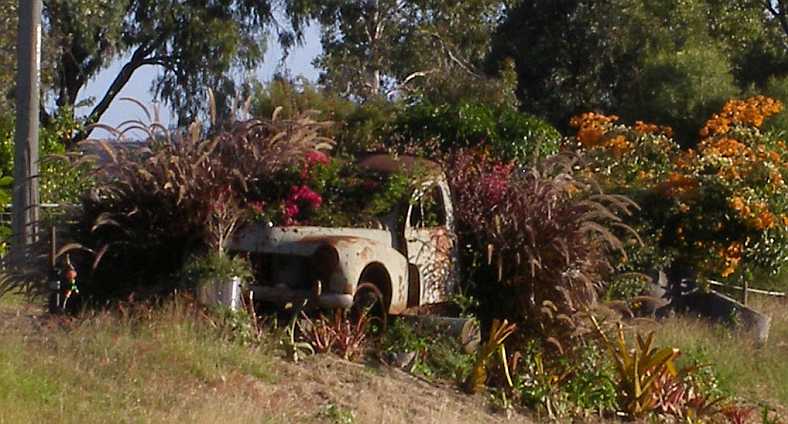
Flowerpot 203. Being a Peugeot man of old I couldn’t help noticing this old 203 utility, long since disused, being used as decoration in front of a house at Theodore.
…this Peugeot, which I later found out had been abandoned in Lonesome Creek, some ten miles away. It suited the new purpose very well, but with bathtubs, sinks and even a urinal mounted on it to provide growing places for the flowers.
Also at Theodore was another of those stickers indicating that Mr Fox isn’t well-liked:
Passing another Fox. I have no idea what the Fox empire think of these stickers, but I’ve seen them as much as a thousand miles apart.
Getting back to the job at hand, there are two very narrow bridges on the road to the goldmine. The wheels on the truck were set at 3.5 metres, the bridges are 3.6 wide.
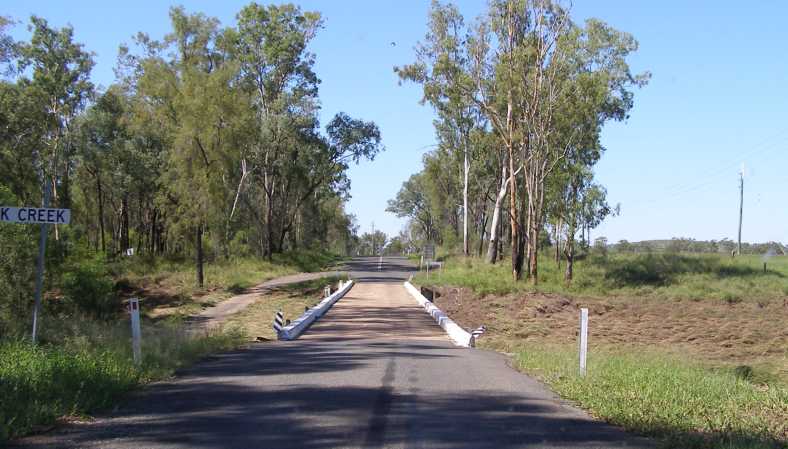
Narrow bridges. Another new challenge was presented to me by the presence of bridges not much wider than the truck.
The truck driver, Mick, was relying on me to ensure that he got all his wheels on the deck and not snag any tyres on the beams at each side, which I had to do by watching in my mirrors and radioing him…
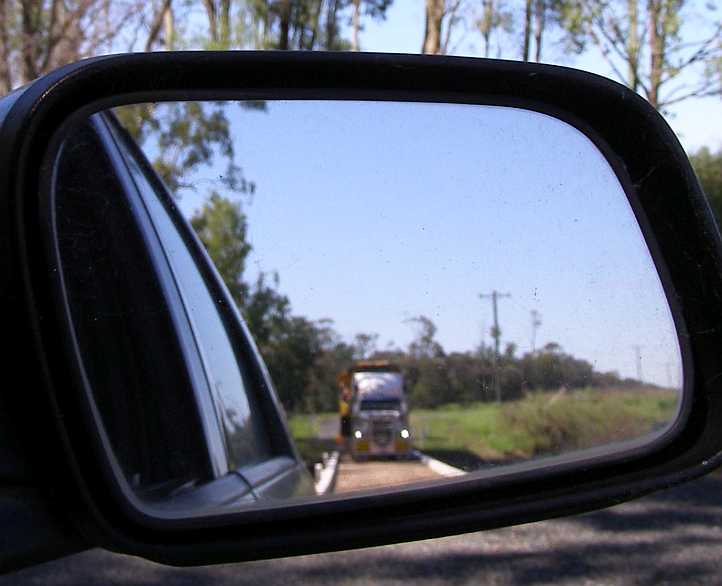
Guiding Mick. The hardest part here was that when I was stationary the mirror vibrated a lot. But we got through it and Mick was happy.
…so he could get his load safely to the mine. At that time we parted ways, I wasn’t allowed on-site. There were other jobs to come with Mick, who’s become something of a working friend.
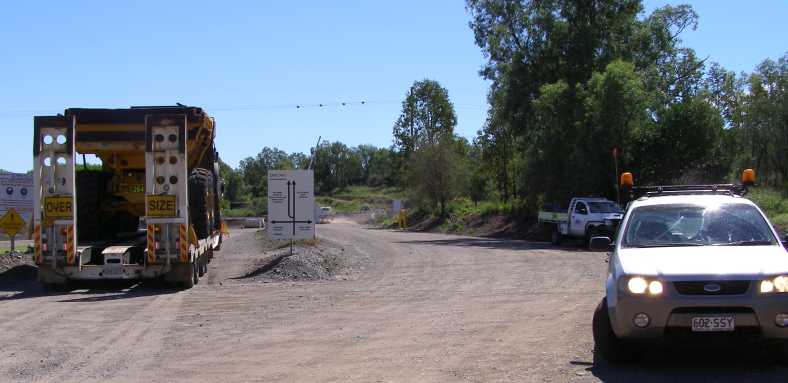
Reached the mine. Here I turned around and went my own way as Mick took the truck in and unloaded the Moxy.
And so I began my more adventurous drive home. The little almost-ghost town of Cracow didn’t offer much…
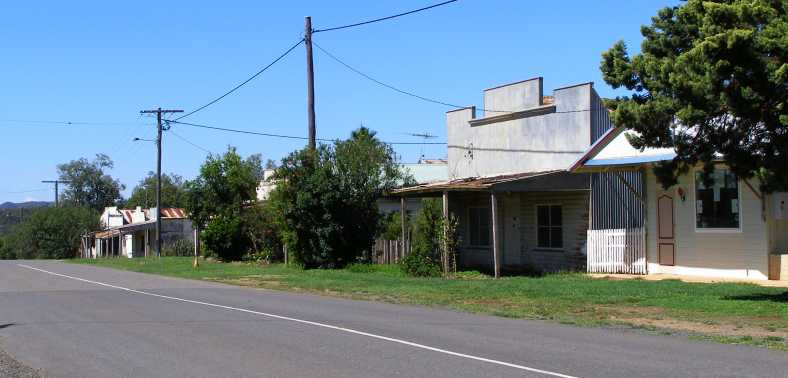
Cracow shops. People have no doubt gone through booms and busts here, but it’s all apparently a long time ago.
…and so I pressed on on my alternative roads to home, calling in to see my Mopar friend, Glendon Perkins, as I went and having a good look at his hot-rods.
It wasn’t to be long before I got a really big-mileage job – almost 1,200 miles. On a Friday night the agent phoned and asked what I was doing the next morning. Replying that I was waiting for him to tell me I soon found out I was on my way to Mount Isa, with a job coming out of Brisbane at 6am the next morning.
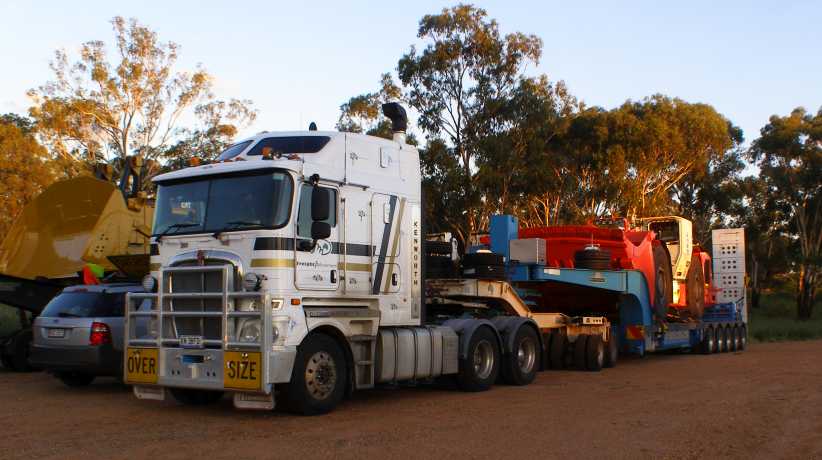
Augathella. We were almost 500 miles from Brisbane when we pulled up here for the night, dining at the local hotel.
The next day we covered a bit more distance, being clear of all the city traffic helping with that. But I couldn’t believe it when we approached the railway crossing just before Cloncurry and the lights started flashing. There would only be three or four trains a day on this line
Held up by a train. We were both surprised to have this train interrupt our progress as trains are so rare on these lines.
At Cloncurry we camped at the local cattle saleyards and went into town to dine at a Club. There’s an area at the saleyards provided specifically for trucks as the people of the town recognise the importance of trucking to their existence in this neck of the ‘outback’. And for a reward we saw a nice sunrise as we prepared for the final hundred miles of the journey:
Cloncurry sunrise. The driver was keen to get moving as soon as the sun came up (we can only travel in daylight with these loads) and so we saw the sun’s first rays coming from the East.
I can’t begin to describe the delightful scenery that was to greet us on this final stretch. So different to the drought-stricken piece of country I’d driven through in the opposite direction a year and a half earlier, the difference was nothing short of amazing. And the difference between the flatter country we’d been traversing added to the contrast and beauty.
Into the hills. It’s always a pleasure to drive into areas like this with the sunrise behind you, this picture gives just a glimpse of what it’s like.
Where on my previous drive the ground was all covered with red stones, with bigger rocks in both red and black standing up among them, and stunted trees providing almost the whole of the contrast in the scene, now we had greens in abundance due to heavy rains in the preceding weeks.
It all led me to state categorically that this was the most stunningly beautiful drive I’d ever taken, but unfortunately my photographic efforts let it down. Having to keep moving to stay ahead of the truck, I could only snap pics as I drove.
The colours. The green of the richer grasses grew through those red stones on the ground, some of the nearer grass was lighter green as it seeded while the darker green of the foliage in the trees completed the contrast with the rocks native to the hills.
The driver wanted to stop somewhere, for a couple of reasons, as we got closer to our destination. First, he wanted to get a good photo of the rig with the beautiful scenery behind it, but he also had to get changed into ‘safety gear’ for his arrival at the mine.
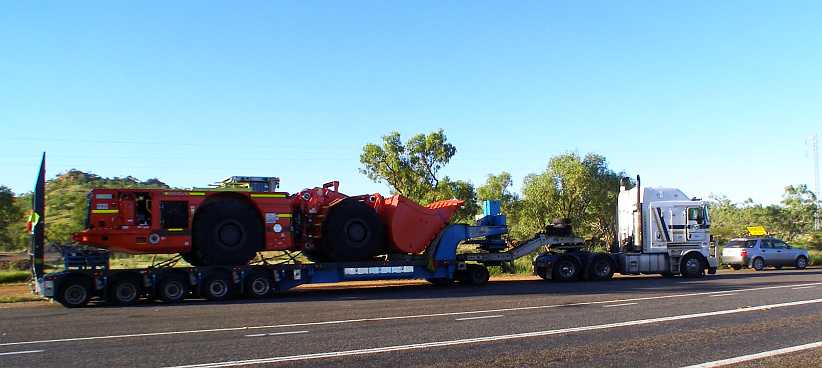
100-ton load. This was the load I was piloting, a machine for underground mining, for which Mount Isa is famous.
As we drove on we continued to see more of that beauty the rains had brought upon this stretch of rugged country:
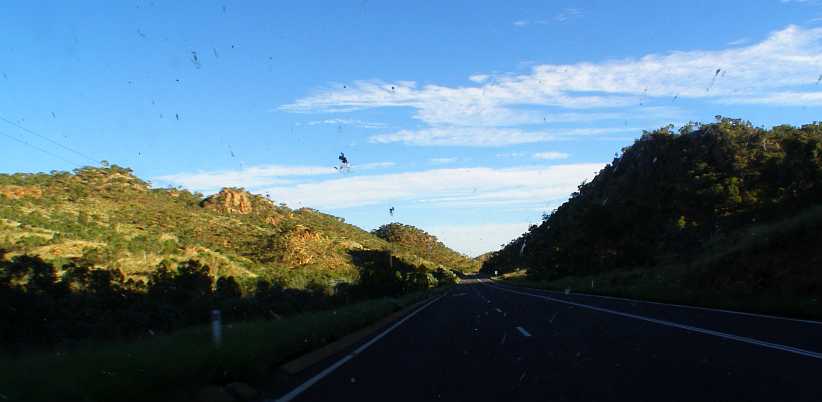
Rocky outcrops. Standing out from the newly-grown green carpet are rocks which typify the area.
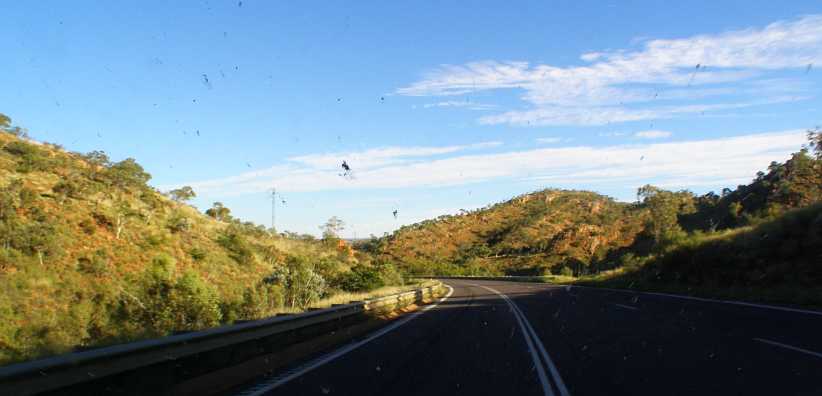
Rugged terrain. This stretch is, once again, carved out of a different kind of scenery to the flatter ground we’d covered most of the way from Brisbane.
Having done my job getting the load to the mine, I put down my sign and turned off my lights and set out to find my stepson, Reilly, who’d moved here a few months earlier after doing a good job for Woolworths at Ayr. He was now the Store Manager for Mount Isa’s branch but finding it a difficult job as staff was hard to find and keep.
He was living in a house in a quiet street…
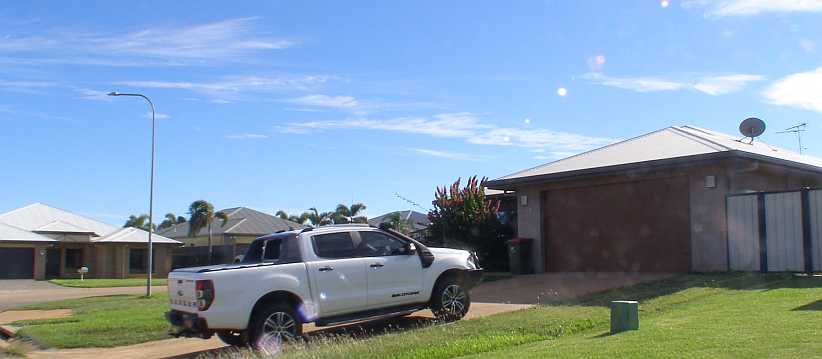
Reilly’s house and Ford. Reilly had added a Ford Ranger to his stable of vehicles since arriving at Mount Isa and was busy equipping it for extreme travels around the country.
…just to the South of the main part of town. The WRX was locked in the garage with the jetskis. There was no shortage of toys in Reilly’s life. Having dropped off some things he’d had me pick up in Toowoomba for him I headed back to the campsite at Cloncurry.
Cloncurry amenities. I mentioned that the people of Cloncurry were appreciative of the work that truck drivers do for them, these amenities have been built because of that appreciation.
With showers, toilets, a barbecue and picnic tables, even a washing machine, this provision is much appreciated by the drivers. The saleyards, by the way, are huge and handle around a million head of cattle per year, they claim to be the biggest in Australia. The sign with the picture also carries the common idiom, ‘Without Trucks, Australia Stops.’
When I got there I found the truck had returned and the driver was setting about reducing its size for the trip home…
Dolly loading. To reduce the size of the truck on the road, the dolly which is required for extreme loads is loaded onto the trailer. The platform, of course, is narrowed to standard truck width.
…but then he worked out that he wouldn’t be seeing another job for several days due to the easter holiday. He’d earlier bought some beer so, after phoning his daughter, he started demolishing the brew on hand and planned to leave again at three in the morning.
I went straight away, I was keen to get home again. But, would you believe, that level crossing just to the East of Cloncurry saw me having to stop again:
Another train. Hard to believe that I struck trains at this crossing as I travelled in both directions.
The sights of those wide open plains were made more interesting by the weather. There’s a whole storm in this cloud:
Rainbow in the rain. Heavy rain and a rainbow come down from this cloud somewhere near Winton.
That night I pulled up to camp at Ilfracombe. I’d been there before, during the running of the Camp Quality Caper back in 1996, but that time I didn’t have time to have a good look at the machinery alongside the highway that the townsfolk have on display. This time I spent a little time having a look.
Ilfracombe machines. The strong shadows of morning fall around these machines, there are many of them, and many types of them, on display here at Ilfracombe.
Old truck chassis. Solid-rubber tyres are an indication of the age of this chassis. Chain drive to the rear axle is yet another.
Specialised. This is a tank and dam excavator, designed to provide water storage so necessary in this extremely dry land.
After looking around for a while – and getting breakfast served by a young Canadian lady on a working holiday in Australia at the adjacent hotel – I headed off towards home. Barcaldine was my fuel stop, then I went through Blackall:
Spelling it out. There’s no excuse for not knowing where you are as you approach this town.
Driving on, looking about, I was at Amby when I spied this transportable water tank:
Tank adaptation. Harking back to what I saw in LA on my first trip to the USA, I asked this driver to pull up so I could get a photo of the first of these I’d seen in Australia.
And so I drove on. Through Roma and Miles, Chinchilla, Dalby and finally home to Toowoomba. Soon I got another call to head out on another job.
Tanks. Another kind of tank, this time much wider and in need of three pilots per load. They’d only needed two pilots before they cross the border from NSW, hence I was called in to help them comply as far as Southbrook.
The new work was certainly making sure I saw some sights. The beauty of that drive from Cloncurry to Mount Isa would be hard to eclipse, but even lesser sights were worth seeing.
The first such job was the ‘Moxy’ from Toowoomba to the goldmine at Cracow. Goldminers are now going over long-since abandoned mining areas as modern machinery makes it possible to win more from the mines.
Approaching Theodore I was surprised to see…
Flowerpot 203. Being a Peugeot man of old I couldn’t help noticing this old 203 utility, long since disused, being used as decoration in front of a house at Theodore.
…this Peugeot, which I later found out had been abandoned in Lonesome Creek, some ten miles away. It suited the new purpose very well, but with bathtubs, sinks and even a urinal mounted on it to provide growing places for the flowers.
Also at Theodore was another of those stickers indicating that Mr Fox isn’t well-liked:
Passing another Fox. I have no idea what the Fox empire think of these stickers, but I’ve seen them as much as a thousand miles apart.
Getting back to the job at hand, there are two very narrow bridges on the road to the goldmine. The wheels on the truck were set at 3.5 metres, the bridges are 3.6 wide.
Narrow bridges. Another new challenge was presented to me by the presence of bridges not much wider than the truck.
The truck driver, Mick, was relying on me to ensure that he got all his wheels on the deck and not snag any tyres on the beams at each side, which I had to do by watching in my mirrors and radioing him…
Guiding Mick. The hardest part here was that when I was stationary the mirror vibrated a lot. But we got through it and Mick was happy.
…so he could get his load safely to the mine. At that time we parted ways, I wasn’t allowed on-site. There were other jobs to come with Mick, who’s become something of a working friend.
Reached the mine. Here I turned around and went my own way as Mick took the truck in and unloaded the Moxy.
And so I began my more adventurous drive home. The little almost-ghost town of Cracow didn’t offer much…
Cracow shops. People have no doubt gone through booms and busts here, but it’s all apparently a long time ago.
…and so I pressed on on my alternative roads to home, calling in to see my Mopar friend, Glendon Perkins, as I went and having a good look at his hot-rods.
It wasn’t to be long before I got a really big-mileage job – almost 1,200 miles. On a Friday night the agent phoned and asked what I was doing the next morning. Replying that I was waiting for him to tell me I soon found out I was on my way to Mount Isa, with a job coming out of Brisbane at 6am the next morning.
Augathella. We were almost 500 miles from Brisbane when we pulled up here for the night, dining at the local hotel.
The next day we covered a bit more distance, being clear of all the city traffic helping with that. But I couldn’t believe it when we approached the railway crossing just before Cloncurry and the lights started flashing. There would only be three or four trains a day on this line
Held up by a train. We were both surprised to have this train interrupt our progress as trains are so rare on these lines.
At Cloncurry we camped at the local cattle saleyards and went into town to dine at a Club. There’s an area at the saleyards provided specifically for trucks as the people of the town recognise the importance of trucking to their existence in this neck of the ‘outback’. And for a reward we saw a nice sunrise as we prepared for the final hundred miles of the journey:
Cloncurry sunrise. The driver was keen to get moving as soon as the sun came up (we can only travel in daylight with these loads) and so we saw the sun’s first rays coming from the East.
I can’t begin to describe the delightful scenery that was to greet us on this final stretch. So different to the drought-stricken piece of country I’d driven through in the opposite direction a year and a half earlier, the difference was nothing short of amazing. And the difference between the flatter country we’d been traversing added to the contrast and beauty.
Into the hills. It’s always a pleasure to drive into areas like this with the sunrise behind you, this picture gives just a glimpse of what it’s like.
Where on my previous drive the ground was all covered with red stones, with bigger rocks in both red and black standing up among them, and stunted trees providing almost the whole of the contrast in the scene, now we had greens in abundance due to heavy rains in the preceding weeks.
It all led me to state categorically that this was the most stunningly beautiful drive I’d ever taken, but unfortunately my photographic efforts let it down. Having to keep moving to stay ahead of the truck, I could only snap pics as I drove.
The colours. The green of the richer grasses grew through those red stones on the ground, some of the nearer grass was lighter green as it seeded while the darker green of the foliage in the trees completed the contrast with the rocks native to the hills.
The driver wanted to stop somewhere, for a couple of reasons, as we got closer to our destination. First, he wanted to get a good photo of the rig with the beautiful scenery behind it, but he also had to get changed into ‘safety gear’ for his arrival at the mine.
100-ton load. This was the load I was piloting, a machine for underground mining, for which Mount Isa is famous.
As we drove on we continued to see more of that beauty the rains had brought upon this stretch of rugged country:
Rocky outcrops. Standing out from the newly-grown green carpet are rocks which typify the area.
Rugged terrain. This stretch is, once again, carved out of a different kind of scenery to the flatter ground we’d covered most of the way from Brisbane.
Having done my job getting the load to the mine, I put down my sign and turned off my lights and set out to find my stepson, Reilly, who’d moved here a few months earlier after doing a good job for Woolworths at Ayr. He was now the Store Manager for Mount Isa’s branch but finding it a difficult job as staff was hard to find and keep.
He was living in a house in a quiet street…
Reilly’s house and Ford. Reilly had added a Ford Ranger to his stable of vehicles since arriving at Mount Isa and was busy equipping it for extreme travels around the country.
…just to the South of the main part of town. The WRX was locked in the garage with the jetskis. There was no shortage of toys in Reilly’s life. Having dropped off some things he’d had me pick up in Toowoomba for him I headed back to the campsite at Cloncurry.
Cloncurry amenities. I mentioned that the people of Cloncurry were appreciative of the work that truck drivers do for them, these amenities have been built because of that appreciation.
With showers, toilets, a barbecue and picnic tables, even a washing machine, this provision is much appreciated by the drivers. The saleyards, by the way, are huge and handle around a million head of cattle per year, they claim to be the biggest in Australia. The sign with the picture also carries the common idiom, ‘Without Trucks, Australia Stops.’
When I got there I found the truck had returned and the driver was setting about reducing its size for the trip home…
Dolly loading. To reduce the size of the truck on the road, the dolly which is required for extreme loads is loaded onto the trailer. The platform, of course, is narrowed to standard truck width.
…but then he worked out that he wouldn’t be seeing another job for several days due to the easter holiday. He’d earlier bought some beer so, after phoning his daughter, he started demolishing the brew on hand and planned to leave again at three in the morning.
I went straight away, I was keen to get home again. But, would you believe, that level crossing just to the East of Cloncurry saw me having to stop again:
Another train. Hard to believe that I struck trains at this crossing as I travelled in both directions.
The sights of those wide open plains were made more interesting by the weather. There’s a whole storm in this cloud:
Rainbow in the rain. Heavy rain and a rainbow come down from this cloud somewhere near Winton.
That night I pulled up to camp at Ilfracombe. I’d been there before, during the running of the Camp Quality Caper back in 1996, but that time I didn’t have time to have a good look at the machinery alongside the highway that the townsfolk have on display. This time I spent a little time having a look.
Ilfracombe machines. The strong shadows of morning fall around these machines, there are many of them, and many types of them, on display here at Ilfracombe.
Old truck chassis. Solid-rubber tyres are an indication of the age of this chassis. Chain drive to the rear axle is yet another.
Specialised. This is a tank and dam excavator, designed to provide water storage so necessary in this extremely dry land.
After looking around for a while – and getting breakfast served by a young Canadian lady on a working holiday in Australia at the adjacent hotel – I headed off towards home. Barcaldine was my fuel stop, then I went through Blackall:
Spelling it out. There’s no excuse for not knowing where you are as you approach this town.
Driving on, looking about, I was at Amby when I spied this transportable water tank:
Tank adaptation. Harking back to what I saw in LA on my first trip to the USA, I asked this driver to pull up so I could get a photo of the first of these I’d seen in Australia.
And so I drove on. Through Roma and Miles, Chinchilla, Dalby and finally home to Toowoomba. Soon I got another call to head out on another job.
Tanks. Another kind of tank, this time much wider and in need of three pilots per load. They’d only needed two pilots before they cross the border from NSW, hence I was called in to help them comply as far as Southbrook.
The new work was certainly making sure I saw some sights. The beauty of that drive from Cloncurry to Mount Isa would be hard to eclipse, but even lesser sights were worth seeing.
Thread Starter
|
Captain
Joined: Oct 2005
Posts: 568
Likes: 8
From: The Summit, Queensland, Australia
The piloting work was looking promising, giving me an opportunity to eventually put the B350 to work, to see fresh parts of the country and keep a healthy bank balance. But to fully realise this I had to upgrade my licence to Level 2.
With the Level 1 licence I was restricted to loads no wider than 4.5 metres, or to taking a secondary role with wider loads. To ‘graduate’ to a Level 2 licence required that I complete a one-day instruction course and successfully complete 12 jobs complying with Level 1.
Fortunately I was getting some work through a local agent, Darren Bizzell, who started to feed little jobs to me to get the tally up to where it was required to be, this was one of them:
Local job. Only an 85km trip, but piloting this load of trusses and frames from Toowoomba to Warwick counted as one of the required 12 jobs.
A bigger job came up next, Darren sending me to be a second rear pilot on a job which was going from Brisbane to Boggabri in New South Wales. This would be the widest job I’d ever been on, 7.9 metres (close enough to 26’) and as wide as the sealed part of much of the roadway we’d be covering.
But I only took over at the NSW border at Goondiwindi as there was a police escort required in Queensland. I was at my shed prior to this job sorting out jobs on the van and went out to Goondiwindi via Inglewood…
Inglewood sunset. I needed to be at Goondiwindi for an early morning start so the best thing to do was drive out there and camp for the night. On the way I got this nice sunset near Inglewood.
…and camped there for the night. The ‘rear gunner’ position gave me the opportunity to observe just how much of the road we took up.
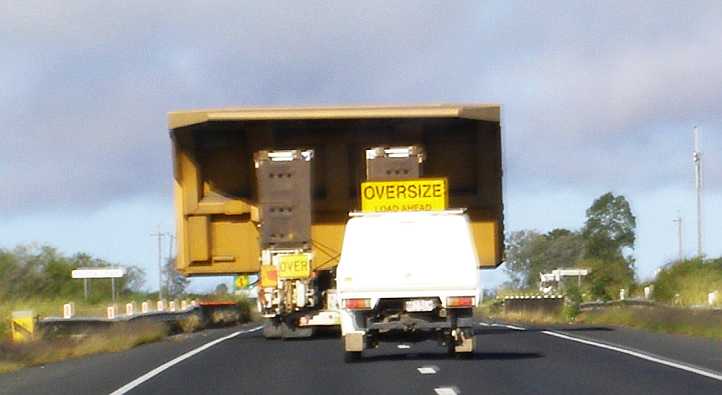
Filling the road. The left side of the dump truck body is here seen just over the top of the bridge railing, some bridges were even narrower and the body was out over the rails on both sides.
I had visited the Boggabri area several times in the past doing the interviewing work, so I was familiar with the story relating to this tall cliff, just across the highway from where we finished this job:
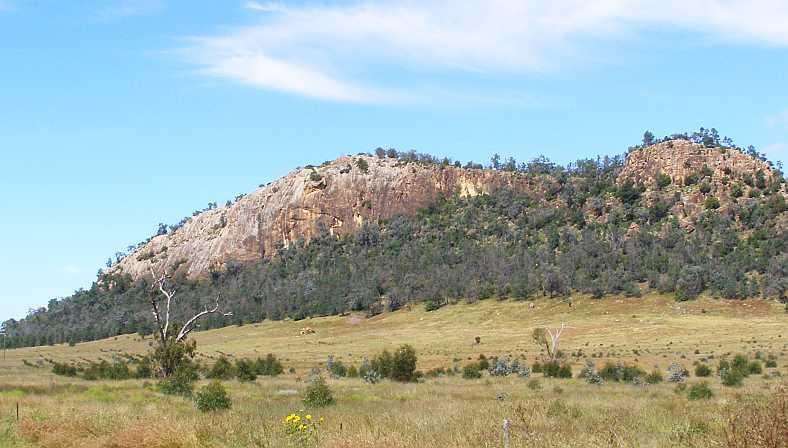
Gin’s Leap. A young Kamilaroi Aboriginal girl promised in marriage to an elder of that tribe ran off with a young man of another tribe. Pursued by angry Kamilaroi, the couple are said to have leapt to their deaths from this cliff.
I was absorbed in a couple of side-issues at this time and went ‘visiting’ after finishing the job. The first person I dropped in on was Chas Chapple, who I found had repainted his 1962 Dodge…
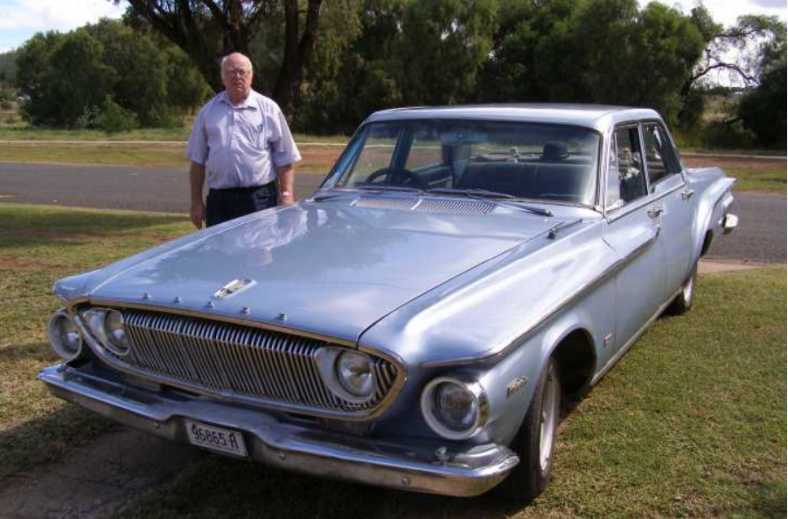
Chas and his Dodge. Chas was the one who put us in touch with the former owner of Ben’s 1964 Dodge.
…and then there was a chance to meet Bob Winley’s wife’s uncle Barry…
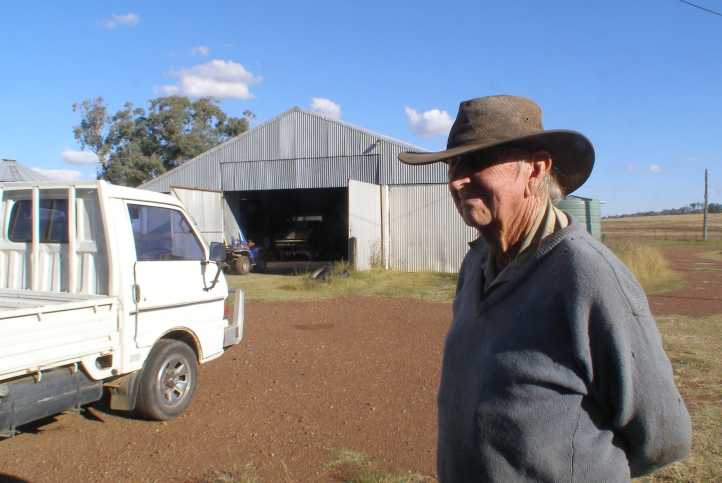
Uncle Barry. Still operating his little farm near Werris Creek, Barry was happy for me to drop in on him. Until her death, his sister had lived here with him but now he was on his own.
…and then I went on to see Max Stahl and Bob Abberfield. I’d been trying to sort out all my various bits and pieces of oxy-acetylene gear back in the shed and found I didn’t have a handpiece/mixer to match everything else and learning just how much new handpieces cost.
At Bob’s, however, I got serious with hunting on eBay and found a complete set for sale on the Gold Coast. Well, I was going to the Gold Coast so I bought it and it gave yet another reason for me to go that way. The path would take me through the picturesque Dorrigo area…
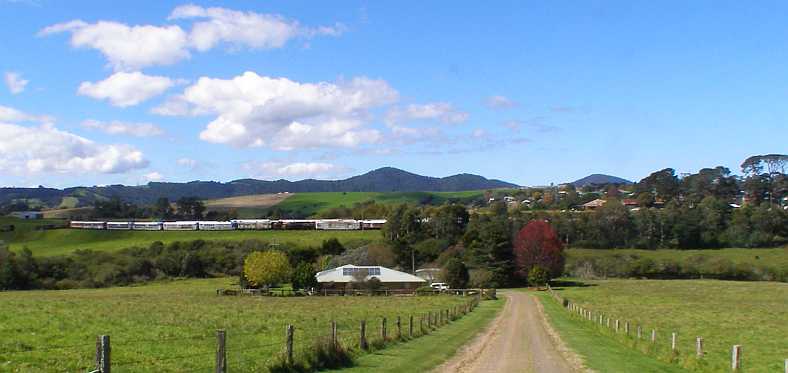
Rail Museum. Across the green paddocks of the hinterland scenery of the Dorrigo area I was quite surprised to see old trains. It’s a huge local project to make a rail museum in the town’s vicinity.
…and to the Pacific Highway, from which I’d visit Norm and inspect his latest acquisition:
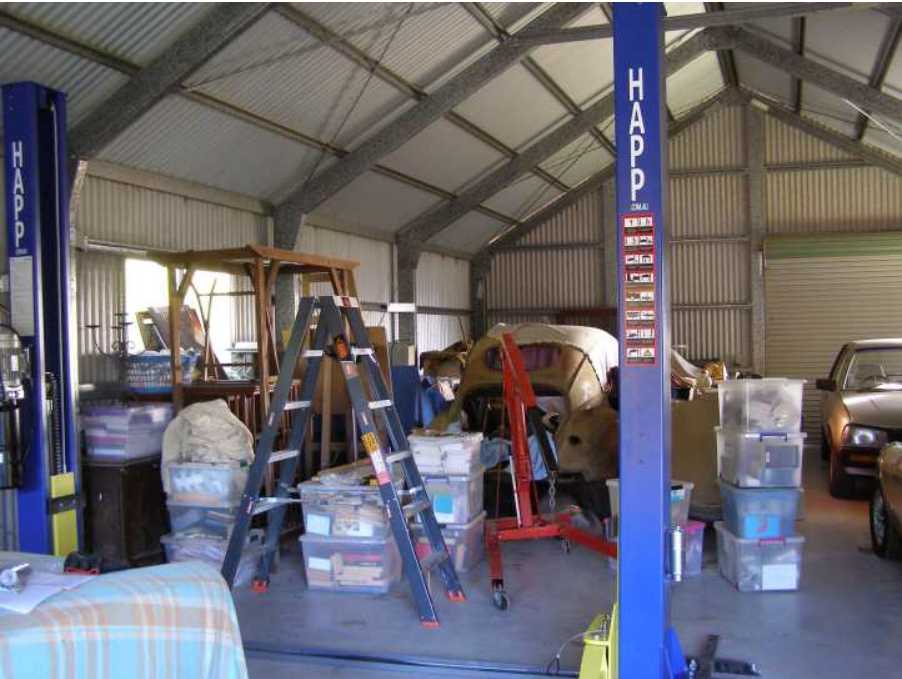
Norm’s hoist. Faced with the difficulty of getting the body off his Lotus Elan +2 so he can tidy up the chassis properly, Norm acquired this 2-post hoist. Still to be wired up at this stage, it will ultimately see use on a number of projects.
One wheel of the Elan can be seen to the extreme right of the pic, while there’s a ‘project’ Peugeot 203 there is also Norm’s 505 with V6 and in the foreground, under the blanket, is his Cortina GT500.
Next it was on to Ben’s workshop on the Gold Coast. I’d had the portable refrigerator sent to his address as it saved me $30, but I was in for a bit of a surprise when I saw it.
Refrigerator. I bought this brand on the recommendation of a friend, but I ordered the 35-litre version and they’d sent the 25-litre instead.
The problem was that the height of the 35-litre was needed to enable bottles of milk to stand vertically in there. I didn’t want to risk leakage leading to smells in the unit so immediately made arrangements for it to be changed. And the postage was at their expense, so I got the replacement sent directly to me.
I had no problems whatever with the oxy set, though. It belonged to a man who was now beyond being able to use it and his wife had put it up on eBay for him. Neither of them wanted to get involved in packing and shipping it, though, so it had been advertised as ‘pick up only’ and, even though the price was quite low, that probably was why I was able to get it.
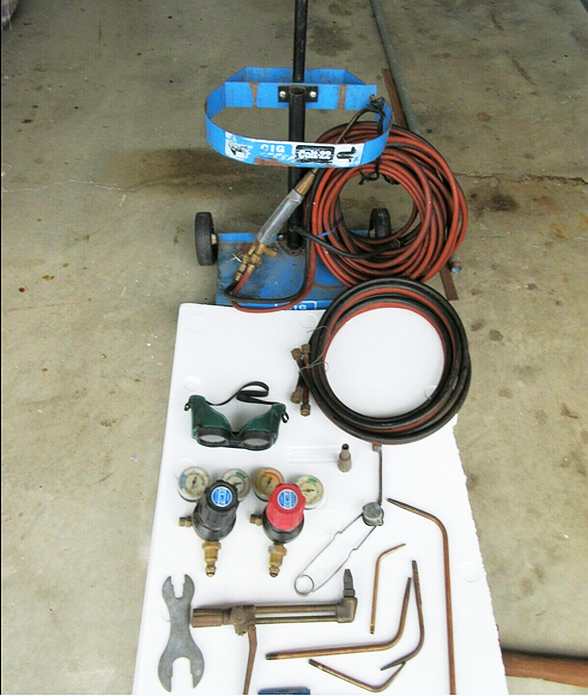
Oxy-acetylene gear. This was the picture on eBay and it shows that there’s everything necessary to get on with some gas welding and cutting. I’d need this when working on the van’s crossmember. And other jobs.
At the same time I’d been getting some thumping under the floor of the Territory so that called for a replacement to the driveshaft centre bearing. I had trouble undoing the bearing retaining nut, but ultimately I was able to get the job done.
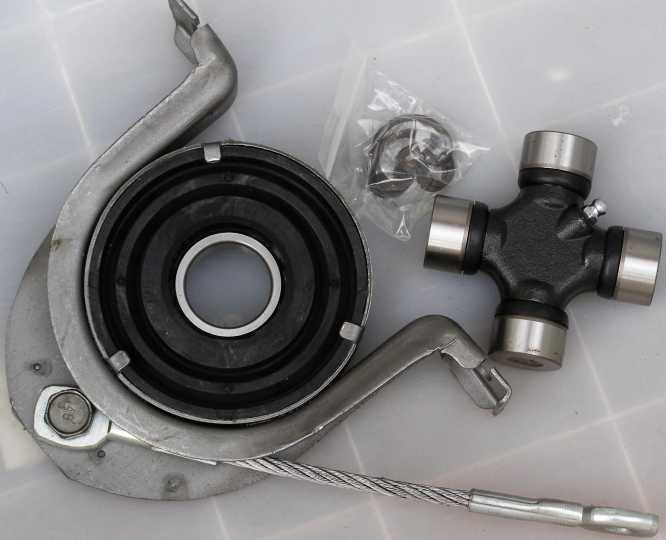
Centre bearing. Another eBay purchase, the failure of the original bearing’s rubber mount was soon overcome at home.
I’d been told some time earlier that it would be a good idea to get the one-day licence upgrade course done earlier rather than later and I phoned the school to book in. “I’m sorry,” said the lady, we normally do those courses on Mondays and next Monday is a holiday.”
Yes, it was the Anzac Day holiday, April 25, so I asked about the following Monday. “Well that’s a holiday too, but what we’ll do is put on a course on Wednesday. I’ll put it up on the website in half an hour or so and you can book in.”
On the Monday I went off to the Men’s Shed and created a clutch aligning tool for the 19-spline clutch to be used on the NV4500. I made this out of a piece of rusty drag link I’d kept off one of those rusty B300 vans.
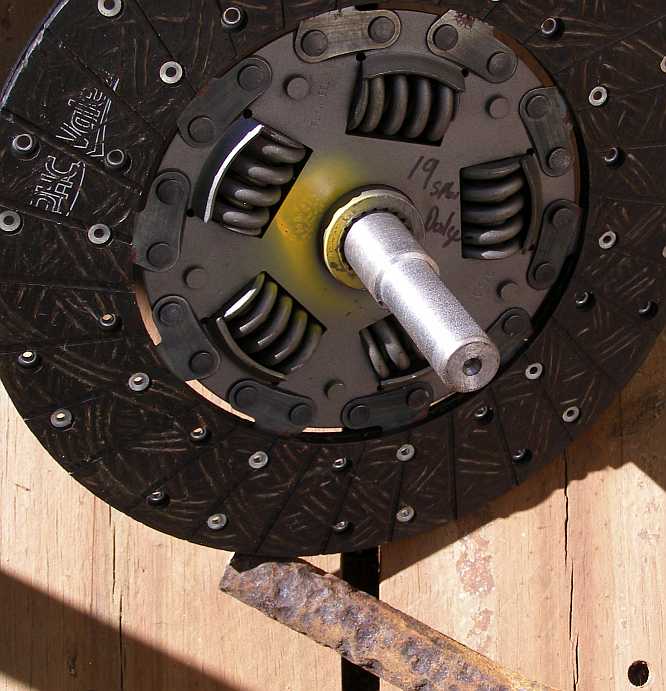
Aligning tool. It’s a neat fit inside the spline and the spigot-bush diameter is matched by the front end of the tool. At the bottom of the pic is a leftover section of the rusty link from which it was machined.
Also at the Men’s Shed I attacked the problem of the B350’s badly-worn clutch linkage bell-crank:
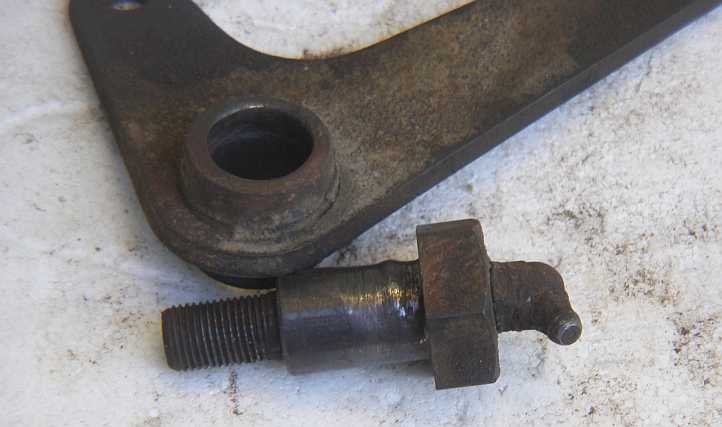
Badly worn. This had come from a slant 6-powered van in one of the pull-and-pay wrecking yards in Spokane, it’s probably no surprise that it’s worn out.
It looks, indeed, like it has never been greased. Or at least not since it was quite new. Anyway, I went to buy a bronze bush that would be suitable to fix it and the place I went introduced me to a material called Acetal, or otherwise known as Delrin, and assured me it would last nigh on forever without grease.
So I had another job to tackle on the lathe at the Men’s Shed…
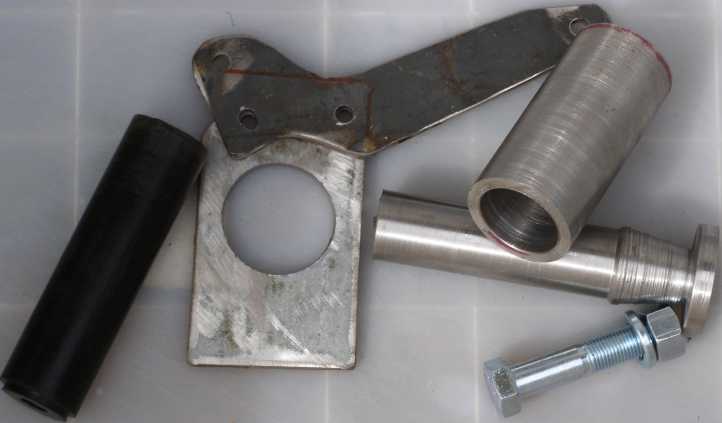
Making the bits. I started with a bit of hollow bar, another bit of bar and some 6mm flat steel. The flat parts, apart from boring the hole in the middle, I worked on at home, the rest I worked on at the Men’s Shed.
…with a design for a replacement bell-crank which was probably a bit of over-kill. The central piece is drilled for the ½” bolt, with clear hole for much of the length and then it’s threaded so it bolts up solid against the bracket in the chassis. The Acetal bush is machined to fit and there’s bits to be welded on the outside and bolted up to complete the job.
I know I’ve complicated it, but it’s dimensionally identical to the original (ie. The lever lengths and relative positions are the same) and there’s a retaining cap and that’s held on by the nut on the end of the bolt. I made two while I was at it.
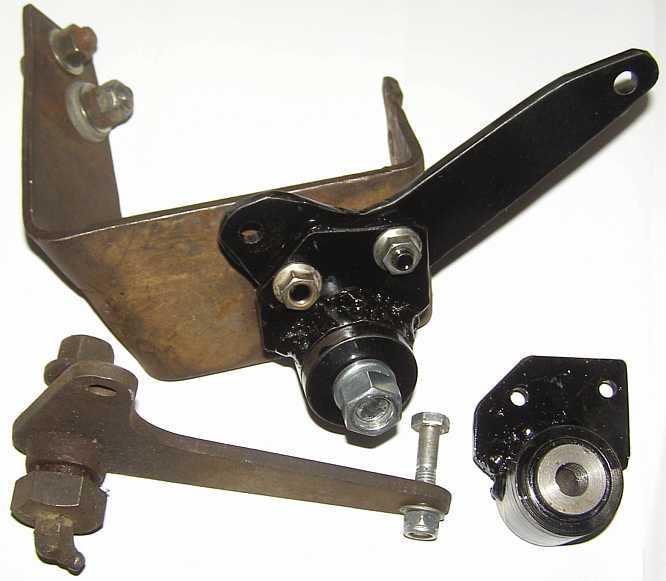
Progress. This pic shows the completed bell-crank, the original one and the core of the second one should I need to replace it for any reason.
And while I was at it I added an extra bolt hole to the bracket to match one in the van’s chassis, thus giving greater rigidity to the bracket (I’d seen that it moves under load) and when I welded a piece across between the two bolt heads I made it much easier to do up the nuts. Getting a second spanner in there is really difficult!
Meanwhile, a new member had joined the Men’s Shed and brought more gear with him. This member had moved into a retirement village and no longer had anywhere to put the gear at home, this enabled him to have it available should he want to do a job while it gave us greater flexibility.
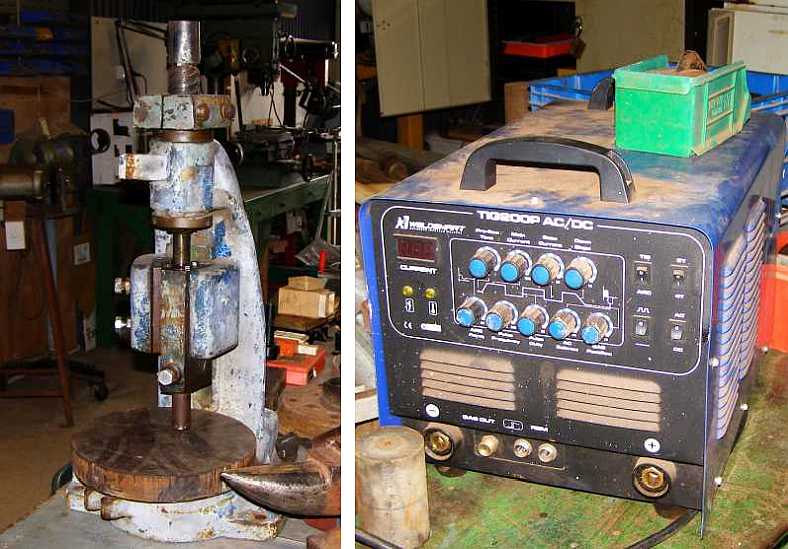
Flypress and TIG welder. The flypress needed some rejuvenation while the new member was a welding instructor and will help some of the members to learn how to weld aluminium (etc) with this machine.
His father had been an aviation engineer and had gathered a lot of tooling for the Nuttall late, which had a longer bed than either of the lathes it would sit beside. Again, it was in need of some work, but Nicol relished the prospect of getting it right for our use.
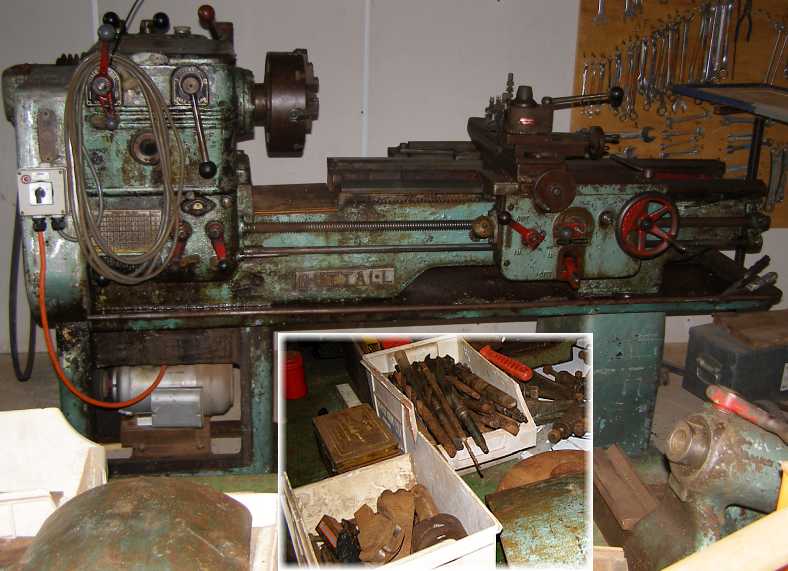
Lathe and tools. The Nuttall lathe with some of the tooling inset. Among these are some large drills and some knurling tools, while elsewhere lots of more conventional tools and tips were crammed into a cupboard.
So all of this was a big advance for the Men’s Shed and I would be able to benefit as I continued to make bits and pieces for my jobs.
I didn’t get any jobs for a couple of weeks but I was able to get to Brisbane and do my course. I phoned up the day before and confirmed that everything was okay and enquired about parking. The man who answered the phone this time asked me to hold on to check that I was properly booked in. “Yes, you’re booked in, you’re the only one, so it will be okay if you come at 9am instead of 8:30!”
I duly arrived and we went through the formalities. Then he asked me, “Are you the Ray Bell who used to write for Racing Car News?” Darryl Cullen then told me about a lot of old friends we had in common, the rest of the day went very smoothly…
A few days later I had a call from Dennis Barber. “Are you available for a job from Oakey to Brisbane?” He’d been caught out as a job went overtime and needed to be elsewhere, so I learned about the Singapore Air Force Chinook helicopter pilots being trained at Oakey.
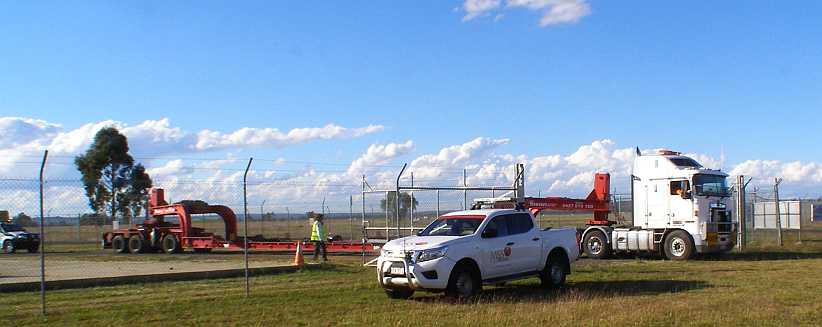
Helicopter trailer. The Chinook helicopters come in on boats and are then transported by road to be reassembled and flown out of the Oakey Air Force base. The trailer isn’t wide, but very long.
Note that the rear bogie for the trailer mounts on a central point, this is so it can be steered around tight corners.
And it was during the course of doing that job that Darren called. He had a job for me the very next day that would take me right into the centre of an area I would soon come to know well, It would take me into the centre of the coal-mining area of what’s known as ‘Central Queensland’:
I rushed back from Brisbane that night and prepared myself for a few days away, letting Sandra know that I was off on this larger job out of Dalby the next morning.
The load in this case was a Caterpillar D11 bulldozer loaded on a 7-row platform. That is, seven rows of wheels, each row comprising 8 wheels, under the trailer. Sufficient to spread the load of the D11 on the roads we were to traverse.
Roma and the bottle tree. ‘Bottle tree’ is the name given to the Boabs and there are many of them lining the streets of Roma, through which we passed late in the morning.
We were to make a stop at Injune, where I got some lunch. The roadhouse there is a popular stop for trucks of all kinds passing through and I got a chance to get a shot of the rig we were escorting:
Stopped at Injune. The D11 sits on the platform behind the Kenworth operated by Centurion. I would be doing a lot of work for this company in the future.
After Injune I was to learn that there’s a drop off the high country called ‘Wallaroo’ and this required a lot of advance warning for oncoming traffic because of the narrow cutting in the sandstone formation. Of course it was slow going down that hill.
We were to camp for the night just outside Rolleston, where a dusty area at a road junction sees a lot of trucks pull up for their mandatory rest time.
We went to the hotel in town for dinner, again a place I would get to know a lot better in time, and then we prepared for a nice early departure as the new day – May 11, 2021 - dawned
Ready to roll again. I was up in the second position on this job, here we’re ready to depart as daylight starts to shine through.
This section of road was undergoing some major works and we had to gain the co-operation of the roadworkers to get this wide load through. After that section we climbed the Staircase Range and soon the early morning sun on the cliffs around Springsure came into sight:
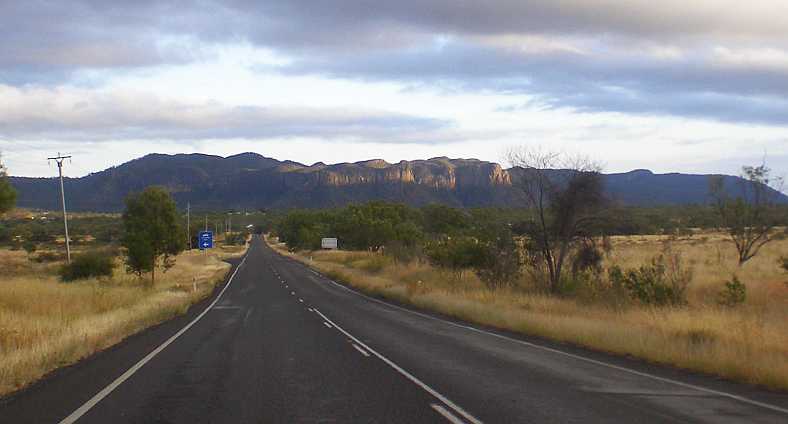
Sun on the cliffs. The sun’s early rays light up the cliffs, a sight which always presents a different picture to the middle of the day.
We stopped at Springsure for breakfast and went on, it was a long run for me, not knowing what to expect. At Mackenzie River we stopped briefly and then went on to the mine. The end of the job came abruptly as we pilots weren’t permitted on the minesite.
From there I went into nearby Dysart to get some fuel and started heading back towards home, the day drew to its inevitable end and, just as in the morning, the late sun cast shadows and lit up landforms as the midday sun never does.
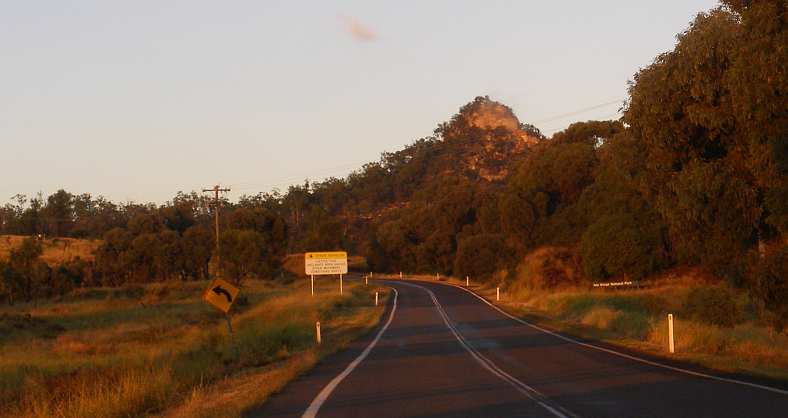
Under the late sun. One of the many rocky outcrops gets the benefit of the sun’s afternoon rays as dusk nears on my trip home.
Around this time I’d established that the Territory’s engine was leaking from the front main seal. It’s not a conventional harmonic balancer with bolt-holes, but a simpler construction which requires a more complicated tool to get it removed.
As usual, I looked for the tool online. But, again as usual, it was too dear for me to contemplate buying when I had the facility to make my own:
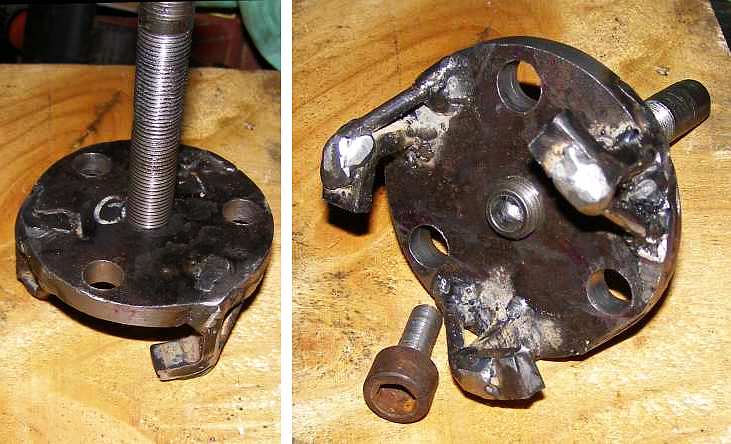
Puller in embryo. I found the pieces of steel I needed and put the gear at the Men’s Shed to work again, welding things together at home. The arms lock in under the ‘spokes’ of the balancer hub and the puller engages on the end of the crank via the piece of cap screw which slips into the end of the threaded piece.
Another job done, another bunch of dollars not spent, but I didn’t actually use it for a long time afterwards.
One of the good things about working for Darren is that he has clients in the agricultural industries as well as mining, so a short job from Chinchilla to Toowoomba with a spray rig soon came my way…
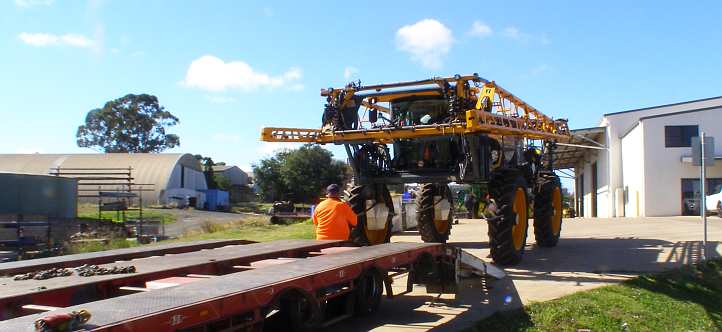
Spray rig unloading. Not a big job, not a huge machine, but still a nice bit of work for me to keep the bills paid. And the picture shows how the trailer is widened for such loads.
…and it became yet another job to help me build up my 12 qualifying jobs for the licence upgrade.
It was now late May and I’d become well used to filling in the days at home with trips to the Men’s Shed and doing more fabricating at home. While the longer jobs were certainly helping the bank balance, gaps between jobs could be up to a couple of weeks at times and I was hoping that this would change soon.
With the Level 1 licence I was restricted to loads no wider than 4.5 metres, or to taking a secondary role with wider loads. To ‘graduate’ to a Level 2 licence required that I complete a one-day instruction course and successfully complete 12 jobs complying with Level 1.
Fortunately I was getting some work through a local agent, Darren Bizzell, who started to feed little jobs to me to get the tally up to where it was required to be, this was one of them:
Local job. Only an 85km trip, but piloting this load of trusses and frames from Toowoomba to Warwick counted as one of the required 12 jobs.
A bigger job came up next, Darren sending me to be a second rear pilot on a job which was going from Brisbane to Boggabri in New South Wales. This would be the widest job I’d ever been on, 7.9 metres (close enough to 26’) and as wide as the sealed part of much of the roadway we’d be covering.
But I only took over at the NSW border at Goondiwindi as there was a police escort required in Queensland. I was at my shed prior to this job sorting out jobs on the van and went out to Goondiwindi via Inglewood…
Inglewood sunset. I needed to be at Goondiwindi for an early morning start so the best thing to do was drive out there and camp for the night. On the way I got this nice sunset near Inglewood.
…and camped there for the night. The ‘rear gunner’ position gave me the opportunity to observe just how much of the road we took up.
Filling the road. The left side of the dump truck body is here seen just over the top of the bridge railing, some bridges were even narrower and the body was out over the rails on both sides.
I had visited the Boggabri area several times in the past doing the interviewing work, so I was familiar with the story relating to this tall cliff, just across the highway from where we finished this job:
Gin’s Leap. A young Kamilaroi Aboriginal girl promised in marriage to an elder of that tribe ran off with a young man of another tribe. Pursued by angry Kamilaroi, the couple are said to have leapt to their deaths from this cliff.
I was absorbed in a couple of side-issues at this time and went ‘visiting’ after finishing the job. The first person I dropped in on was Chas Chapple, who I found had repainted his 1962 Dodge…
Chas and his Dodge. Chas was the one who put us in touch with the former owner of Ben’s 1964 Dodge.
…and then there was a chance to meet Bob Winley’s wife’s uncle Barry…
Uncle Barry. Still operating his little farm near Werris Creek, Barry was happy for me to drop in on him. Until her death, his sister had lived here with him but now he was on his own.
…and then I went on to see Max Stahl and Bob Abberfield. I’d been trying to sort out all my various bits and pieces of oxy-acetylene gear back in the shed and found I didn’t have a handpiece/mixer to match everything else and learning just how much new handpieces cost.
At Bob’s, however, I got serious with hunting on eBay and found a complete set for sale on the Gold Coast. Well, I was going to the Gold Coast so I bought it and it gave yet another reason for me to go that way. The path would take me through the picturesque Dorrigo area…
Rail Museum. Across the green paddocks of the hinterland scenery of the Dorrigo area I was quite surprised to see old trains. It’s a huge local project to make a rail museum in the town’s vicinity.
…and to the Pacific Highway, from which I’d visit Norm and inspect his latest acquisition:
Norm’s hoist. Faced with the difficulty of getting the body off his Lotus Elan +2 so he can tidy up the chassis properly, Norm acquired this 2-post hoist. Still to be wired up at this stage, it will ultimately see use on a number of projects.
One wheel of the Elan can be seen to the extreme right of the pic, while there’s a ‘project’ Peugeot 203 there is also Norm’s 505 with V6 and in the foreground, under the blanket, is his Cortina GT500.
Next it was on to Ben’s workshop on the Gold Coast. I’d had the portable refrigerator sent to his address as it saved me $30, but I was in for a bit of a surprise when I saw it.
Refrigerator. I bought this brand on the recommendation of a friend, but I ordered the 35-litre version and they’d sent the 25-litre instead.
The problem was that the height of the 35-litre was needed to enable bottles of milk to stand vertically in there. I didn’t want to risk leakage leading to smells in the unit so immediately made arrangements for it to be changed. And the postage was at their expense, so I got the replacement sent directly to me.
I had no problems whatever with the oxy set, though. It belonged to a man who was now beyond being able to use it and his wife had put it up on eBay for him. Neither of them wanted to get involved in packing and shipping it, though, so it had been advertised as ‘pick up only’ and, even though the price was quite low, that probably was why I was able to get it.
Oxy-acetylene gear. This was the picture on eBay and it shows that there’s everything necessary to get on with some gas welding and cutting. I’d need this when working on the van’s crossmember. And other jobs.
At the same time I’d been getting some thumping under the floor of the Territory so that called for a replacement to the driveshaft centre bearing. I had trouble undoing the bearing retaining nut, but ultimately I was able to get the job done.
Centre bearing. Another eBay purchase, the failure of the original bearing’s rubber mount was soon overcome at home.
I’d been told some time earlier that it would be a good idea to get the one-day licence upgrade course done earlier rather than later and I phoned the school to book in. “I’m sorry,” said the lady, we normally do those courses on Mondays and next Monday is a holiday.”
Yes, it was the Anzac Day holiday, April 25, so I asked about the following Monday. “Well that’s a holiday too, but what we’ll do is put on a course on Wednesday. I’ll put it up on the website in half an hour or so and you can book in.”
On the Monday I went off to the Men’s Shed and created a clutch aligning tool for the 19-spline clutch to be used on the NV4500. I made this out of a piece of rusty drag link I’d kept off one of those rusty B300 vans.
Aligning tool. It’s a neat fit inside the spline and the spigot-bush diameter is matched by the front end of the tool. At the bottom of the pic is a leftover section of the rusty link from which it was machined.
Also at the Men’s Shed I attacked the problem of the B350’s badly-worn clutch linkage bell-crank:
Badly worn. This had come from a slant 6-powered van in one of the pull-and-pay wrecking yards in Spokane, it’s probably no surprise that it’s worn out.
It looks, indeed, like it has never been greased. Or at least not since it was quite new. Anyway, I went to buy a bronze bush that would be suitable to fix it and the place I went introduced me to a material called Acetal, or otherwise known as Delrin, and assured me it would last nigh on forever without grease.
So I had another job to tackle on the lathe at the Men’s Shed…
Making the bits. I started with a bit of hollow bar, another bit of bar and some 6mm flat steel. The flat parts, apart from boring the hole in the middle, I worked on at home, the rest I worked on at the Men’s Shed.
…with a design for a replacement bell-crank which was probably a bit of over-kill. The central piece is drilled for the ½” bolt, with clear hole for much of the length and then it’s threaded so it bolts up solid against the bracket in the chassis. The Acetal bush is machined to fit and there’s bits to be welded on the outside and bolted up to complete the job.
I know I’ve complicated it, but it’s dimensionally identical to the original (ie. The lever lengths and relative positions are the same) and there’s a retaining cap and that’s held on by the nut on the end of the bolt. I made two while I was at it.
Progress. This pic shows the completed bell-crank, the original one and the core of the second one should I need to replace it for any reason.
And while I was at it I added an extra bolt hole to the bracket to match one in the van’s chassis, thus giving greater rigidity to the bracket (I’d seen that it moves under load) and when I welded a piece across between the two bolt heads I made it much easier to do up the nuts. Getting a second spanner in there is really difficult!
Meanwhile, a new member had joined the Men’s Shed and brought more gear with him. This member had moved into a retirement village and no longer had anywhere to put the gear at home, this enabled him to have it available should he want to do a job while it gave us greater flexibility.
Flypress and TIG welder. The flypress needed some rejuvenation while the new member was a welding instructor and will help some of the members to learn how to weld aluminium (etc) with this machine.
His father had been an aviation engineer and had gathered a lot of tooling for the Nuttall late, which had a longer bed than either of the lathes it would sit beside. Again, it was in need of some work, but Nicol relished the prospect of getting it right for our use.
Lathe and tools. The Nuttall lathe with some of the tooling inset. Among these are some large drills and some knurling tools, while elsewhere lots of more conventional tools and tips were crammed into a cupboard.
So all of this was a big advance for the Men’s Shed and I would be able to benefit as I continued to make bits and pieces for my jobs.
I didn’t get any jobs for a couple of weeks but I was able to get to Brisbane and do my course. I phoned up the day before and confirmed that everything was okay and enquired about parking. The man who answered the phone this time asked me to hold on to check that I was properly booked in. “Yes, you’re booked in, you’re the only one, so it will be okay if you come at 9am instead of 8:30!”
I duly arrived and we went through the formalities. Then he asked me, “Are you the Ray Bell who used to write for Racing Car News?” Darryl Cullen then told me about a lot of old friends we had in common, the rest of the day went very smoothly…
A few days later I had a call from Dennis Barber. “Are you available for a job from Oakey to Brisbane?” He’d been caught out as a job went overtime and needed to be elsewhere, so I learned about the Singapore Air Force Chinook helicopter pilots being trained at Oakey.
Helicopter trailer. The Chinook helicopters come in on boats and are then transported by road to be reassembled and flown out of the Oakey Air Force base. The trailer isn’t wide, but very long.
Note that the rear bogie for the trailer mounts on a central point, this is so it can be steered around tight corners.
And it was during the course of doing that job that Darren called. He had a job for me the very next day that would take me right into the centre of an area I would soon come to know well, It would take me into the centre of the coal-mining area of what’s known as ‘Central Queensland’:
I rushed back from Brisbane that night and prepared myself for a few days away, letting Sandra know that I was off on this larger job out of Dalby the next morning.
The load in this case was a Caterpillar D11 bulldozer loaded on a 7-row platform. That is, seven rows of wheels, each row comprising 8 wheels, under the trailer. Sufficient to spread the load of the D11 on the roads we were to traverse.
Roma and the bottle tree. ‘Bottle tree’ is the name given to the Boabs and there are many of them lining the streets of Roma, through which we passed late in the morning.
We were to make a stop at Injune, where I got some lunch. The roadhouse there is a popular stop for trucks of all kinds passing through and I got a chance to get a shot of the rig we were escorting:
Stopped at Injune. The D11 sits on the platform behind the Kenworth operated by Centurion. I would be doing a lot of work for this company in the future.
After Injune I was to learn that there’s a drop off the high country called ‘Wallaroo’ and this required a lot of advance warning for oncoming traffic because of the narrow cutting in the sandstone formation. Of course it was slow going down that hill.
We were to camp for the night just outside Rolleston, where a dusty area at a road junction sees a lot of trucks pull up for their mandatory rest time.
We went to the hotel in town for dinner, again a place I would get to know a lot better in time, and then we prepared for a nice early departure as the new day – May 11, 2021 - dawned
Ready to roll again. I was up in the second position on this job, here we’re ready to depart as daylight starts to shine through.
This section of road was undergoing some major works and we had to gain the co-operation of the roadworkers to get this wide load through. After that section we climbed the Staircase Range and soon the early morning sun on the cliffs around Springsure came into sight:
Sun on the cliffs. The sun’s early rays light up the cliffs, a sight which always presents a different picture to the middle of the day.
We stopped at Springsure for breakfast and went on, it was a long run for me, not knowing what to expect. At Mackenzie River we stopped briefly and then went on to the mine. The end of the job came abruptly as we pilots weren’t permitted on the minesite.
From there I went into nearby Dysart to get some fuel and started heading back towards home, the day drew to its inevitable end and, just as in the morning, the late sun cast shadows and lit up landforms as the midday sun never does.
Under the late sun. One of the many rocky outcrops gets the benefit of the sun’s afternoon rays as dusk nears on my trip home.
Around this time I’d established that the Territory’s engine was leaking from the front main seal. It’s not a conventional harmonic balancer with bolt-holes, but a simpler construction which requires a more complicated tool to get it removed.
As usual, I looked for the tool online. But, again as usual, it was too dear for me to contemplate buying when I had the facility to make my own:
Puller in embryo. I found the pieces of steel I needed and put the gear at the Men’s Shed to work again, welding things together at home. The arms lock in under the ‘spokes’ of the balancer hub and the puller engages on the end of the crank via the piece of cap screw which slips into the end of the threaded piece.
Another job done, another bunch of dollars not spent, but I didn’t actually use it for a long time afterwards.
One of the good things about working for Darren is that he has clients in the agricultural industries as well as mining, so a short job from Chinchilla to Toowoomba with a spray rig soon came my way…
Spray rig unloading. Not a big job, not a huge machine, but still a nice bit of work for me to keep the bills paid. And the picture shows how the trailer is widened for such loads.
…and it became yet another job to help me build up my 12 qualifying jobs for the licence upgrade.
It was now late May and I’d become well used to filling in the days at home with trips to the Men’s Shed and doing more fabricating at home. While the longer jobs were certainly helping the bank balance, gaps between jobs could be up to a couple of weeks at times and I was hoping that this would change soon.
Last edited by Ray Bell; Jan 28, 2023 at 05:29 AM.

