Colder AC


THE ULTI-MOD


Joined: Jan 2007
Posts: 19,797
Likes: 36
From: Union NJ
 RE: Colder AC
ORIGINAL: cesspool
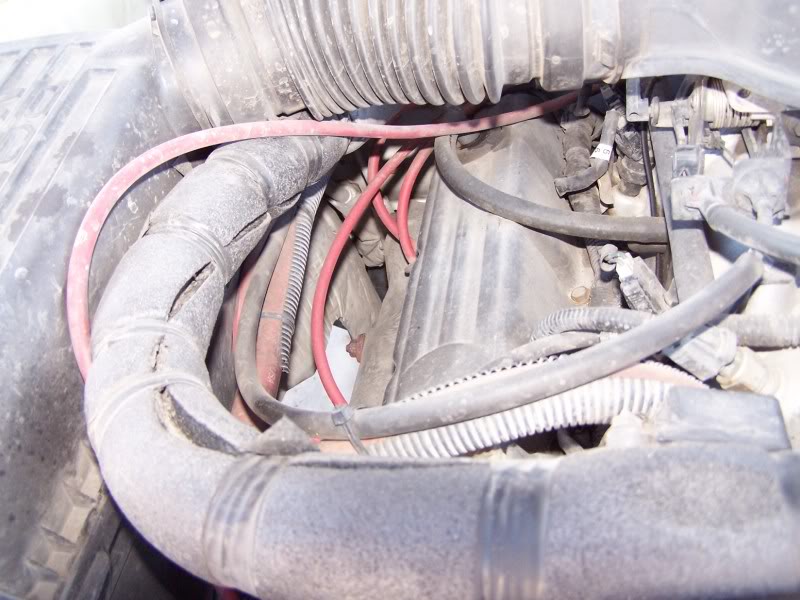
But then I also made a heater core bypass manifold. That made a big difference in the cabin. No warm air at the feet. Very easy to use, kinda pricey though. I just got done with the cold air lines, so I haven't got to test them out yet. That's tomorrow. Hope it helps mine as well as it did Means!
But then I also made a heater core bypass manifold. That made a big difference in the cabin. No warm air at the feet. Very easy to use, kinda pricey though. I just got done with the cold air lines, so I haven't got to test them out yet. That's tomorrow. Hope it helps mine as well as it did Means!

Professional
Joined: Mar 2008
Posts: 228
Likes: 0
From: Killeen, TX & St. Paul, MN
RE: Colder AC
The A/c system process:
not 100% sure but pretty close
the basic concept is the when you compress a gas it heats up. The opposite happens when you decompress it, it cools (think about letting air out of your bike tire).
1) the compressor compresses the freon to a hot gas.
2) the hot gas is ran threw a radiator thats close to your radiator or a part of it. (condenser)
3) its now cool gas
4) its moved threw your expansion core and decompressed to an even colder gas. (possible liquid)
5) evap core where air is moved threw it to cool the cabin and the freon in the line is warmed
6) then returned back to the compressor
There is a Receiver Drier/Accumulator somewhere in there too.. just not sure where... i think that it is part of the high pressure system before it hits the expansion core, But im not sure.
If ever adding a/c coolant, freon or rc134, make sure you do it to the low pressure system before the compressor.
In response to some of the earlier threads though if you insulate any of the lines you will most likely see an improvement. Start with the skinny ones because those are the compressed ones that you would see better improvement from insulating.
not 100% sure but pretty close
the basic concept is the when you compress a gas it heats up. The opposite happens when you decompress it, it cools (think about letting air out of your bike tire).
1) the compressor compresses the freon to a hot gas.
2) the hot gas is ran threw a radiator thats close to your radiator or a part of it. (condenser)
3) its now cool gas
4) its moved threw your expansion core and decompressed to an even colder gas. (possible liquid)
5) evap core where air is moved threw it to cool the cabin and the freon in the line is warmed
6) then returned back to the compressor
There is a Receiver Drier/Accumulator somewhere in there too.. just not sure where... i think that it is part of the high pressure system before it hits the expansion core, But im not sure.
If ever adding a/c coolant, freon or rc134, make sure you do it to the low pressure system before the compressor.
In response to some of the earlier threads though if you insulate any of the lines you will most likely see an improvement. Start with the skinny ones because those are the compressed ones that you would see better improvement from insulating.
 RE: Colder AC
ORIGINAL: SumAmerican
The A/c system process:
not 100% sure but pretty close
the basic concept is the when you compress a gas it heats up. The opposite happens when you decompress it, it cools (think about letting air out of your bike tire).
1) the compressor compresses the freon to a hot gas.
2) the hot gas is ran threw a radiator thats close to your radiator or a part of it. (condenser)
3) its now cool gas
4) its moved threw your expansion core and decompressed to an even colder gas. (possible liquid)
5) evap core where air is moved threw it to cool the cabin and the freon in the line is warmed
6) then returned back to the compressor
There is a Receiver Drier/Accumulator somewhere in there too.. just not sure where... i think that it is part of the high pressure system before it hits the expansion core, But im not sure.
If ever adding a/c coolant, freon or rc134, make sure you do it to the low pressure system before the compressor.
In response to some of the earlier threads though if you insulate any of the lines you will most likely see an improvement. Start with the skinny ones because those are the compressed ones that you would see better improvement from insulating.
The A/c system process:
not 100% sure but pretty close
the basic concept is the when you compress a gas it heats up. The opposite happens when you decompress it, it cools (think about letting air out of your bike tire).
1) the compressor compresses the freon to a hot gas.
2) the hot gas is ran threw a radiator thats close to your radiator or a part of it. (condenser)
3) its now cool gas
4) its moved threw your expansion core and decompressed to an even colder gas. (possible liquid)
5) evap core where air is moved threw it to cool the cabin and the freon in the line is warmed
6) then returned back to the compressor
There is a Receiver Drier/Accumulator somewhere in there too.. just not sure where... i think that it is part of the high pressure system before it hits the expansion core, But im not sure.
If ever adding a/c coolant, freon or rc134, make sure you do it to the low pressure system before the compressor.
In response to some of the earlier threads though if you insulate any of the lines you will most likely see an improvement. Start with the skinny ones because those are the compressed ones that you would see better improvement from insulating.
1. Compressor compresses the gas to a high pressure/temperature gas.
3. The condensor cools off the high pressure gas to a high pressure liquid.
4. High pressure liquid is passed thru the expansion value and reduced to a low pressure/temperature liquid.
5. When low pressure liquid is passed thru the evap coil, warm air warms the liquid back to a low pressure gas.
Receiver Dryers are always located on the high pressure side of the system just before it reaches the expansion valve. They are actually filters that filter out comtaminates in the system.
Accumulators are always located on the low side of the system just before it reaches the compressor. Their function is tocatch any excess freon that are still in liquid state to prevent liquid from coming back to the compressor causing a hydraulic effect and possibly damaging the valves.
The pressure and temperature relationship for freon are proportional. This means, when the freon pressure goes up or down, so does temperature.
some common issues with A/C systems are if your A/C system constantly cycles on/off, three things to check,
1. Low on freon causing the low pressure safety switch to cut off the compressor.
2. Receiver dryer may be clogged causing restrictive flow of freon to the expansion valve.
3. Moisture contamination in freon causing freeze up at the expansion valve. this will cause restrictive flow of freon that may give a false low pressure reading. You must check high side to eliminate this false reading on low side.

Amateur
Joined: Jan 2007
Posts: 33
Likes: 0
From:
I think this is the aluminized tape the OP was talking about:
http://store.summitracing.com/partde...5&autoview=sku
Thermo-Tec makes it. They say it's for wrapping around hoses and wiring and fuel lines. I think this would be great to wrap around an AC line, especially here in Texas where underhood heat affects everything from AC temp to fuel boiling to batteries drying out. I'm thinking the 15 foot roll of this would be enough to do at least my wife's Durango and my Estate Wagon, if not our Suburban as well. At least the underhood parts. Doing that line to the rear AC on the Suburban might take a whole roll by itself.
I imagine you could use the same stuff for AC and fuel, especially since they mention it's for fuel lines. Goodbye vapor lock. The computer-controlled Q-jet on my Buick ought to love that.
They also have Summit-branded stuff for $9/roll, a little cheaper, not sure if it will work as effectively, and it's 1/8" narrower:
http://store.summitracing.com/partde...5&autoview=sku
http://store.summitracing.com/partde...5&autoview=sku
Thermo-Tec makes it. They say it's for wrapping around hoses and wiring and fuel lines. I think this would be great to wrap around an AC line, especially here in Texas where underhood heat affects everything from AC temp to fuel boiling to batteries drying out. I'm thinking the 15 foot roll of this would be enough to do at least my wife's Durango and my Estate Wagon, if not our Suburban as well. At least the underhood parts. Doing that line to the rear AC on the Suburban might take a whole roll by itself.
I imagine you could use the same stuff for AC and fuel, especially since they mention it's for fuel lines. Goodbye vapor lock. The computer-controlled Q-jet on my Buick ought to love that.
They also have Summit-branded stuff for $9/roll, a little cheaper, not sure if it will work as effectively, and it's 1/8" narrower:
http://store.summitracing.com/partde...5&autoview=sku
Last edited by occupant; Feb 15, 2009 at 04:50 PM.