


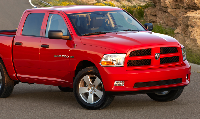
Leveling kit confusion


Professional
Joined: Sep 2009
Posts: 175
Likes: 0
From: Marshall, MI

Thanks!
And, based on that, isn't it also correct to say that replacing the struts with ones that are more than 1" longer than stock would have the same problems as putting a spacer on top of the stock strut to make it the same length (as this hypothetical replacement strut)?
And, based on that, isn't it also correct to say that replacing the struts with ones that are more than 1" longer than stock would have the same problems as putting a spacer on top of the stock strut to make it the same length (as this hypothetical replacement strut)?

Banned
Joined: Nov 2009
Posts: 160
Likes: 0
From: Warren, MI
Bilstein 5100 Series Leveling Shocks are 1/2” to 3/4” longer, depending on application, than the O.E. shocks they replace. Yet, they are designed to
prevent over-extension of the suspension travel and possible component damage. All 5100 Leveling Shocks are designed to optimize available
suspension travel.
prevent over-extension of the suspension travel and possible component damage. All 5100 Leveling Shocks are designed to optimize available
suspension travel.

Professional
Joined: Dec 2009
Posts: 141
Likes: 0
From: Tallahassee, FL
And do you happen to know how much it changes the fender height if you add a 1" spacer on the end of the strut?
I know the TGC spacers aren't 1:1. In other words, their spacer that lifts the front of the truck up 2.5" is not 2.5" thick. It's less. So, a 1" spacer should raise the truck up more than 1". I'm just curious how much.
I know the TGC spacers aren't 1:1. In other words, their spacer that lifts the front of the truck up 2.5" is not 2.5" thick. It's less. So, a 1" spacer should raise the truck up more than 1". I'm just curious how much.
Professional
Joined: Dec 2009
Posts: 141
Likes: 0
From: Tallahassee, FL
Bilstein 5100 Series Leveling Shocks are 1/2” to 3/4” longer, depending on application, than the O.E. shocks they replace. Yet, they are designed to
prevent over-extension of the suspension travel and possible component damage. All 5100 Leveling Shocks are designed to optimize available
suspension travel.
prevent over-extension of the suspension travel and possible component damage. All 5100 Leveling Shocks are designed to optimize available
suspension travel.
So, the claim of, what, 2.8" lift in the front, without risk of over-extending anything, seems pretty believable.
My only complaint is they're a lot more expensive than a couple of spacers and the stock shocks are covered by my Lifetime Max Care warranty, so I don't really want to shell out money to replace them with something that isn't...

Registered User
Joined: Nov 2009
Posts: 12
Likes: 0
From: SANTA FE NM
In my opinion thats my opinion the bilisteins are one of the best investments i have made if you look up kores wedsite they use a fox shock but very similiar and they have replacement upper arms and cv shafts and they get pretty good wheel travel and with my set up i have 35 inch toyo mt with the bms arm and the bilistein and i can go thruogh some descent whoops at high speeds in control no problem like i said my opinion but love the things and would only replace them with some kings and they do put the ride hieght just a smidge taller than a trx so a 35 would fit with no rubbing ill post some pics of the arms a bilsteins as soon as possible iam away for a awhile
Professional
Joined: Dec 2009
Posts: 141
Likes: 0
From: Tallahassee, FL
I went ahead and ordered Bilsteins for front and rear. They are Lifetime Warranty, so that at least addresses that concern of mine.
My plan is to also put a 1.5" spacer on top of the rear springs, along with installing the Bilsteins in the rear (and front).
Anybody know if there would be any problem with that?
Also, jball, or anybody else, how hard is it to swap out the front struts for the Bilsteins? Do I have to use a ball joint separator? Do I have to use a spring compressor?
My plan is to also put a 1.5" spacer on top of the rear springs, along with installing the Bilsteins in the rear (and front).
Anybody know if there would be any problem with that?
Also, jball, or anybody else, how hard is it to swap out the front struts for the Bilsteins? Do I have to use a ball joint separator? Do I have to use a spring compressor?
Professional
Joined: Sep 2009
Posts: 175
Likes: 0
From: Marshall, MI
You can definitely do this at home.... with one small exception. I would NOT use those side spring compressors - I know people have used them before, but I've heard lots of bad stories about them. You can take your struts out of your truck then take it to a place where they replace struts and have them swap the struts for you - It might be around $30, but it is money well spent.
I never use a ball joint separator - even though the service manual calls for one... They call for a special tool to separate the ball joints and tie rod ends, not the traditional 'pickle fork'. Usually the upper ball joint unseats itself when you take the nut off. Don't hit the aluminum steering knuckle with a hammer (advice in the service manual I do follow - it can weaken it then eventually fracture).
When I do spacer kits, I generally disconnect the upper ball joint and let everything droop out that way... I think you can just disconnect the lower control arms at the frame and let the arm swing down and accomplish the same thing. I think this way is more difficult (reassembly is a pain), but to each his own. If you do disconnect the lower control arm, make sure you mark your cams, so your alignment will be halfway close when you drive it to the alignment shop. You wouldn't have to disconnect the balljoints this way - if that scares you.
Rear is super easy - unless you are replacing your shocks for longer ones (The upper shock nut is a pain to get to). Disconnect the lower shock hardware, sway bar links, brakeline at the frame, remove the ABS wires from the clips... let it droop out, install them, and reassemble. If you are changing out your rear shocks... buy a 22mm chrome 6 point deep socket. The nut is actually 21mm, but it's so tough to get to and there isn't much clearance - it is a terrible setup... it's not like people ever change their shocks. That's pretty much all I can think of.
I never use a ball joint separator - even though the service manual calls for one... They call for a special tool to separate the ball joints and tie rod ends, not the traditional 'pickle fork'. Usually the upper ball joint unseats itself when you take the nut off. Don't hit the aluminum steering knuckle with a hammer (advice in the service manual I do follow - it can weaken it then eventually fracture).
When I do spacer kits, I generally disconnect the upper ball joint and let everything droop out that way... I think you can just disconnect the lower control arms at the frame and let the arm swing down and accomplish the same thing. I think this way is more difficult (reassembly is a pain), but to each his own. If you do disconnect the lower control arm, make sure you mark your cams, so your alignment will be halfway close when you drive it to the alignment shop. You wouldn't have to disconnect the balljoints this way - if that scares you.
Rear is super easy - unless you are replacing your shocks for longer ones (The upper shock nut is a pain to get to). Disconnect the lower shock hardware, sway bar links, brakeline at the frame, remove the ABS wires from the clips... let it droop out, install them, and reassemble. If you are changing out your rear shocks... buy a 22mm chrome 6 point deep socket. The nut is actually 21mm, but it's so tough to get to and there isn't much clearance - it is a terrible setup... it's not like people ever change their shocks. That's pretty much all I can think of.

Amateur
Joined: Oct 2009
Posts: 40
Likes: 0
From: Apple Valley, MN
Stu, that's the same thing I was planning on doing in a few months here once it warms up. How high do you plan on setting the front struts? I also have an 09 CC Sport so I'll be really interested in how yours turns out.
PS, nice sig pic. I also raced for a few years.
PS, nice sig pic. I also raced for a few years.
Professional
Joined: Dec 2009
Posts: 141
Likes: 0
From: Tallahassee, FL
Thanks, Harmsie. I'm *hoping* I can set the front all the way up to 2.8". But, it will depend on what the rear does when I put in the 1.5" spacer and the new rear struts. If that raises the rear up at least 2", then I'll set the front for 2.8" lift.
My current ride heights are such that my rear is 1.25" higher than the front (measured at the wheel wells).
Info on the rear Bilsteins' effect on ride height seems somewhat unclear. TGC says they're non-adjustable (for lift), but then shows them giving a lift amount of 0 - 1.5". Bilstein's website also says they're non-adjustable, and says they give 0 - 1" lift. If they give 0 lift, then I'll probably just set the front for a 2.1" lift. If they give 1/2" or more, then I'll set the fronts to 2.8".
I wish I knew what the deal is on these specs for the rear Bilsteins and how much lift they give. TGC said that it just means that the struts give no lift, but that they are good for use in conjunction with up to a 1.5" spacer (which is part of the reason I'm only going with a 1.5" spacer in the back). But, Bilstein only shows them as 0 - 1" lift, not 1.5". It makes me wonder if the real deal is that they give 0 lift, if you are replacing the stock struts on a TRX, but they give 1" lift, if you are replacing the stock struts on a non-TRX.
The latter seems most likely, since the front Bilsteins specifically show that their lowest setting matches the stock ride height of a non-TRX, and the next setting up, of 0.7" lift, matches the stock height of a TRX. And if they made the rears to match the stock height of a non-TRX, that would mean that it would make a TRX lower in the back to install Bilsteins. Assuming that TRX models are higher in the back, as well as the front, of course.
It's all speculation at this point, but what seems most likely is I'll end up with 2.8" of lift in the front and a total of 2.5" in the back. And if I'm lucky, my truck will be slightly closer to level than it is now, unloaded, and the increase in preload will result in my truck still riding level when my trailer is hooked up (as it does now).
My current ride heights are such that my rear is 1.25" higher than the front (measured at the wheel wells).
Info on the rear Bilsteins' effect on ride height seems somewhat unclear. TGC says they're non-adjustable (for lift), but then shows them giving a lift amount of 0 - 1.5". Bilstein's website also says they're non-adjustable, and says they give 0 - 1" lift. If they give 0 lift, then I'll probably just set the front for a 2.1" lift. If they give 1/2" or more, then I'll set the fronts to 2.8".
I wish I knew what the deal is on these specs for the rear Bilsteins and how much lift they give. TGC said that it just means that the struts give no lift, but that they are good for use in conjunction with up to a 1.5" spacer (which is part of the reason I'm only going with a 1.5" spacer in the back). But, Bilstein only shows them as 0 - 1" lift, not 1.5". It makes me wonder if the real deal is that they give 0 lift, if you are replacing the stock struts on a TRX, but they give 1" lift, if you are replacing the stock struts on a non-TRX.
The latter seems most likely, since the front Bilsteins specifically show that their lowest setting matches the stock ride height of a non-TRX, and the next setting up, of 0.7" lift, matches the stock height of a TRX. And if they made the rears to match the stock height of a non-TRX, that would mean that it would make a TRX lower in the back to install Bilsteins. Assuming that TRX models are higher in the back, as well as the front, of course.
It's all speculation at this point, but what seems most likely is I'll end up with 2.8" of lift in the front and a total of 2.5" in the back. And if I'm lucky, my truck will be slightly closer to level than it is now, unloaded, and the increase in preload will result in my truck still riding level when my trailer is hooked up (as it does now).
