


Ride along with me...


Thread Starter
|
Captain

Joined: Oct 2005
Posts: 570
Likes: 8
From: The Summit, Queensland, Australia

I found somewhere to freshen up a bit before I went visiting, I was there for a couple of hours and then set the GPS for Luxembourg. But I was also making phone calls and reconsidering the plan for the day.
The issue was that I had been to the Mercedes-Benz museum and not the Porsche museum, and someone I spoke to on the phone reckoned I should have gone to both. The problem I found at the M-B museum was that everything was Mercedes or Benz or Mercedes-Benz. No other makes were involved.
With Porsche, however, there may have been. I ticked this over in my mind. Porsche did work for a lot of other makers, so there might be some variety. I should, therefore, go back to Stuttgart and go to the Porsche museum. Then came a warning note, someone suggested that they’re not open every day.
So I went online and learned they don’t open Mondays. It was time to give up on the Porsche museum and head for Luxembourg…
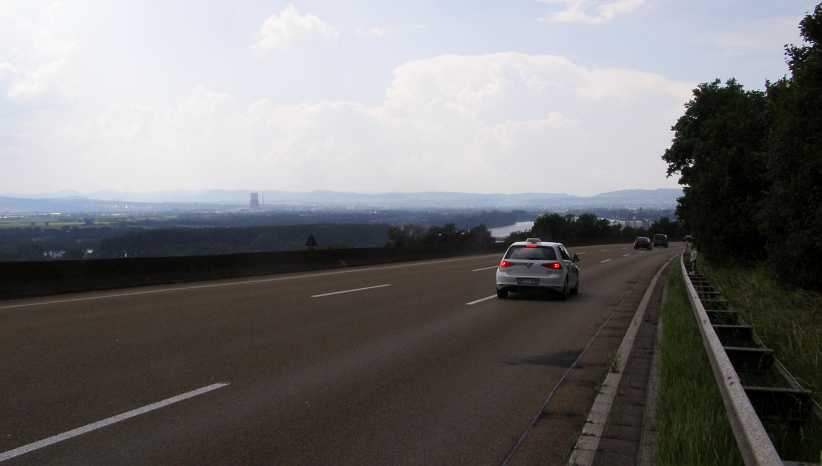
Heading for Luxembourg. Once again I was into ‘fresh adventure’ mode crossing a fresh part of Germany as well as a part I’d seen before on the way to my eighteenth European country.
Note, also, that it was yet another cloudy day. In fact, there’d been heavy rains across much of France and there was flooding in Paris a few days earlier. Between making phone calls and other things it seems I didn’t do much with the camera, though where I crossed the Moselle at Longuich I took a few snaps:
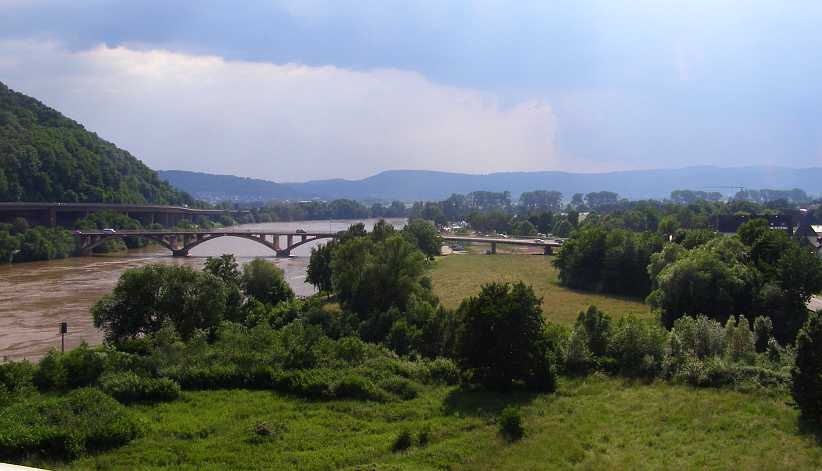
Muddy river. There’d been heavy rains, which probably adds emphasis to this photo of the bridge at Longuich. I would soon be on the highway curving around on the distant shore.
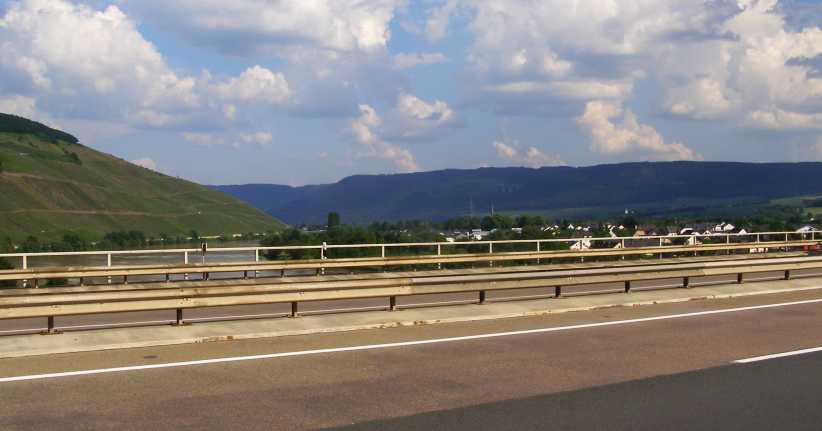
The other way. Looking in the opposite direction we see the huge hills alongside the Moselle River.
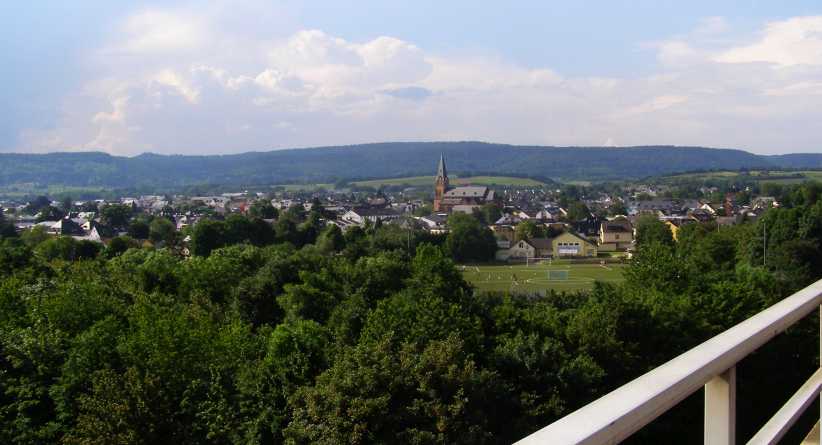
Schweich. On the opposite side of the river to Longuich is Schweich with sporting fields featuring in this picture.
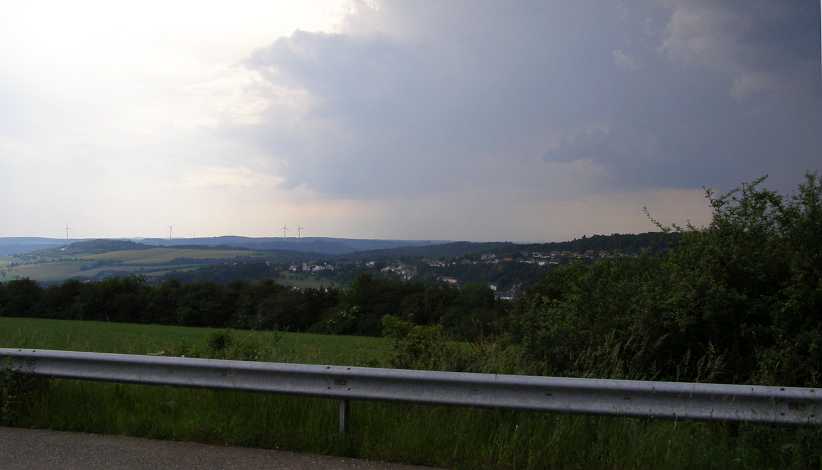
Weather threatening. Though I didn’t strike rain this day, it looks like it wasn’t far away some of the time.
Ultimately I crossed the Luxembourg border, and here it is:
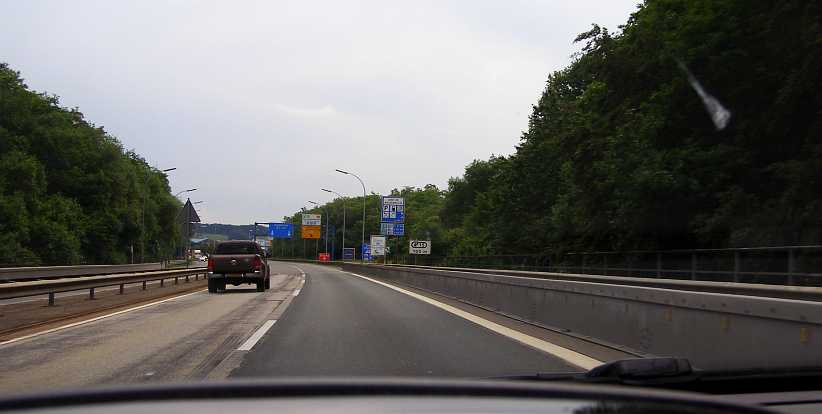
Luxembourg border. A forest of signs tends to hide the fact that we’re about to enter another country.
Note the little blue sign with the ring of stars on it?
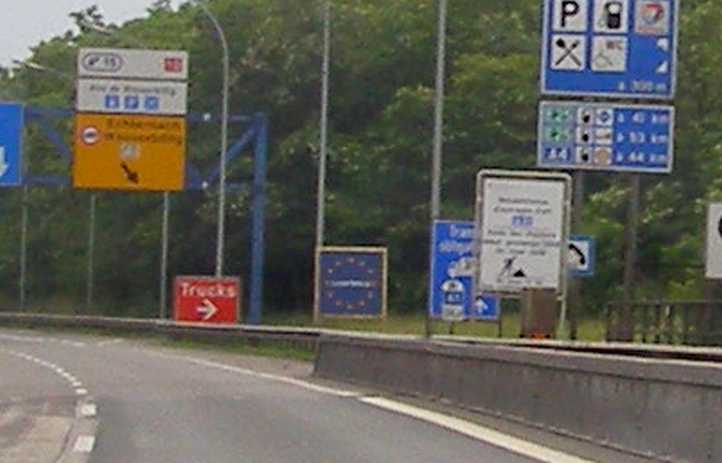
Border sign. One thing the European Union has led to is easier travel between countries.
That’s the sign that tells you that you’re crossing a border between two European Union countries. No border gates, no customs checks, just a fresh country made up of the same dirt that was in the last country. Unless the border is a river, then it’s more formal, I guess.
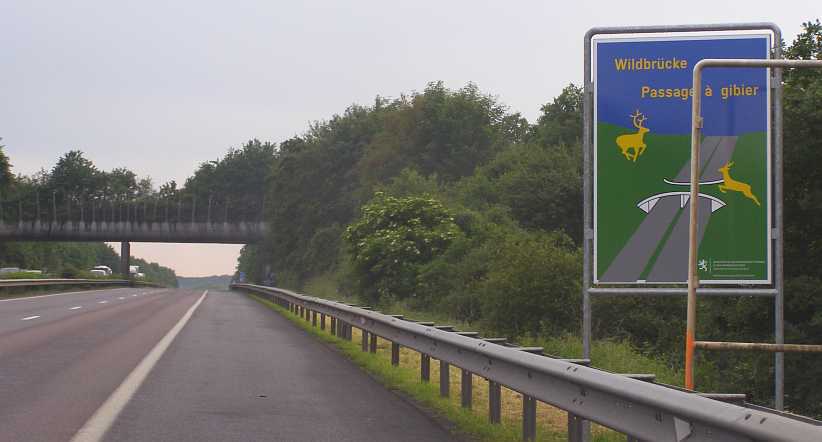
Nature crossing. Giving the deer somewhere to cross the road would hopefully reduce the risk of a high-speed collision with one.
Driving across this tiny country wasn’t going to take long. The country would fit into Tasmania about 24 times, though there’s about 15% more people in Luxembourg than in Tasmania.
One of the first things I saw on the way into town was the great chasm the bridge that carried the main road went across. Down below I could glimpse buildings and trees, but at speed I couldn’t get a really good look. As I looked around I tried to find somewhere to get a good picture of all of that.
But first I saw this edifice…
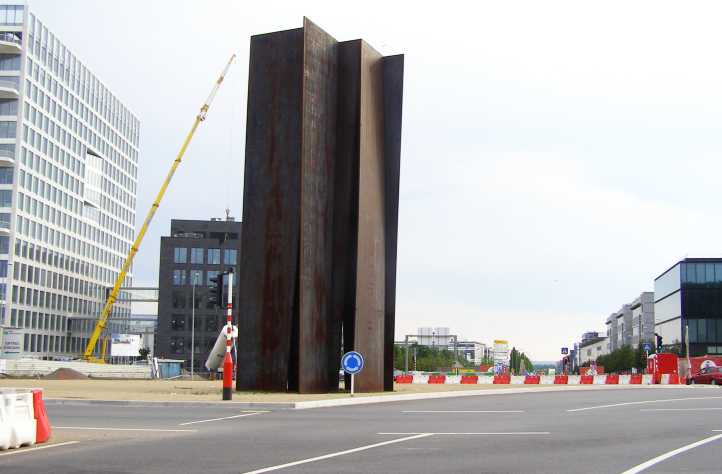
Luxembourg art? It wouldn’t have been my choice to put this here, but here it is, possibly seen as art.
I have no idea what it is, but I’m guessing it’s some sort of monument to the steel industry, one of the main industries in Luxembourg. Then I noted that the place was modern, neat and clean, even though many buildings were old and in places stonework was still holding up after centuries. These buildings were definitely not old:
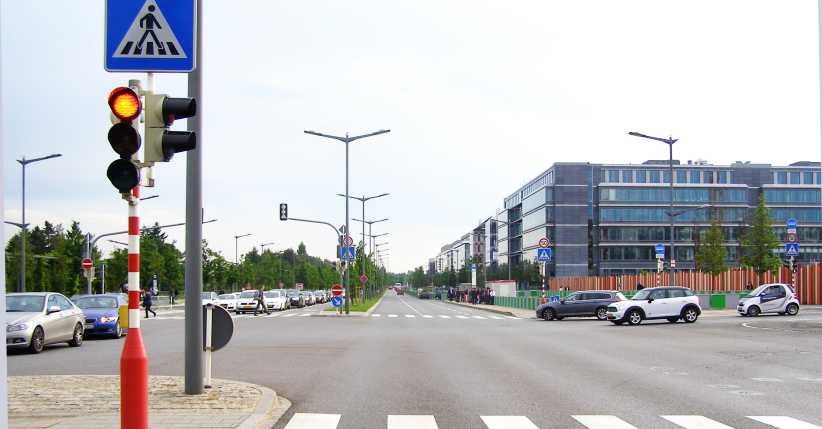
Clean streets, I felt that the cleanness of the city was outstanding, and this wide road fits in with the modern building to suggest it’s right up to date with current needs.
Also not old were these buses…
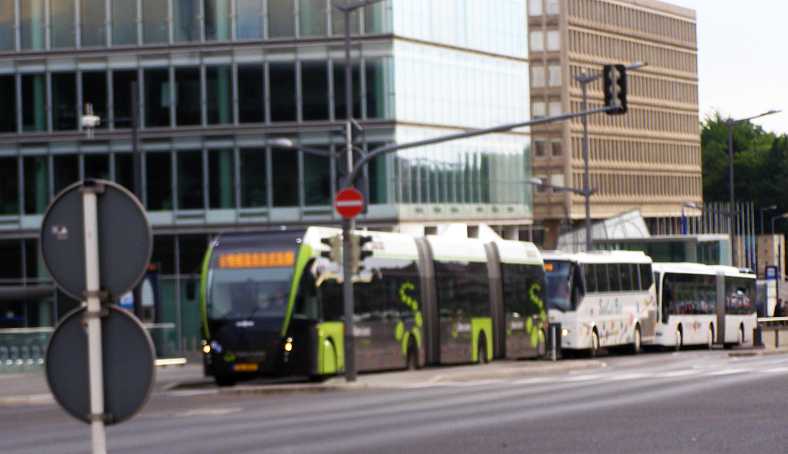
Modern transport too. ‘Bendy’ buses with streamlining, even public transport is right up to date.
I had been told earlier in the day that fuel was considerably cheaper in Luxembourg than in other EU countries, so I was keeping my eyes peeled for somewhere to top up. Service stations were, however, pretty thin on the ground and I was actually on my way out of town before I found somewhere to top up.
The other thing I’d been told to look at was the sunken garden in the middle of the city. I found that all right, here’s a few pictures I took:
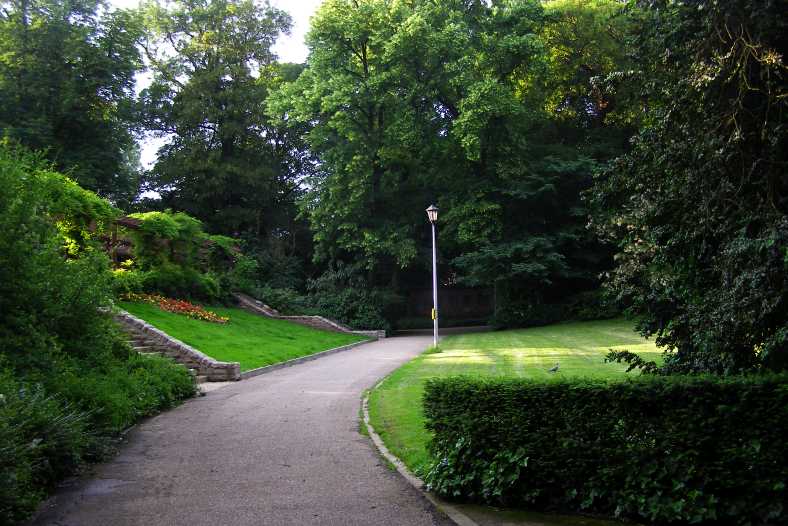
Sunken garden. Having been told about it, I had to check it out. This corner gives some idea…
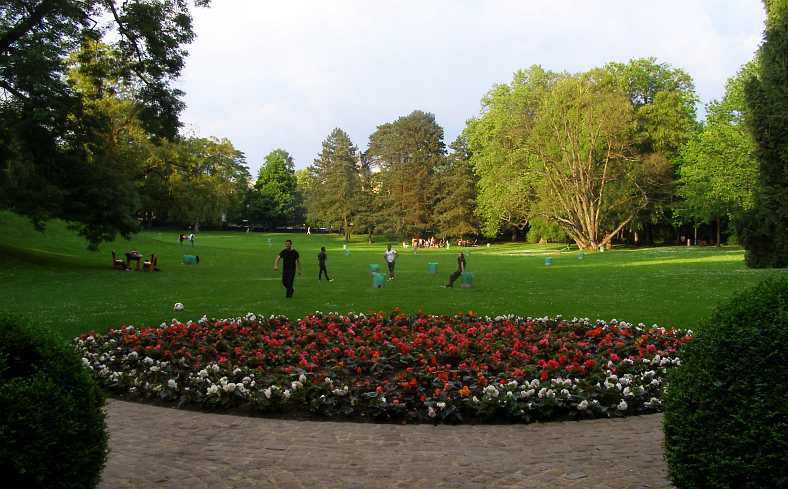
Prepared for people. …while the few people here late in the afternoon would give little indication of the larger numbers who would turn out for the noon break from local office buildings.
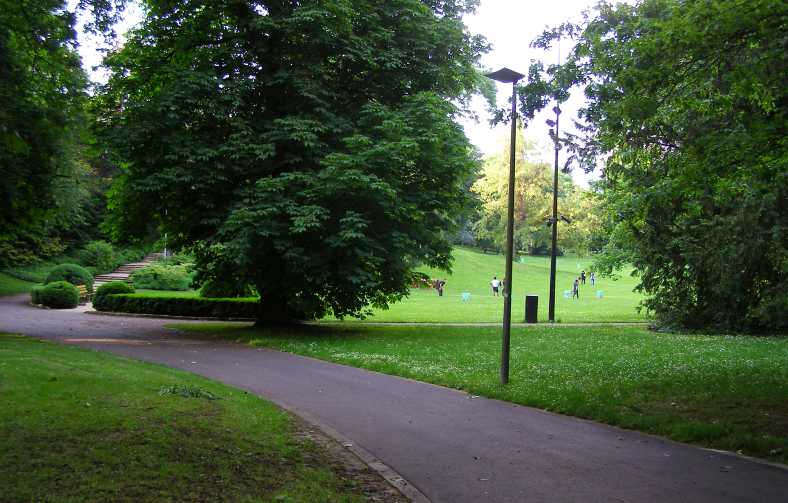
Garden walks. There are many walkways between the trees and garden beds, a very nice little corner of the city.
But not all of the city is new, nor is it all garden. Even so, the older buildings are well-maintained and fit into the scene nicely…
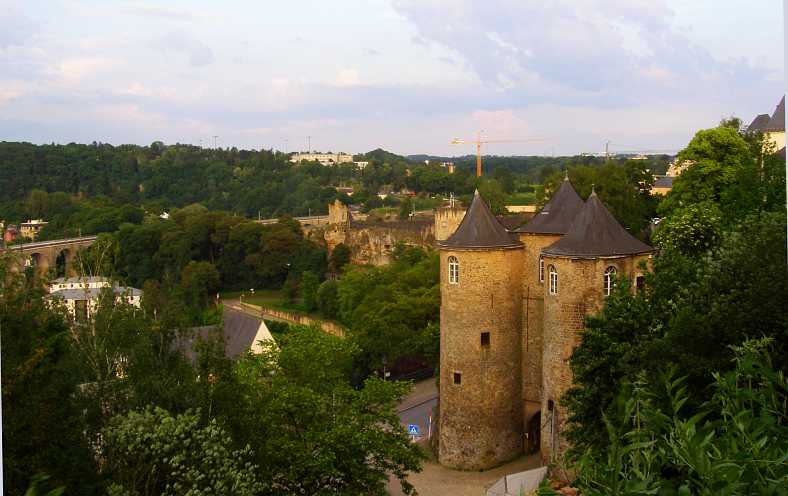
Older buildings. A totally different style, these blend in with the modern to give the city more atmosphere.
Then I went looking for that huge bridge over which I’d entered the city. It was hard to find a spot to photograph it, but I kept winding my way around some narrow lanes on the edge of the place until I found this spot:
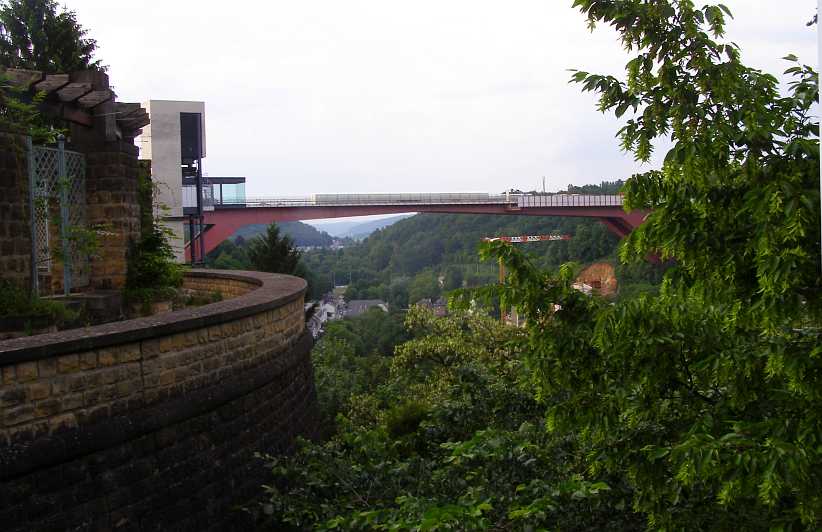
Grand Duchess bridge. The river crossing and the whole setting it creates certainly made an impression on me.
The bridge is called the Grand Duchess Bridge and if you’re looking it really is impressive. I found this on Google Earth to show the part of the city that’s down in that ‘ravine’ beneath the bridge, too:
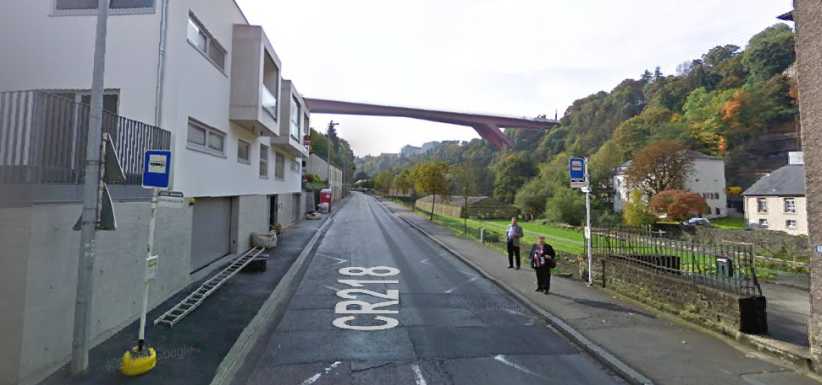
From underneath. A simple structure from this angle, it deserves the impressive name it’s been given.
After accomplishing that feat I started looking more seriously for the lower-priced fuel I’d been promised, found it and filled up and headed South.
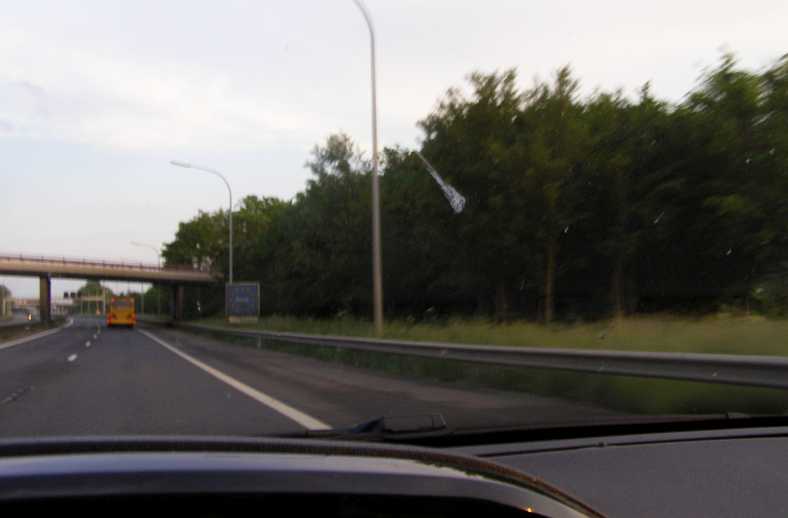
Re-entering France. Back into France, the fourth entry to this country during the trip. Well, fifth actually, as I stayed in Ventimiglia and went back to Monaco from there on one day.
I didn’t have to drive far, obviously, until I was at the French border. A service station *** truck stop loomed up and I went in there, had some tucker and put the little Peugeot into a quiet spot at the back of the truck’s parking area to sleep for the night.
Tomorrow would see me head for Reims, for many years the home of the French Grand Prix. I had worked out I should go there before I turned towards the coast as it would mean a big detour to get there as I was going between Dunkirk and Paris after my United Kingdom visit.
It rained lightly as I slept…
The issue was that I had been to the Mercedes-Benz museum and not the Porsche museum, and someone I spoke to on the phone reckoned I should have gone to both. The problem I found at the M-B museum was that everything was Mercedes or Benz or Mercedes-Benz. No other makes were involved.
With Porsche, however, there may have been. I ticked this over in my mind. Porsche did work for a lot of other makers, so there might be some variety. I should, therefore, go back to Stuttgart and go to the Porsche museum. Then came a warning note, someone suggested that they’re not open every day.
So I went online and learned they don’t open Mondays. It was time to give up on the Porsche museum and head for Luxembourg…
Heading for Luxembourg. Once again I was into ‘fresh adventure’ mode crossing a fresh part of Germany as well as a part I’d seen before on the way to my eighteenth European country.
Note, also, that it was yet another cloudy day. In fact, there’d been heavy rains across much of France and there was flooding in Paris a few days earlier. Between making phone calls and other things it seems I didn’t do much with the camera, though where I crossed the Moselle at Longuich I took a few snaps:
Muddy river. There’d been heavy rains, which probably adds emphasis to this photo of the bridge at Longuich. I would soon be on the highway curving around on the distant shore.
The other way. Looking in the opposite direction we see the huge hills alongside the Moselle River.
Schweich. On the opposite side of the river to Longuich is Schweich with sporting fields featuring in this picture.
Weather threatening. Though I didn’t strike rain this day, it looks like it wasn’t far away some of the time.
Ultimately I crossed the Luxembourg border, and here it is:
Luxembourg border. A forest of signs tends to hide the fact that we’re about to enter another country.
Note the little blue sign with the ring of stars on it?
Border sign. One thing the European Union has led to is easier travel between countries.
That’s the sign that tells you that you’re crossing a border between two European Union countries. No border gates, no customs checks, just a fresh country made up of the same dirt that was in the last country. Unless the border is a river, then it’s more formal, I guess.
Nature crossing. Giving the deer somewhere to cross the road would hopefully reduce the risk of a high-speed collision with one.
Driving across this tiny country wasn’t going to take long. The country would fit into Tasmania about 24 times, though there’s about 15% more people in Luxembourg than in Tasmania.
One of the first things I saw on the way into town was the great chasm the bridge that carried the main road went across. Down below I could glimpse buildings and trees, but at speed I couldn’t get a really good look. As I looked around I tried to find somewhere to get a good picture of all of that.
But first I saw this edifice…
Luxembourg art? It wouldn’t have been my choice to put this here, but here it is, possibly seen as art.
I have no idea what it is, but I’m guessing it’s some sort of monument to the steel industry, one of the main industries in Luxembourg. Then I noted that the place was modern, neat and clean, even though many buildings were old and in places stonework was still holding up after centuries. These buildings were definitely not old:
Clean streets, I felt that the cleanness of the city was outstanding, and this wide road fits in with the modern building to suggest it’s right up to date with current needs.
Also not old were these buses…
Modern transport too. ‘Bendy’ buses with streamlining, even public transport is right up to date.
I had been told earlier in the day that fuel was considerably cheaper in Luxembourg than in other EU countries, so I was keeping my eyes peeled for somewhere to top up. Service stations were, however, pretty thin on the ground and I was actually on my way out of town before I found somewhere to top up.
The other thing I’d been told to look at was the sunken garden in the middle of the city. I found that all right, here’s a few pictures I took:
Sunken garden. Having been told about it, I had to check it out. This corner gives some idea…
Prepared for people. …while the few people here late in the afternoon would give little indication of the larger numbers who would turn out for the noon break from local office buildings.
Garden walks. There are many walkways between the trees and garden beds, a very nice little corner of the city.
But not all of the city is new, nor is it all garden. Even so, the older buildings are well-maintained and fit into the scene nicely…
Older buildings. A totally different style, these blend in with the modern to give the city more atmosphere.
Then I went looking for that huge bridge over which I’d entered the city. It was hard to find a spot to photograph it, but I kept winding my way around some narrow lanes on the edge of the place until I found this spot:
Grand Duchess bridge. The river crossing and the whole setting it creates certainly made an impression on me.
The bridge is called the Grand Duchess Bridge and if you’re looking it really is impressive. I found this on Google Earth to show the part of the city that’s down in that ‘ravine’ beneath the bridge, too:
From underneath. A simple structure from this angle, it deserves the impressive name it’s been given.
After accomplishing that feat I started looking more seriously for the lower-priced fuel I’d been promised, found it and filled up and headed South.
Re-entering France. Back into France, the fourth entry to this country during the trip. Well, fifth actually, as I stayed in Ventimiglia and went back to Monaco from there on one day.
I didn’t have to drive far, obviously, until I was at the French border. A service station *** truck stop loomed up and I went in there, had some tucker and put the little Peugeot into a quiet spot at the back of the truck’s parking area to sleep for the night.
Tomorrow would see me head for Reims, for many years the home of the French Grand Prix. I had worked out I should go there before I turned towards the coast as it would mean a big detour to get there as I was going between Dunkirk and Paris after my United Kingdom visit.
It rained lightly as I slept…
Thread Starter
|
Captain
Joined: Oct 2005
Posts: 570
Likes: 8
From: The Summit, Queensland, Australia
When I awoke and started driving on this Tuesday morning I was heading once again for a racing circuit formed on public roads. And it was one of the most famous of all, a place where many racing memories were recorded. It was also one of the circuits involved in the ‘race’ for the fastest road circuit in Europe during the fifties.
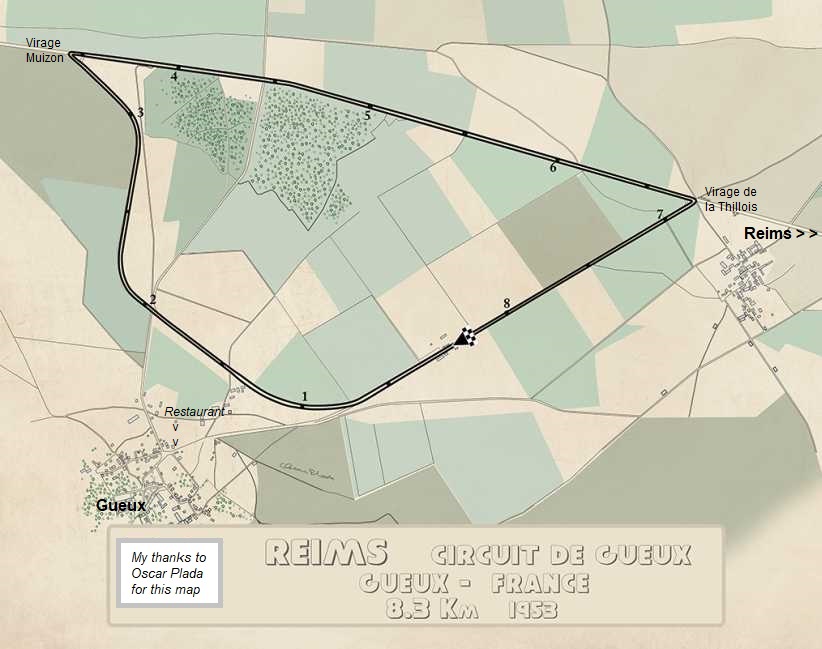
The Reims circuit. Shown here is the last version. If you drive straight into the town of Gueux, however, you’d be on the early version. This turned right just past the marked ‘restaurant’ and followed that line across the path of the later circuit, continuing to go between the sections shown as forest and turning right onto the main road to Reims again there. Between times – for just one year – the circuit avoided Gueux and instead of going to the Thillois hairpin turned right onto the same road used between Gueux and the forests.
But it was still a little way away and so I headed along roads lined with green outlook, but an outlook at times showing the effects of recent heavy rains. The path for the day:
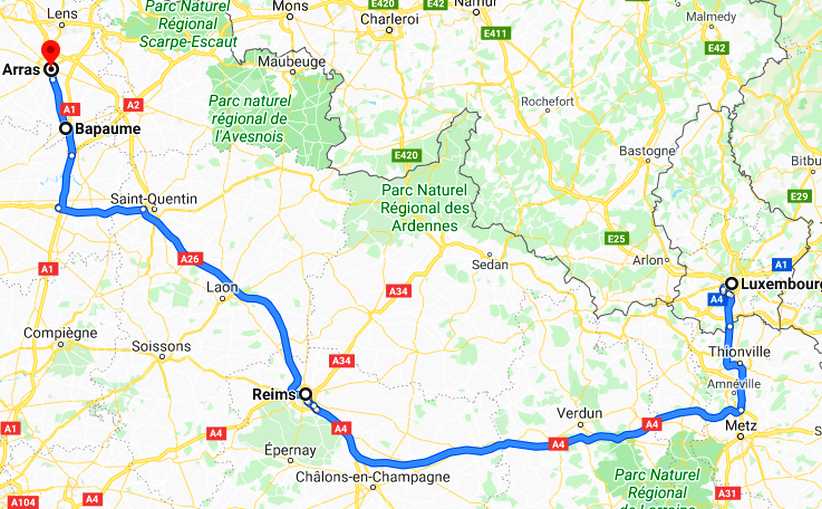
Before the day was out I was to break one of my personal promises made before taking this drive. But the first thing was to drive through to Reims. Scenes of flooding were prominent, or sometimes just remnants of flooding:
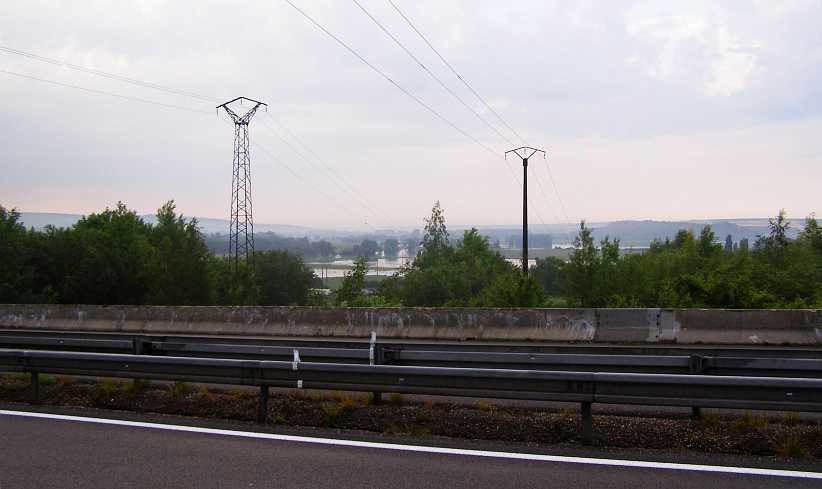
Flooding. Heading across from Metz I first spotted flooding, reminding me of hearing about Paris enduring floods a few days earlier.
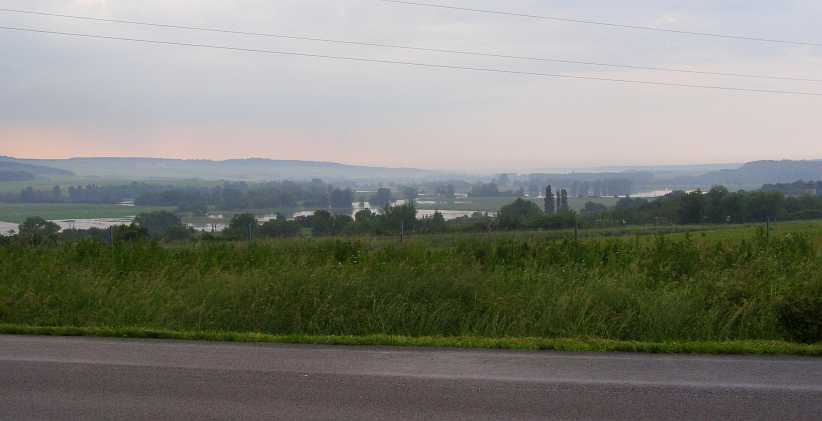
Closer look. I stopped to get this shot. I had now seen flooding on three continents, I realise, with it being a regular occurrence at home and having seen it on the previous trip at Burlington, Iowa.
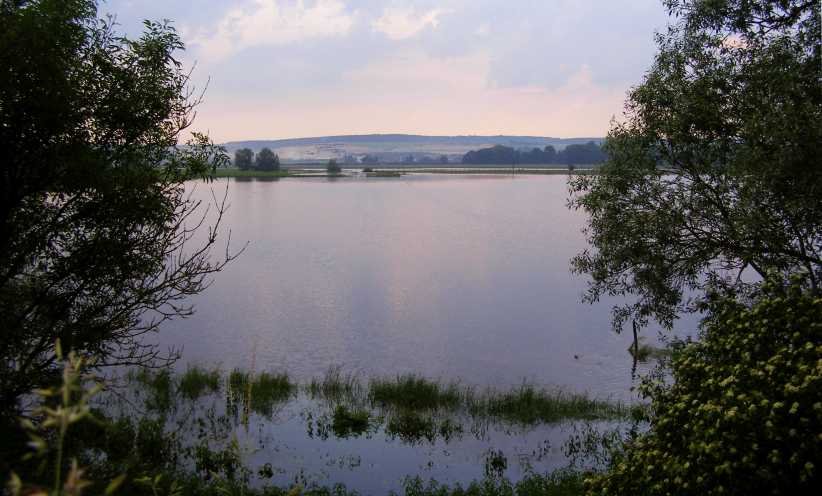
A thorough soaking. The paddocks here are well underwater and probably had been for some days.
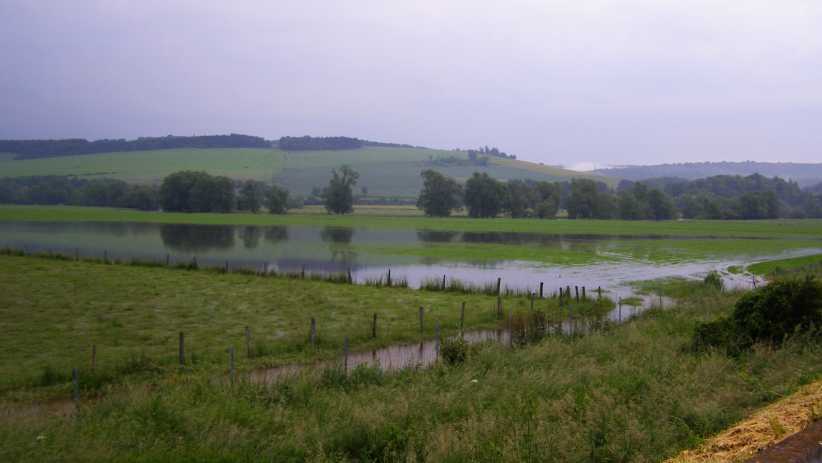
Very wet. Not so deep here, but still giving the soil a good watering.
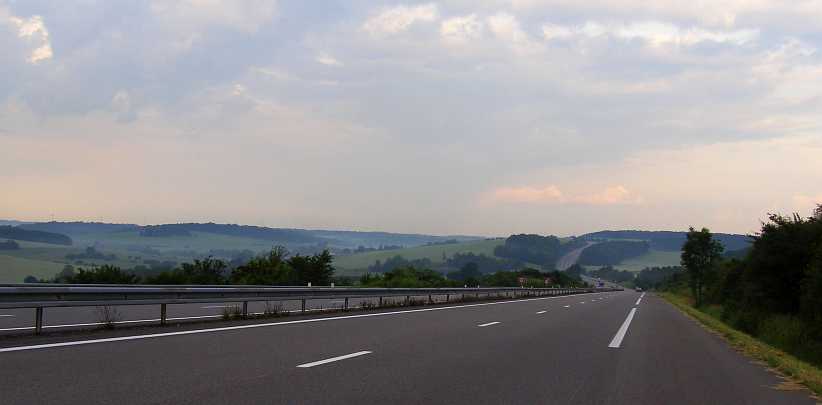
Green countryside. Finally clear of the flooded area, the country with its rolling hills was very attractive.
I stopped for fuel at Les Petites Loges Grand Est, Google Earth provides a picture of the BP roadhouse where I pulled in:
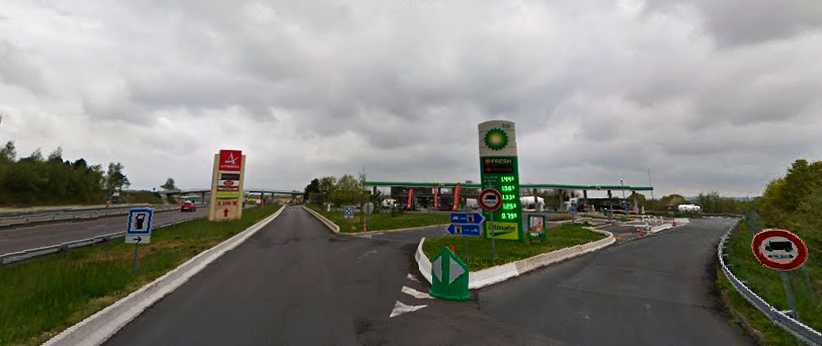
Breakfast time. I didn’t need fuel here, but it was getting along to time I had some breakfast.
And while I was there snapped this shot of a couple of recovery vehicles crossing the adjacent overpass:
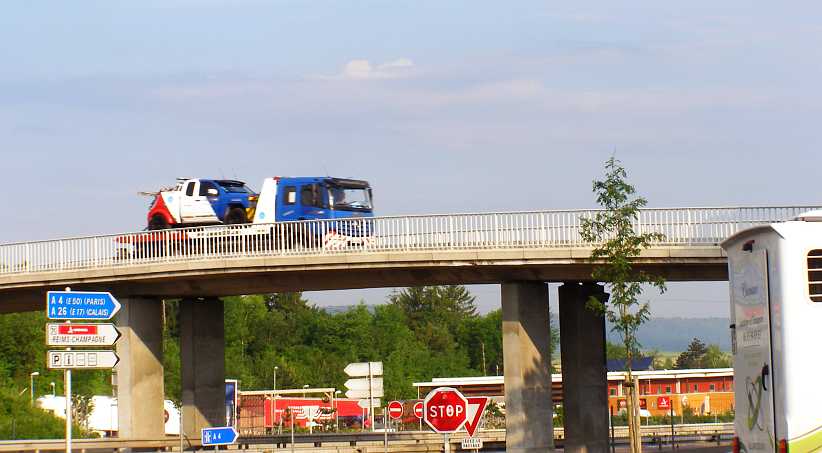
Recovering and recovered? I thought it unusual for a tow truck to be on top of a tilt tray, but no doubt it was a practical way of getting both vehicles to a destination.
Ultimately I got to Reims and quickly located the triangle of roads which made up the circuit. It was all very familiar to me through photographs I’ve seen over the years, so I took a bit of a tour:
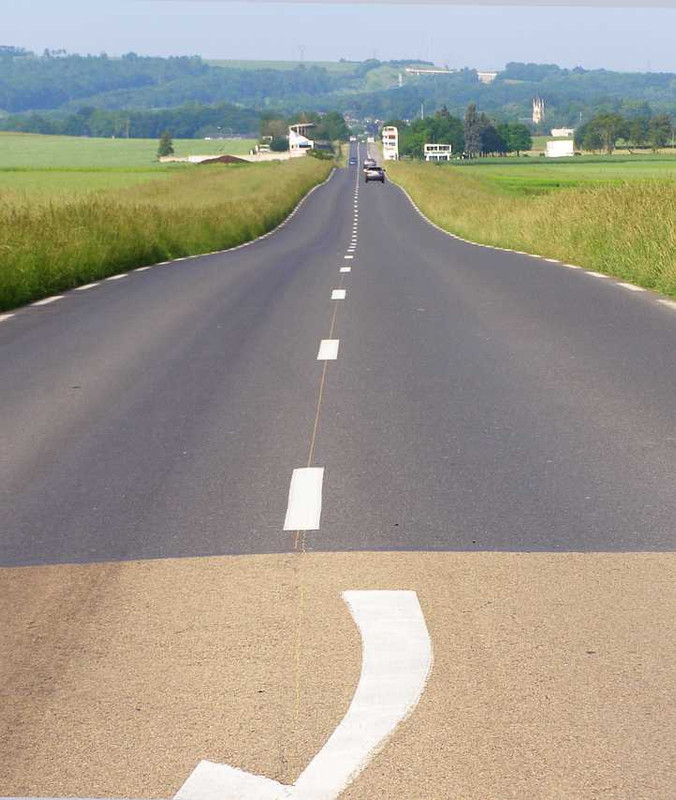
The long straight. Immediately I got through the roundabout and onto the road which used to see the race starts and finishes I saw those old concrete buildings.
Local businesses have pooled together to do major preservation work around the old pits and grandstands. Many jobs aimed at preserving them have borne fruit.
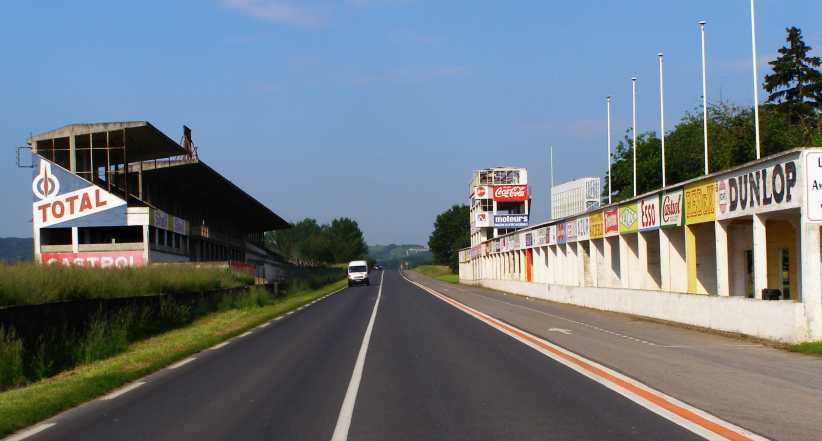
Centre of activity. Quiet now, these concrete structures once saw huge crowds for major events every year.
At a little restaurant in town I found walls full of photographs of those spectacular days. I photographed those I could, always difficult with framed pictures behind glass, but some came up fairly well.
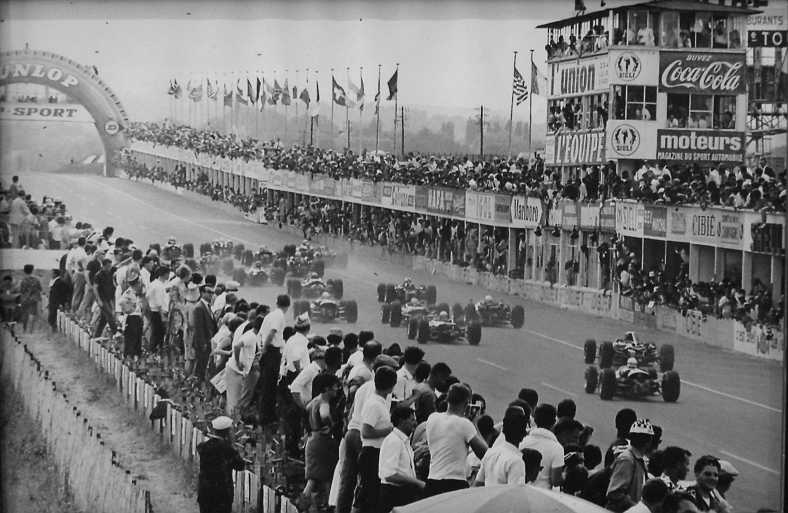
How it used to be. A race start in the mid-sixties. Tens of thousands of people strain to watch as the 1966 French Grand Prix gets under way. Jack Brabham won this event to begin his charge that won him his third World Championship.
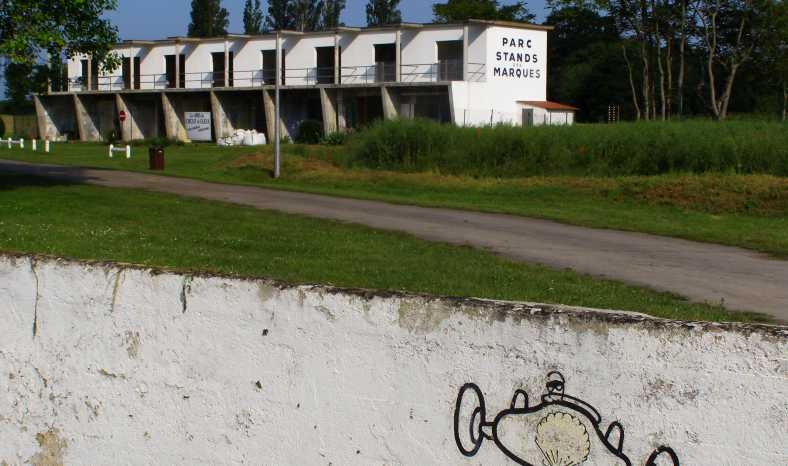
Pit buildings. More of the buildings being restored, these being at the rear of the pits.
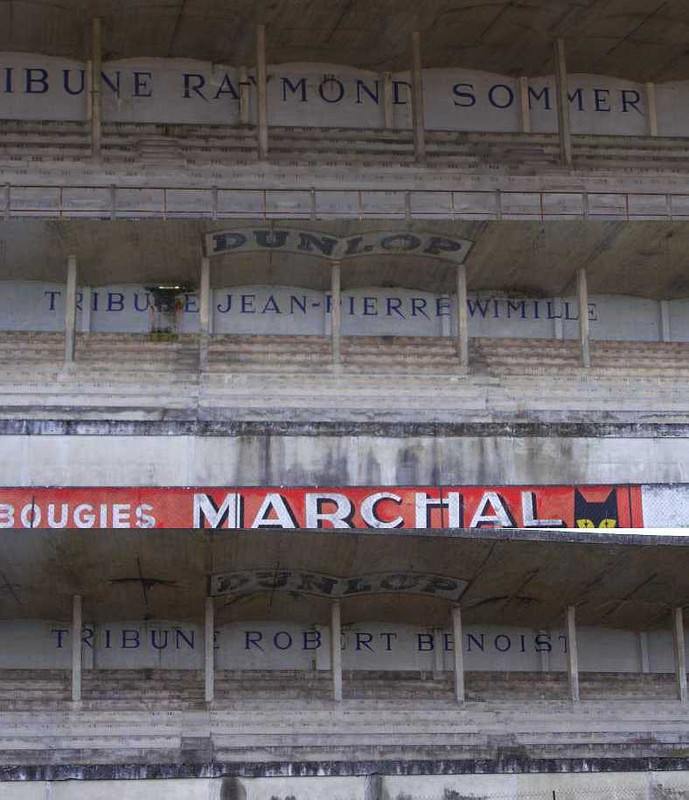
Composite of stands. The grandstands have been named for famous French drivers, some brave men. Raymond Sommer raced valiantly before and after the war, Jean-Pierre Wimille likewise and was also one who helped Juan Manuel Fangio to reach Europe, Robert Benoist was a Le Mans winner who lost his life when fighting for the Resistance.
To continue to explore the circuit, I continued to drive on that long, long straight…
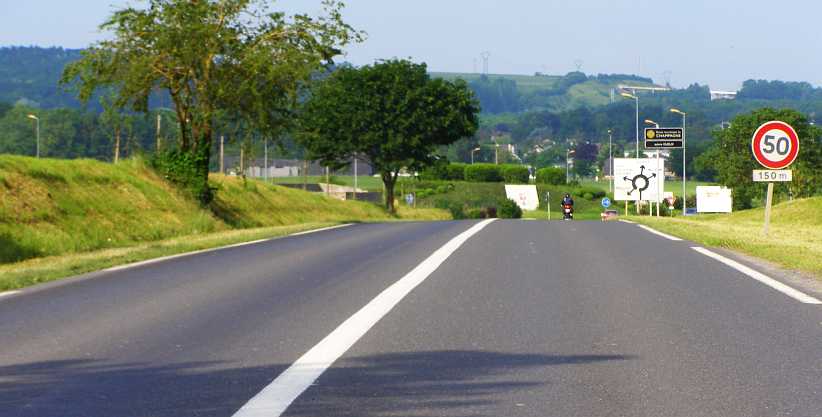
Over thecrest. This straight used to end in a huge sweeping bend, one to test the bravery of the drivers of the fastest cars. It was just beyond this modern-day roundabout, which is where the earlier version of the circuit branched off to Gueux.
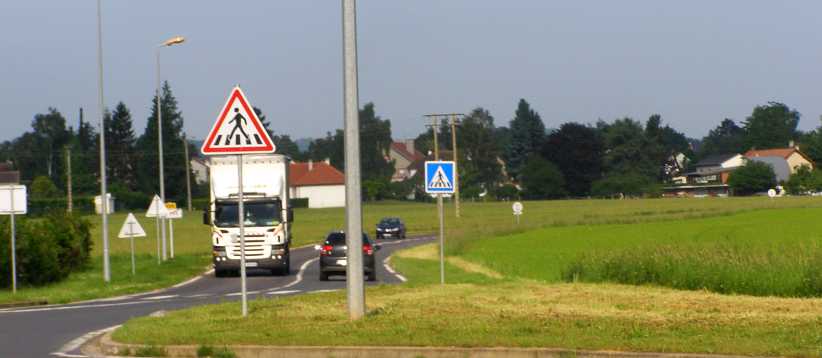
Fast sweeper. This must have been one of the fastest corners in motor racing. It continues way past the range of this photo and skirts the edge of the town.
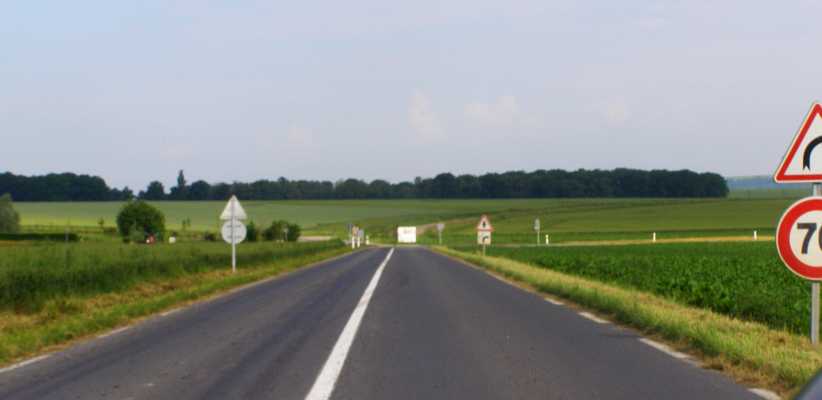
Time’s changes. Exiting the sweeper this short straight leads to the junction where the original circuit crossed, and where the 1952 competitors turned right on the shortest version of the Reims layouts. And still visible straight ahead is the path of the last version swinging more gently to the right.
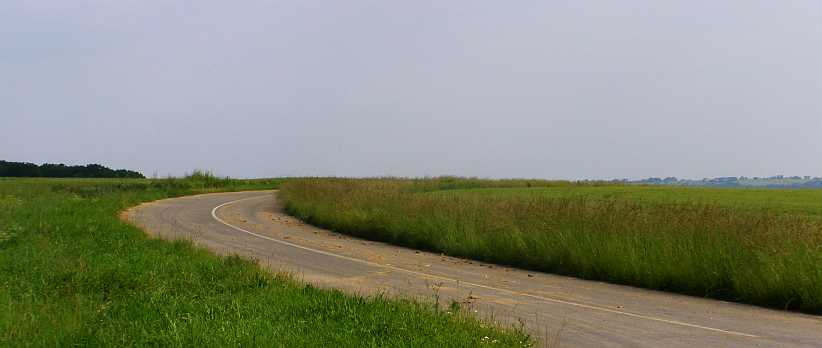
Over another crest. The sweeper went over this crest…
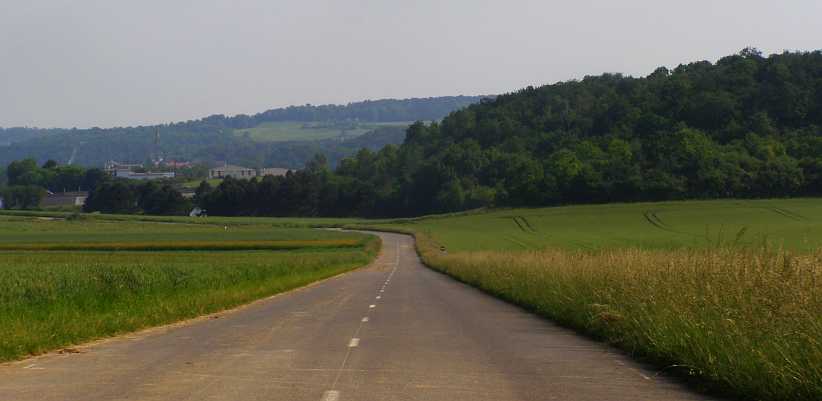
Downhill run. …to a downhill straight to the left-hand sweeper towards the Muizon hairpin.
There were diversions because the roads have changed. A new Autoroute has taken care of the Muizon Hairpin, the road that used to go there is starting to disappear:
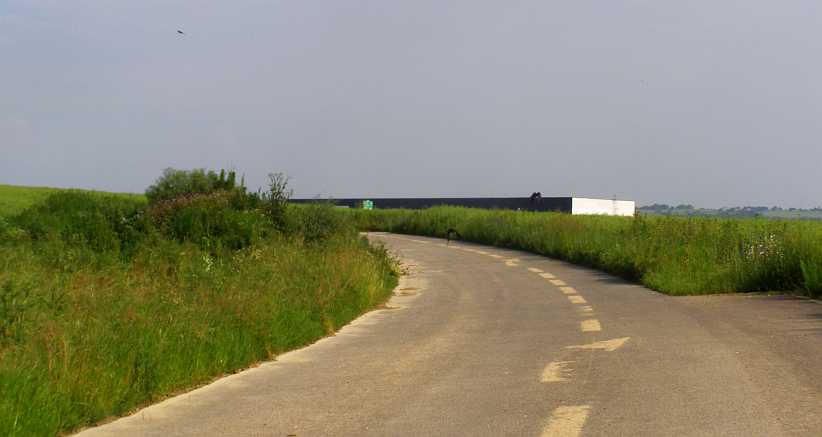
Petering out. At this point the road is being eaten up by the encroachment of greenery.
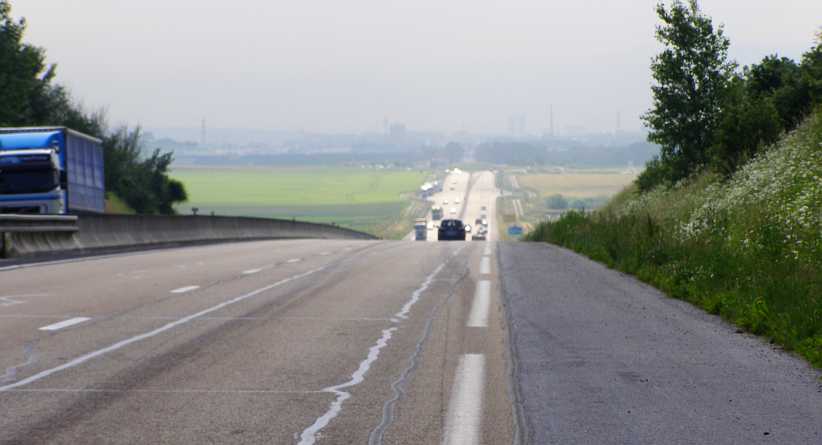
Motorway. This motorway follows the basic line of the road which ran from Muizon back to the Thillois hairpin where we began our lap.
So that was a lap of the Reims circuit of 1953-1972, where champagne flowed freely for practice performances and race wins. Now there’s the matter of the change the circuit took from its original form, in which it went through the town of Gueux.
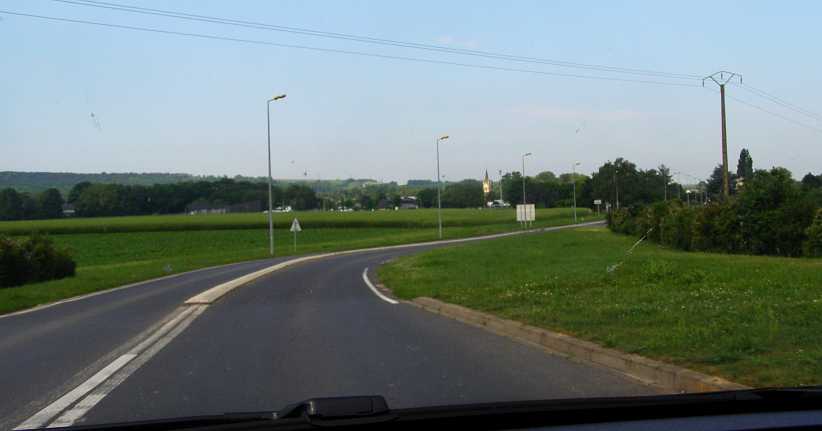
Road to Gueux. Driving out of that roundabout I mentioned already this road heads into town, swinging right here…
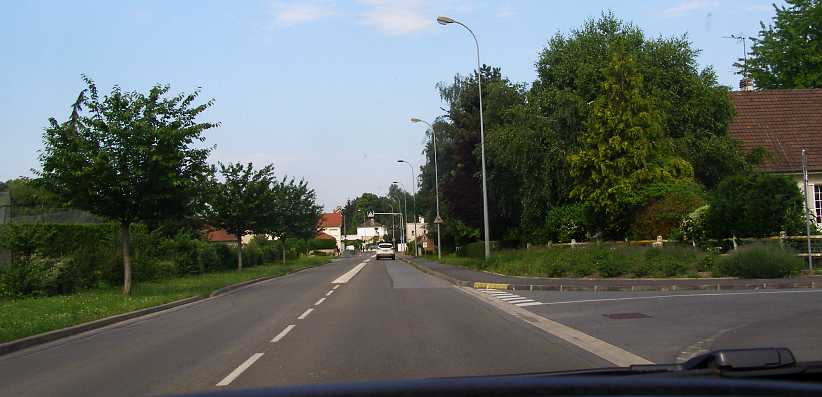
Entering the town. …and after a short straight a kink to the left took the cars to the start of the centre of town.
This is how it looked as the cars came from that left kink and prepared to slow and enter a 90° bend alongside this building:
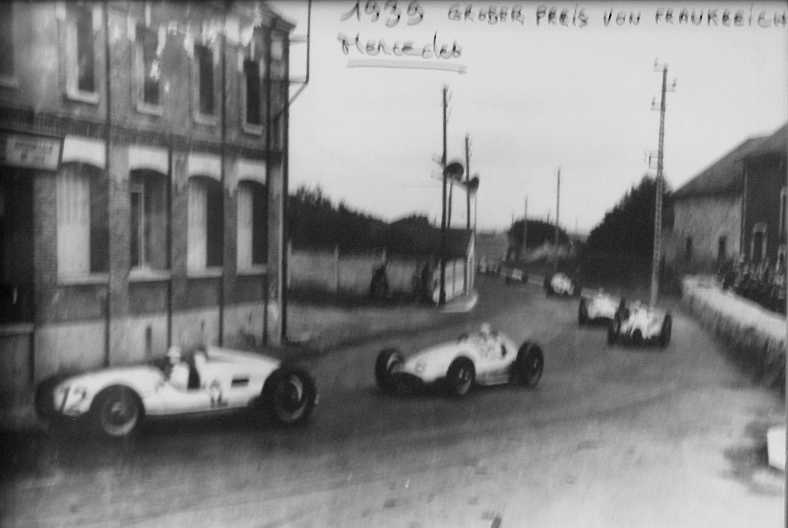
Auto Union and Mercedes. This picture from 1939 shows the fastest cars of the pre-war era negotiating this part of Gueux.
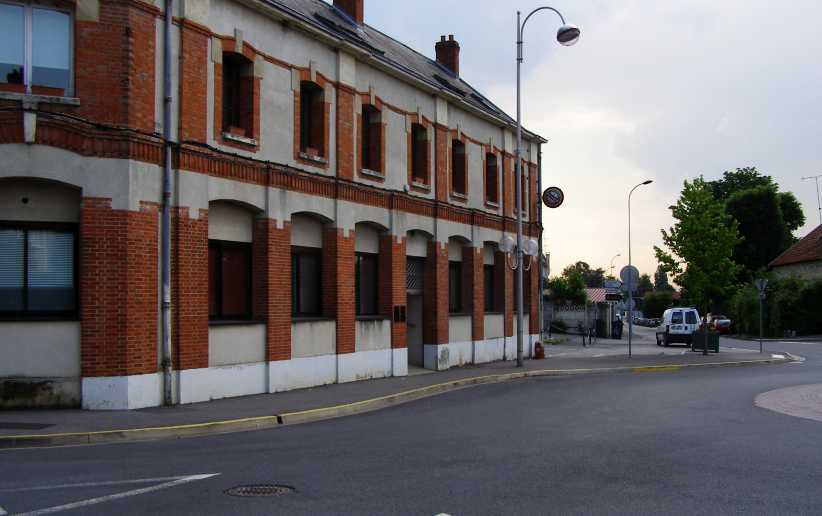
Quieter today. The same scene today, kerbing spoiling the line once used and the building still there, if changed somewhat.
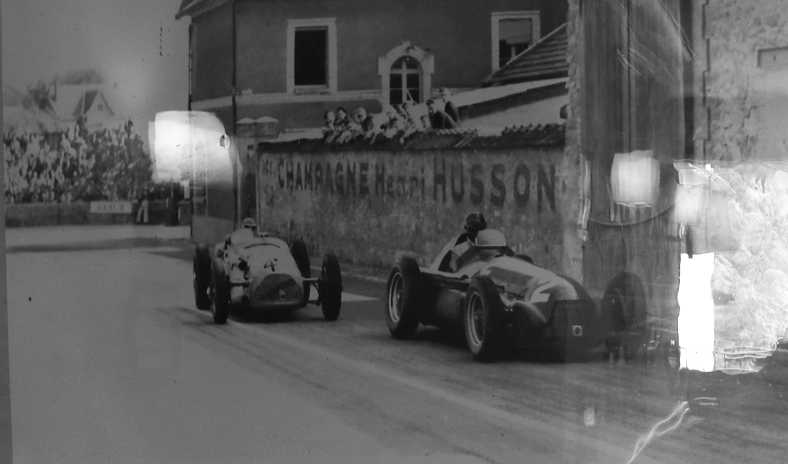
The exit. There’s not a lot of room here for error. Coming from that same turn we see a Lago Talbot looking like he's ranging up to try a pass. The Alfa Romeo 158 is Guiseppi Farina, who won the 1951 race, the Lago Talbot is Eugene Charboud who finished the race in eighth.
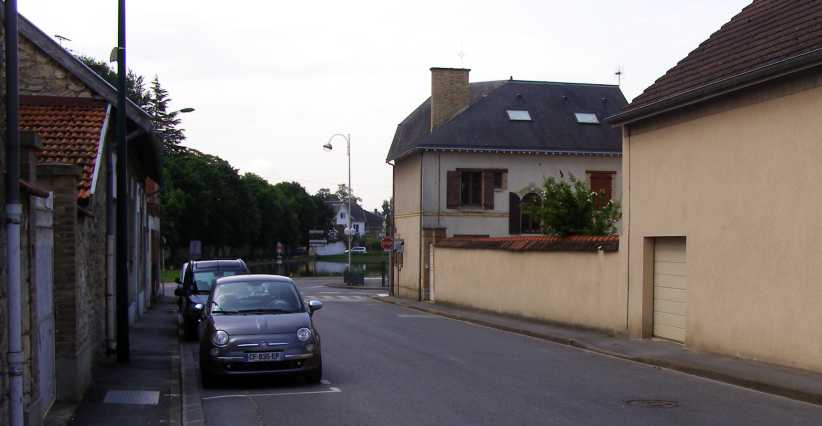
Today’s picture. None of the roar or power here, just a quiet street.
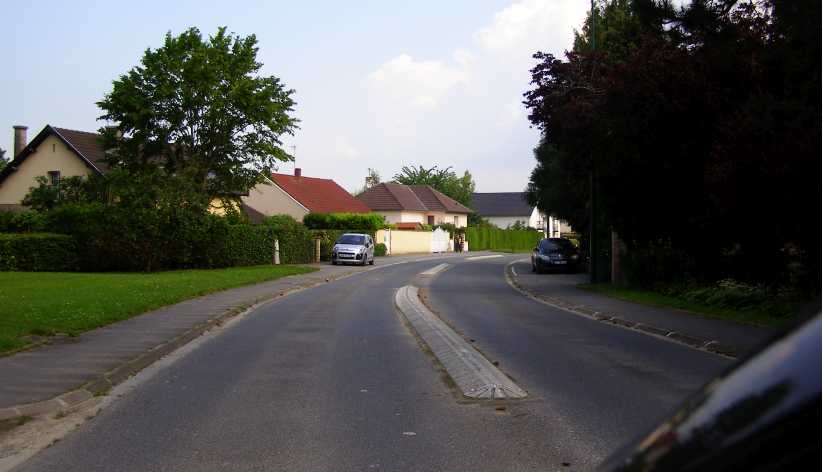
Between the houses. From that scene the road curves gently through a residential area…
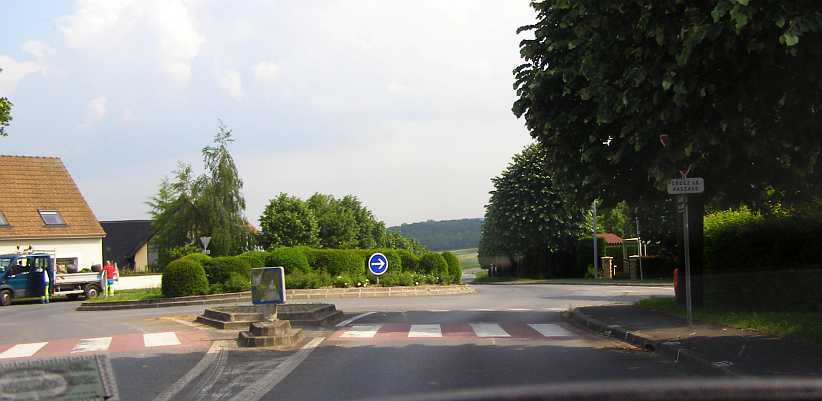
Roundabout added. …where a roundabout has grown across the path once used by these powerful machines.
The racers were busy gathering speed through here, as seen in this picture of a Mercedes heading for the open country:
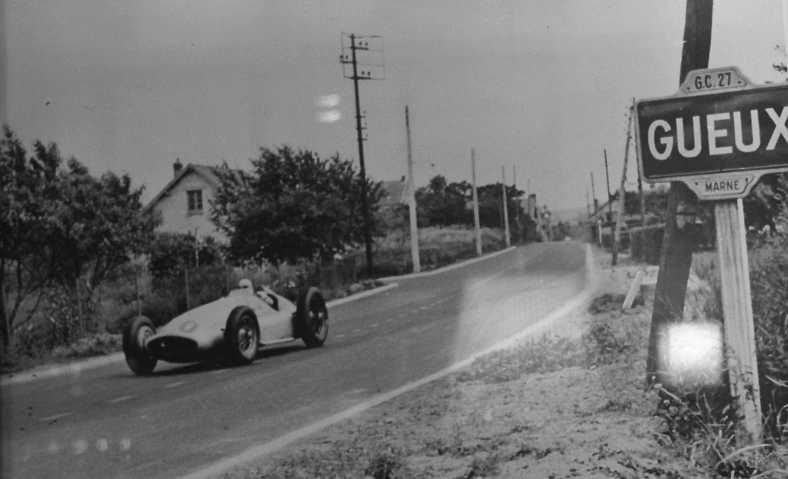
Mercedes. 1939 again, Rudolf Caracciola at the wheel, putting the power down leaving the town area.
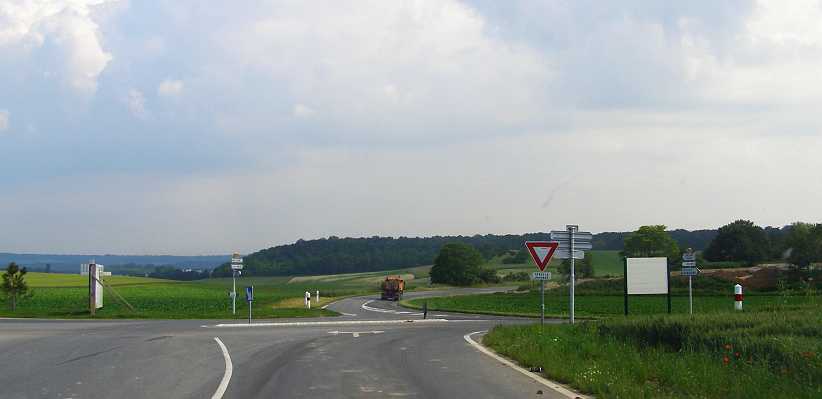
Crossing the new circuit. Ahead of us is the road towards the forests, which was used up till 1952, much of it straight, all of it fast.
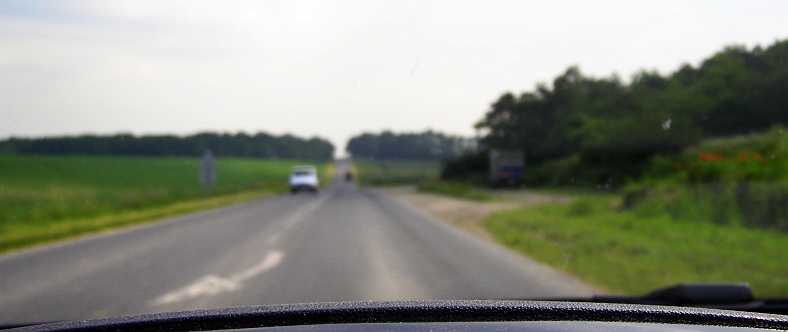
Straight to forests. The left curve is between those trees in the background of this (unfortunately blurred) photo.
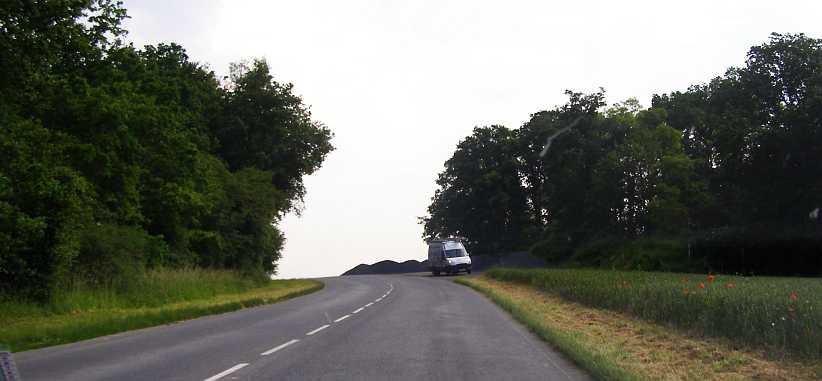
Sweep left. This sweeper rises over a small crest. It seems the forest on the right has now been cleared out.
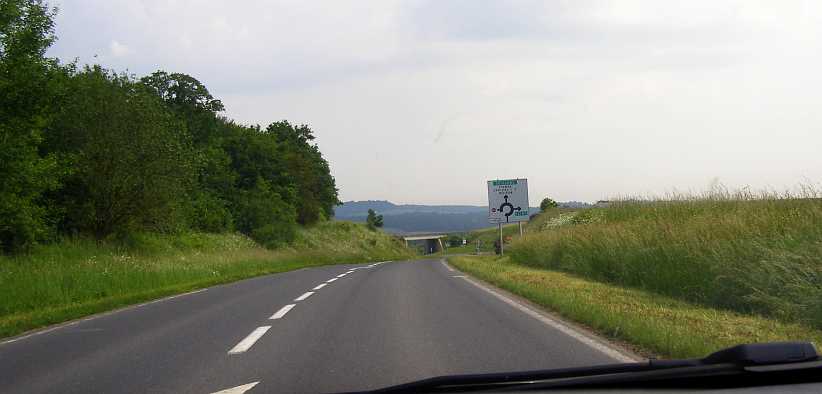
And to the freeway. After that left, there’s a gentle right and then there was a tight right onto a long straight. As you can see here, things have once again changed and we’re back at that motorway which has taken over that section.
After driving around all of that I returned to the pit area and was very much surprised at what I found there. There was a small group of people, the focus of their attention being this car:
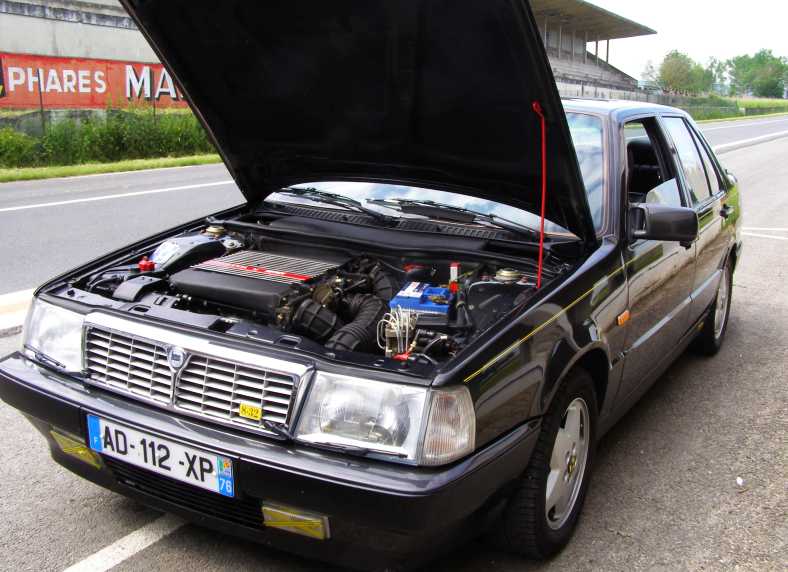
Lancia Thema 8-32. A V8 Ferrari engine nestles under this car’s bonnet, echoing the Lancia-Ferraris which raced at Reims in 1956.
And they were comparing it to this one:
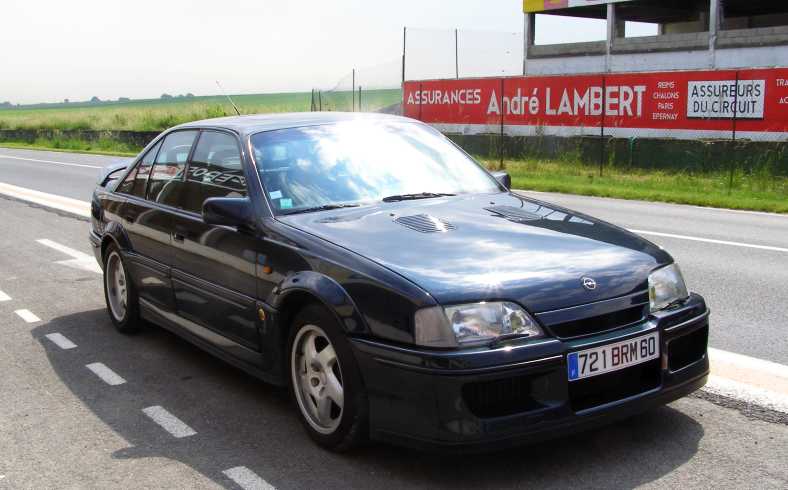
Fast Opel. The Opel Lotus-Omega, capable of 177mph, it had a very twin-turbo 3.6-litre inline six engine and they said it's chassis and suspension owed some heritage to development done by Holden in Australia.
It was interesting meeting these people. They were from a French automotive magazine, of which they gave me a copy, and we had a good conversation as they came and went doing acceleration runs to compare the cars and doing a photo shoot in this famous location.
Finally, back in Gueux I went to this little restaurant/bar…
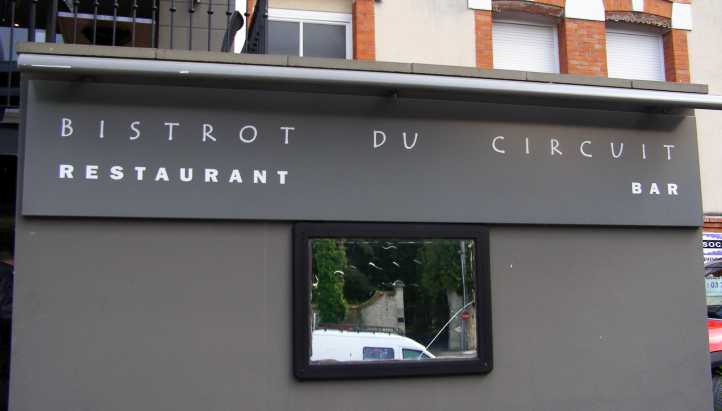
Bistrot du Circuit. A very interesting little place, loaded down with photos of the racing of days gone by.
The old pics I’ve used are all snaps of framed photos on the walls of this restaurant, and there were many more. Some I just couldn’t copy because of reflections from the glass in the frames, but I did manage to get a fair selection.
Here are some more:
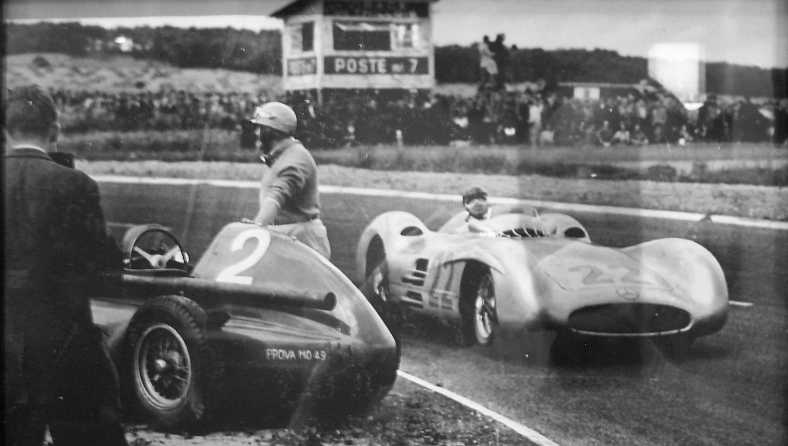
Juan Manuel Fangio. The debut of the 1954 Mercedes-Benz W196 saw Fangio dominant at Reims, though the streamlined bodywork proved a problem at tighter circuits. Here his team mate Hans Hermann passes the Ferrari of Froilan Gonzalez, whose Ferrari engine gave up the struggle after just 13 laps.
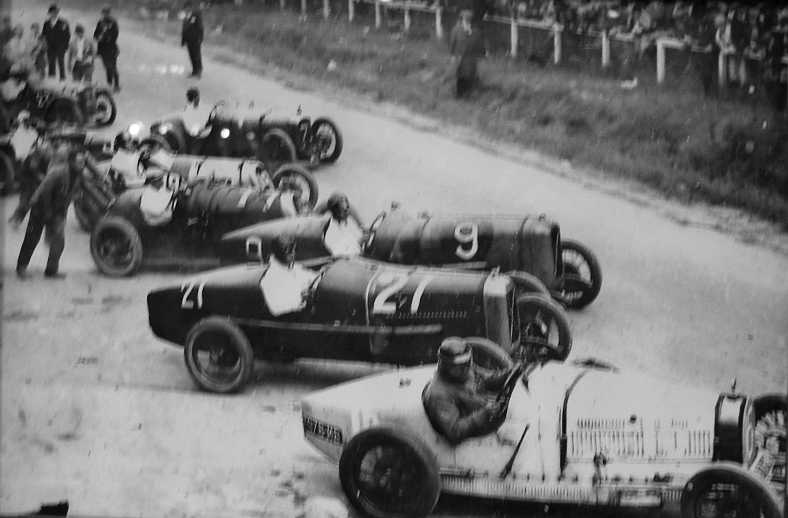
An earlier time. It’s a Bugatti heading this picture, two Salmsons are next in what is clearly a photo from the 1928 Grand Prix de la Marne.
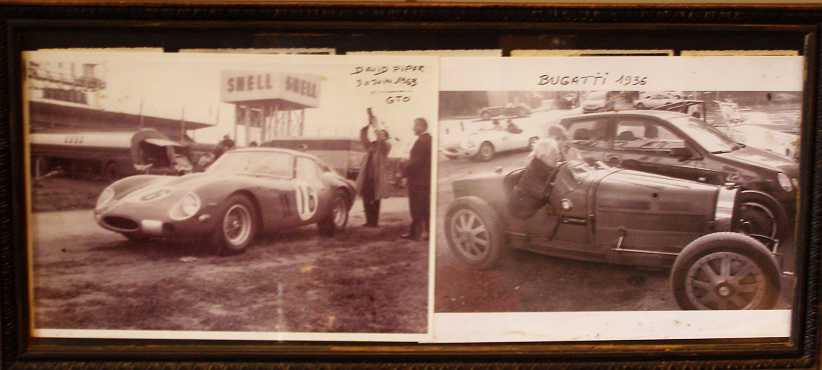
Different times and different races. The Grand Prix races for open-wheeled cars generally dominate the thoughts about racing at Reims, the Bugatti on the right is marked 1936 and is one of these. But the car on the left is David Piper’s Ferrari GTO, one of the cars which contended in the annual 12-hour race which started in the early morning darkness.
And so I’d seen Reims and was satisfied to drive on. I didn’t need to be at Dunkirk until the following night and so I set off across the countryside of Northern France.
I didn’t yet know that I would not be able to resist doing something I’d promised myself I wouldn’t…
The Reims circuit. Shown here is the last version. If you drive straight into the town of Gueux, however, you’d be on the early version. This turned right just past the marked ‘restaurant’ and followed that line across the path of the later circuit, continuing to go between the sections shown as forest and turning right onto the main road to Reims again there. Between times – for just one year – the circuit avoided Gueux and instead of going to the Thillois hairpin turned right onto the same road used between Gueux and the forests.
But it was still a little way away and so I headed along roads lined with green outlook, but an outlook at times showing the effects of recent heavy rains. The path for the day:
Before the day was out I was to break one of my personal promises made before taking this drive. But the first thing was to drive through to Reims. Scenes of flooding were prominent, or sometimes just remnants of flooding:
Flooding. Heading across from Metz I first spotted flooding, reminding me of hearing about Paris enduring floods a few days earlier.
Closer look. I stopped to get this shot. I had now seen flooding on three continents, I realise, with it being a regular occurrence at home and having seen it on the previous trip at Burlington, Iowa.
A thorough soaking. The paddocks here are well underwater and probably had been for some days.
Very wet. Not so deep here, but still giving the soil a good watering.
Green countryside. Finally clear of the flooded area, the country with its rolling hills was very attractive.
I stopped for fuel at Les Petites Loges Grand Est, Google Earth provides a picture of the BP roadhouse where I pulled in:
Breakfast time. I didn’t need fuel here, but it was getting along to time I had some breakfast.
And while I was there snapped this shot of a couple of recovery vehicles crossing the adjacent overpass:
Recovering and recovered? I thought it unusual for a tow truck to be on top of a tilt tray, but no doubt it was a practical way of getting both vehicles to a destination.
Ultimately I got to Reims and quickly located the triangle of roads which made up the circuit. It was all very familiar to me through photographs I’ve seen over the years, so I took a bit of a tour:
The long straight. Immediately I got through the roundabout and onto the road which used to see the race starts and finishes I saw those old concrete buildings.
Local businesses have pooled together to do major preservation work around the old pits and grandstands. Many jobs aimed at preserving them have borne fruit.
Centre of activity. Quiet now, these concrete structures once saw huge crowds for major events every year.
At a little restaurant in town I found walls full of photographs of those spectacular days. I photographed those I could, always difficult with framed pictures behind glass, but some came up fairly well.
How it used to be. A race start in the mid-sixties. Tens of thousands of people strain to watch as the 1966 French Grand Prix gets under way. Jack Brabham won this event to begin his charge that won him his third World Championship.
Pit buildings. More of the buildings being restored, these being at the rear of the pits.
Composite of stands. The grandstands have been named for famous French drivers, some brave men. Raymond Sommer raced valiantly before and after the war, Jean-Pierre Wimille likewise and was also one who helped Juan Manuel Fangio to reach Europe, Robert Benoist was a Le Mans winner who lost his life when fighting for the Resistance.
To continue to explore the circuit, I continued to drive on that long, long straight…
Over thecrest. This straight used to end in a huge sweeping bend, one to test the bravery of the drivers of the fastest cars. It was just beyond this modern-day roundabout, which is where the earlier version of the circuit branched off to Gueux.
Fast sweeper. This must have been one of the fastest corners in motor racing. It continues way past the range of this photo and skirts the edge of the town.
Time’s changes. Exiting the sweeper this short straight leads to the junction where the original circuit crossed, and where the 1952 competitors turned right on the shortest version of the Reims layouts. And still visible straight ahead is the path of the last version swinging more gently to the right.
Over another crest. The sweeper went over this crest…
Downhill run. …to a downhill straight to the left-hand sweeper towards the Muizon hairpin.
There were diversions because the roads have changed. A new Autoroute has taken care of the Muizon Hairpin, the road that used to go there is starting to disappear:
Petering out. At this point the road is being eaten up by the encroachment of greenery.
Motorway. This motorway follows the basic line of the road which ran from Muizon back to the Thillois hairpin where we began our lap.
So that was a lap of the Reims circuit of 1953-1972, where champagne flowed freely for practice performances and race wins. Now there’s the matter of the change the circuit took from its original form, in which it went through the town of Gueux.
Road to Gueux. Driving out of that roundabout I mentioned already this road heads into town, swinging right here…
Entering the town. …and after a short straight a kink to the left took the cars to the start of the centre of town.
This is how it looked as the cars came from that left kink and prepared to slow and enter a 90° bend alongside this building:
Auto Union and Mercedes. This picture from 1939 shows the fastest cars of the pre-war era negotiating this part of Gueux.
Quieter today. The same scene today, kerbing spoiling the line once used and the building still there, if changed somewhat.
The exit. There’s not a lot of room here for error. Coming from that same turn we see a Lago Talbot looking like he's ranging up to try a pass. The Alfa Romeo 158 is Guiseppi Farina, who won the 1951 race, the Lago Talbot is Eugene Charboud who finished the race in eighth.
Today’s picture. None of the roar or power here, just a quiet street.
Between the houses. From that scene the road curves gently through a residential area…
Roundabout added. …where a roundabout has grown across the path once used by these powerful machines.
The racers were busy gathering speed through here, as seen in this picture of a Mercedes heading for the open country:
Mercedes. 1939 again, Rudolf Caracciola at the wheel, putting the power down leaving the town area.
Crossing the new circuit. Ahead of us is the road towards the forests, which was used up till 1952, much of it straight, all of it fast.
Straight to forests. The left curve is between those trees in the background of this (unfortunately blurred) photo.
Sweep left. This sweeper rises over a small crest. It seems the forest on the right has now been cleared out.
And to the freeway. After that left, there’s a gentle right and then there was a tight right onto a long straight. As you can see here, things have once again changed and we’re back at that motorway which has taken over that section.
After driving around all of that I returned to the pit area and was very much surprised at what I found there. There was a small group of people, the focus of their attention being this car:
Lancia Thema 8-32. A V8 Ferrari engine nestles under this car’s bonnet, echoing the Lancia-Ferraris which raced at Reims in 1956.
And they were comparing it to this one:
Fast Opel. The Opel Lotus-Omega, capable of 177mph, it had a very twin-turbo 3.6-litre inline six engine and they said it's chassis and suspension owed some heritage to development done by Holden in Australia.
It was interesting meeting these people. They were from a French automotive magazine, of which they gave me a copy, and we had a good conversation as they came and went doing acceleration runs to compare the cars and doing a photo shoot in this famous location.
Finally, back in Gueux I went to this little restaurant/bar…
Bistrot du Circuit. A very interesting little place, loaded down with photos of the racing of days gone by.
The old pics I’ve used are all snaps of framed photos on the walls of this restaurant, and there were many more. Some I just couldn’t copy because of reflections from the glass in the frames, but I did manage to get a fair selection.
Here are some more:
Juan Manuel Fangio. The debut of the 1954 Mercedes-Benz W196 saw Fangio dominant at Reims, though the streamlined bodywork proved a problem at tighter circuits. Here his team mate Hans Hermann passes the Ferrari of Froilan Gonzalez, whose Ferrari engine gave up the struggle after just 13 laps.
An earlier time. It’s a Bugatti heading this picture, two Salmsons are next in what is clearly a photo from the 1928 Grand Prix de la Marne.
Different times and different races. The Grand Prix races for open-wheeled cars generally dominate the thoughts about racing at Reims, the Bugatti on the right is marked 1936 and is one of these. But the car on the left is David Piper’s Ferrari GTO, one of the cars which contended in the annual 12-hour race which started in the early morning darkness.
And so I’d seen Reims and was satisfied to drive on. I didn’t need to be at Dunkirk until the following night and so I set off across the countryside of Northern France.
I didn’t yet know that I would not be able to resist doing something I’d promised myself I wouldn’t…
Last edited by Ray Bell; Aug 22, 2020 at 09:46 AM.
Thread Starter
|
Captain
Joined: Oct 2005
Posts: 570
Likes: 8
From: The Summit, Queensland, Australia
Leaving Reims I struck out along a minor road, not a freeway. It headed towards Laon and the going was somewhat like the circuit at Reims – straight and easy. But even taking it easy along straight roads didn’t prevent me taking myself into a different reality when I saw this place:
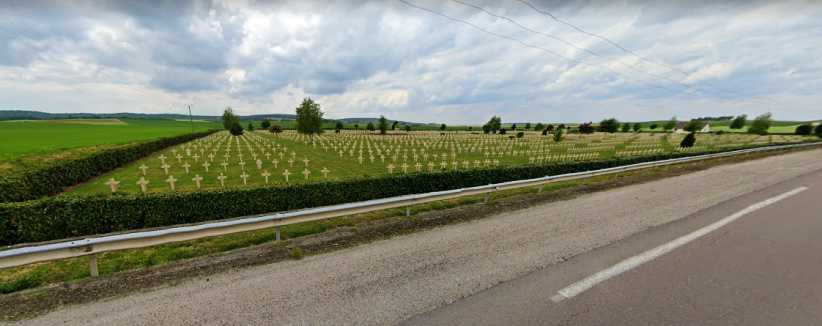
6,000 graves. My first sighting of a war graves cemetery was this one, totally devoted to French soldiers of the first world war.
That’s a Google Earth view of the paddock given over to war graves near Cormicy. The name of the cemetery is a long one, but a shorter name is Cimetiere Francais de Cormicy. Here’s the photo I took as I walked about looking in there:
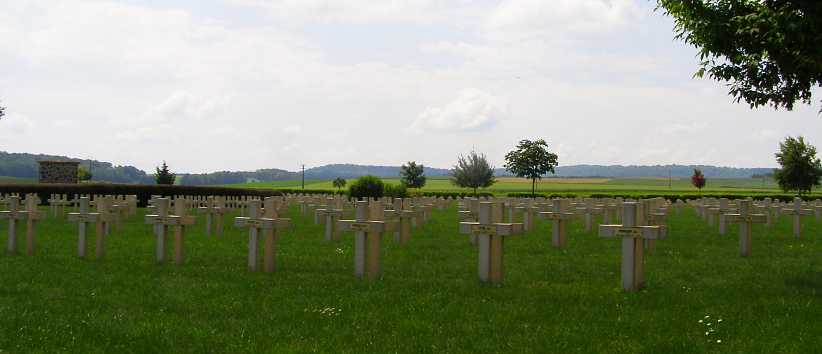
Lost youth. The plaques tell the story. The name, their age, dates of death ranging over three years or more.
Yes, this is the thing that I’d been convinced I wouldn’t bother with looking at when in this part of the world. People would ask if I would, but I would merely say that I saw all war as futility and I want no part in emphasising it or glorifying it. The sheer stupid waste is appalling as the youth of nations is thrown into costly battles being fought over things they know nothing about.
I don’t know what area this cemetery covers, maybe three acres. But I did a calculation and found that there’s about 6,000 graves. Reading the inscriptions, most of them tended to be between 18 and 22 years old. And I know this is just a small one. I drove on in a mood more reflective than normal.
And it wasn’t all that long before I found something else I’m not used to seeing – a canal with a lock in it. So it was captured, both sides of the road:
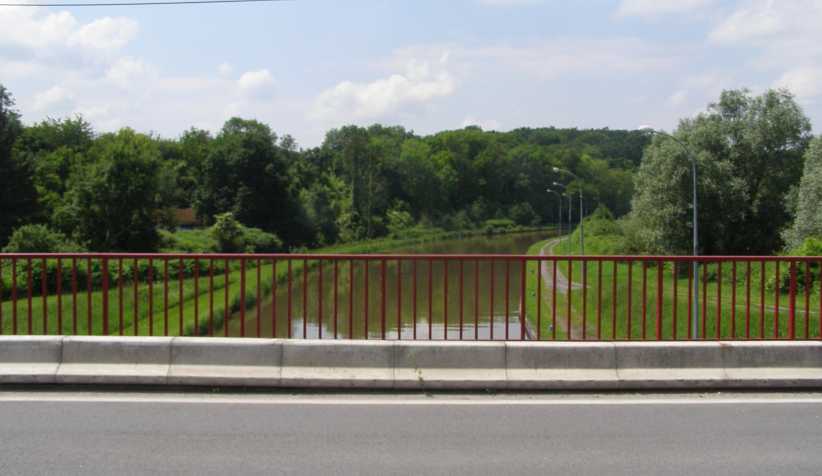
Canal country. Canals provide a means of transport in country like this, plenty of water, fairly level going, convenient before railways and automobiles intervened.
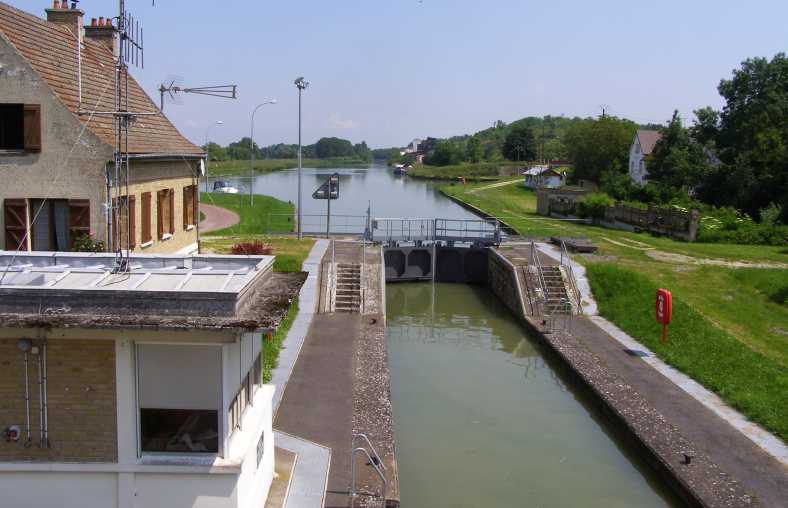
Locks too. This is at Berry au Bac where this lock provides the means of trafficking up or down the hill.
Some places along these roads did have bigger hills. Descending this one I spotted the horses and thought the scene worth a few pixels…
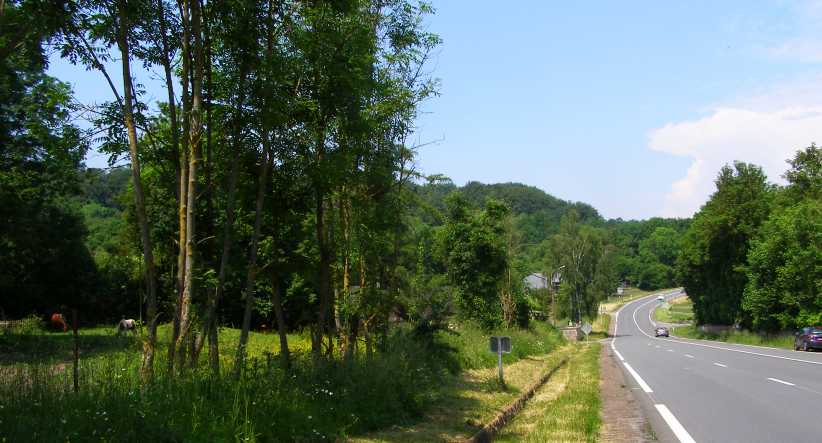
Pleasant surroundings. Down this hill at Festieux looked like a nice setting, the horses added to the picture.
Strangely enough, horses played a significant part in the next photo I took. But there was rather more of them and they weren’t your average horses at all, rather just little ones:
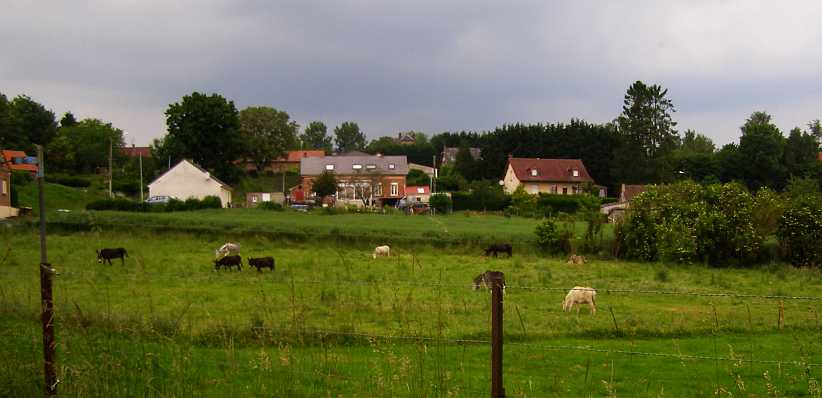
Little horses. On the edge of a village as I neared Saint Quentin I saw these little ponies in the paddock. I knew Sandra would have liked them.
And I got interested in photographing the greenery of the springtime farm production as I passed by. The first one was, I think, Spinach. But it’s hard to tell, it might be lettuce, it might even be cauliflower. Whatever it was, it had been well-watered by passing rains:
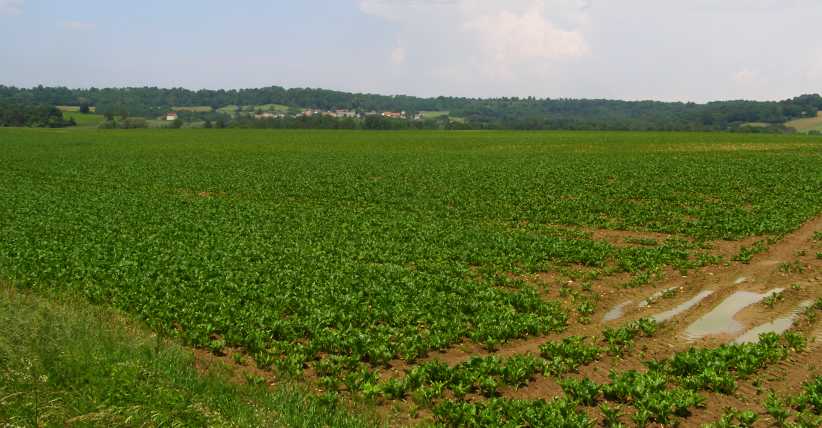
Green vegetables. Spinach, lettuce? I don’t know, I rather fancy it’s the former but you’d really need to taste it to find out. And it does look tasty.
There were also paddocks full of grain, coming up to ripen for the early summer harvest while in the background there are wind turbines making electricity:
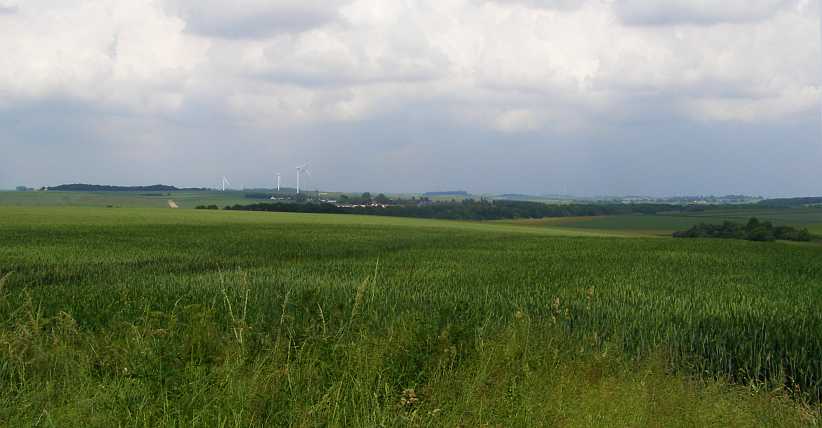
Grains. A hillside covered in crop reaching maturity. This stuff always appeals to me, I love to see the land producing.
I was taking a detour near Pontruet and I saw this sign:
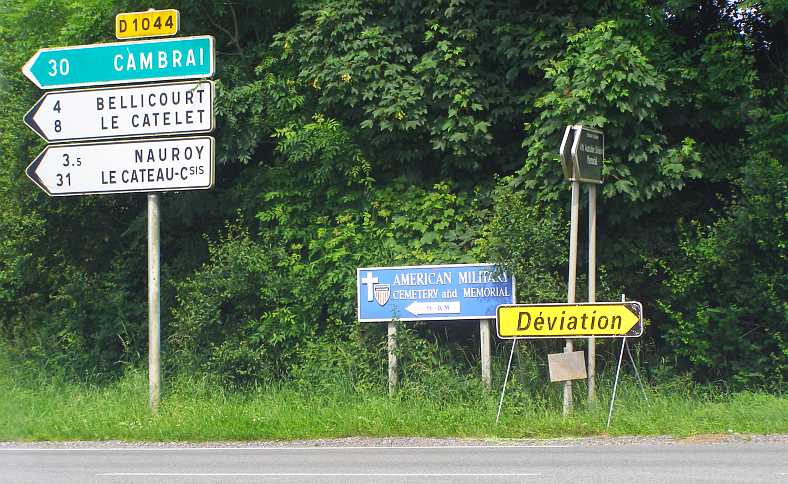
Sign spotted. The word ‘Australian’ on the sign meant I had to stop and take a look, didn’t it?
Pulling up outside the little cemetery devoted to Aussies who died here in the first world war I was impressed by the standard to which the maintenance is kept up.
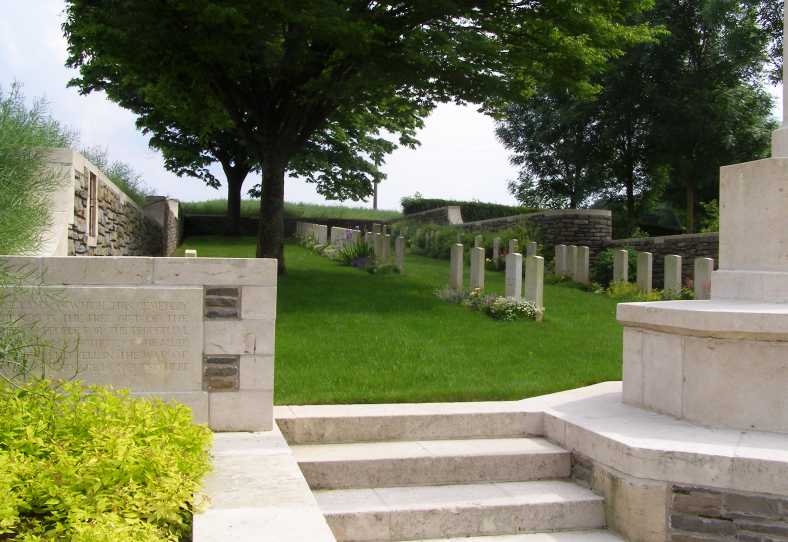
Little Aussie cemetery. There wasn’t many graves here, but they had their own area and it was perfectly maintained.
I looked, once again, at the headstones. I couldn't help but wonder about these, however:
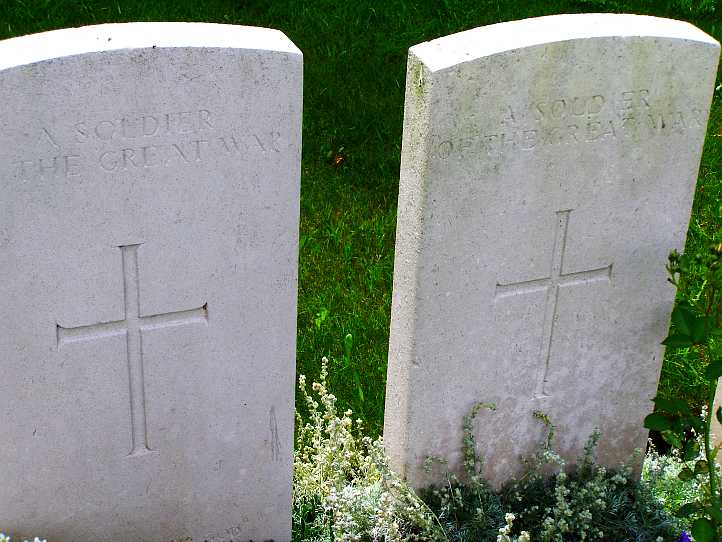
Nameless. Two of the graves had no names, it makes you wonder why.
It’s all so terrible and there’s lots more of it in this part of the world. Driving on as the day started to decline, I saw a sign pointing to Bapaume. This shouldn’t have surprised me at all.
The reason it stood out was it’s the name of one of the little towns near where I lived at the time. A main road rings a large area of what we call ‘Soldier Settlement’ farms. After the major wars the governments established areas where returning soldiers could start a farm as they assimilated into the more peaceful pursuits of life.
That road is called ‘Armistice Way’ and the towns are Bapaume, Amiens, Passchendaele, Pozieres and Fleurbaix, all scenes of battles of the ‘Great War’ in which Australians were involved. Some good friends live in Bapaume so I followed the signs to get pics for them…
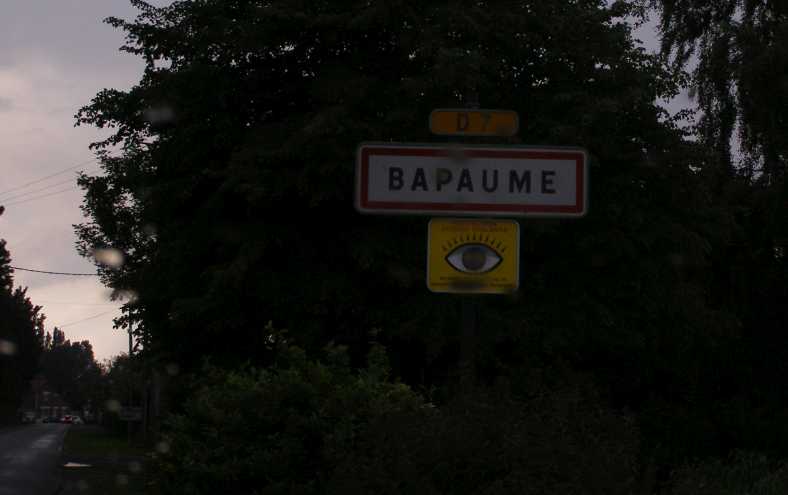
Bapaume. This sign welcomed me as the day was starting to wear on, it was raining.
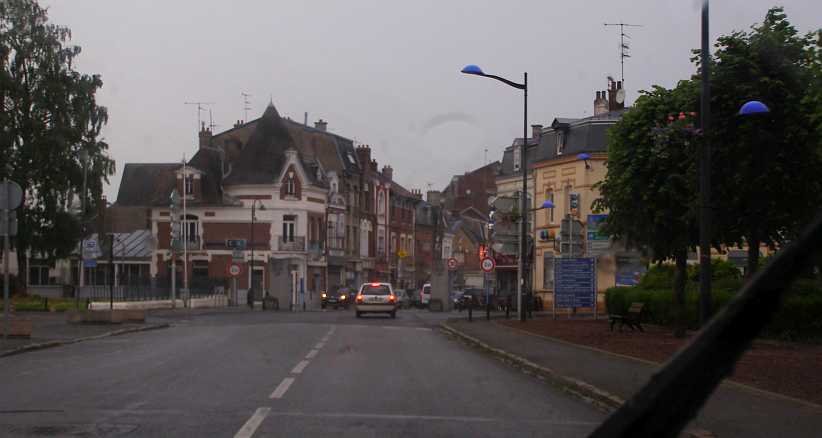
Bapaume architecture. Now that I look at the pics I realise that architecture in this old town must have been a major feature.
It’s a sizeable and very busy town, as can be seen. Parking’s at a premium in places like this and the French never seem to object to parking on the footpath!
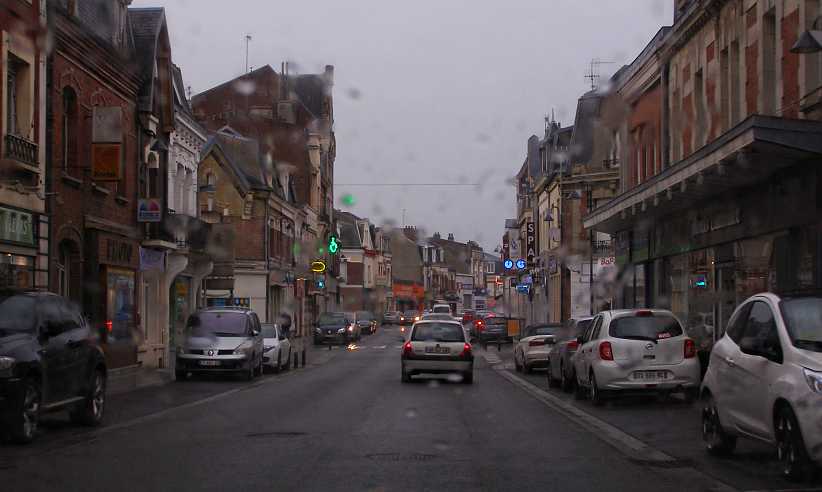
More atchitecture. The tall facades and fancy stonework all contribute to a picturesque village area.
I’d been checking on arrangements during the day and there were people I’d like to meet up with in Arras that evening. It wasn’t too far away, but I needed to settle into some accommodation so I could freshen up to join them. I found this hotel (and Google Earth photographed it for me) which filled the bill nicely:
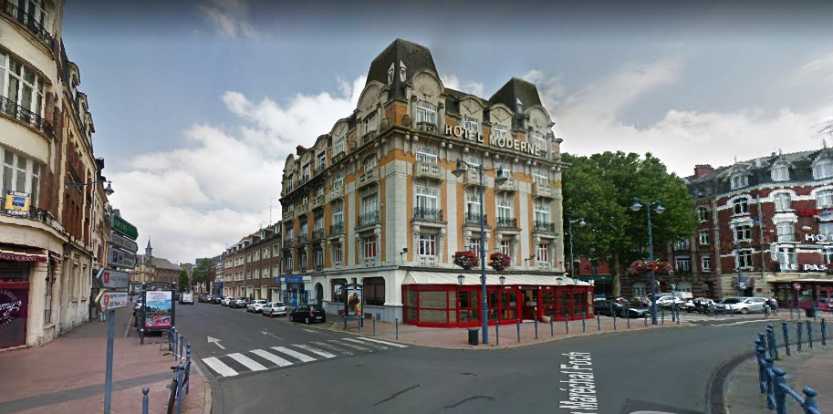
Hotel Moderne, Arras. I got a room on the third floor and looked forward to a comfortable night.
This bloodstained part of the world had got to me quite solidly during the afternoon. This Northern part of France and the adjacent Southern part of Belgium became the scene of terrible trench wars, nasty bombing attacks, waterborne invasions and every sort of military atrocity. Of course, only the massive graveyards remain today, everyone’s shaken hands and made up over it all and the misery was all for nought.
I had to shake those thoughts as I went off to meet up with the people recommended to me by folks at home. Late in the evening one young couple invited me around to their place for pleasant conversation and supper, they even asked me if I wanted to stay the night.
But no, I jumped back into the little Peugeot and drove around to the Hotel Moderne.
I’d now seen a lot of different parts of France and I would return in another ten or eleven days. Ahead of me lay a new adventure, a visit to the ‘Olde Dart’ and people who speak my language, people on forums I use and places I’ve heard about all my life. And driving on the side of the road I'm more used to, albeit with a car with the steering wheel on the wrong side.
There was the little matter, still, of driving to Dunkirk and finding the ferry terminal. An easy job...
6,000 graves. My first sighting of a war graves cemetery was this one, totally devoted to French soldiers of the first world war.
That’s a Google Earth view of the paddock given over to war graves near Cormicy. The name of the cemetery is a long one, but a shorter name is Cimetiere Francais de Cormicy. Here’s the photo I took as I walked about looking in there:
Lost youth. The plaques tell the story. The name, their age, dates of death ranging over three years or more.
Yes, this is the thing that I’d been convinced I wouldn’t bother with looking at when in this part of the world. People would ask if I would, but I would merely say that I saw all war as futility and I want no part in emphasising it or glorifying it. The sheer stupid waste is appalling as the youth of nations is thrown into costly battles being fought over things they know nothing about.
I don’t know what area this cemetery covers, maybe three acres. But I did a calculation and found that there’s about 6,000 graves. Reading the inscriptions, most of them tended to be between 18 and 22 years old. And I know this is just a small one. I drove on in a mood more reflective than normal.
And it wasn’t all that long before I found something else I’m not used to seeing – a canal with a lock in it. So it was captured, both sides of the road:
Canal country. Canals provide a means of transport in country like this, plenty of water, fairly level going, convenient before railways and automobiles intervened.
Locks too. This is at Berry au Bac where this lock provides the means of trafficking up or down the hill.
Some places along these roads did have bigger hills. Descending this one I spotted the horses and thought the scene worth a few pixels…
Pleasant surroundings. Down this hill at Festieux looked like a nice setting, the horses added to the picture.
Strangely enough, horses played a significant part in the next photo I took. But there was rather more of them and they weren’t your average horses at all, rather just little ones:
Little horses. On the edge of a village as I neared Saint Quentin I saw these little ponies in the paddock. I knew Sandra would have liked them.
And I got interested in photographing the greenery of the springtime farm production as I passed by. The first one was, I think, Spinach. But it’s hard to tell, it might be lettuce, it might even be cauliflower. Whatever it was, it had been well-watered by passing rains:
Green vegetables. Spinach, lettuce? I don’t know, I rather fancy it’s the former but you’d really need to taste it to find out. And it does look tasty.
There were also paddocks full of grain, coming up to ripen for the early summer harvest while in the background there are wind turbines making electricity:
Grains. A hillside covered in crop reaching maturity. This stuff always appeals to me, I love to see the land producing.
I was taking a detour near Pontruet and I saw this sign:
Sign spotted. The word ‘Australian’ on the sign meant I had to stop and take a look, didn’t it?
Pulling up outside the little cemetery devoted to Aussies who died here in the first world war I was impressed by the standard to which the maintenance is kept up.
Little Aussie cemetery. There wasn’t many graves here, but they had their own area and it was perfectly maintained.
I looked, once again, at the headstones. I couldn't help but wonder about these, however:
Nameless. Two of the graves had no names, it makes you wonder why.
It’s all so terrible and there’s lots more of it in this part of the world. Driving on as the day started to decline, I saw a sign pointing to Bapaume. This shouldn’t have surprised me at all.
The reason it stood out was it’s the name of one of the little towns near where I lived at the time. A main road rings a large area of what we call ‘Soldier Settlement’ farms. After the major wars the governments established areas where returning soldiers could start a farm as they assimilated into the more peaceful pursuits of life.
That road is called ‘Armistice Way’ and the towns are Bapaume, Amiens, Passchendaele, Pozieres and Fleurbaix, all scenes of battles of the ‘Great War’ in which Australians were involved. Some good friends live in Bapaume so I followed the signs to get pics for them…
Bapaume. This sign welcomed me as the day was starting to wear on, it was raining.
Bapaume architecture. Now that I look at the pics I realise that architecture in this old town must have been a major feature.
It’s a sizeable and very busy town, as can be seen. Parking’s at a premium in places like this and the French never seem to object to parking on the footpath!
More atchitecture. The tall facades and fancy stonework all contribute to a picturesque village area.
I’d been checking on arrangements during the day and there were people I’d like to meet up with in Arras that evening. It wasn’t too far away, but I needed to settle into some accommodation so I could freshen up to join them. I found this hotel (and Google Earth photographed it for me) which filled the bill nicely:
Hotel Moderne, Arras. I got a room on the third floor and looked forward to a comfortable night.
This bloodstained part of the world had got to me quite solidly during the afternoon. This Northern part of France and the adjacent Southern part of Belgium became the scene of terrible trench wars, nasty bombing attacks, waterborne invasions and every sort of military atrocity. Of course, only the massive graveyards remain today, everyone’s shaken hands and made up over it all and the misery was all for nought.
I had to shake those thoughts as I went off to meet up with the people recommended to me by folks at home. Late in the evening one young couple invited me around to their place for pleasant conversation and supper, they even asked me if I wanted to stay the night.
But no, I jumped back into the little Peugeot and drove around to the Hotel Moderne.
I’d now seen a lot of different parts of France and I would return in another ten or eleven days. Ahead of me lay a new adventure, a visit to the ‘Olde Dart’ and people who speak my language, people on forums I use and places I’ve heard about all my life. And driving on the side of the road I'm more used to, albeit with a car with the steering wheel on the wrong side.
There was the little matter, still, of driving to Dunkirk and finding the ferry terminal. An easy job...
Last edited by Ray Bell; May 26, 2020 at 10:51 PM.
Thread Starter
|
Captain
Joined: Oct 2005
Posts: 570
Likes: 8
From: The Summit, Queensland, Australia
My bookings on the ferries, both to and from England, were for midnight. These times were less expensive and less crowded, and I had nothing better to do each night so I might as well be on these ferries. I might add that I chose to go from Dunkirk because of the refugee smuggling issues of the time, people were hiding themselves in trucks and under trucks and possibly in cars in an effort to get to sanctuary in England. It seemed most of that problem was in Calais.
So when I awoke on June 8 I had plenty of time to get from Arras to Dunkirk...
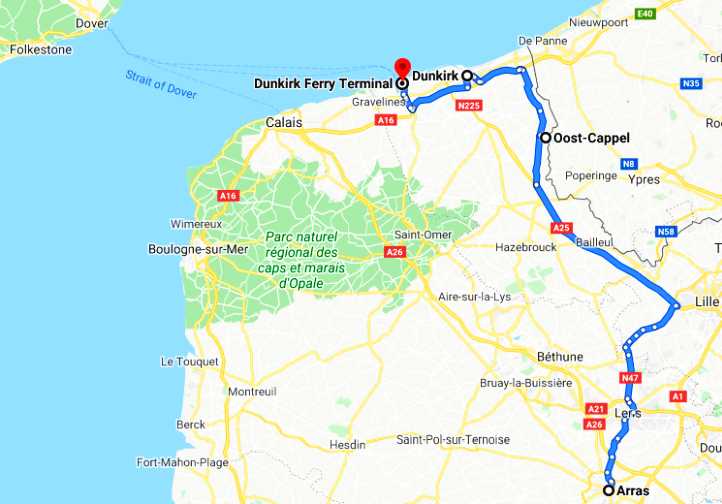
There seemed to be very little to do around there so I started driving. Of interest, it was at this time that the memory card glitch became obvious and so I changed memory cards and sweated that I’d be able to recover the pics I’d taken since Stuttgart.
The country was much the same as that between Reims and Arras, I didn’t bother taking many photos but I did get this one of a windmill:
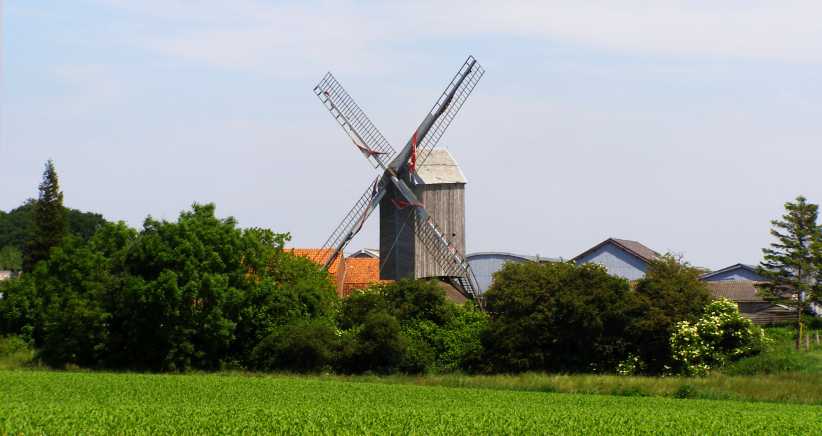
Old windmill. This seems to have been built in the same manner as the one seen in the Netherlands, the one called ‘Aurora’.
Because I expected a lower fuel price I diverted through Oost Cappel to a little village in Belgium called Beveren, barely a kilometre out of France, and found the border easy to cross…
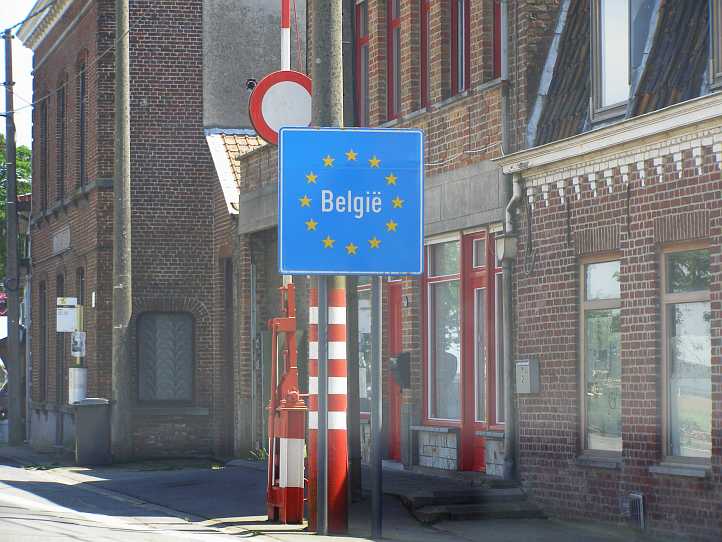
Easy borders. I was still marvelling at the ease of crossing borders within the European Union, just drive past the sign in almost every case!
…merely a sign marking its presence, though there’s a little brick border post across the road which Google Earth have kindly photographed for me, anticipating my slack shutter-use on this day:
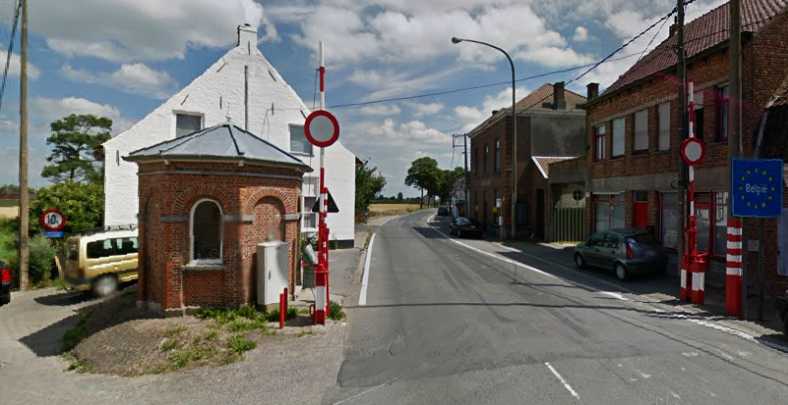
Sign of times gone by. The border as Google Earth pictured it in 2013, the sign above on the right, and the gates which are probably rusted in place now, and that little brick building to the left where border guards once held their positions.
At Beveren I did find low-cost fuel, at what I think was the solitary bowser in the town, and left it to the gentleman at this establishment…
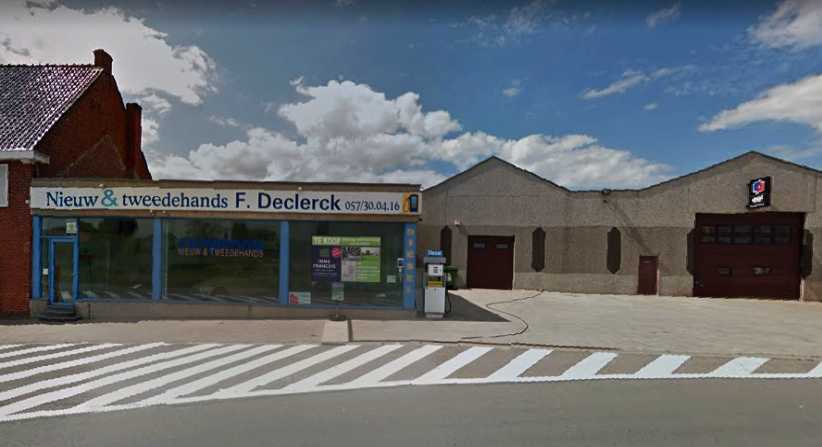
Cheap fuel. It was at this place where I bought the fuel, the Google Earth image appearing to show that it’s no longer in business. This image is from 2019.
…to fill the little Peugeot’s tank. I noted that he had trouble getting the nozzle into the filler neck but thought nothing more of it. And as I crossed the border back into France:
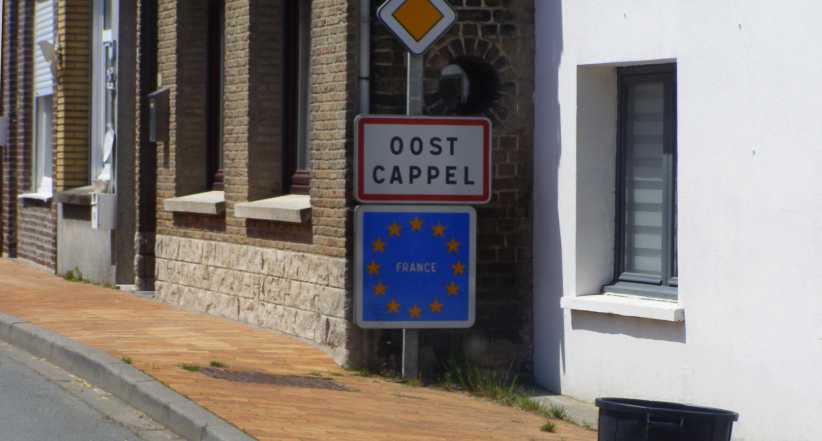
Back to France. Strictly speaking this was my sixth entry into France on this trip. The sign is very low-key.
A simple sign telling you it’s a different country. I drove on, not much to see, not much photographed apart from this bit of flooding:
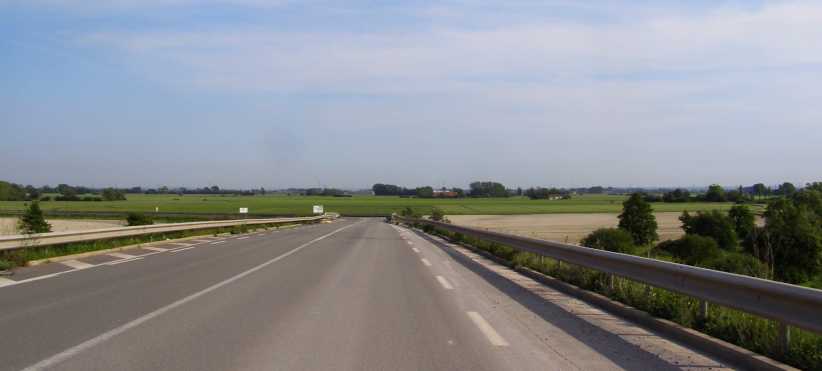
More flooding. Not bad flooding, but it’s run the banks. I wasn’t all that excited about taking photos on this day.
It was only 24kms from Oost Cappel to Dunkirk, when I got there I found a parking spot and looked around for somewhere I could get a map to find my way to the ferry terminal and not have too many surprises. But the real situation was that I had half a day up my sleeve.
Getting back into the car, having found a tourist map, I drove around a fair bit, in short I was at a ‘loose end’. Noting the industrial and, principally, portside industry that was prominent, I did a ‘dry run’ to the DFDS terminal to ensure I would know where I had to go when the time came.
And when I started to feel that it was time to eat I found the McDonalds and went in there. It was a slow day, a very slow day. I made a few phone calls and went online to check forums, but the hours took a while to go away.
I got this shot of the Carrefour Markets in town, it was very quiet at the time…
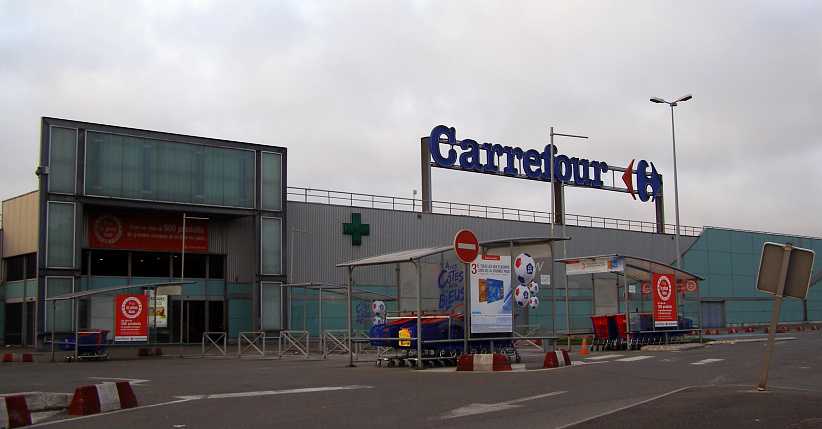
Carrefour market. Memories of the good time Sandra and I had shopping at Carrefour’s four weeks earlier might have contributed to me wanting to get this photo. Or maybe that I just wanted to be able to remember the name as I hadn’t photographed that one.
Throughout the time I’d been driving around Europe I kept seeing the Citroen Cactus and marvelled at how silly they looked with that plastic/rubber panel across the doors. Later a friend in Australia said he thought it looked like they had a mattress glued on the side!
Anyway, I got this pic of a purple one, on which the panels didn’t contrast as badly as it did on lighter-coloured versions which seem more common. Even without the high contrast, I still don’t like it:
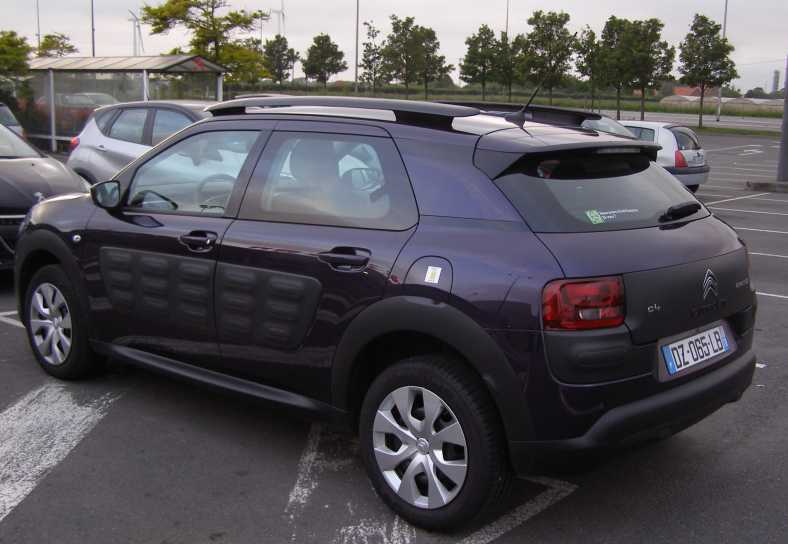
Cactus. Very popular in France, this model didn’t appeal to me aesthetically at all. Why has it got that panelling on the side?
With my lack of camera use this day I failed to capture the desolate-looking surroundings of the greater port area. Google Earth to the rescue again, they did and I’ve captured this pic showing the sandy country and the rubbish growth it fosters, and just a small part of the endless piles of containers.
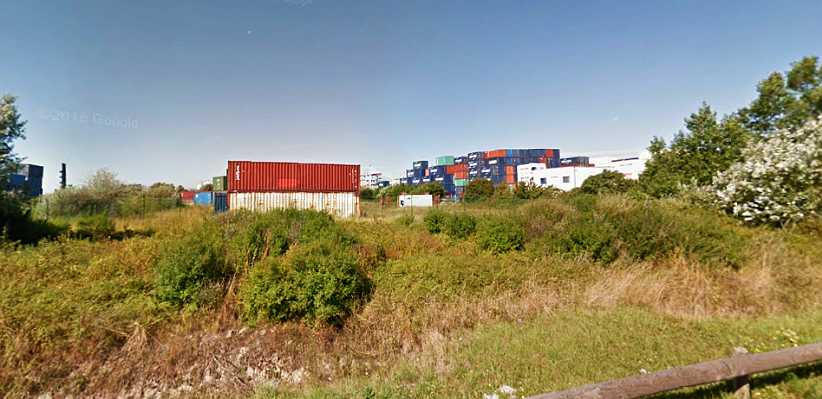
Desolate. The areas along the roads leading to the ports were not attractive at all. Windswept, too, I would suggest, and you’d never be able to count all the containers in paved and fenced areas.
As late evening came I eventually I made my final trip to the DFDS establishment at the port…
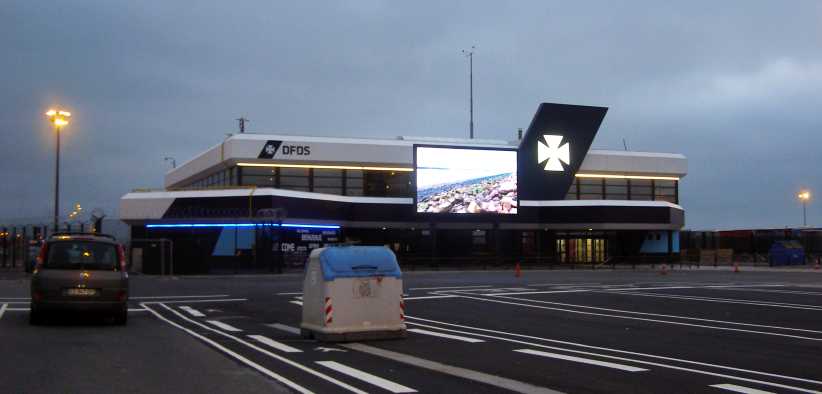
The way to England. The DFDS terminal, within which the British Customs and Immigration people have their drive-through checking system.
The fun came when I approached the British Customs office. Which seemed somewhat strange after driving from country to country all over Europe with very few opportunities to show my passport. Talking to the lady there I made a big mistake, I mentioned that there should have been two of us but that my wife had flown home.
This raised suspicions with her immediately. A fairly long discussion ensued in which she was trying to tell me she knew that I’d had a blue with my wife, she’d shot off home and our marriage was over, that I was going to stay in England and get a job illegally.
It was touch and go for a while, but eventually I happened to make a chance comment that made sense to her. “Why didn’t you say so?” she said. And stamped my passport.
Then it was time to queue and await the clearing of the ferry. All sorts of vehicles use these ferries and lots of them are trucks.
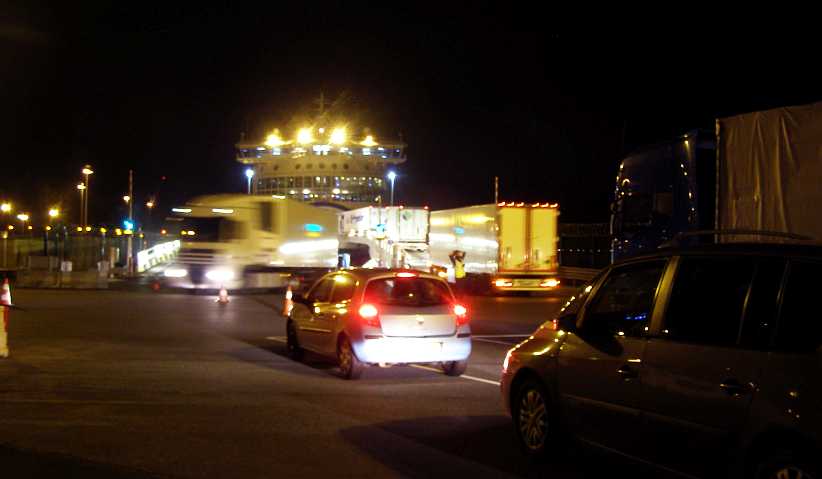
Waiting our turn. Alongside other cars and trucks, I awaited the emptying of the vehicle decks of the ferry.
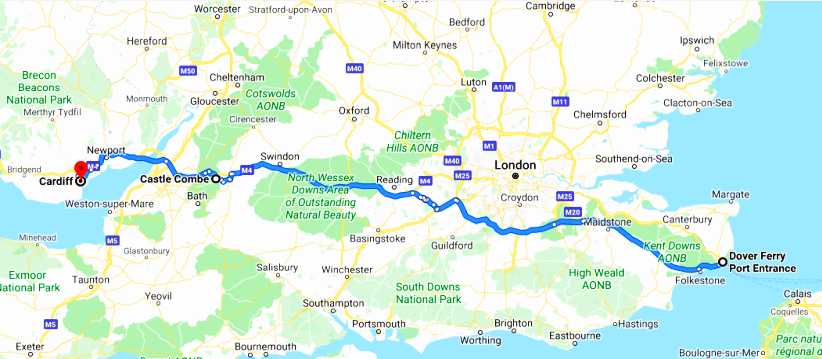
In time we all drove down into the bowels of the ferry, left our cars behind and went up onto the decks. The throbbing of the propellers began and a couple of hours later we were docking in Dover. My planning here was to skirt around the South of London before any real traffic started to hum, and then head for Cardiff where Roger had a bunk ready for me for a couple of nights.
So my path across England looked like this:
And I definitely missed any early morning London ‘going to work’ traffic, though I did delay things with one additional unplanned stop...
So when I awoke on June 8 I had plenty of time to get from Arras to Dunkirk...
There seemed to be very little to do around there so I started driving. Of interest, it was at this time that the memory card glitch became obvious and so I changed memory cards and sweated that I’d be able to recover the pics I’d taken since Stuttgart.
The country was much the same as that between Reims and Arras, I didn’t bother taking many photos but I did get this one of a windmill:
Old windmill. This seems to have been built in the same manner as the one seen in the Netherlands, the one called ‘Aurora’.
Because I expected a lower fuel price I diverted through Oost Cappel to a little village in Belgium called Beveren, barely a kilometre out of France, and found the border easy to cross…
Easy borders. I was still marvelling at the ease of crossing borders within the European Union, just drive past the sign in almost every case!
…merely a sign marking its presence, though there’s a little brick border post across the road which Google Earth have kindly photographed for me, anticipating my slack shutter-use on this day:
Sign of times gone by. The border as Google Earth pictured it in 2013, the sign above on the right, and the gates which are probably rusted in place now, and that little brick building to the left where border guards once held their positions.
At Beveren I did find low-cost fuel, at what I think was the solitary bowser in the town, and left it to the gentleman at this establishment…
Cheap fuel. It was at this place where I bought the fuel, the Google Earth image appearing to show that it’s no longer in business. This image is from 2019.
…to fill the little Peugeot’s tank. I noted that he had trouble getting the nozzle into the filler neck but thought nothing more of it. And as I crossed the border back into France:
Back to France. Strictly speaking this was my sixth entry into France on this trip. The sign is very low-key.
A simple sign telling you it’s a different country. I drove on, not much to see, not much photographed apart from this bit of flooding:
More flooding. Not bad flooding, but it’s run the banks. I wasn’t all that excited about taking photos on this day.
It was only 24kms from Oost Cappel to Dunkirk, when I got there I found a parking spot and looked around for somewhere I could get a map to find my way to the ferry terminal and not have too many surprises. But the real situation was that I had half a day up my sleeve.
Getting back into the car, having found a tourist map, I drove around a fair bit, in short I was at a ‘loose end’. Noting the industrial and, principally, portside industry that was prominent, I did a ‘dry run’ to the DFDS terminal to ensure I would know where I had to go when the time came.
And when I started to feel that it was time to eat I found the McDonalds and went in there. It was a slow day, a very slow day. I made a few phone calls and went online to check forums, but the hours took a while to go away.
I got this shot of the Carrefour Markets in town, it was very quiet at the time…
Carrefour market. Memories of the good time Sandra and I had shopping at Carrefour’s four weeks earlier might have contributed to me wanting to get this photo. Or maybe that I just wanted to be able to remember the name as I hadn’t photographed that one.
Throughout the time I’d been driving around Europe I kept seeing the Citroen Cactus and marvelled at how silly they looked with that plastic/rubber panel across the doors. Later a friend in Australia said he thought it looked like they had a mattress glued on the side!
Anyway, I got this pic of a purple one, on which the panels didn’t contrast as badly as it did on lighter-coloured versions which seem more common. Even without the high contrast, I still don’t like it:
Cactus. Very popular in France, this model didn’t appeal to me aesthetically at all. Why has it got that panelling on the side?
With my lack of camera use this day I failed to capture the desolate-looking surroundings of the greater port area. Google Earth to the rescue again, they did and I’ve captured this pic showing the sandy country and the rubbish growth it fosters, and just a small part of the endless piles of containers.
Desolate. The areas along the roads leading to the ports were not attractive at all. Windswept, too, I would suggest, and you’d never be able to count all the containers in paved and fenced areas.
As late evening came I eventually I made my final trip to the DFDS establishment at the port…
The way to England. The DFDS terminal, within which the British Customs and Immigration people have their drive-through checking system.
The fun came when I approached the British Customs office. Which seemed somewhat strange after driving from country to country all over Europe with very few opportunities to show my passport. Talking to the lady there I made a big mistake, I mentioned that there should have been two of us but that my wife had flown home.
This raised suspicions with her immediately. A fairly long discussion ensued in which she was trying to tell me she knew that I’d had a blue with my wife, she’d shot off home and our marriage was over, that I was going to stay in England and get a job illegally.
It was touch and go for a while, but eventually I happened to make a chance comment that made sense to her. “Why didn’t you say so?” she said. And stamped my passport.
Then it was time to queue and await the clearing of the ferry. All sorts of vehicles use these ferries and lots of them are trucks.
Waiting our turn. Alongside other cars and trucks, I awaited the emptying of the vehicle decks of the ferry.
In time we all drove down into the bowels of the ferry, left our cars behind and went up onto the decks. The throbbing of the propellers began and a couple of hours later we were docking in Dover. My planning here was to skirt around the South of London before any real traffic started to hum, and then head for Cardiff where Roger had a bunk ready for me for a couple of nights.
So my path across England looked like this:
And I definitely missed any early morning London ‘going to work’ traffic, though I did delay things with one additional unplanned stop...
Last edited by Ray Bell; May 27, 2020 at 09:14 PM.
Thread Starter
|
Captain
Joined: Oct 2005
Posts: 570
Likes: 8
From: The Summit, Queensland, Australia
Once again I've learned a little more about something I've posted a little while ago and I've added the information into that post...
However, for those who are reading as I post, I'll post this here and leave it for a few days so you don't have to go back and look at the revised post to know about it.
It's about the Arzens streamlined car in the Schlumpf collection, which was built on a 1928 Buick chassis. I couldn't find out what engine was fitted to it and I noted that fact, but now I've had a response from someone on another forum (the AACA forum) and this is what I'm now able to pass on:
Incredibly, it seems that the running gear was all from a 1928 Buick 'Standard Six', possibly bored out from the original 207 cubic inches to reach the 214 cubic inches mentioned on some websites.

Inside. From another website I've copied this picture which shows the original gearlever, bent to suit, and the handbrake lever also bent to suit. Tortured would be a better description, I'd say. And the instrument cluster is original 1928 Buick too, very old-fashioned even ten years later when this car was built, though the steering wheel looks a bit more modern, probably fifties.
Moving into the next stage... Dover to Cardiff and Bristol:As the ferry crossed the Channel I wandered about and just waited for Dover to come into view. It was dark, of course, and I was to be denied a view of the white cliffs, something I would like to have seen. In time we docked, in our turn we got into our cars and drove off onto solid land. I was, finally, in England.
I made it around the ring roads South of London before I even thought about stopping, but in due course I did pull up and grab a bit of a sleep. I guess I got about three hours, maybe a bit more, then I drove on. I was on the M4, which had three lanes in each direction, and progressing rapidly towards and then I saw a sign which said ‘Castle Combe Circuit.’ That was something I wasn’t expecting to see.
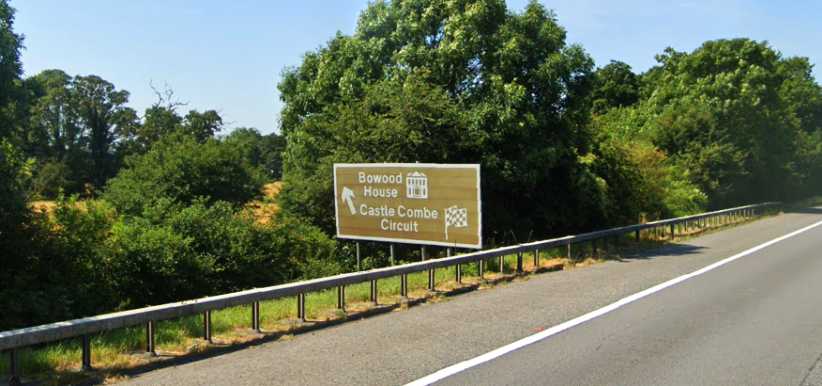
The sign. It was a surprise to me to see this sign, but with time up my sleeve there was no excuse not to take the side-road and have a look.
It wasn’t yet quite 8am and I was only about 60kms from Roger’s home in Cardiff, so I had some time on my hands. I took the turn onto the A350 which goes through Chippenham, but I didn’t turning off onto a minor road and that took me through a place called Tiddleywink. No, I’m not kidding, that was what the place was called. Then came Yatton Keynell and then came the circuit. At this early hour there were a few people around unloading cars from trailers…
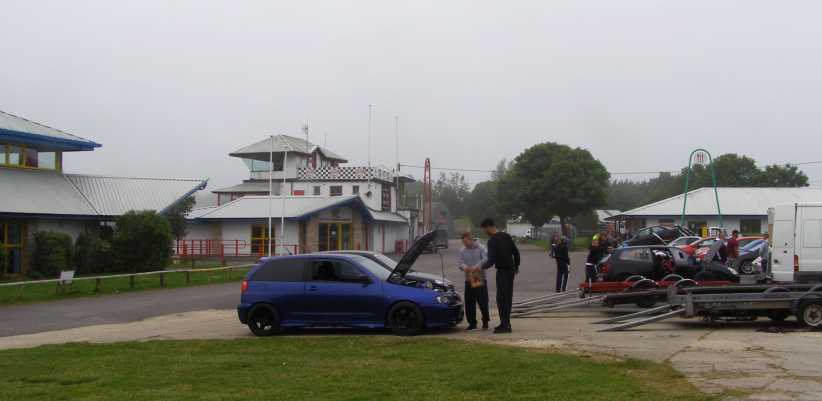
Hot hatches. The modern world is full of ‘hot hatches’ and they seem to predominate in lower levels of motor sport, club racing and track days. And here were some more.
Not only the cars, but particularly the trailers were of interest to me. In Australia the trailers tend to use wheels from popular cars and chassis are made from steel tubing, not pressings designed for the job. I had to have a closer look at all of this. And this was different again:
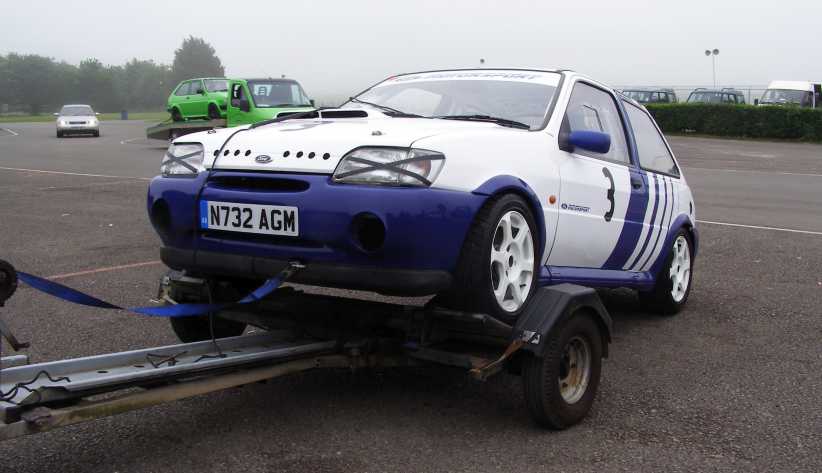
Ford riding high. This Ford has its drive wheels on the rig and rides along the highway with its rear wheels carrying their normal load, I assume the lighting is rigged up to the towcar too. A good setup.
Others were still arriving, like the one on the green truck in the background above, obviously it was going to be a busy morning. But I had a higher priority for my thoughts.
In the mist I couldn’t see much of the circuit, and I wanted, if possible, to do a lap. Either driving or as a passenger didn’t matter. I approached the people in the office and one of the officials was due to do his morning inspection lap and told me I could go with him if I waited while he completed some other task. This Google Earth picture shows the circuit, these days surrounding acres of solar panels:
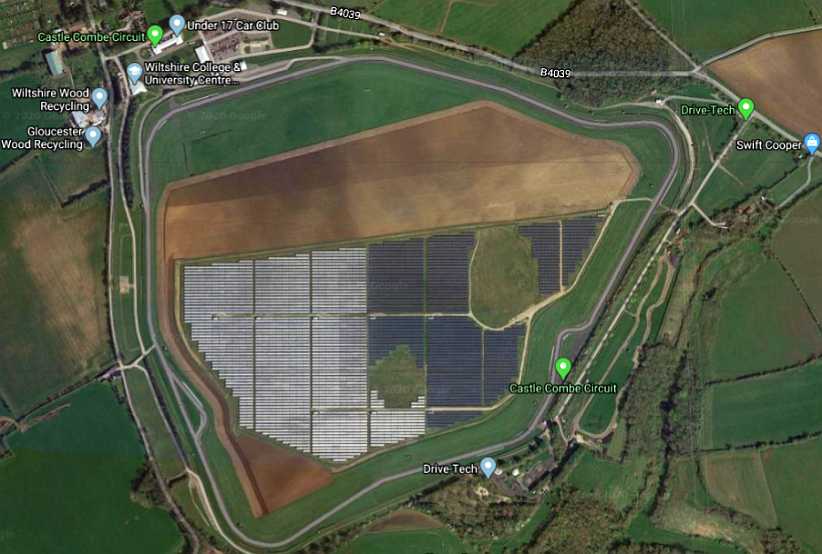
Then it was time and we got out there onto this very flat and apparently simple circuit. It was built around an airfield from World War 2, used principally for pilot training. Like Mallala in South Australia, the airstrips were grass and the circuit has been built on the sealed roads around them. After the war the area was used as a refugee camp for Polish people, but by 1950 they were gone and family contacts with the motor industry led to it becoming a racing circuit.
A racing circuit with a crop growing in the middle! This is how it looked this misty morning as we started our lap:
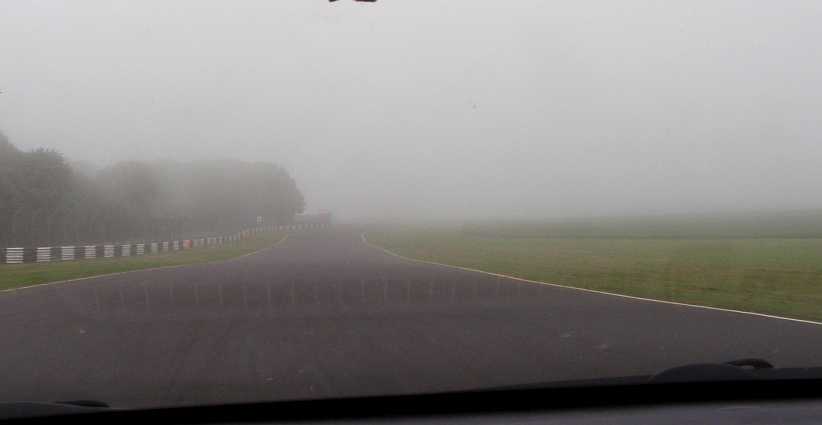
Onto the circuit. Slipping into the passenger’s seat of a course vehicle I had my camera at the ready as we began the lap. Immediately I noticed the wheat crop growing in the middle of the circuit.
It was explained to me that the crop was a part of the deal they had with the local villagers to enable the racing circuit to continue near their village. Already they’d endured very rigid noise restriction rules and I was told that solar panels were coming to provide power to the locals in the near future. As can be seen in the Google Earth view, they’re in place now.
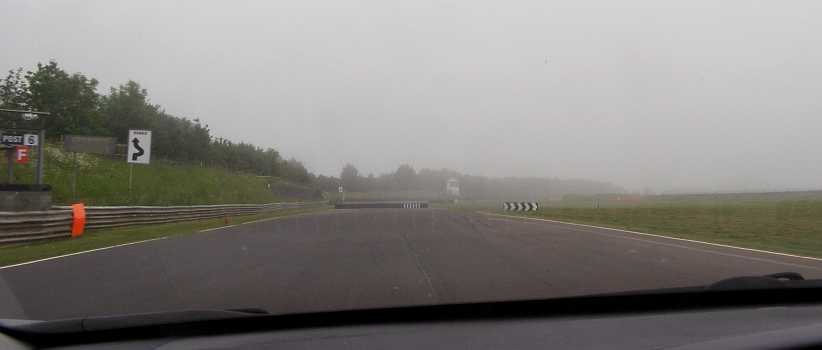
Chicanes. With little in the way of tight corners, the original circuit didn’t have the two chicanes in it. Here we approach the first of them.
The best lap time prior to the installation of the chicanes was over 130mph by a Tyrrell F1 (or F3000) car. But a fatal accident where a wheel came off a TVR and flew into the crowd led to the chicanes being put in to reduce speeds at the fastest parts of the course.
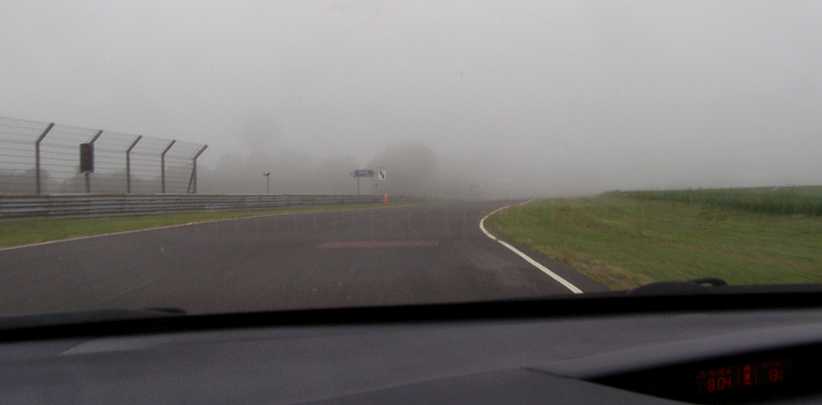
More right turn. Naturally on a clockwise circuit there’s a lot of turning right, on this one it’s even more obvious because there’s not much else apart from the chicanes.
My lap was soon over and I returned to the paddock area where yet another arrival showed the difference in car trailers between home and here:
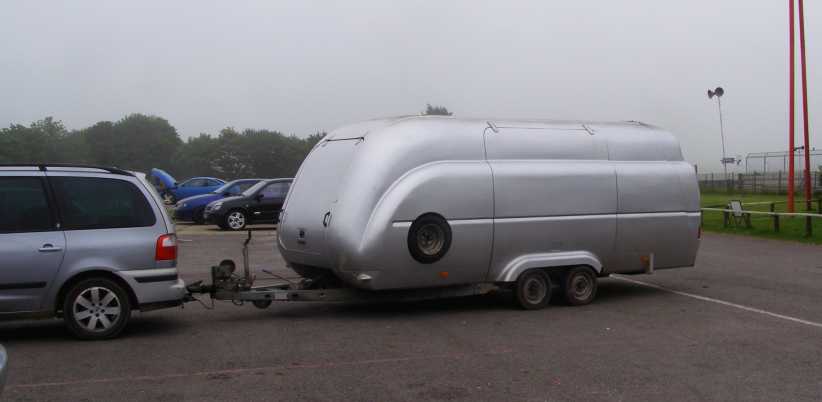
Enclosed trailer. A neatly streamlined-looking trailer was among the newcomers as I completed my exploratory lap.
It was time to get moving again. Back to the M4 I drove and then turned West again. As mentioned, it wasn’t far and the signs were proving that:
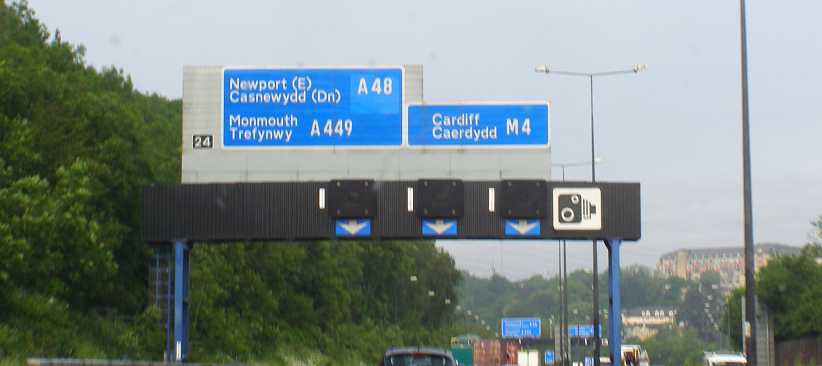
Interpretations. Cardiff, of course, is in Wales. The Welsh have strange new words that I don’t understand and they started to show on the road signs.
More and more the Welsh names cropped up. It wasn’t daunting the road users, though, as traffic got a bit heavier…
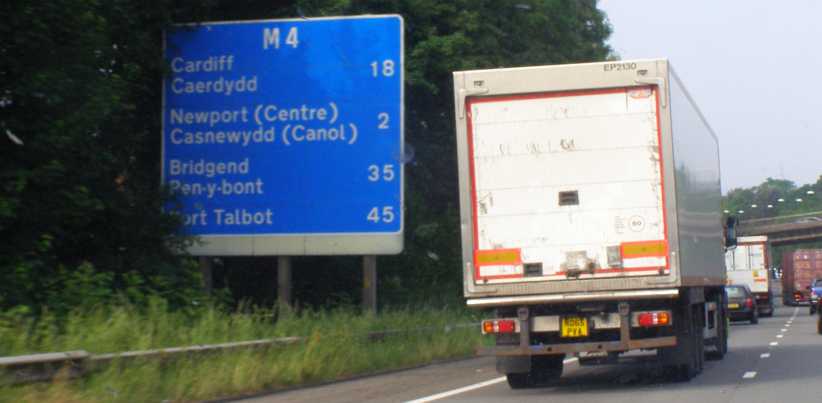
Welsh names. So I was really going to Caerdydd, but that wasn’t the worst of it.
…and the spellng got stranger, even though the pronunciation turned out to be a simple, “Gwassanathigh”:
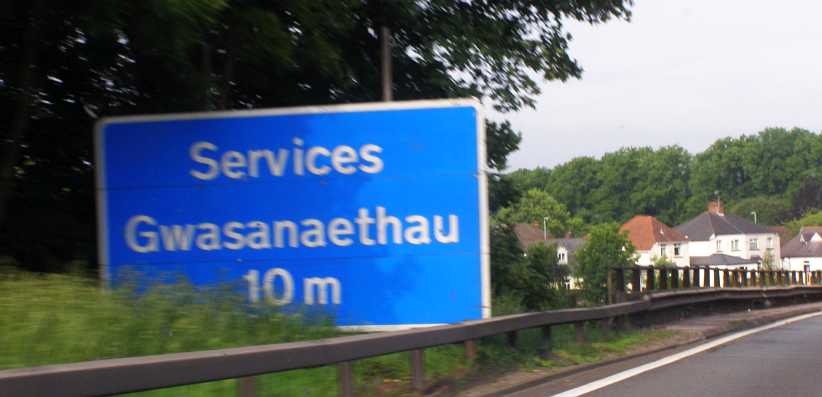
More Welsh names. Not too hard, I guess, but certainly not what I was used to. But I should be more reasonable seeing that I’d just driven through so many countries with their own ‘foreign’ languages.
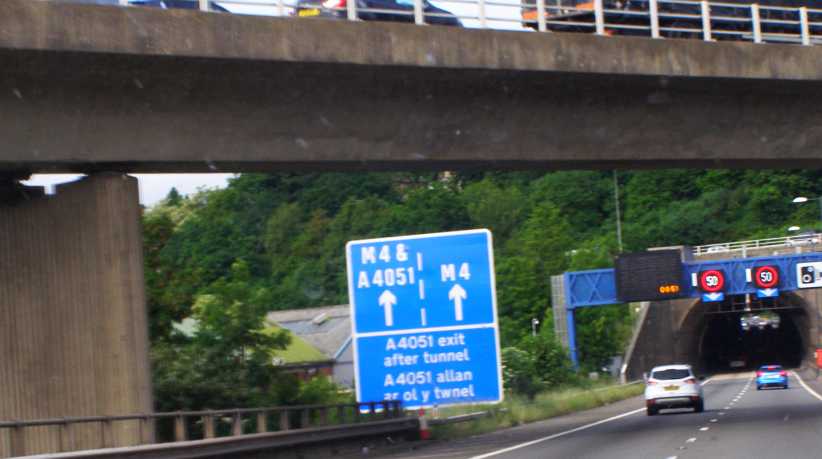
A tunnel too. I knew I had to cross a bridge to get to Wales, but first there was this tunnel.
The bridge was fairly new, only twenty years old when I crossed it. Then it was known as the ‘Second Severn Crossing” but later it was renamed the “Prince of Wales Bridge.” Overall it’s just over five kilometres long.
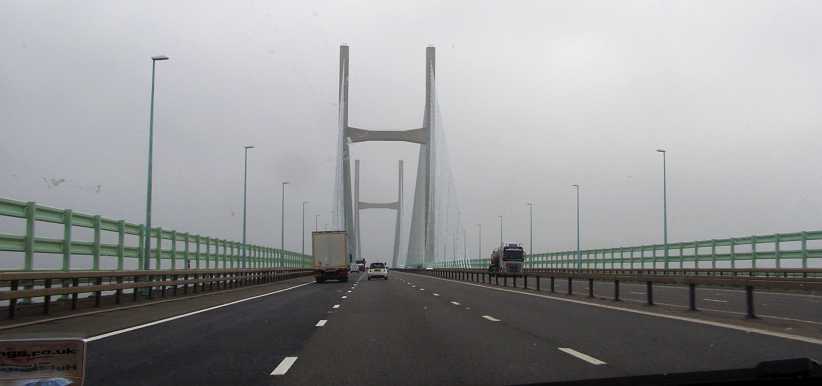
Second Severn Crossing. Like other bridges I’d crossed in my travels, this was a huge piece of infrastructure and in its own way spectacular.
I drove on to Roger’s place and unloaded my gear. Roger visited Australia back in 2003 or 2004 and we met in Sydney so I could show him around the Warwick Farm circuit. Or what little was left of it. At the same time I introduced him to my friends Malcolm and Gladys Smith and, on learning he was going to Cairns, arranged for him to meet Bob Levett there.
He and his wife, Jean, were good company and very knowledgeable. It was going to be nice to spend a couple of days in their company and to learn more from them. But there was a meeting arranged for me to join with another three contributors to the Nostalgia Forum back in England at Bristol and before too long we were headed that way.
As Roger drove me there at one time we were following alongside the River Avon and this old suspension bridge came into view:
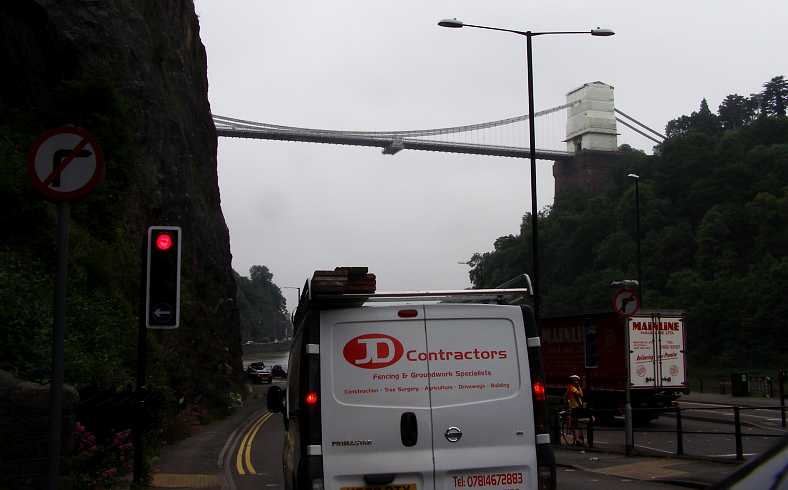
Clifton Suspension Bridge. This bridge over the River Avon was a sight worth recording on the way to Bristol. It dates back to 1864.
The meeting was at a pub built in an old wharf area and it didn’t take long for us to become absorbed in conversation about our favourite subjects. These boys are all very knowledgeable about motor racing, all good researchers and just love the subject:
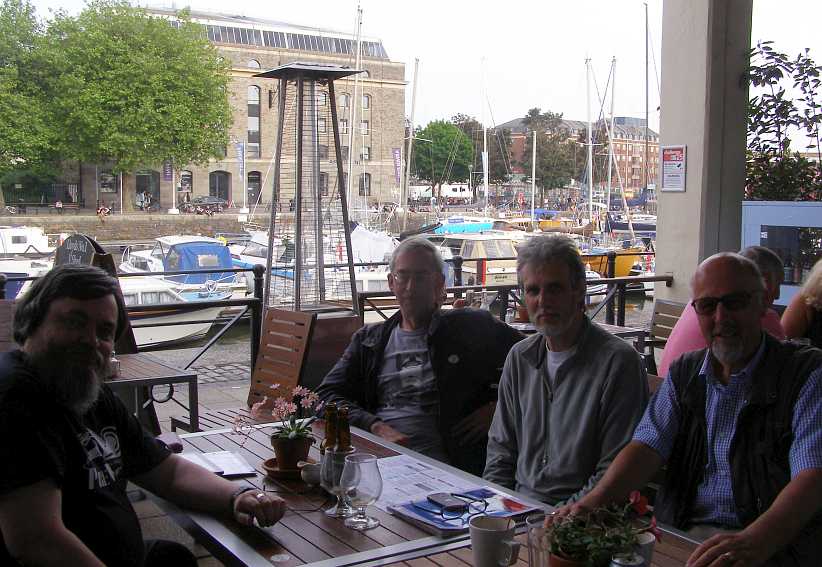
The Bristol boys. Richard Armstrong at left joined Tim Murray, Tony Pashley and Roger to make a great afternoon of it for me.
Of course, with the excited discussions happening and my very non-local accent, one of the waitresses came over and started asking me questions…
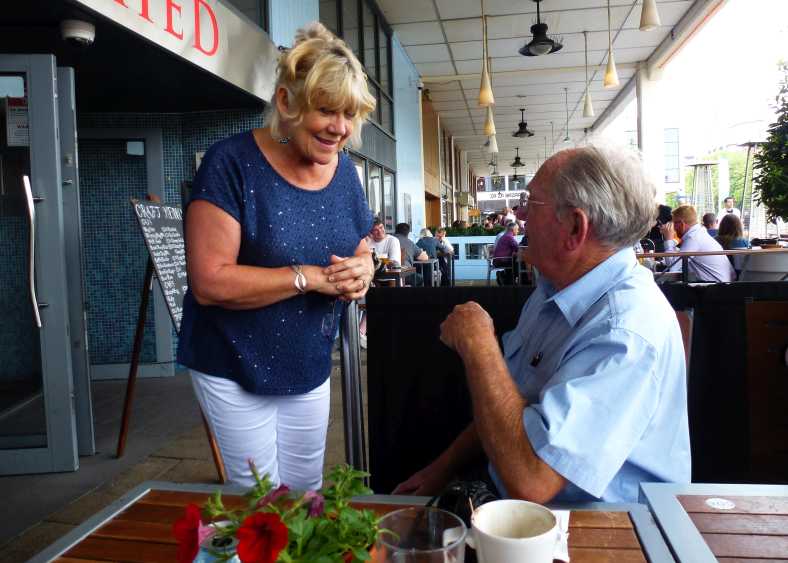
The waitress. An inquisitive young lady who joined in the conversation as she quizzed me about where I was from.
We couldn’t leave the area, which is famous for its tall ships and history in shipping, without having a bit more of a look around. This bridge merits some inspection:
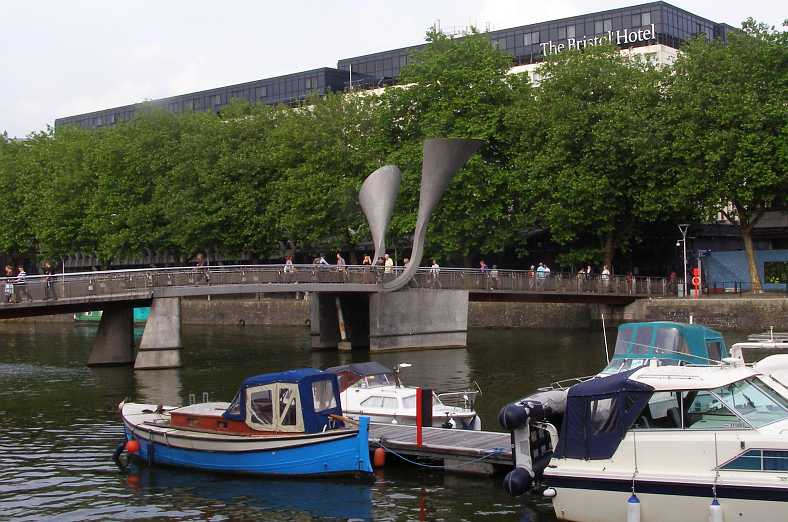
Opening bridge. The trumpet-shaped pieces are cleverly-designed counterweights as are needed so the opening span can operate.
But the principal interest was in the couple of ships nearby…
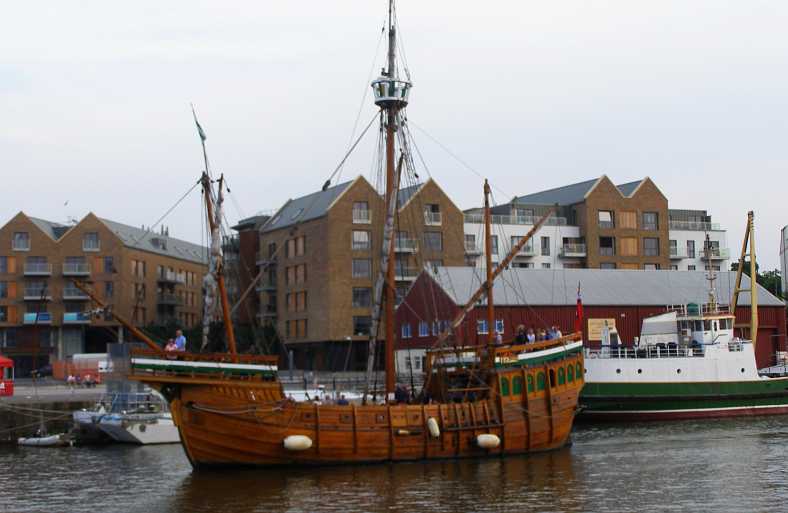
Little sailing ship. Ships like this have been coming to this port for hundreds of years.
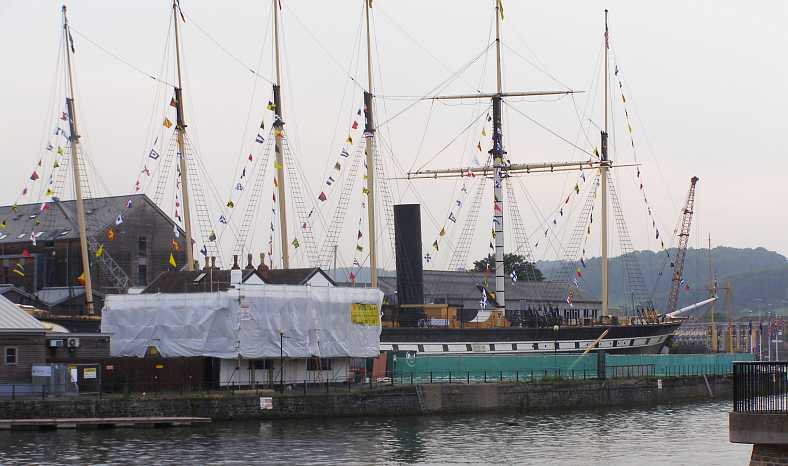
Restoration. A rather larger ship is seen here, it’s being restored by the local artisans.
Like so many other occasions on this trip, there was some sadness that we all had to bid each other farewell. Not Roger, of course, as I went home with him and enjoyed a fine meal and comfortable bed provided by he and Jean.
In the morning we were to have a rather different outing…
However, for those who are reading as I post, I'll post this here and leave it for a few days so you don't have to go back and look at the revised post to know about it.
It's about the Arzens streamlined car in the Schlumpf collection, which was built on a 1928 Buick chassis. I couldn't find out what engine was fitted to it and I noted that fact, but now I've had a response from someone on another forum (the AACA forum) and this is what I'm now able to pass on:
Incredibly, it seems that the running gear was all from a 1928 Buick 'Standard Six', possibly bored out from the original 207 cubic inches to reach the 214 cubic inches mentioned on some websites.
Inside. From another website I've copied this picture which shows the original gearlever, bent to suit, and the handbrake lever also bent to suit. Tortured would be a better description, I'd say. And the instrument cluster is original 1928 Buick too, very old-fashioned even ten years later when this car was built, though the steering wheel looks a bit more modern, probably fifties.
Moving into the next stage... Dover to Cardiff and Bristol:As the ferry crossed the Channel I wandered about and just waited for Dover to come into view. It was dark, of course, and I was to be denied a view of the white cliffs, something I would like to have seen. In time we docked, in our turn we got into our cars and drove off onto solid land. I was, finally, in England.
I made it around the ring roads South of London before I even thought about stopping, but in due course I did pull up and grab a bit of a sleep. I guess I got about three hours, maybe a bit more, then I drove on. I was on the M4, which had three lanes in each direction, and progressing rapidly towards and then I saw a sign which said ‘Castle Combe Circuit.’ That was something I wasn’t expecting to see.
The sign. It was a surprise to me to see this sign, but with time up my sleeve there was no excuse not to take the side-road and have a look.
It wasn’t yet quite 8am and I was only about 60kms from Roger’s home in Cardiff, so I had some time on my hands. I took the turn onto the A350 which goes through Chippenham, but I didn’t turning off onto a minor road and that took me through a place called Tiddleywink. No, I’m not kidding, that was what the place was called. Then came Yatton Keynell and then came the circuit. At this early hour there were a few people around unloading cars from trailers…
Hot hatches. The modern world is full of ‘hot hatches’ and they seem to predominate in lower levels of motor sport, club racing and track days. And here were some more.
Not only the cars, but particularly the trailers were of interest to me. In Australia the trailers tend to use wheels from popular cars and chassis are made from steel tubing, not pressings designed for the job. I had to have a closer look at all of this. And this was different again:
Ford riding high. This Ford has its drive wheels on the rig and rides along the highway with its rear wheels carrying their normal load, I assume the lighting is rigged up to the towcar too. A good setup.
Others were still arriving, like the one on the green truck in the background above, obviously it was going to be a busy morning. But I had a higher priority for my thoughts.
In the mist I couldn’t see much of the circuit, and I wanted, if possible, to do a lap. Either driving or as a passenger didn’t matter. I approached the people in the office and one of the officials was due to do his morning inspection lap and told me I could go with him if I waited while he completed some other task. This Google Earth picture shows the circuit, these days surrounding acres of solar panels:
Then it was time and we got out there onto this very flat and apparently simple circuit. It was built around an airfield from World War 2, used principally for pilot training. Like Mallala in South Australia, the airstrips were grass and the circuit has been built on the sealed roads around them. After the war the area was used as a refugee camp for Polish people, but by 1950 they were gone and family contacts with the motor industry led to it becoming a racing circuit.
A racing circuit with a crop growing in the middle! This is how it looked this misty morning as we started our lap:
Onto the circuit. Slipping into the passenger’s seat of a course vehicle I had my camera at the ready as we began the lap. Immediately I noticed the wheat crop growing in the middle of the circuit.
It was explained to me that the crop was a part of the deal they had with the local villagers to enable the racing circuit to continue near their village. Already they’d endured very rigid noise restriction rules and I was told that solar panels were coming to provide power to the locals in the near future. As can be seen in the Google Earth view, they’re in place now.
Chicanes. With little in the way of tight corners, the original circuit didn’t have the two chicanes in it. Here we approach the first of them.
The best lap time prior to the installation of the chicanes was over 130mph by a Tyrrell F1 (or F3000) car. But a fatal accident where a wheel came off a TVR and flew into the crowd led to the chicanes being put in to reduce speeds at the fastest parts of the course.
More right turn. Naturally on a clockwise circuit there’s a lot of turning right, on this one it’s even more obvious because there’s not much else apart from the chicanes.
My lap was soon over and I returned to the paddock area where yet another arrival showed the difference in car trailers between home and here:
Enclosed trailer. A neatly streamlined-looking trailer was among the newcomers as I completed my exploratory lap.
It was time to get moving again. Back to the M4 I drove and then turned West again. As mentioned, it wasn’t far and the signs were proving that:
Interpretations. Cardiff, of course, is in Wales. The Welsh have strange new words that I don’t understand and they started to show on the road signs.
More and more the Welsh names cropped up. It wasn’t daunting the road users, though, as traffic got a bit heavier…
Welsh names. So I was really going to Caerdydd, but that wasn’t the worst of it.
…and the spellng got stranger, even though the pronunciation turned out to be a simple, “Gwassanathigh”:
More Welsh names. Not too hard, I guess, but certainly not what I was used to. But I should be more reasonable seeing that I’d just driven through so many countries with their own ‘foreign’ languages.
A tunnel too. I knew I had to cross a bridge to get to Wales, but first there was this tunnel.
The bridge was fairly new, only twenty years old when I crossed it. Then it was known as the ‘Second Severn Crossing” but later it was renamed the “Prince of Wales Bridge.” Overall it’s just over five kilometres long.
Second Severn Crossing. Like other bridges I’d crossed in my travels, this was a huge piece of infrastructure and in its own way spectacular.
I drove on to Roger’s place and unloaded my gear. Roger visited Australia back in 2003 or 2004 and we met in Sydney so I could show him around the Warwick Farm circuit. Or what little was left of it. At the same time I introduced him to my friends Malcolm and Gladys Smith and, on learning he was going to Cairns, arranged for him to meet Bob Levett there.
He and his wife, Jean, were good company and very knowledgeable. It was going to be nice to spend a couple of days in their company and to learn more from them. But there was a meeting arranged for me to join with another three contributors to the Nostalgia Forum back in England at Bristol and before too long we were headed that way.
As Roger drove me there at one time we were following alongside the River Avon and this old suspension bridge came into view:
Clifton Suspension Bridge. This bridge over the River Avon was a sight worth recording on the way to Bristol. It dates back to 1864.
The meeting was at a pub built in an old wharf area and it didn’t take long for us to become absorbed in conversation about our favourite subjects. These boys are all very knowledgeable about motor racing, all good researchers and just love the subject:
The Bristol boys. Richard Armstrong at left joined Tim Murray, Tony Pashley and Roger to make a great afternoon of it for me.
Of course, with the excited discussions happening and my very non-local accent, one of the waitresses came over and started asking me questions…
The waitress. An inquisitive young lady who joined in the conversation as she quizzed me about where I was from.
We couldn’t leave the area, which is famous for its tall ships and history in shipping, without having a bit more of a look around. This bridge merits some inspection:
Opening bridge. The trumpet-shaped pieces are cleverly-designed counterweights as are needed so the opening span can operate.
But the principal interest was in the couple of ships nearby…
Little sailing ship. Ships like this have been coming to this port for hundreds of years.
Restoration. A rather larger ship is seen here, it’s being restored by the local artisans.
Like so many other occasions on this trip, there was some sadness that we all had to bid each other farewell. Not Roger, of course, as I went home with him and enjoyed a fine meal and comfortable bed provided by he and Jean.
In the morning we were to have a rather different outing…
Last edited by Ray Bell; May 30, 2020 at 09:50 AM.
Thread Starter
|
Captain
Joined: Oct 2005
Posts: 570
Likes: 8
From: The Summit, Queensland, Australia
And another 'further information' insertion...
Here's a beautiful YouTube piece on the Belgian Grand Prix of 1955, this was on the Spa-Francorchamps circuit:
Here's a beautiful YouTube piece on the Belgian Grand Prix of 1955, this was on the Spa-Francorchamps circuit:
Thread Starter
|
Captain
Joined: Oct 2005
Posts: 570
Likes: 8
From: The Summit, Queensland, Australia
Friday began fairly early and Roger announced he was about to take the dog for a walk. I suggested that I go with him and we took the friendly little dog up the street and onto a part of a golf course. It was a lot of fun and exercise for the dog but a little bit hard on my knee, I was rather pleased to get back to the house.
Roger had showed me some of the bits and pieces he had around of the cars he’s restoring, then he suggested that we go and visit David, a friend of his who builds cars from scratch. It didn’t take long to get to his workshop and we found him working on his latest creation…
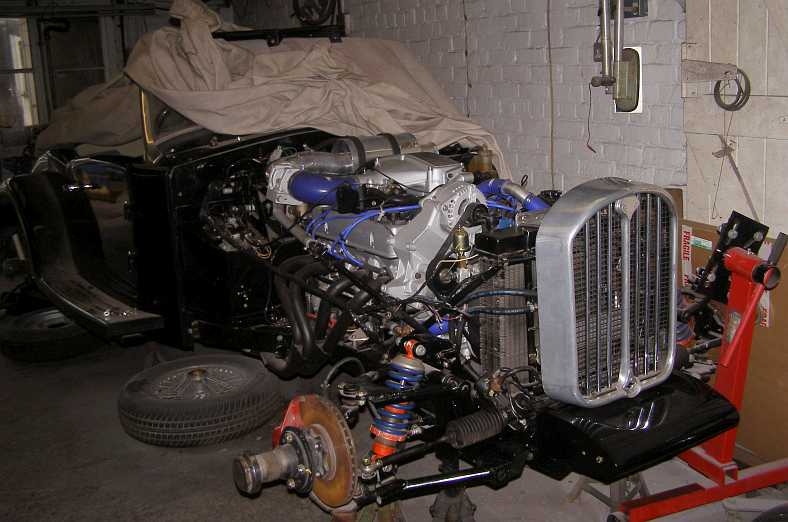
David’s car. One way to keep yourself busy would be to build cars like this. David is a real craftsman and does a nice job of it.
What an immense amount of work this all involved. He fabricates the chassis, attaches suspension pieces from production cars and makes his choices of what power unit, transmission etc to use. All are built in a ‘just like yesteryear’ style but have modern components fitted. This one has a Rover V8.
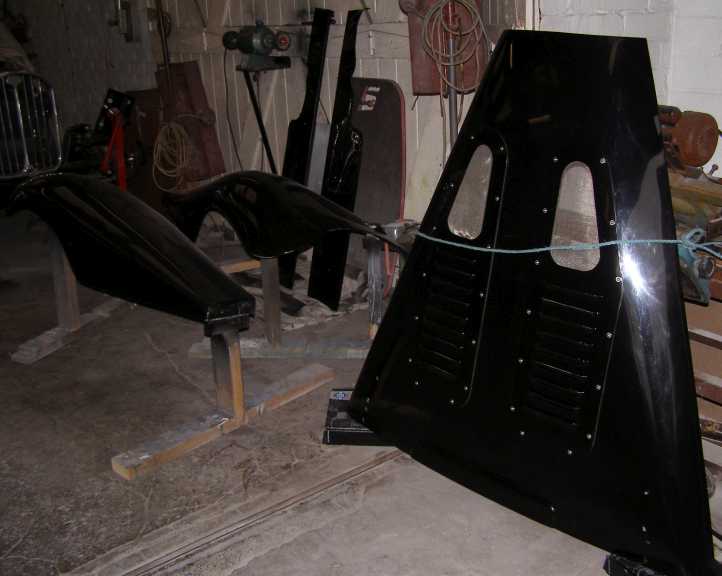
Bonnet and mudguards. Or ‘hood and fenders’, though Dave might well call the ‘fenders’ ‘wings’ in the British tradition. Louvres, too.[/i]
Some nice forming of the metal, there, and not just the sheet metal either. He made his own windscreen frame, the hinges for the doors and much more.
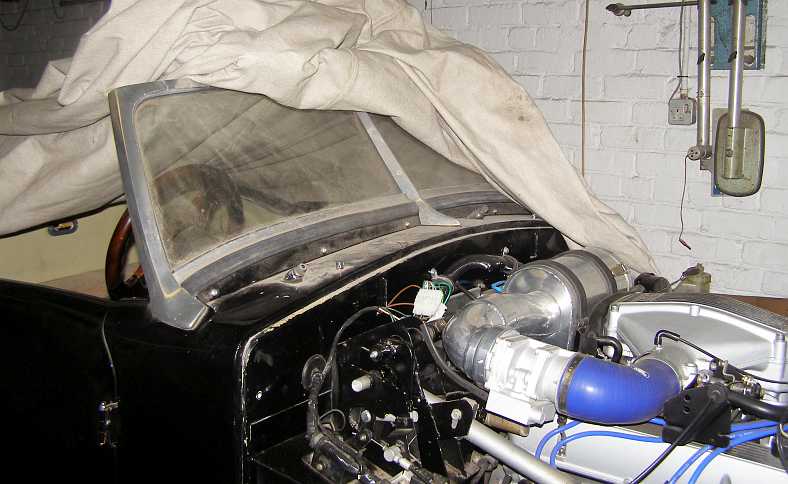
Windscreen and pedal mounts. I really should have got him to take the dust cover off, but there’s plenty here to see Dave’s workmanship.
At the rear he’s given the car some sweeping lines, while under the bodywork there’s disc brakes on a complex rear suspension using coilover dampers. That wheel recess would not have been easy to make, while other features like the filler-neck cover and bumpers are appropriately styled.
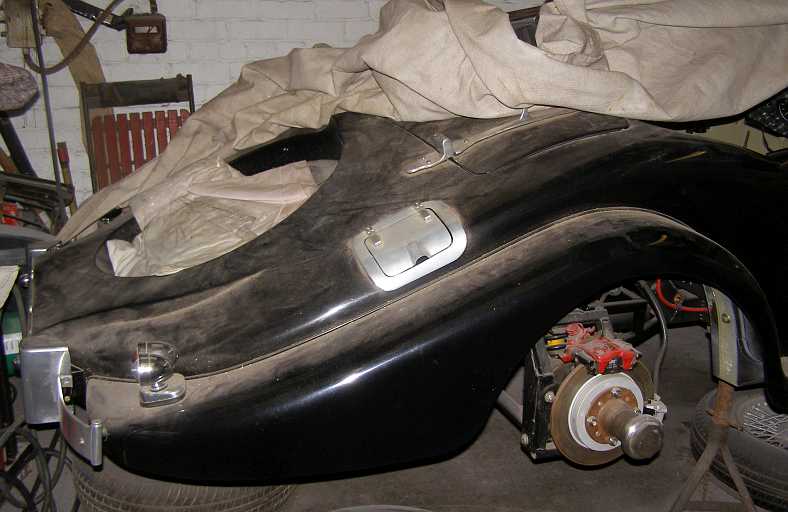
Rearward parts. Note that David has used knock-on hubs to give the car more ‘class’ and to look more appropriate for the style.
Just look at the work that’s gone into the hinges, while it’s apparent that he’s just bought some new fasteners to make them look ‘just right’ with allen headed bolts.
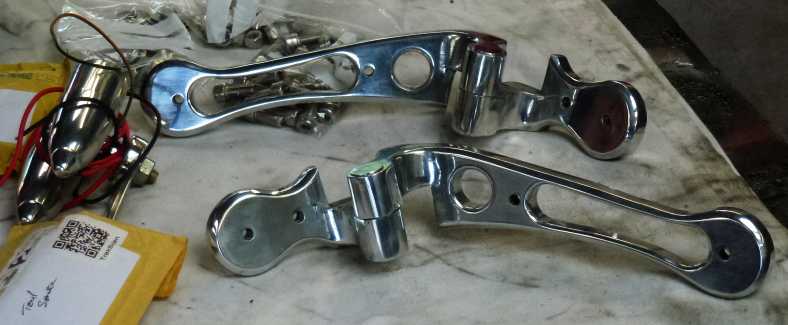
Hinges. I don’t know what these are for, it seems the boot and doors have their hinges in place. Maybe the glove box?
Roger sneaked in this photo of me looking at all of this wonderment. It strikes me now that I’m wearing a jacket I bought at a thrift shop in either Spokane or Butte – it’s a jacket for a football or baseball team from Montana – and Reeboks from the Waterloo Direct Factory Outlet centre in Waterloo, NY. All of this obtained during the previous (2014) trip.
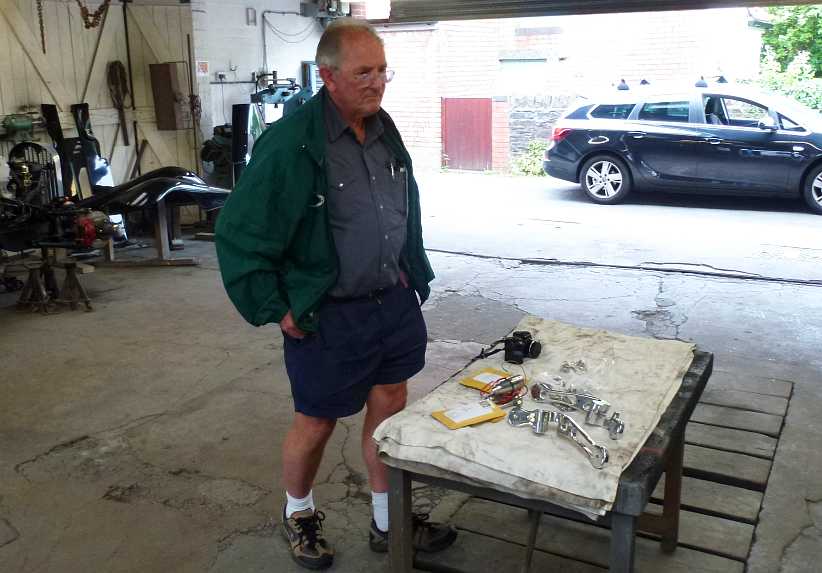
Me exposed. Roger took this photo of me ‘inspecting’ David’s work. Note also that there’s a pit under the floor in his workshop, and in a previous photo there was an engine stand to indicate he does more of the mechanical work too.
I guess I was still wearing this garb when Jean joined us for the drive into the Welsh countryside. I’m really not sure of the route that we took going North, but one of this maps may be close:
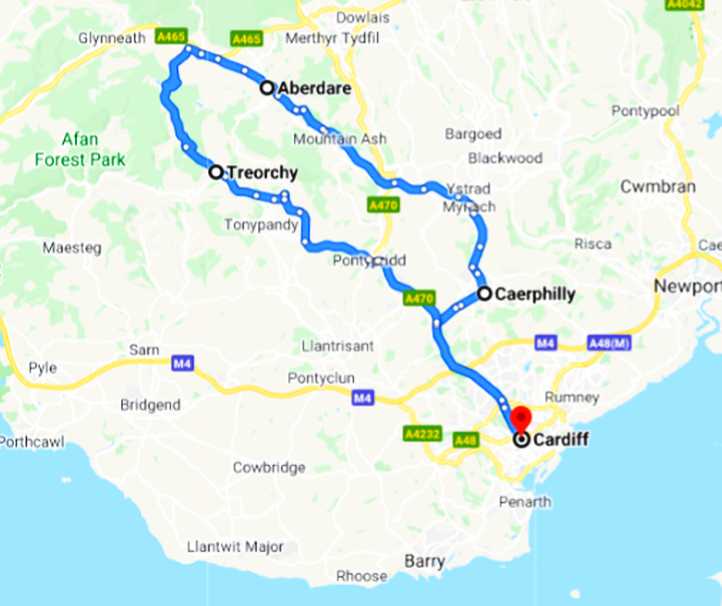
Possible route. I’m checking with Roger to see if I can make up a more accurate map of our tour.
Roger had explained to me that the several valleys radiating up into South Wales from the Cardiff area were once all involved in coal mining. For that reason there were villages the length of some of those valleys as the workers had to live close to their work.
Coal mining has died off, however, which probably contributes to it all being a cleaner environment along these roads than used to exist. And so we headed North…
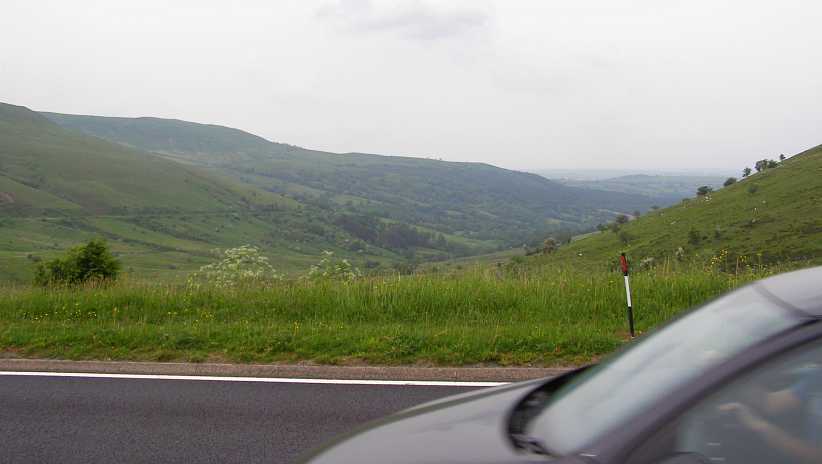
Valley views. Riding up along the ridges we had some good views down some of the valleys. And there’s a road coming up the hill on the left, too.
Some farming activity was seen too. It seems that sheep are the main livestock here, though there are cattle in the background:
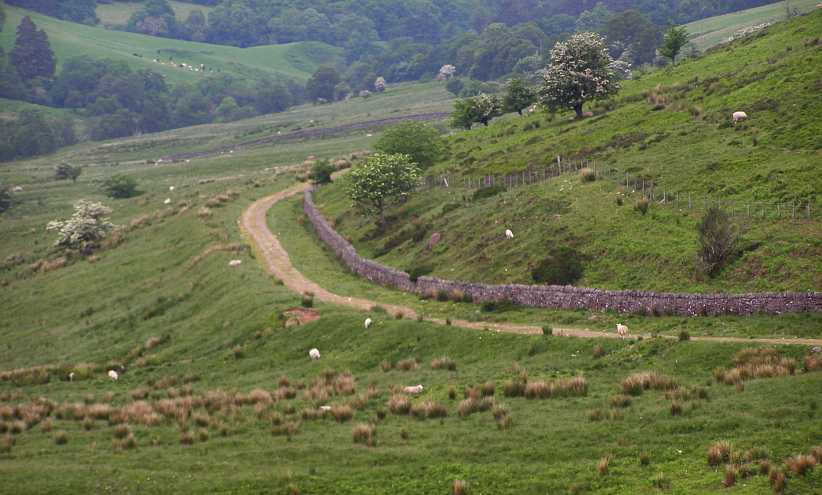
Sheep and rocks. Once again I had cause to question who it might have been that collected all the rocks. I kept asking that question!
We were by no means alone out there on those roads, many sightseers and other travellers were making the most of the pleasant weather and scenery.
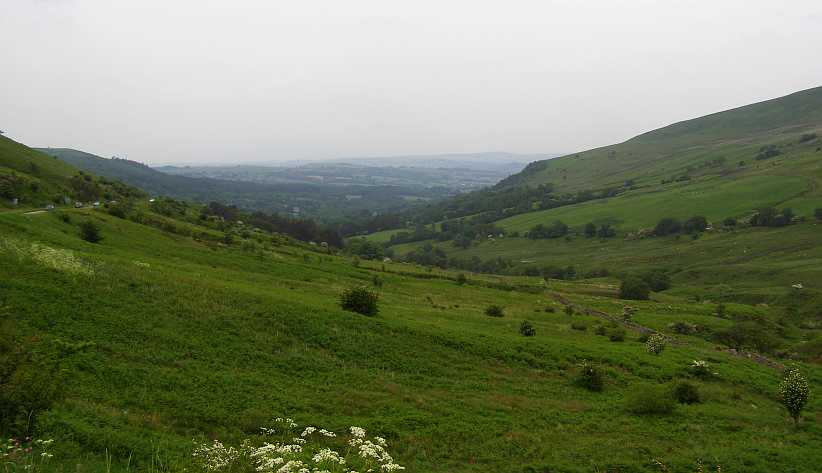
Broad view. This view down a long valley shows a little of the traffic which was out there this day too.
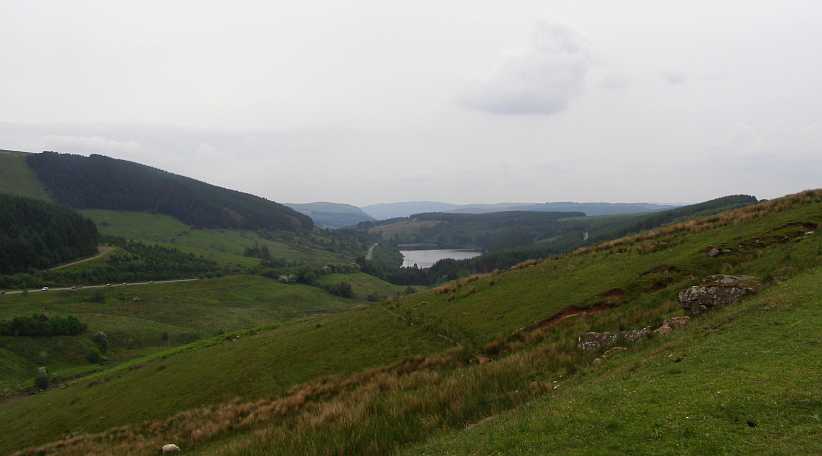
Lake and highway. The pleasant scenery continued as we drove along, the lake in this shot adding to the picture.
And then we saw this village in the distance, with hills in the distance in the haze. It looks like an old mine in the foreground, on a good day this might well be a picture-postcard scene.
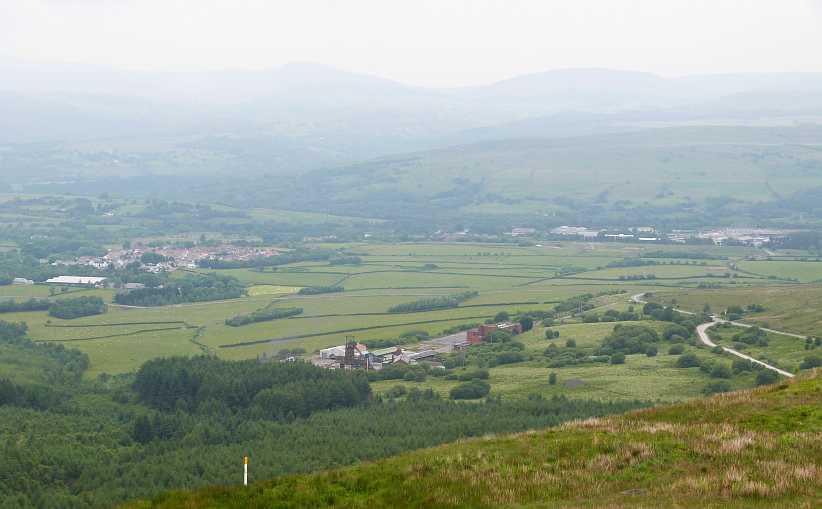
Village in the valley. More stone fences divide the properties near this village, where the houses look to be very close together.
A little further on as we travelled back towards Treorchy the setting looks more dramatic. A dam has a road over it here while it appears that some effort has gone into creating a forest as well.
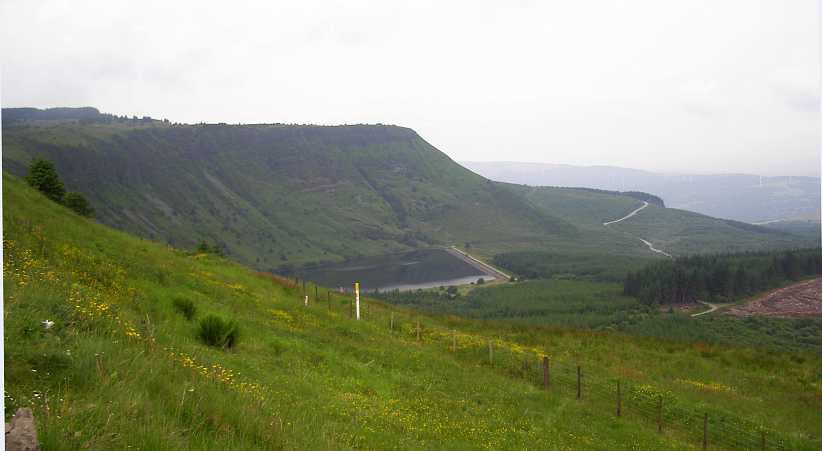
Road over dam. The water brims over in the dam and the traffic continues to pass through. Note that the trees are in different stages of growth.
And we finally entered Treorchy, which fitted well with Roger’s description of strips of houses filling the valley. In this shot we’re right at the edge of it so there’s a horse paddock in the foreground, but the houses are certainly all close together.
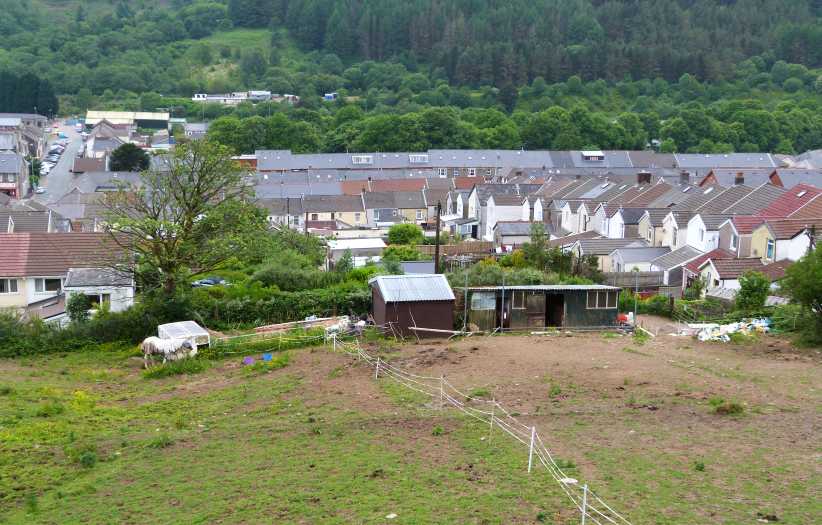
Farm to town. The scenery changed as we reached Treorchy with its heavy concentration of housing, presumably, in the main, from the nineteenth century.
The string of housing went on for quite a distance, again, as Roger said. Mostly 2-storey terrace homes, though there were some even taller and, no doubt, there would have been some converted into flats.
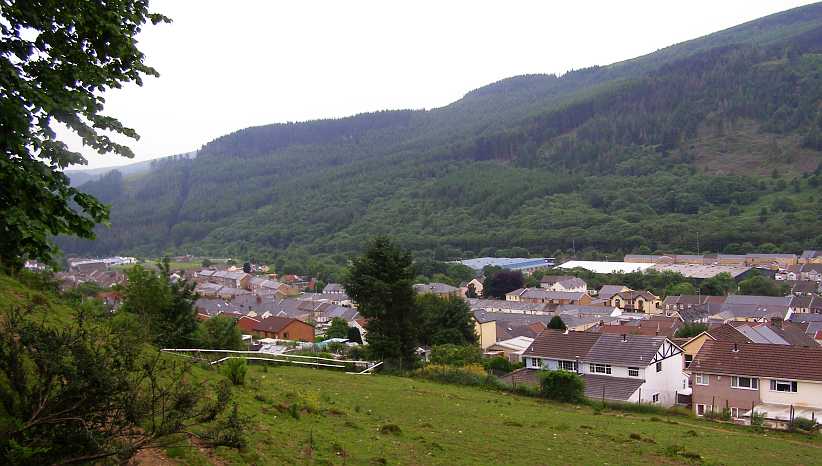
Town fills the valley floor. Yes, it’s harder building up on the slope, isn’t it. And the slopes are quite steep here.
But even among some unique scenery there are some familiar sights, like this one at Tonypandy:
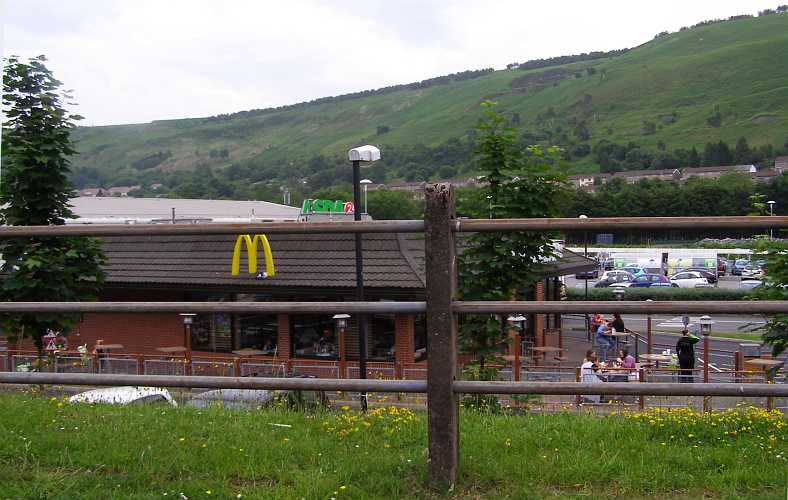
Familiarity. McDonalds have encroached on the traditions of South Wales too, while the big store in the background is the ASDA supermarket, another chain which has made inroads into the area.
Progressively the drive was drawing to a close. It was Friday afternoon and there was plenty of traffic about by the time we reached this area…
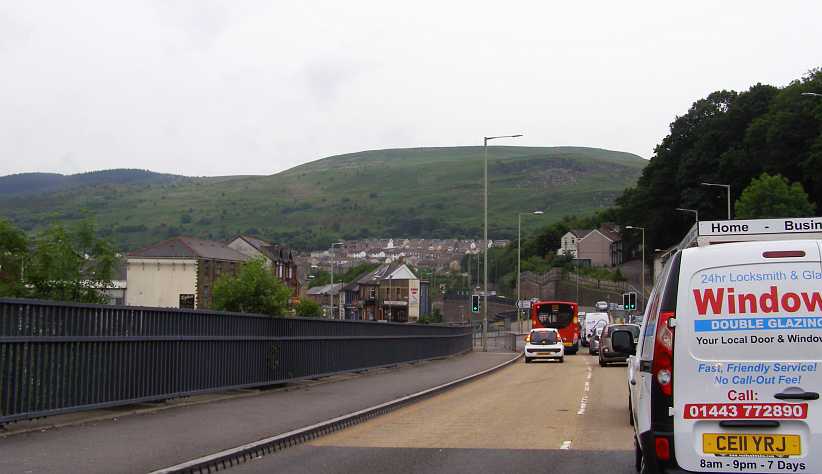
Traffic. Well, you could expect no less on a Friday afternoon as we headed for Cardiff. Some of those taller buildings are in this picture.
It had been a pleasant day, from walking the dog to the visit to David’s workshop and on to the drive in the Welsh countryside. The evening brought a nice meal and more pleasant conversation, with the unfortunate truth being that I would be getting away again early in the morning.
Brands Hatch and a big ‘American Car Day’ were awaiting me…
Roger had showed me some of the bits and pieces he had around of the cars he’s restoring, then he suggested that we go and visit David, a friend of his who builds cars from scratch. It didn’t take long to get to his workshop and we found him working on his latest creation…
David’s car. One way to keep yourself busy would be to build cars like this. David is a real craftsman and does a nice job of it.
What an immense amount of work this all involved. He fabricates the chassis, attaches suspension pieces from production cars and makes his choices of what power unit, transmission etc to use. All are built in a ‘just like yesteryear’ style but have modern components fitted. This one has a Rover V8.
Bonnet and mudguards. Or ‘hood and fenders’, though Dave might well call the ‘fenders’ ‘wings’ in the British tradition. Louvres, too.[/i]
Some nice forming of the metal, there, and not just the sheet metal either. He made his own windscreen frame, the hinges for the doors and much more.
Windscreen and pedal mounts. I really should have got him to take the dust cover off, but there’s plenty here to see Dave’s workmanship.
At the rear he’s given the car some sweeping lines, while under the bodywork there’s disc brakes on a complex rear suspension using coilover dampers. That wheel recess would not have been easy to make, while other features like the filler-neck cover and bumpers are appropriately styled.
Rearward parts. Note that David has used knock-on hubs to give the car more ‘class’ and to look more appropriate for the style.
Just look at the work that’s gone into the hinges, while it’s apparent that he’s just bought some new fasteners to make them look ‘just right’ with allen headed bolts.
Hinges. I don’t know what these are for, it seems the boot and doors have their hinges in place. Maybe the glove box?
Roger sneaked in this photo of me looking at all of this wonderment. It strikes me now that I’m wearing a jacket I bought at a thrift shop in either Spokane or Butte – it’s a jacket for a football or baseball team from Montana – and Reeboks from the Waterloo Direct Factory Outlet centre in Waterloo, NY. All of this obtained during the previous (2014) trip.
Me exposed. Roger took this photo of me ‘inspecting’ David’s work. Note also that there’s a pit under the floor in his workshop, and in a previous photo there was an engine stand to indicate he does more of the mechanical work too.
I guess I was still wearing this garb when Jean joined us for the drive into the Welsh countryside. I’m really not sure of the route that we took going North, but one of this maps may be close:
Possible route. I’m checking with Roger to see if I can make up a more accurate map of our tour.
Roger had explained to me that the several valleys radiating up into South Wales from the Cardiff area were once all involved in coal mining. For that reason there were villages the length of some of those valleys as the workers had to live close to their work.
Coal mining has died off, however, which probably contributes to it all being a cleaner environment along these roads than used to exist. And so we headed North…
Valley views. Riding up along the ridges we had some good views down some of the valleys. And there’s a road coming up the hill on the left, too.
Some farming activity was seen too. It seems that sheep are the main livestock here, though there are cattle in the background:
Sheep and rocks. Once again I had cause to question who it might have been that collected all the rocks. I kept asking that question!
We were by no means alone out there on those roads, many sightseers and other travellers were making the most of the pleasant weather and scenery.
Broad view. This view down a long valley shows a little of the traffic which was out there this day too.
Lake and highway. The pleasant scenery continued as we drove along, the lake in this shot adding to the picture.
And then we saw this village in the distance, with hills in the distance in the haze. It looks like an old mine in the foreground, on a good day this might well be a picture-postcard scene.
Village in the valley. More stone fences divide the properties near this village, where the houses look to be very close together.
A little further on as we travelled back towards Treorchy the setting looks more dramatic. A dam has a road over it here while it appears that some effort has gone into creating a forest as well.
Road over dam. The water brims over in the dam and the traffic continues to pass through. Note that the trees are in different stages of growth.
And we finally entered Treorchy, which fitted well with Roger’s description of strips of houses filling the valley. In this shot we’re right at the edge of it so there’s a horse paddock in the foreground, but the houses are certainly all close together.
Farm to town. The scenery changed as we reached Treorchy with its heavy concentration of housing, presumably, in the main, from the nineteenth century.
The string of housing went on for quite a distance, again, as Roger said. Mostly 2-storey terrace homes, though there were some even taller and, no doubt, there would have been some converted into flats.
Town fills the valley floor. Yes, it’s harder building up on the slope, isn’t it. And the slopes are quite steep here.
But even among some unique scenery there are some familiar sights, like this one at Tonypandy:
Familiarity. McDonalds have encroached on the traditions of South Wales too, while the big store in the background is the ASDA supermarket, another chain which has made inroads into the area.
Progressively the drive was drawing to a close. It was Friday afternoon and there was plenty of traffic about by the time we reached this area…
Traffic. Well, you could expect no less on a Friday afternoon as we headed for Cardiff. Some of those taller buildings are in this picture.
It had been a pleasant day, from walking the dog to the visit to David’s workshop and on to the drive in the Welsh countryside. The evening brought a nice meal and more pleasant conversation, with the unfortunate truth being that I would be getting away again early in the morning.
Brands Hatch and a big ‘American Car Day’ were awaiting me…
Thread Starter
|
Captain
Joined: Oct 2005
Posts: 570
Likes: 8
From: The Summit, Queensland, Australia
Roger and Jean had been great hosts, but there was so much more to see in the limited time I had available, so early on Saturday morning I packed my gear in the Peugeot and bade them farewell. I was to run back along the M4 I’d travelled before for much of the drive, so the day’s map’s not too different to the one from Dover to Cardiff…
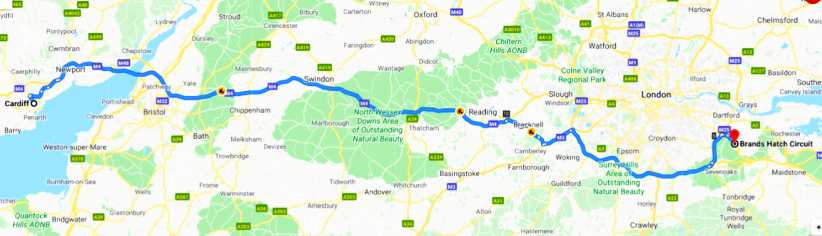
My distaste for the Citroen Cactus led me to get another photo of one to show people how lousy they look. Actually, I took pics of another one later in the day, but I won’t bore you with that. This was somewhere along the M4:
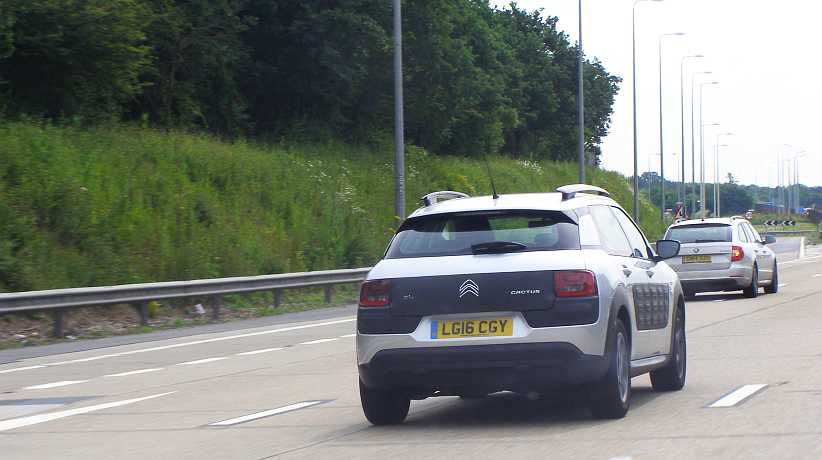
Cactus again. Still endeavouring to get a picture with good contrasting colours to show the misguided design cues of this Citroen.
Finding Brands Hatch wasn’t too hard, and having mobile phones to talk to each other, finding Dave wasn’t hard either. Which was a good thing as he had a ticket for me.
As mentioned it was an ‘American Car Day’ and Dave was there with a Chrysler group who had a number of cars on display. So we looked at those.
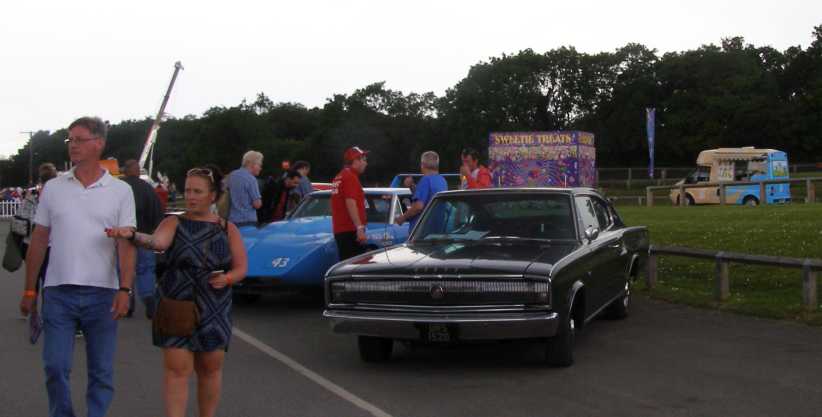
Charger. This Dodge Charger had the headlights hidden during the daytime, something that might be handy on Australian roads.
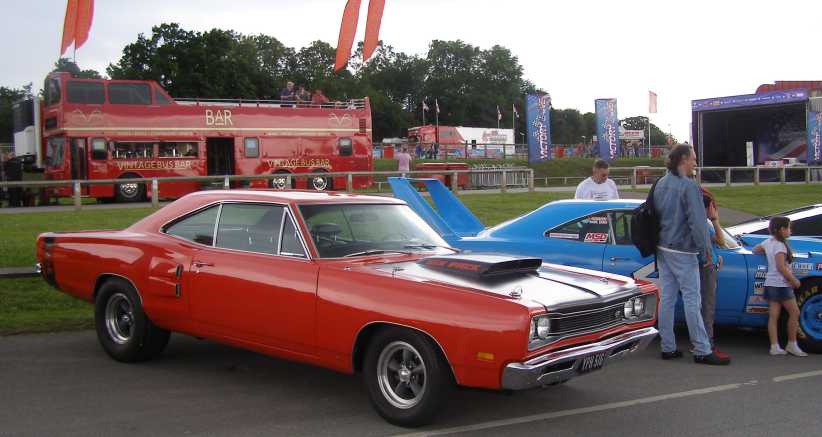
Super Bee. This 1969 model has the 440 engine with three twin-choke carbies. The fibreglass bonnet doesn’t hinge, either, it has four clips and lifts right off.
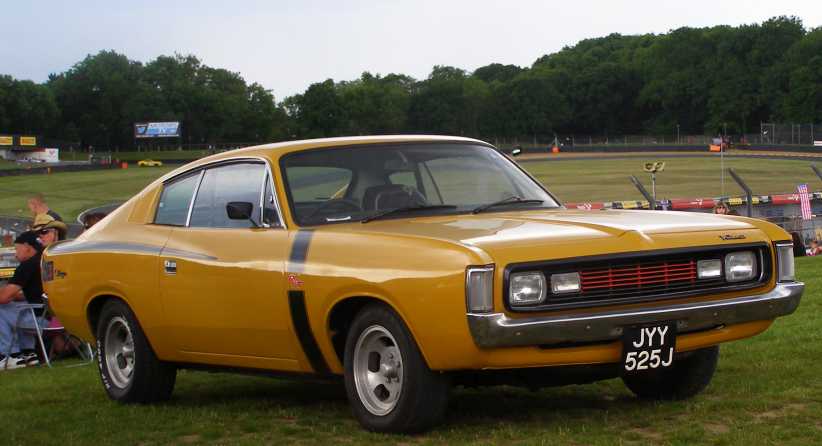
Dave’s Charger. A Charger of a different kind, based on the Australian Valiant and sporting a Hemi-6 engine with triple Webers.
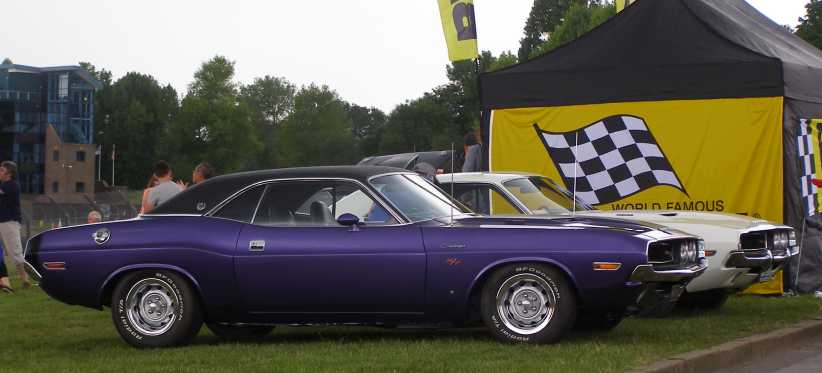
Challengers. These are what are known as E-body cars, Dodge’s Challenger and Plymouth’s Barracuda when the ‘Cuda grew out of the little A-body platform.
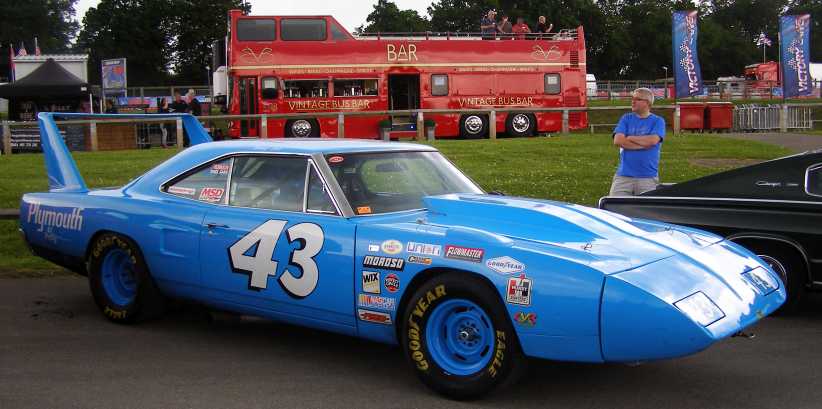
Roadrunner Superbird. Twin to the Dodge Daytona, these high-winged cars with Hemi 426 engines upset the NASCAR folk when they were released.
And we found somewhere to eat, too. David wasn’t used to circuit racing events while I wasn’t used to the way the Brits do things. I learned and he learned, I guess it’s fair to say, while we had some hot food and saw the standard of service and fare the British catering people turn out. Which wasn’t too bad at all.
All of this took place on what used to be called the ‘Kidney Circuit’ which got that name from the approximate kidney-shape layout. Since the seventies it’s been known as the ‘Indy Circuit’ because Indianapolis racers turned out on it at that time. It’s only a baby circuit alongside the full ‘Grand Prix Circuit’ which roughly doubles its length.
The circuit, along with Oulton Park, Snetterton and Cadwell Park, is run by MotorSport Vision, with Jonathon Palmer as one of the main figures in the management group. They do seem to have a nice way of running things, quite professional and catering for all needs.
In addition to this, there was some racing going on. Essentially it was for anything with a V8 engine, so a sports car field combined with a ‘muscle car’ group to get the numbers up to scratch, and we saw things like a Morgan Plus 8 (Rover 3500 motor) and Dodge Challenger mixing it with TVRs and other similar (or dissimilar) makes. Rolling starts were also the order of the day…
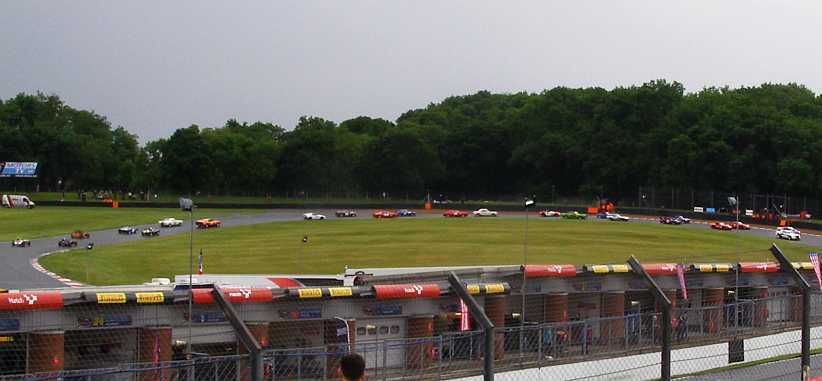
Mixed field. A large number of different breeds and types made up the ‘Sports Car’ races.
Principal attraction of the meeting was that it included a round of the European NASCAR series. So we saw these brutal beasts grace the circuit too, but they didn’t impress me at all. I felt that their cornering speeds were low and the level of driver skills right through the field questionable. But they were noisy and put on a fair sized field. The drivers all seemed to be very young and all of them lived somewhere on the Continent.
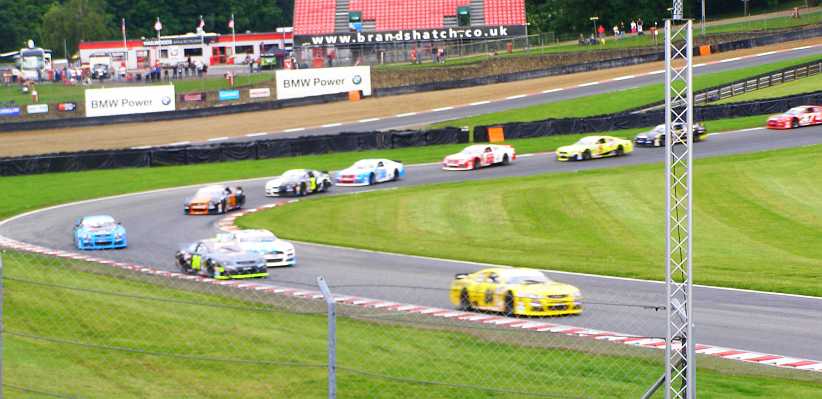
European NASCAR. A disappointment to me. Still noisy and big, but I felt poorly developed and driven for this kind of circuit.
Between all of this we kept wandering around. Yet another RAM pickup came into view…
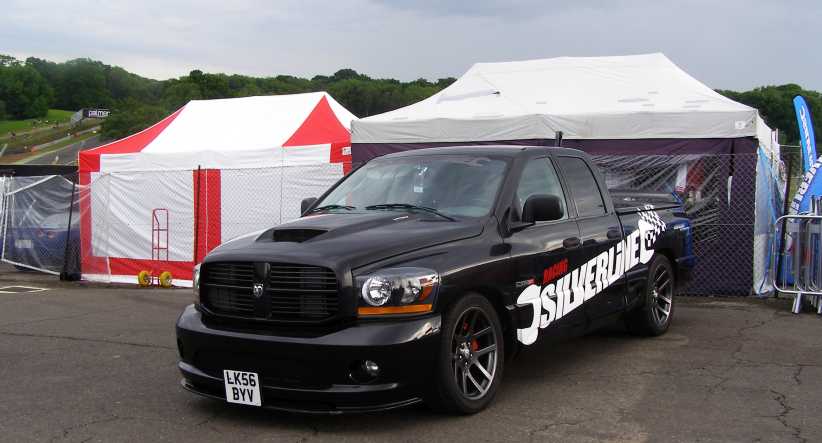
Silverline RAM. I still reckon these look out of place on the roads of England and Europe, always towering over the general traffic of hatches and mini-cars.
If there was anything that appealed to me it was the F5000s, of which there weren’t many. But it’s always good to see these cars anywhere. Powerful, raucous, challenging, even dangerous. I really enjoyed the F5000 era of the seventies in Australia, cars which made the drivers work and showed up the difference in skills quite readily. Expense, of course, was a major issue, but that doesn’t seem to bother people these days like it did then.
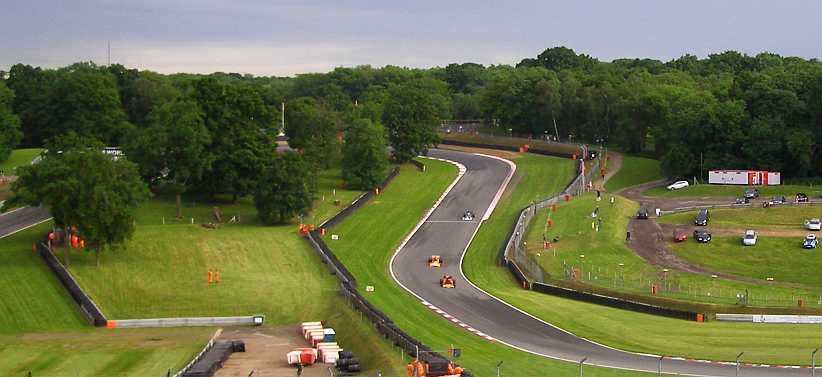
F5000s. Brands Hatch began with the short circuit and a lot of 500cc racing. F5000s seemed a bit constrained on such a short layout.
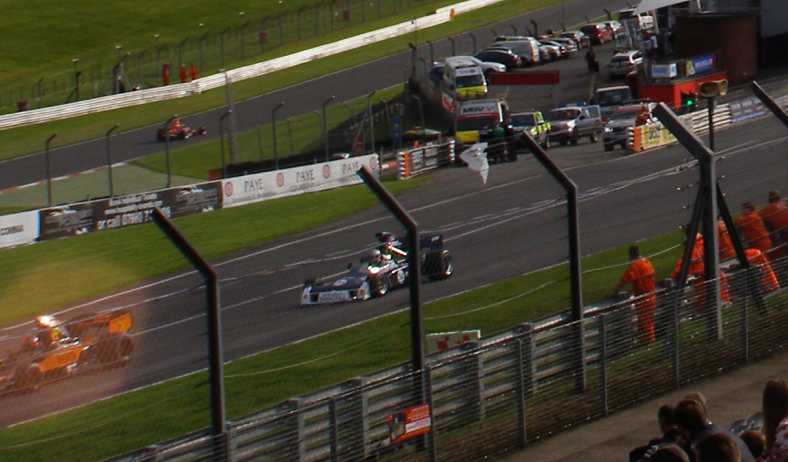
Some racing. Again suffering from late shutter action, we see here a Lola T332 and a Surtees TS10 vying for position as they begin another lap.
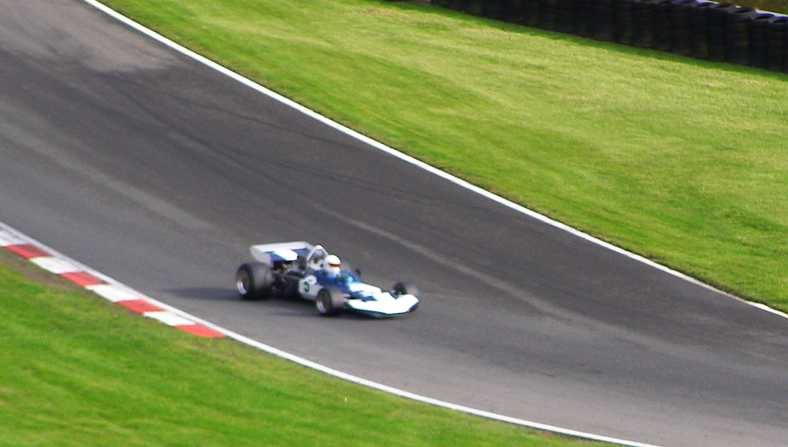
Surtees TS8. With the Team Surtees arrow, this car is entering Graham Hill bend as I struggle to get a decent picture at that distance.
Unfortunately it was extremely difficult for me to get decent photos of the racing. The camera kept on latching onto some foreground object to change its focus at the last instant so they were blurred, and then there’s the shutter lag which means you shoot when the car’s at one point but the camera operates when it’s gone well past there.
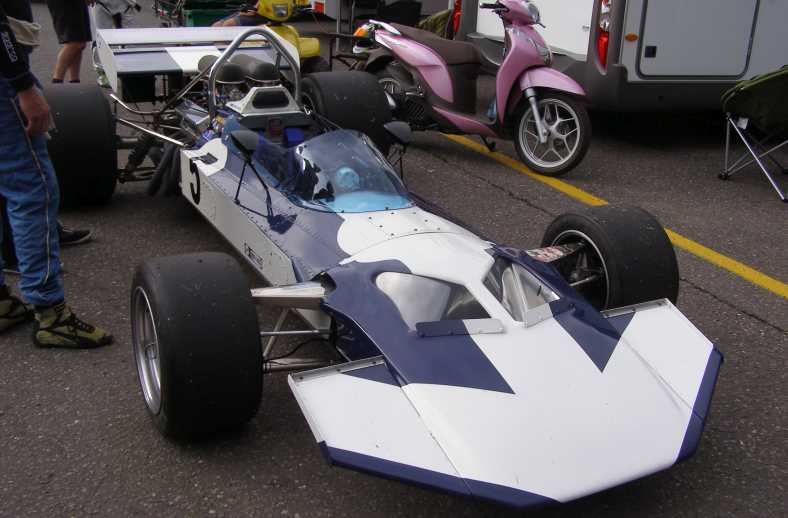
Surtees TS8. Close up and unblurred, the classic lines of the Surtees and the workmanship that went into it are seen here.
Getting decent photos of the cars in the paddock area wasn’t hard, though. I wandered around the F5000 section for a while, then when Dave left for the day after I showed him some of the detail of these cars.
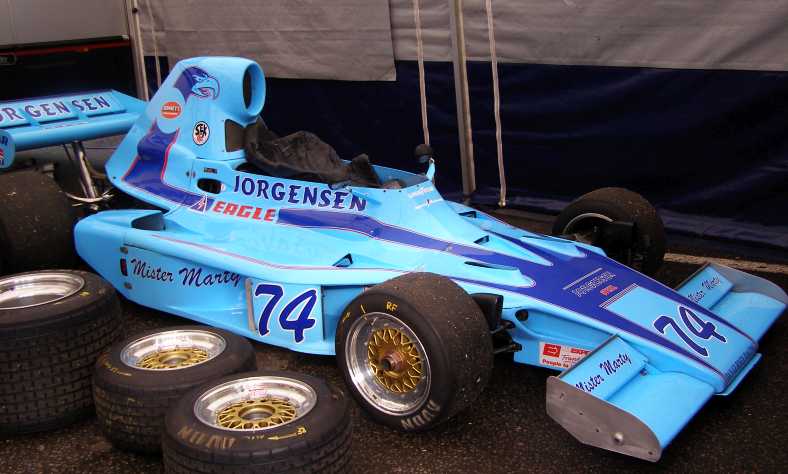
Eagle. Eagles were one of the F5000 breed we never saw in Australia, this one looked very nice.
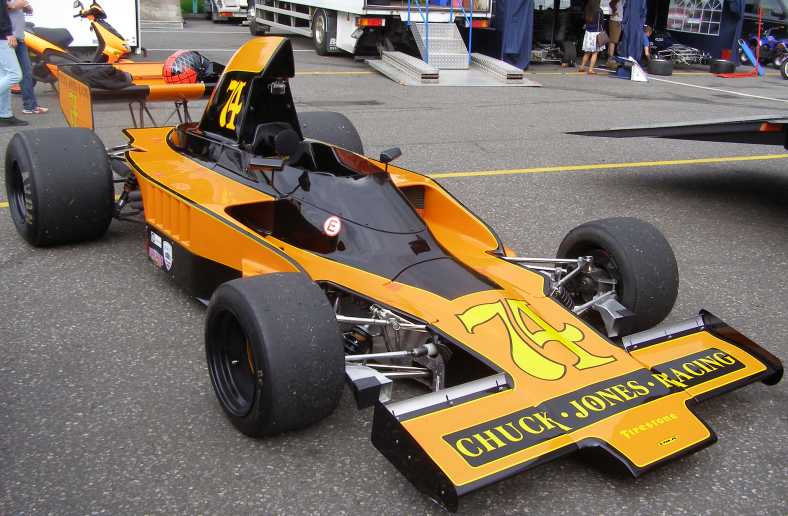
Lola T332. The car which came to dominate F5000 was the Lola T330, evolving into the T332 and T333.
Tribute. In that era Chuck Jones was a patron of the first order, helping many drivers get into cars.
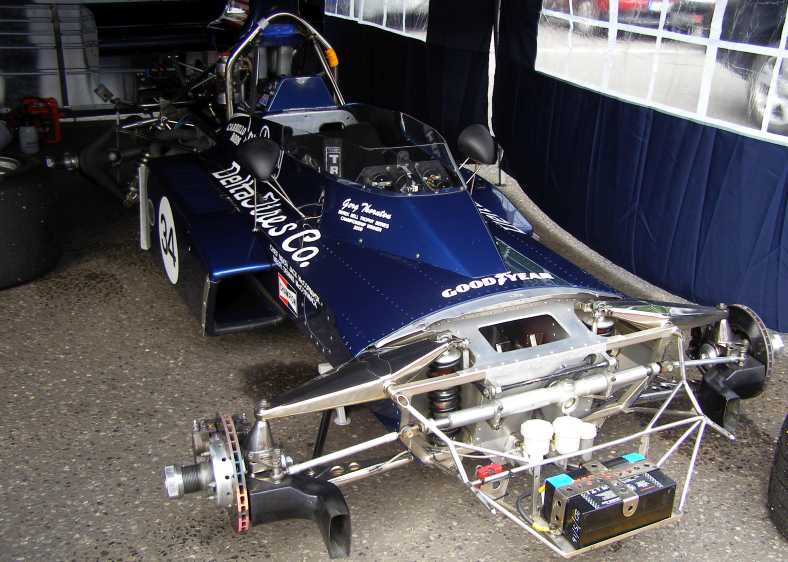
Surtees TS10. Without its wide nose we can see the detail in the front suspension of the ex-Sam Posey TS10.
And then it was time for me to take a walk around the Grand Prix Circuit so see what it was really like. Here’s a map to show how it all fitted together:
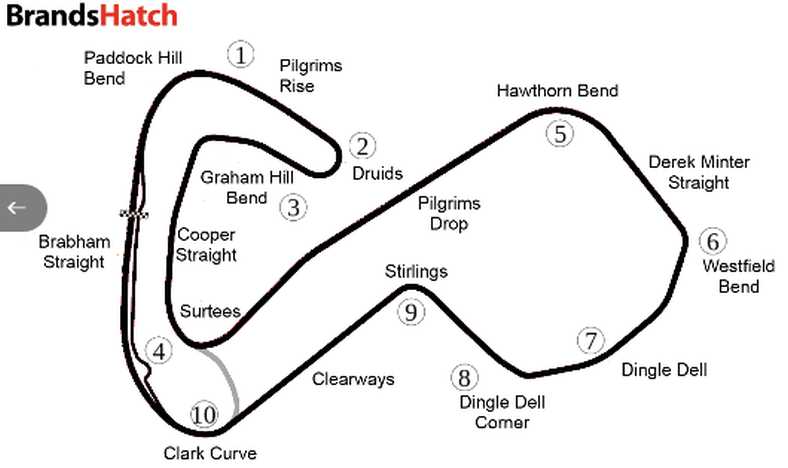
We start by leaving the ‘kidney circuit’ and going uphill through Surtees, which is shown here looking back towards the peel-off point where the Grand Prix circuit branches away from the smaller track:
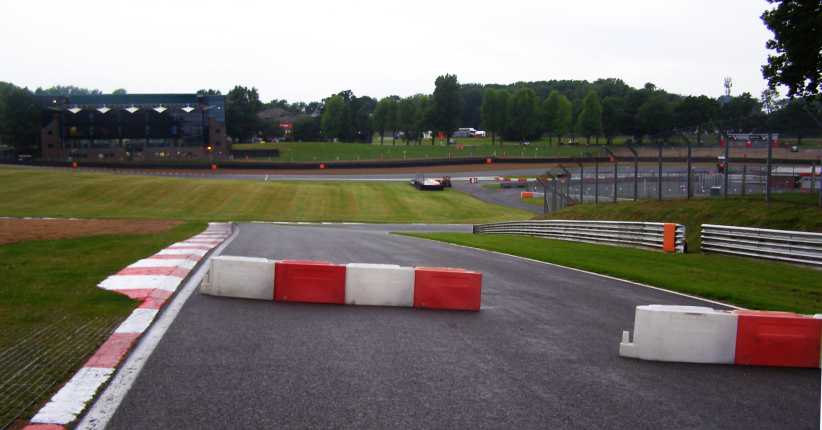
There’s a minor kink in this climb…
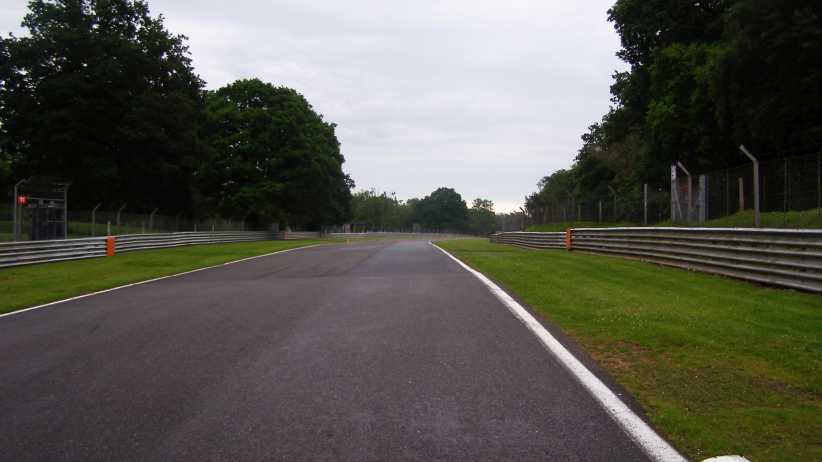
…and then over the rise it goes under a bridge at a point called ‘Pilgrims Drop’…
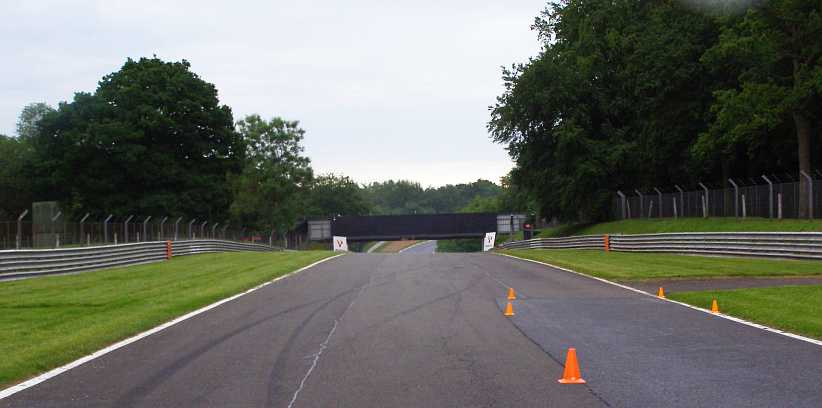
…before climbing Hawthorn Hill to Hawthorn’s Bend…
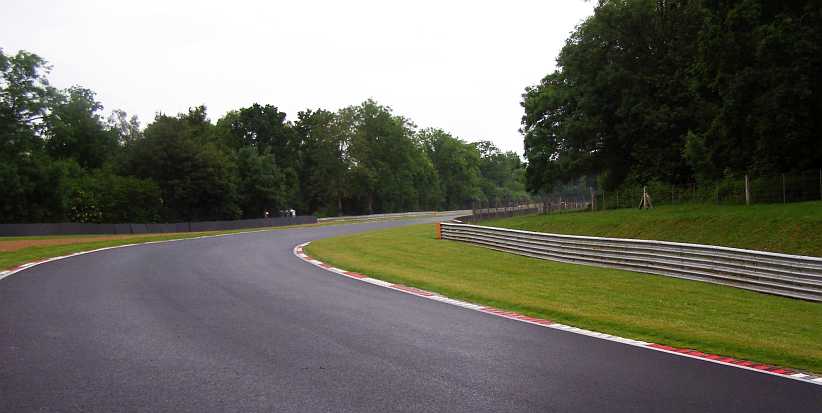
…and onto Derek Minter Straight:
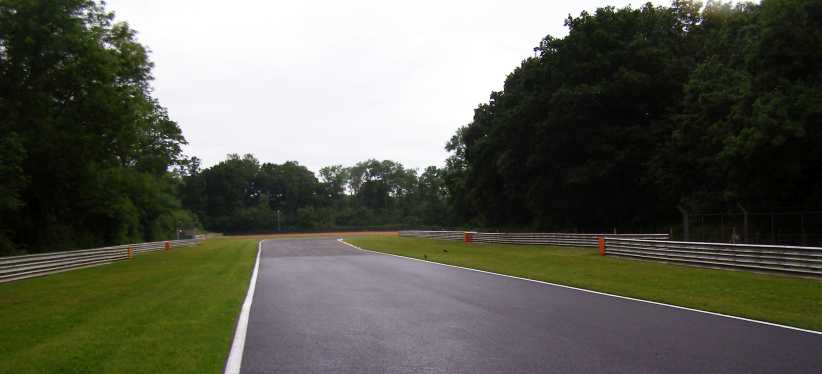
Westfield Corner is next, it looks tricky…
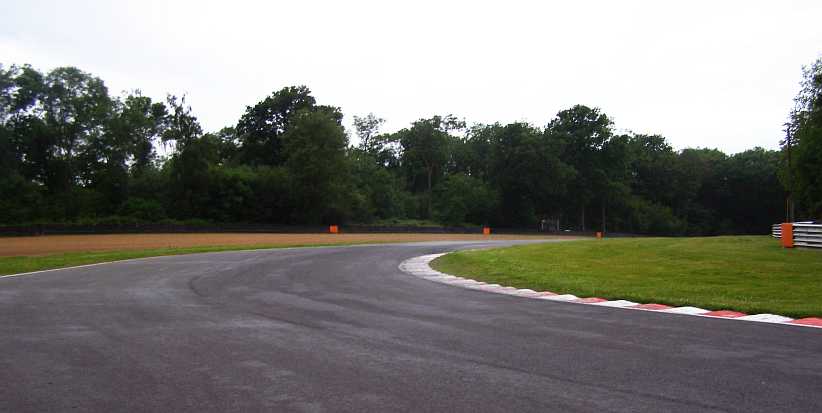
…and it swoops you down to Dingle Dell:
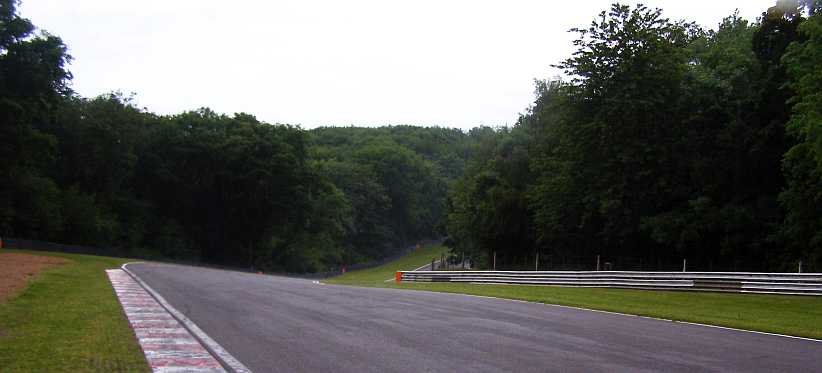
Dingle Dell is a bit more complex, combining a drop and a curve…
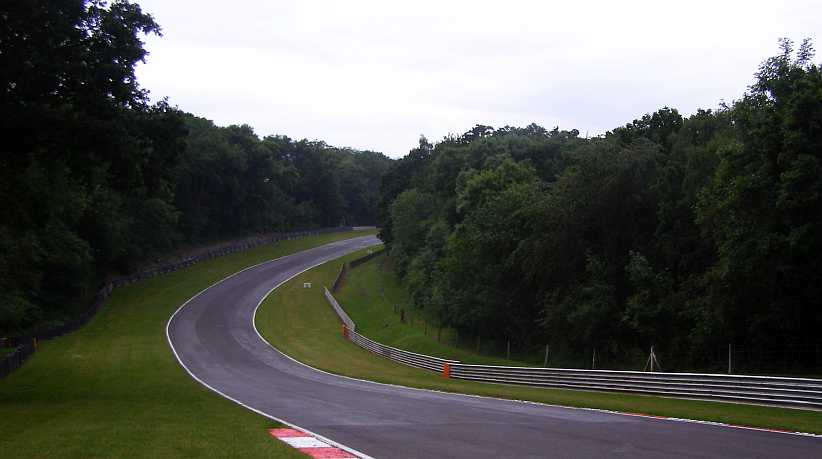
…but instead of leading to Dingle Dell Corner, these days it’s named after motorcyclist Barry Sheene:
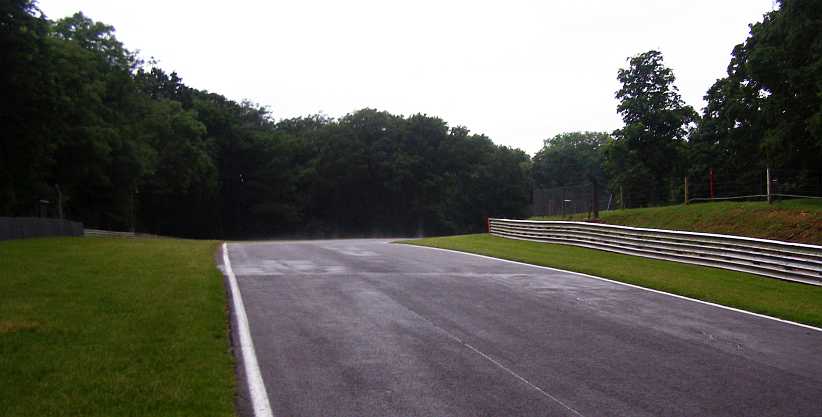
Though maps appear to show a straight run from there to Stirlings Bend, my camera thought differently…
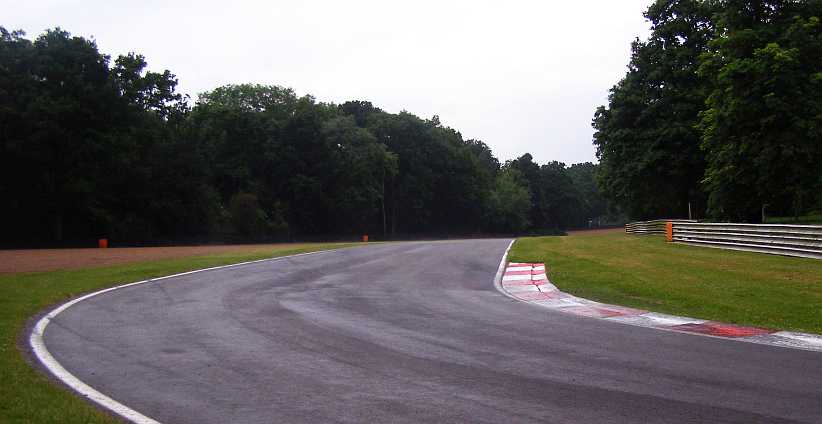
…and the corner itself looks challenging as speed from it dictates how fast one will get down the next straight…
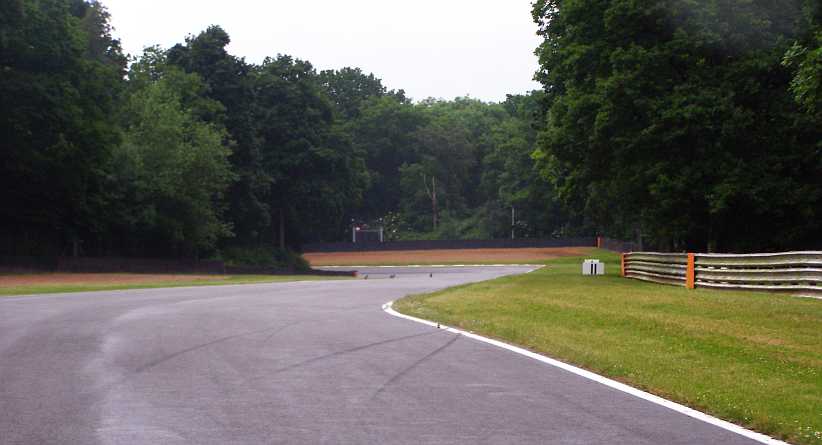
…which is the straight leading to Clearways…
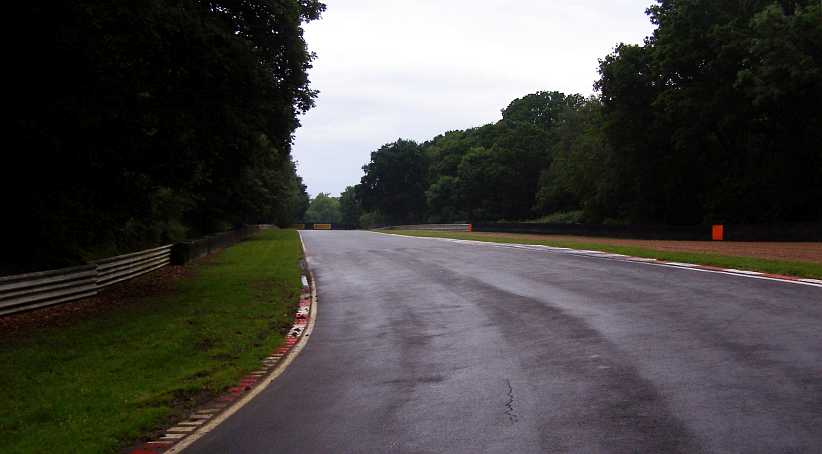
…which dives under another footbridge on the way back to the original circuit at Clark Curve:
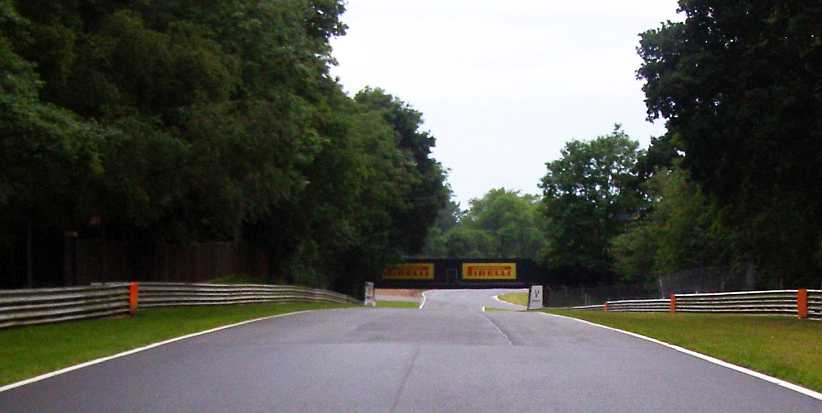
It was giving my bad knee a bit of a caning to take that long walk, especially after a fairly hefty lot of walking around during the day. Then I had to walk even further to get out the gate and into the carpark to finally drop my body into the driver’s seat of the 208. And with it starting to get a bit low on fuel I headed off to obtain some for the next step of my British adventure…
My distaste for the Citroen Cactus led me to get another photo of one to show people how lousy they look. Actually, I took pics of another one later in the day, but I won’t bore you with that. This was somewhere along the M4:
Cactus again. Still endeavouring to get a picture with good contrasting colours to show the misguided design cues of this Citroen.
Finding Brands Hatch wasn’t too hard, and having mobile phones to talk to each other, finding Dave wasn’t hard either. Which was a good thing as he had a ticket for me.
As mentioned it was an ‘American Car Day’ and Dave was there with a Chrysler group who had a number of cars on display. So we looked at those.
Charger. This Dodge Charger had the headlights hidden during the daytime, something that might be handy on Australian roads.
Super Bee. This 1969 model has the 440 engine with three twin-choke carbies. The fibreglass bonnet doesn’t hinge, either, it has four clips and lifts right off.
Dave’s Charger. A Charger of a different kind, based on the Australian Valiant and sporting a Hemi-6 engine with triple Webers.
Challengers. These are what are known as E-body cars, Dodge’s Challenger and Plymouth’s Barracuda when the ‘Cuda grew out of the little A-body platform.
Roadrunner Superbird. Twin to the Dodge Daytona, these high-winged cars with Hemi 426 engines upset the NASCAR folk when they were released.
And we found somewhere to eat, too. David wasn’t used to circuit racing events while I wasn’t used to the way the Brits do things. I learned and he learned, I guess it’s fair to say, while we had some hot food and saw the standard of service and fare the British catering people turn out. Which wasn’t too bad at all.
All of this took place on what used to be called the ‘Kidney Circuit’ which got that name from the approximate kidney-shape layout. Since the seventies it’s been known as the ‘Indy Circuit’ because Indianapolis racers turned out on it at that time. It’s only a baby circuit alongside the full ‘Grand Prix Circuit’ which roughly doubles its length.
The circuit, along with Oulton Park, Snetterton and Cadwell Park, is run by MotorSport Vision, with Jonathon Palmer as one of the main figures in the management group. They do seem to have a nice way of running things, quite professional and catering for all needs.
In addition to this, there was some racing going on. Essentially it was for anything with a V8 engine, so a sports car field combined with a ‘muscle car’ group to get the numbers up to scratch, and we saw things like a Morgan Plus 8 (Rover 3500 motor) and Dodge Challenger mixing it with TVRs and other similar (or dissimilar) makes. Rolling starts were also the order of the day…
Mixed field. A large number of different breeds and types made up the ‘Sports Car’ races.
Principal attraction of the meeting was that it included a round of the European NASCAR series. So we saw these brutal beasts grace the circuit too, but they didn’t impress me at all. I felt that their cornering speeds were low and the level of driver skills right through the field questionable. But they were noisy and put on a fair sized field. The drivers all seemed to be very young and all of them lived somewhere on the Continent.
European NASCAR. A disappointment to me. Still noisy and big, but I felt poorly developed and driven for this kind of circuit.
Between all of this we kept wandering around. Yet another RAM pickup came into view…
Silverline RAM. I still reckon these look out of place on the roads of England and Europe, always towering over the general traffic of hatches and mini-cars.
If there was anything that appealed to me it was the F5000s, of which there weren’t many. But it’s always good to see these cars anywhere. Powerful, raucous, challenging, even dangerous. I really enjoyed the F5000 era of the seventies in Australia, cars which made the drivers work and showed up the difference in skills quite readily. Expense, of course, was a major issue, but that doesn’t seem to bother people these days like it did then.
F5000s. Brands Hatch began with the short circuit and a lot of 500cc racing. F5000s seemed a bit constrained on such a short layout.
Some racing. Again suffering from late shutter action, we see here a Lola T332 and a Surtees TS10 vying for position as they begin another lap.
Surtees TS8. With the Team Surtees arrow, this car is entering Graham Hill bend as I struggle to get a decent picture at that distance.
Unfortunately it was extremely difficult for me to get decent photos of the racing. The camera kept on latching onto some foreground object to change its focus at the last instant so they were blurred, and then there’s the shutter lag which means you shoot when the car’s at one point but the camera operates when it’s gone well past there.
Surtees TS8. Close up and unblurred, the classic lines of the Surtees and the workmanship that went into it are seen here.
Getting decent photos of the cars in the paddock area wasn’t hard, though. I wandered around the F5000 section for a while, then when Dave left for the day after I showed him some of the detail of these cars.
Eagle. Eagles were one of the F5000 breed we never saw in Australia, this one looked very nice.
Lola T332. The car which came to dominate F5000 was the Lola T330, evolving into the T332 and T333.
Tribute. In that era Chuck Jones was a patron of the first order, helping many drivers get into cars.
Surtees TS10. Without its wide nose we can see the detail in the front suspension of the ex-Sam Posey TS10.
And then it was time for me to take a walk around the Grand Prix Circuit so see what it was really like. Here’s a map to show how it all fitted together:
We start by leaving the ‘kidney circuit’ and going uphill through Surtees, which is shown here looking back towards the peel-off point where the Grand Prix circuit branches away from the smaller track:
There’s a minor kink in this climb…
…and then over the rise it goes under a bridge at a point called ‘Pilgrims Drop’…
…before climbing Hawthorn Hill to Hawthorn’s Bend…
…and onto Derek Minter Straight:
Westfield Corner is next, it looks tricky…
…and it swoops you down to Dingle Dell:
Dingle Dell is a bit more complex, combining a drop and a curve…
…but instead of leading to Dingle Dell Corner, these days it’s named after motorcyclist Barry Sheene:
Though maps appear to show a straight run from there to Stirlings Bend, my camera thought differently…
…and the corner itself looks challenging as speed from it dictates how fast one will get down the next straight…
…which is the straight leading to Clearways…
…which dives under another footbridge on the way back to the original circuit at Clark Curve:
It was giving my bad knee a bit of a caning to take that long walk, especially after a fairly hefty lot of walking around during the day. Then I had to walk even further to get out the gate and into the carpark to finally drop my body into the driver’s seat of the 208. And with it starting to get a bit low on fuel I headed off to obtain some for the next step of my British adventure…
Thread Starter
|
Captain
Joined: Oct 2005
Posts: 570
Likes: 8
From: The Summit, Queensland, Australia
And so I went off and found somewhere to fuel up. I had perhaps a hundred kilometres in the tank, but you must have something in reserve, right?
The service station I went to wasn’t all that far from Brands Hatch, self-serve, of course, and I went to put the nozzle in and… it wouldn’t go! I fiddled, pushed and poked but I couldn’t get it in there. So I phoned the number the lease people had given me and asked what I should do.
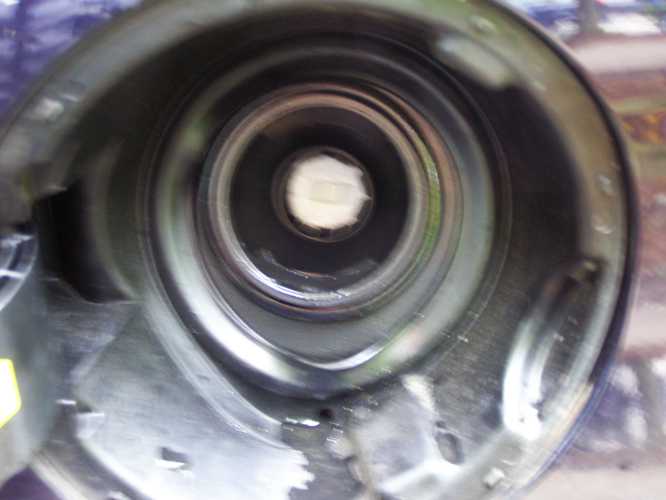
Fuel filler woes. The restricting flap in the filler neck which was damaged and refused to allow the fuel nozzle to enter.
Most options involved the word ‘tomorrow’ or ‘Monday’ or something which would occupy time I didn’t want to waste, so after a few phone calls while they considered things I suggested that it needed fixing anyway, I reckoned I could butcher it to get the nozzle in and they gave the go-ahead for that. Hence we have before and after photos, taken in the dark, too blurred to see much detail but still showing the main thing – the restricter in place and with it gone.
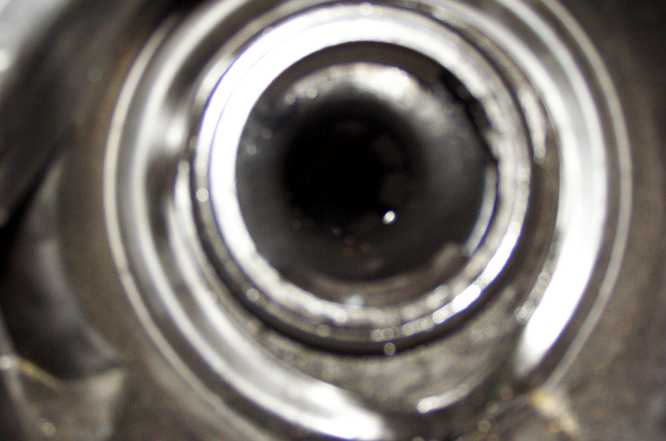
Fixed! A bit of rough work with a screwdriver meant I could refuel and carry on with my trip.
After sorting that out I drove off and looked around for somewhere safe to pull up and sleep for the night. I’d made arrangements with ‘condor’, another forum friend, to meet up the next day and get to know each other and see some more sights, among which she’d planned to show me a kite show in her home town of Bedford.
But the day was restructured because I had an e-mail from my daughter in law telling me that Sandra was in hospital. I really didn't know how serious things were, but chest pains were being investigated. I had learned that Sandra was on some heart tablets, and blood pressure tablets, so it was a bit worrying.
My personal tour of Bedford was instructive, the well-known ‘condor’ showed me some highlights of the town and we had some interesting chats, not only with each other, but with other people. It was a bit lousy in the weather department, but I'm told England can be like that. One of the features of the forum through which we met is that there’s a thread each weekend for people to discuss their plans, outings and accomplishments as the weekend passes. ‘condor’ posted this:
I didn’t take a single photo this day, foolishly. And then on the forum one of the younger contributors said he hoped Sandra would be okay. I replied:
My next plans were for Monday. Again, after finding my way around a supermarket loaded down with suggestions for Ramadan, I looked for somewhere quiet to park and sleep through the night. When Monday came I had the plan of catching a train into London to go to the British Museum. I didn’t have time to arrange the ultimate Bible items tour, so I resolved that seeing the Rosetta Stone and anything else I could stumble over would be enough. After that I was not sure what I would do, my next firm arrangment was to spend Tuesday night with Barry Boor at his local slot car races. I’d previously met up with Barry at Monaco.
I drove to the vicinity of a station a little out of London and found a parking spot where I didn’t have to pay and wasn’t likely to get booked. Walking to the station I noticed that the Royal Mail people work things a bit differently to what we see at home. This trolley…
Royal Mail. No doubt dropped off from a vehicle earlier, this trolley was padlocked to the post and awaiting the foot-slogging postman’s arrival to distribute its contents.
…was chained to a post to provide the walking postman with his next load to deliver.
I bought a ticket and rode the train into London, having ensured that I was going to the station nearest to the British Museum. I think this ticket…
Underground ticket. There was no point in taking the car into the city, parking would be impossible and impossibly expensive, much better to catch the train.
…was for the return journey. On alighting from the train and emerging onto the street some few hundred yards from the museum I realised I’d be foolish to set off to the museum without having had something to eat. And right there at the corner in front of me was a McDonalds.
I went in and got a meal, then looked around for somewhere to sit down to eat it. It was by this time getting towards lunchtime and plenty of others had the same idea, but I found a seat which wasn’t occupied and asked the lady opposite if it was okay for me to sit there.
Eventually we got to talking and comparing notes and I learned she was also an Australian. From Campbelltown, which was an area I knew well when I lived in Sydney. And she told me she was going to take a trip in the next few days to visit Spa, the Nurburgring, Reims and a few other places I’d just been!
Not only was she on a similar wavelength to me about motor racing and old circuits, but she was also on her way to the British Museum! So we walked up there together, still comparing notes, but that was as far as it went as her interest in the museum was more about Egyptian things, mummies and so on, while mine was quite different.
I snapped a photo of the Rosetta Stone, which provided researchers with the keys to unlock the secrets of Egyptian Hieroglyphics:
Rosetta Stone. Discovered in 1799, this stone was the key to understanding Egyptian hieroglyphics and unlocking some secrets of ancient times.
Without guidance it would have proved difficult and time-consuming to look in detail for more things which might interest me, so I had a brief look around and headed back to the station. Then, after walking to the car I set off looking for anything that might interest me with a view to getting to Barry’s late in the afternoon in Essex.
I found a Welcome Break rest area/retail centre and got a photo of yet another RAM…
Welcome Break. These are the rest and retail stops along the motorways of Britain. Their parking limits worried me whenever I wanted to get a sleep parked in one.
…and also took note of the electric car charging outlet provided there:
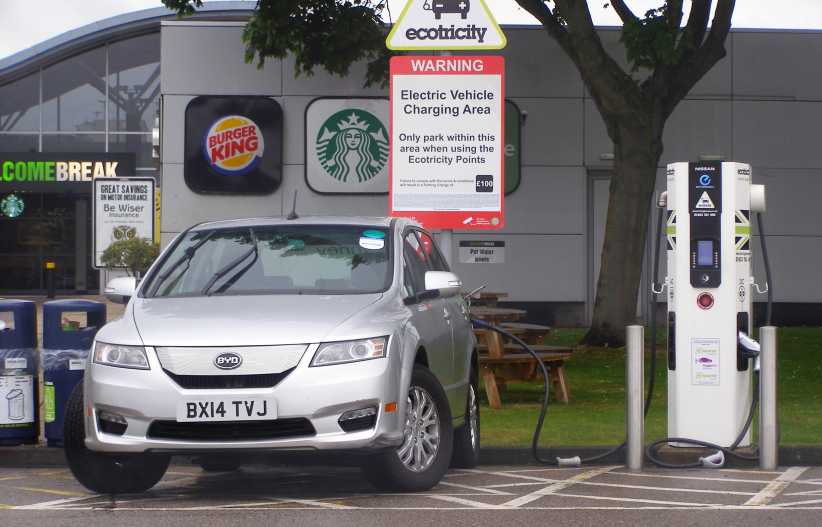
Electric charge. New to me were the electric car charging outlets, becoming more common around the world now.
Some peaches appealed to me as something different to eat, but they were more different than just that. I’ve only ever seen peaches which are more or less spherical, these looked like they’d been trampled flat:
Flat peaches. I’d never seen peaches this shape before, but they were good to eat anyway.
Driving around the suburbs and towns was somewhat different to Australia and America, even Europe, and I snapped this suburban street scene during the afternoon:
Characteristic. Each country has its unique ‘feel’ and this sort of scene was a part of that in England.
And somewhere along the way I spotted a car-carrying truck which held no fewer than ten cars!
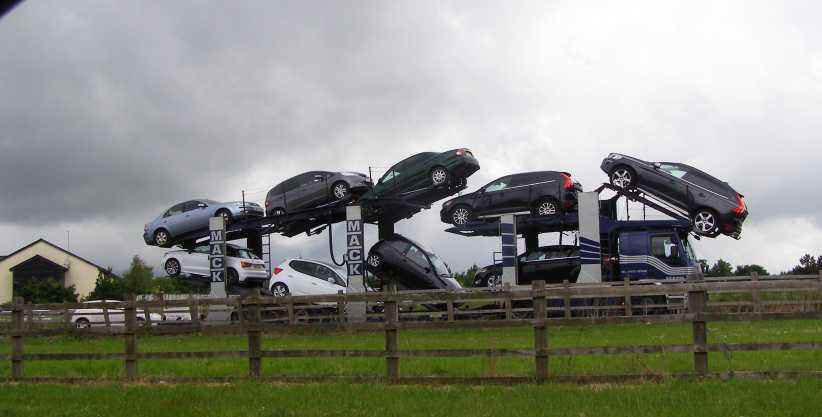
Ten on a truck. Actually, there are only nine here as one has just been unloaded off the lower level at the back.
The rest of Monday and well into Tuesday I wasted a lot of time as I was awaiting phone calls relating to seeing Stirling Moss and John Surtees, I didn’t want to leave the London area too quickly in case one of them became available for an interview relating to them contributing to our planned book on Warwick Farm. It was all a huge loss of travelling time, but I’d already arranged to still be in the area on Tuesday night anyway.
I spent some time sleeping in the car on one of those days at one of the ‘Welcome Breaks’ and was concerned about the parking limits there – the signs have dire warnings – but nothing untoward came of it. I also went back to the supermarket I’d been to on Sunday and picked up something to snack on and Monday night was spent in the car in one of the car parks.
Ultimately I did speak to ‘Fearless John’ and had a good conversation about the time we’d met before, about 45 years earlier in Australia, and I explained what e were doing with the book. But he couldn’t afford time to see me and gave me all of his phone numbers. Then we arranged to do things by e.mail later.
It was then time to go to Barry’s. Once there he took me to see the Connew Formula One car built by his cousin, which was a car which appeared against all odds. Not enough finance, not enough experience, not enough of any of the things which add up to the resources to do such a thing, but Peter Connew – aided by people who worked on the project with him for nothing – somehow pulled it off and it did race in the Austrian Grand Prix of 1972 with Francois Migault driving.
Peter was happy to show me around, the car was at that time being worked on to enable it to be reassembled for displays, a picture accompanies the story of the car on this page:
https://www.oldracingcars.com/connew/pc1/
It was interesting for me to see these parts which were about to be dragged out and put back together again. I was impressed with the standard of finish, even though they’d been ‘in storage’ for over forty years:
Connew chassis tub. Built as a monocoque with an open top, the chassis was typical of many of the era. Steel tubing forms the bulkheads and aluminium skins tie it all together.
Front suspension. With rocker arms at the top which attach to the coil-spring/damper units (missing here, the black tube is holding things where this belongs), the front suspension is able to be attached to the chassis as a unit.
The other side. It can be seen here that the anti-roll bar is in place within the ‘box’ and small links from the rocker arm activate that.
Finishing work. Some filler has been applied to the side of the chassis tub here to bring it into shape for painting.
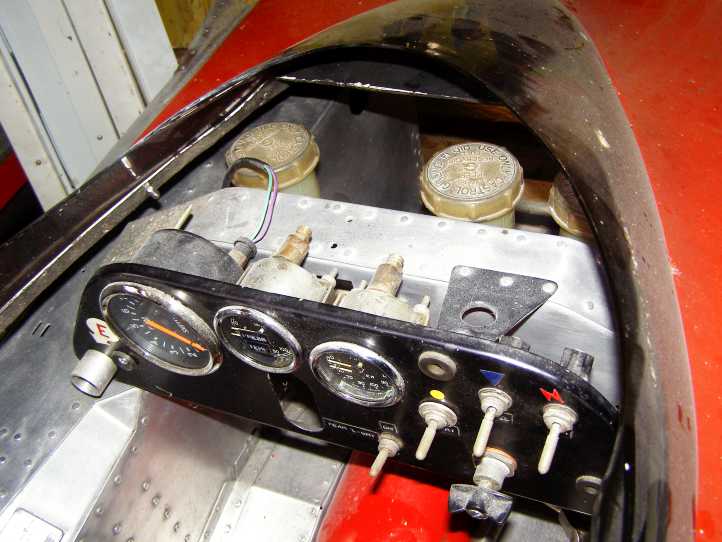
Instrument panel This is mounted on a support which forms a part of the chassis. Brake and clutch master cylinder reservoirs are conveniently located.
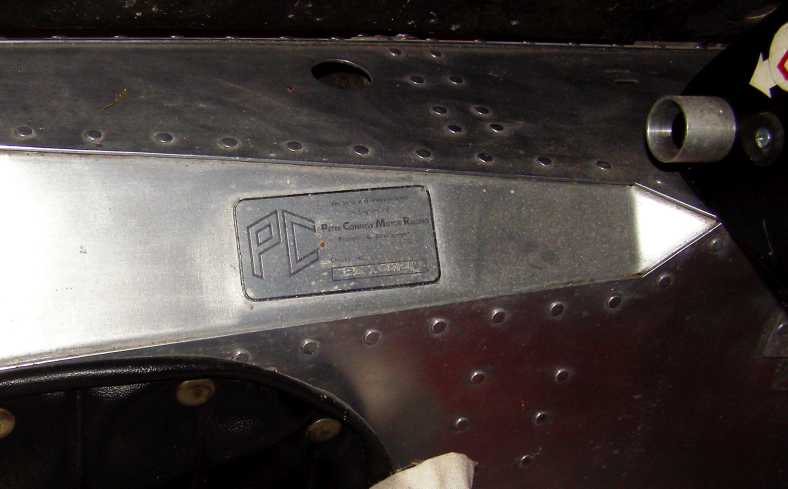
Chassis plate. Among the multitude of rivet heads is the plate which identifies the chassis.
Organised wall. Neat storage of spare rocker arms and tools, but dust shows that things need to be put into use.
Peter then invited us in for a cup of tea and a further discussion about the car and how it was built, then the day concluded with Barry and I going to the back-street shed which housed the slot car track. Six or seven ‘regulars’ turned out to put their little cars on the track and race them against each other, which made for a very different evening for me and a lot of fun for them.
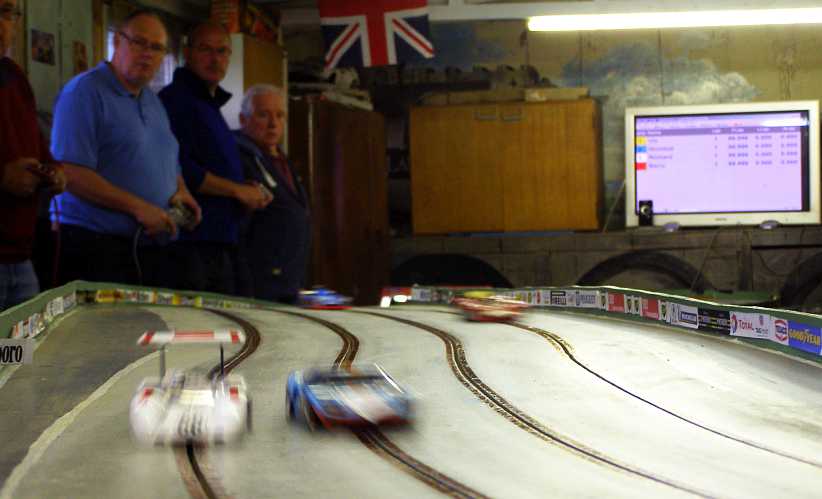
Boys and toys. These are mature gentlemen racing each other here, the car on the left is a Chaparral and the blue one is a Ford GT. The inside of the shed is well decked out for the purpose.
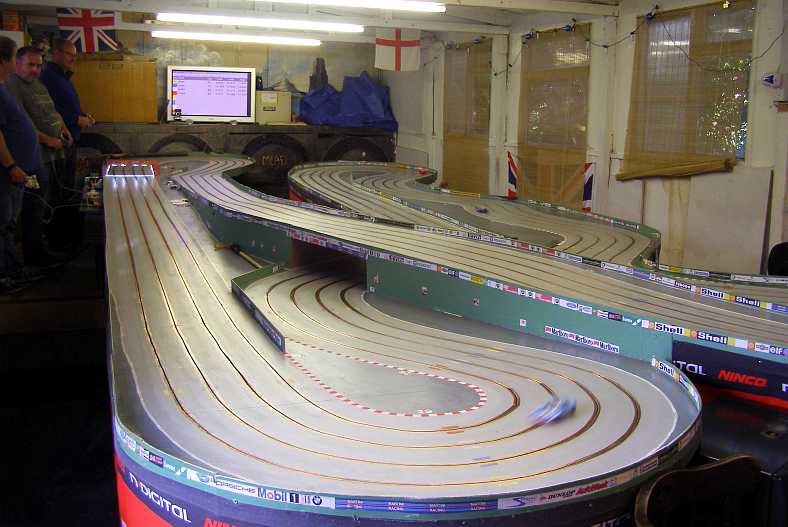
Four lanes. The four-lane track has the mandatory flyover to ensure that all lanes are the same length.
We had some good conversations there with the other blokes and when the night ended we returned to Barry’s place where I stayed the night. Barry had been living in Malta for a couple of years after the loss of his wife and we had some discussion about that too.
After a comfortable night’s sleep in the spare bed I was well ready to put together another day of enjoying the green of the English countryside…
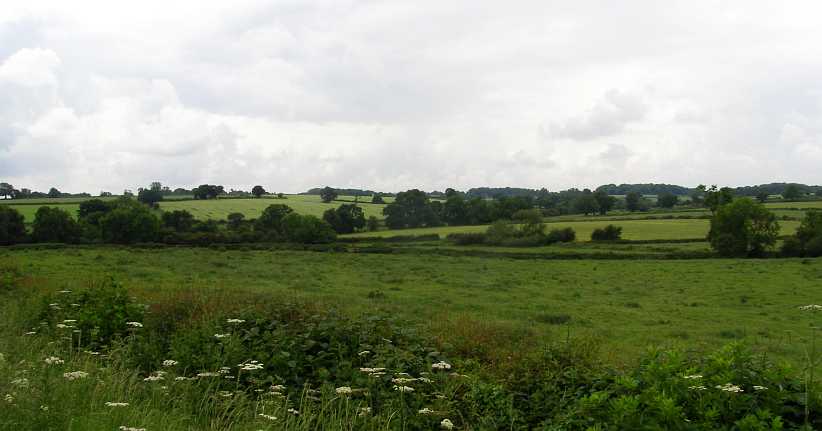
…with a couple more racing circuits and a motor racing museum visit planned and a look at the first cast iron bridge ever built…
The service station I went to wasn’t all that far from Brands Hatch, self-serve, of course, and I went to put the nozzle in and… it wouldn’t go! I fiddled, pushed and poked but I couldn’t get it in there. So I phoned the number the lease people had given me and asked what I should do.
Fuel filler woes. The restricting flap in the filler neck which was damaged and refused to allow the fuel nozzle to enter.
Most options involved the word ‘tomorrow’ or ‘Monday’ or something which would occupy time I didn’t want to waste, so after a few phone calls while they considered things I suggested that it needed fixing anyway, I reckoned I could butcher it to get the nozzle in and they gave the go-ahead for that. Hence we have before and after photos, taken in the dark, too blurred to see much detail but still showing the main thing – the restricter in place and with it gone.
Fixed! A bit of rough work with a screwdriver meant I could refuel and carry on with my trip.
After sorting that out I drove off and looked around for somewhere safe to pull up and sleep for the night. I’d made arrangements with ‘condor’, another forum friend, to meet up the next day and get to know each other and see some more sights, among which she’d planned to show me a kite show in her home town of Bedford.
But the day was restructured because I had an e-mail from my daughter in law telling me that Sandra was in hospital. I really didn't know how serious things were, but chest pains were being investigated. I had learned that Sandra was on some heart tablets, and blood pressure tablets, so it was a bit worrying.
My personal tour of Bedford was instructive, the well-known ‘condor’ showed me some highlights of the town and we had some interesting chats, not only with each other, but with other people. It was a bit lousy in the weather department, but I'm told England can be like that. One of the features of the forum through which we met is that there’s a thread each weekend for people to discuss their plans, outings and accomplishments as the weekend passes. ‘condor’ posted this:
The Panacea society, of which I showed Ray the outside of the museum (as it was shut) and showed the houses in Albany Road that it owns and which are kept specifically for the 30 bishops that are (never) going to meet there to open Joanna Southcotts box of prophecies. Also we passed their 'the garden of Eden' at least 3 times – that's because Ray wanted to check out a strange new car shape (turned out to be a TVR).
I did misname a John Howard statue for a John Bunyan one (but in mitigation, we did pass the John Bunyan museum and meeting place, also both closed). John Howard statue had relevance as we had met the current owners of John Howard's mansion in the cafe bar earlier. They asked to sit next to us as they wanted to know who Ray was.
I did misname a John Howard statue for a John Bunyan one (but in mitigation, we did pass the John Bunyan museum and meeting place, also both closed). John Howard statue had relevance as we had met the current owners of John Howard's mansion in the cafe bar earlier. They asked to sit next to us as they wanted to know who Ray was.
She's having a CTPA tomorrow morning, if I've got the letters right that means it's a dye check for clots. I spoke to her briefly a little while ago and she's happy to be in hospital being looked after.
I drove to the vicinity of a station a little out of London and found a parking spot where I didn’t have to pay and wasn’t likely to get booked. Walking to the station I noticed that the Royal Mail people work things a bit differently to what we see at home. This trolley…
Royal Mail. No doubt dropped off from a vehicle earlier, this trolley was padlocked to the post and awaiting the foot-slogging postman’s arrival to distribute its contents.
…was chained to a post to provide the walking postman with his next load to deliver.
I bought a ticket and rode the train into London, having ensured that I was going to the station nearest to the British Museum. I think this ticket…
Underground ticket. There was no point in taking the car into the city, parking would be impossible and impossibly expensive, much better to catch the train.
…was for the return journey. On alighting from the train and emerging onto the street some few hundred yards from the museum I realised I’d be foolish to set off to the museum without having had something to eat. And right there at the corner in front of me was a McDonalds.
I went in and got a meal, then looked around for somewhere to sit down to eat it. It was by this time getting towards lunchtime and plenty of others had the same idea, but I found a seat which wasn’t occupied and asked the lady opposite if it was okay for me to sit there.
Eventually we got to talking and comparing notes and I learned she was also an Australian. From Campbelltown, which was an area I knew well when I lived in Sydney. And she told me she was going to take a trip in the next few days to visit Spa, the Nurburgring, Reims and a few other places I’d just been!
Not only was she on a similar wavelength to me about motor racing and old circuits, but she was also on her way to the British Museum! So we walked up there together, still comparing notes, but that was as far as it went as her interest in the museum was more about Egyptian things, mummies and so on, while mine was quite different.
I snapped a photo of the Rosetta Stone, which provided researchers with the keys to unlock the secrets of Egyptian Hieroglyphics:
Rosetta Stone. Discovered in 1799, this stone was the key to understanding Egyptian hieroglyphics and unlocking some secrets of ancient times.
Without guidance it would have proved difficult and time-consuming to look in detail for more things which might interest me, so I had a brief look around and headed back to the station. Then, after walking to the car I set off looking for anything that might interest me with a view to getting to Barry’s late in the afternoon in Essex.
I found a Welcome Break rest area/retail centre and got a photo of yet another RAM…
Welcome Break. These are the rest and retail stops along the motorways of Britain. Their parking limits worried me whenever I wanted to get a sleep parked in one.
…and also took note of the electric car charging outlet provided there:
Electric charge. New to me were the electric car charging outlets, becoming more common around the world now.
Some peaches appealed to me as something different to eat, but they were more different than just that. I’ve only ever seen peaches which are more or less spherical, these looked like they’d been trampled flat:
Flat peaches. I’d never seen peaches this shape before, but they were good to eat anyway.
Driving around the suburbs and towns was somewhat different to Australia and America, even Europe, and I snapped this suburban street scene during the afternoon:
Characteristic. Each country has its unique ‘feel’ and this sort of scene was a part of that in England.
And somewhere along the way I spotted a car-carrying truck which held no fewer than ten cars!
Ten on a truck. Actually, there are only nine here as one has just been unloaded off the lower level at the back.
The rest of Monday and well into Tuesday I wasted a lot of time as I was awaiting phone calls relating to seeing Stirling Moss and John Surtees, I didn’t want to leave the London area too quickly in case one of them became available for an interview relating to them contributing to our planned book on Warwick Farm. It was all a huge loss of travelling time, but I’d already arranged to still be in the area on Tuesday night anyway.
I spent some time sleeping in the car on one of those days at one of the ‘Welcome Breaks’ and was concerned about the parking limits there – the signs have dire warnings – but nothing untoward came of it. I also went back to the supermarket I’d been to on Sunday and picked up something to snack on and Monday night was spent in the car in one of the car parks.
Ultimately I did speak to ‘Fearless John’ and had a good conversation about the time we’d met before, about 45 years earlier in Australia, and I explained what e were doing with the book. But he couldn’t afford time to see me and gave me all of his phone numbers. Then we arranged to do things by e.mail later.
It was then time to go to Barry’s. Once there he took me to see the Connew Formula One car built by his cousin, which was a car which appeared against all odds. Not enough finance, not enough experience, not enough of any of the things which add up to the resources to do such a thing, but Peter Connew – aided by people who worked on the project with him for nothing – somehow pulled it off and it did race in the Austrian Grand Prix of 1972 with Francois Migault driving.
Peter was happy to show me around, the car was at that time being worked on to enable it to be reassembled for displays, a picture accompanies the story of the car on this page:
https://www.oldracingcars.com/connew/pc1/
It was interesting for me to see these parts which were about to be dragged out and put back together again. I was impressed with the standard of finish, even though they’d been ‘in storage’ for over forty years:
Connew chassis tub. Built as a monocoque with an open top, the chassis was typical of many of the era. Steel tubing forms the bulkheads and aluminium skins tie it all together.
Front suspension. With rocker arms at the top which attach to the coil-spring/damper units (missing here, the black tube is holding things where this belongs), the front suspension is able to be attached to the chassis as a unit.
The other side. It can be seen here that the anti-roll bar is in place within the ‘box’ and small links from the rocker arm activate that.
Finishing work. Some filler has been applied to the side of the chassis tub here to bring it into shape for painting.
Instrument panel This is mounted on a support which forms a part of the chassis. Brake and clutch master cylinder reservoirs are conveniently located.
Chassis plate. Among the multitude of rivet heads is the plate which identifies the chassis.
Organised wall. Neat storage of spare rocker arms and tools, but dust shows that things need to be put into use.
Peter then invited us in for a cup of tea and a further discussion about the car and how it was built, then the day concluded with Barry and I going to the back-street shed which housed the slot car track. Six or seven ‘regulars’ turned out to put their little cars on the track and race them against each other, which made for a very different evening for me and a lot of fun for them.
Boys and toys. These are mature gentlemen racing each other here, the car on the left is a Chaparral and the blue one is a Ford GT. The inside of the shed is well decked out for the purpose.
Four lanes. The four-lane track has the mandatory flyover to ensure that all lanes are the same length.
We had some good conversations there with the other blokes and when the night ended we returned to Barry’s place where I stayed the night. Barry had been living in Malta for a couple of years after the loss of his wife and we had some discussion about that too.
After a comfortable night’s sleep in the spare bed I was well ready to put together another day of enjoying the green of the English countryside…
…with a couple more racing circuits and a motor racing museum visit planned and a look at the first cast iron bridge ever built…
Last edited by Ray Bell; Jun 15, 2020 at 06:30 AM.
Thread Starter
|
Captain
Joined: Oct 2005
Posts: 570
Likes: 8
From: The Summit, Queensland, Australia
It was certainly an experience spending time with Barry, and a pleasure to get to know him after seeing his activities on the forum for over ten years. He is firstly known for his participation in the Connew project with his cousin, but he’s also remembered by the forum regulars for his replication of just about every Formula 1 race ever held using Scalextric track sections and cars.
Like me, he’s keen on visiting old circuits and has done several trips to France pursuing the old road tracks like Amiens, while he also lived in Malta for a while up until not long before I visited. We shared the ultimate pain, too, as he had also lost his wife a few years before that.
But this was a new day, there was some more waiting around before I decided I just had to hit the road. This is the path I was to follow:
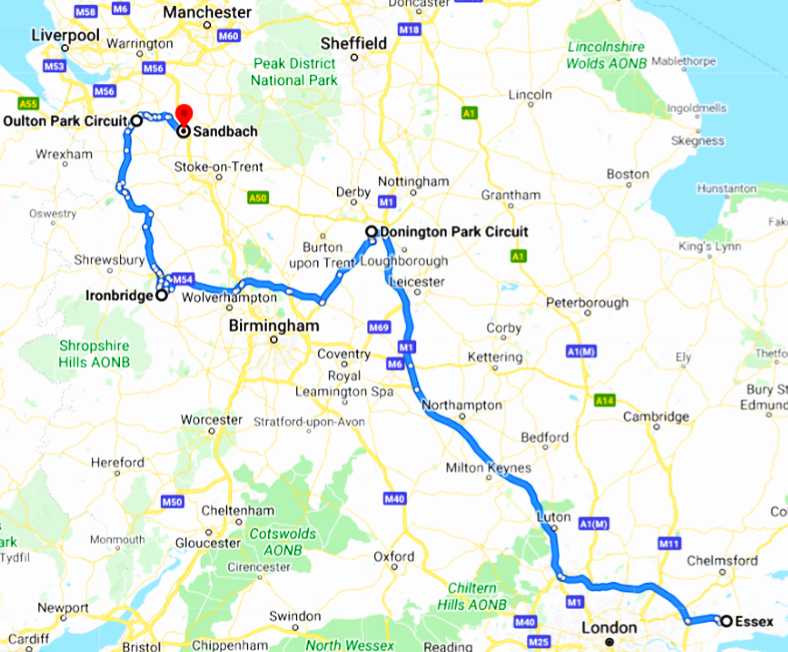
Now, after covering three days with one post, this day will require two.
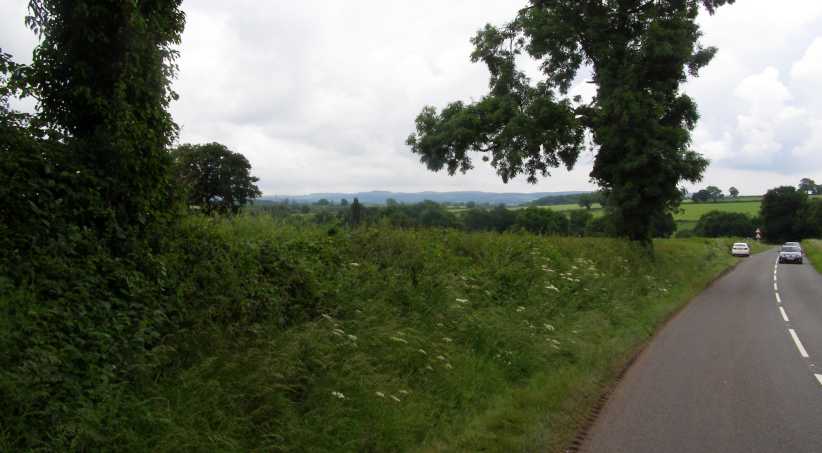
Secondary roads. Out in the greenery of the country early in the overcast day I drove along some nice little roads like this, a change from the motorways.
It was a fair drive to Donington, probably three hours with a stop for refreshments at one of the Welcome Breaks. There were two things to see there, the racing car museum and the racing circuit, which had seen the visits of the big German Grand Prix cars of the late thirties as well as (in an altered form) been the scene of a stunning exhibition of wet-weather driving by Ayrton Senna in the early nineties.
I had heard that some of the prize exhibits had been moved out after the death of the owner, Tom Wheatcroft. ‘Wheaty,’ as some knew him, was a great enthusiast and sponsored a couple of drivers in Formula One as well as lesser classes and he’d been a great friend of another car collector, ‘Jumbo’ Goddard.
At one point he and Jumbo did a deal which made a lot of sense to both. Jumbo sold all his cars to Tom at the price prevailing at the time (I think it was in the seventies) but kept whichever ones he wanted in his possession until he died. So financially Tom fared better, but Jumbo got to spend his money before he departed this life.
On paying my admission on this drizzly day I entered and had to walk past lots of World War 2 machinery, which are the preferred interest of Wheatcroft’s son. And there were to be other things which irked me, but there were still plenty of good exhibits.
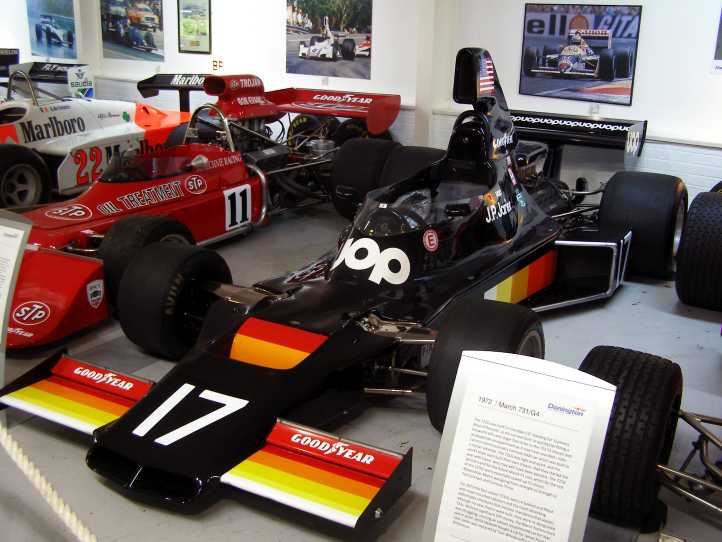
UPS Shadow. Don Nichols of UPS poured a lot of money into racing, Can-Am and Formula One. This is one of the F1 cars he had built for Jean-Pierre Jarier to drive. Their successes were minimal. The car alongside is a Trojan F5000.
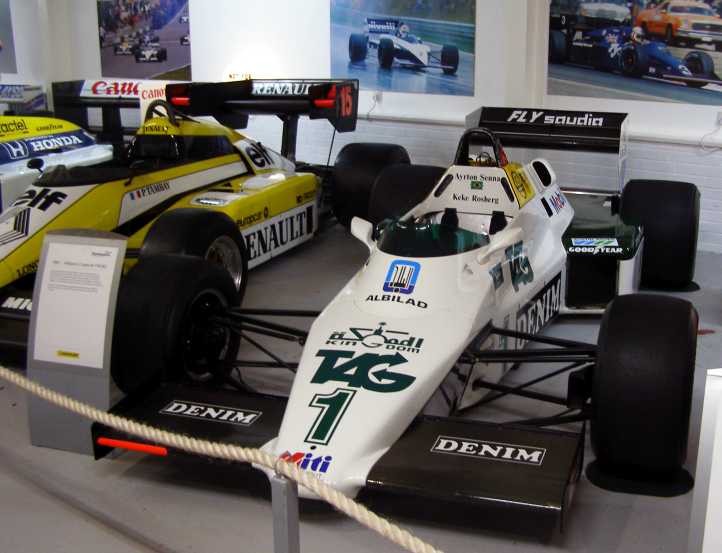
Williams FW08C Still racing with the DFV Cosworth engines, Williams faced a lot of turbocharged opposition with this car after its predecessor had won the World Championship for Keke Rosberg. Just one win in 1983, at Monaco, came to the team.
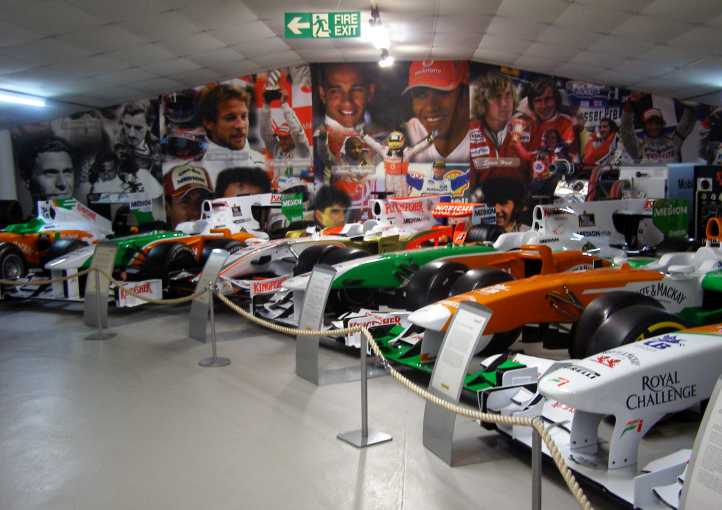
Force India. Probably too modern for my liking, these cars were on display in abundance, not highly successful in their time in the early 2000s, but not everybody can win.
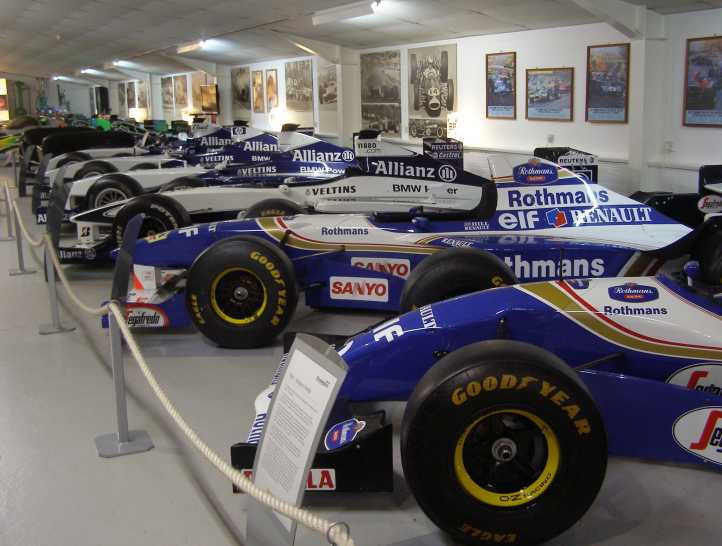
More Williams. One of the things I came to be disenchanted with in the museum was the large displays of one make such as this. Again, too new for my liking visually swamping the place.
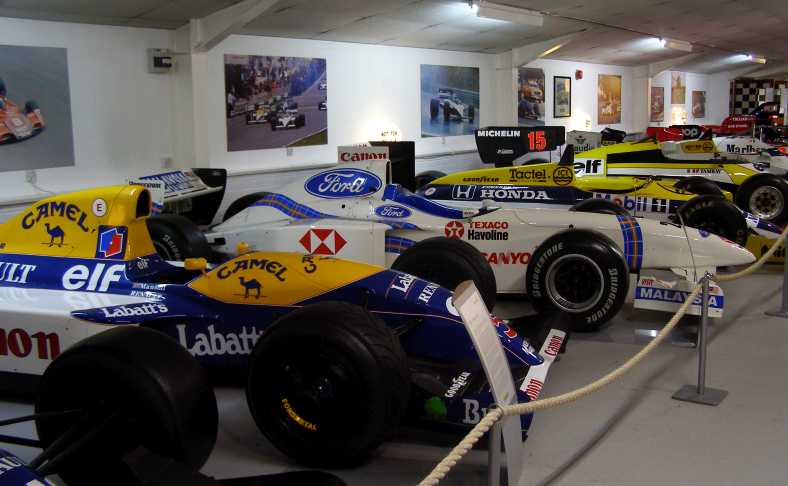
Williams and Stewart. For a short time Jackie Stewart had his own team, here his car is surrounded by the Williams of an earlier time, when they had Renault and Honda power.
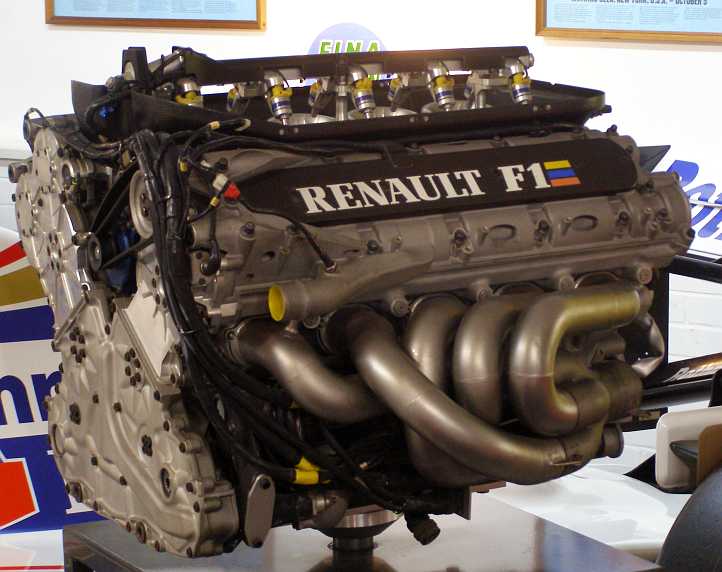
Renault V10. The technically-exciting period from the nineties and early 2000s bred a lot of new things as computers allowed engine designers to explore new avenues. The V10 layout was the best compromise for the 3.5-litre (naturally aspirated) F1 as it delivered more power than a V8 but was more compact than a V12. Until computers came, 5 and 10-cylinder engines could not easily be balanced.
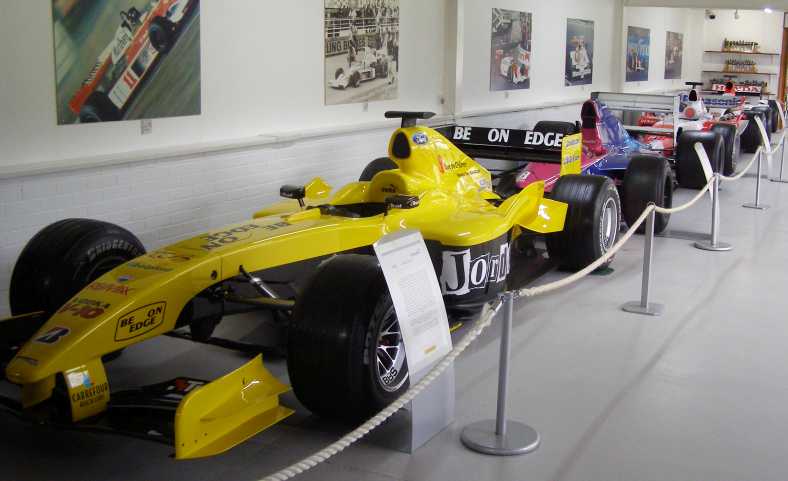
Jordan. In the nineties the extrovert Eddie Jordan built a Grand Prix team and had some minor successes. These are some of his cars.
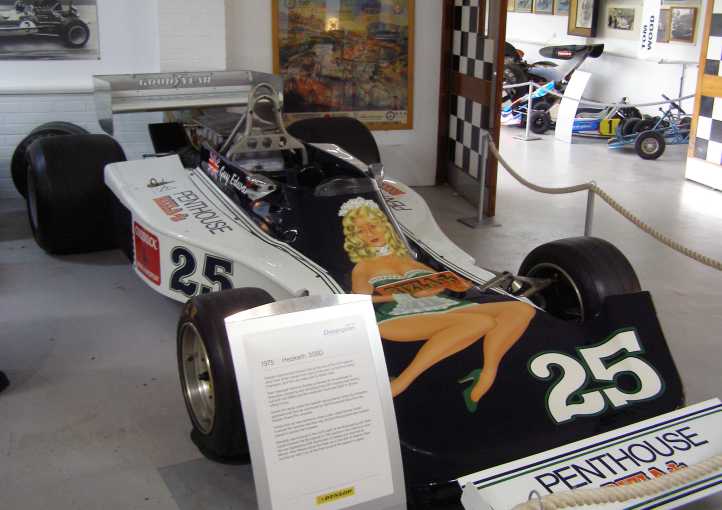
Penthouse Hesketh. Lord Hesketh came into F1 sponsoring James Hunt in a March, but in time he had his own cars built. After Hunt had moved to McLaren, Hesketh continued for a couple of years, the sponsorship from Penthouse was most appropriate for this playboy team owner.
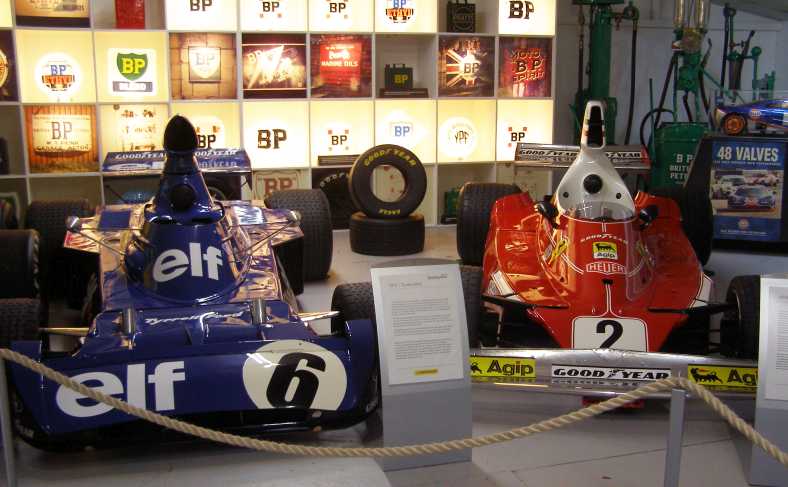
Tyrrell and Ferrari. Two teams which were generally at the pointy end of the field, this Tyrrell 006 won Jackie Stewart his third World Driver’s Championship, the Ferrari alongside is the model which won Niki Lauda his first title in 1975.
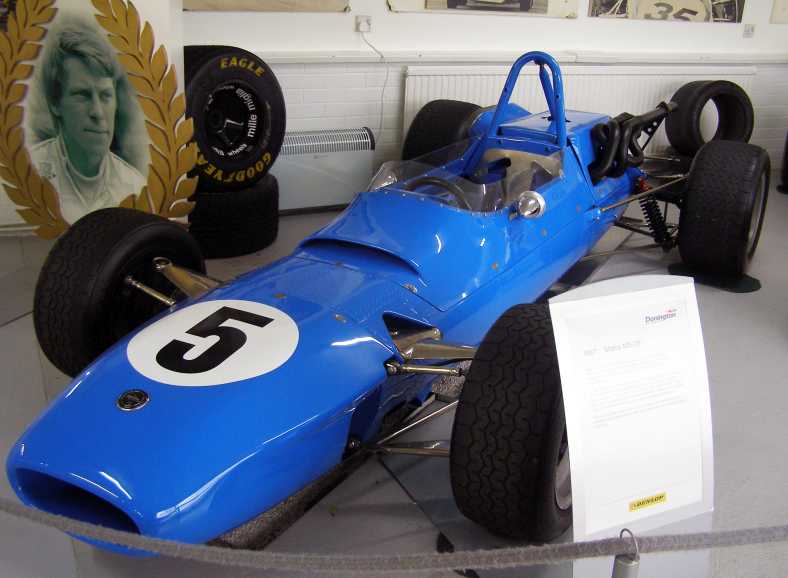
Matra MS05 This was the car which launched Jacky Ickx’ career when he took on the Formula One cars at the Nurburgring. Driving this 1.6-litre Formula Two car he practised faster than all but two F1 cars and in the race, having started behind all of the F1 cars, he was up to fifth place after just four laps. A suspension failure put him out of the race.
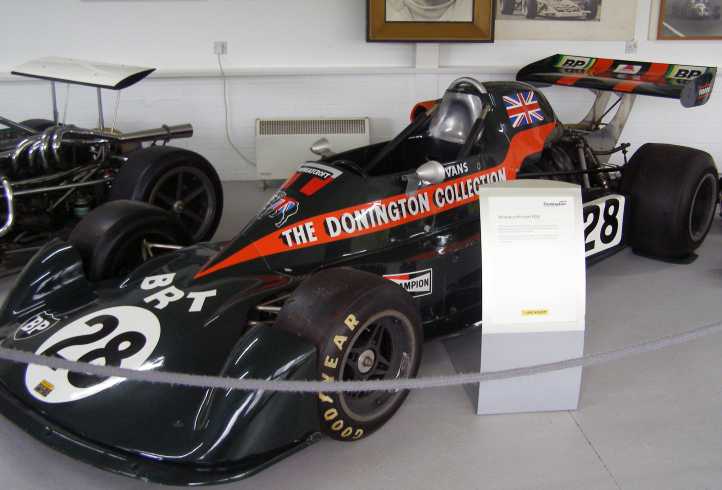
Wheatcroft Hart F2. Using a Pilbeam R27 chassis, Tom Wheatcroft gave a couple of drivers a chance in F2 racing. In 1976 he was denied success because the Abarth 6-cylinder engine used was a failure, in 1977 he diverted his attention to setting up the circuit and the museum.
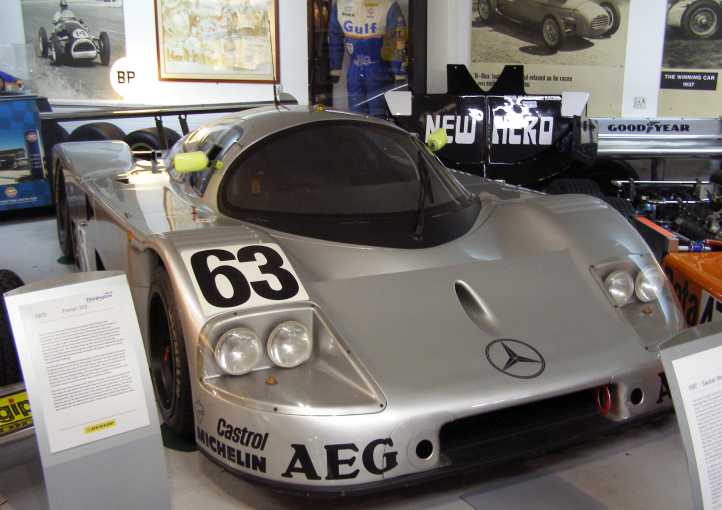
Sauber C9. With Mercedes-Benz engines and backing, Sauber suffered setbacks in 1987 and 1988 before finally dominating the Endurance races – including Le Mans – in 1989 with this car.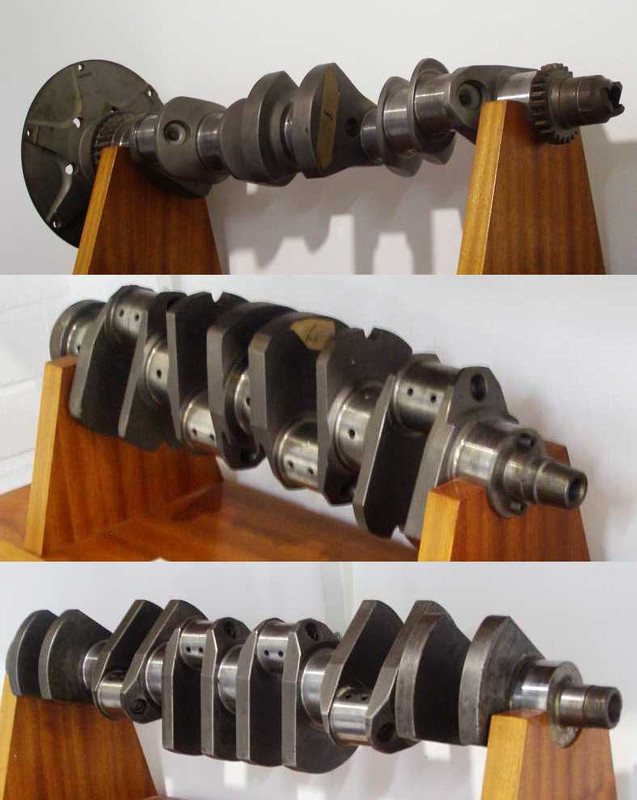
BRM crankshafts. A display of BRM crankshafts from the F1 formulae of 1954 to the eighties. The top one is from their earliest 4-cylinder 2.5-litre engines, the next is the little V8 crank from the 1.5-litre era, then the V12 crank used from 1968 in the 3-litre era.
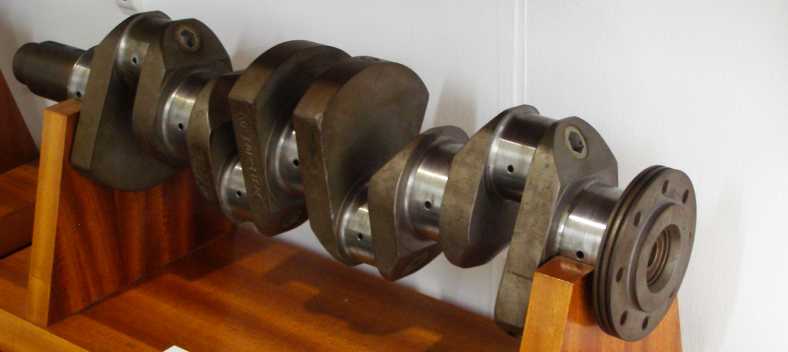
Coventry-Climax crank. The 4-cylinder engine Coventry-Climax engine started life as a 1.5-litre and grew to an eventual 2.7-litres (as used by Jack Brabham at Indianapolis in 1961), this crank being from one of the larger versions. In 2.5-litre form it won two World Championships for Brabham and a number of other races for other drivers of Cooper and Lotus cars.
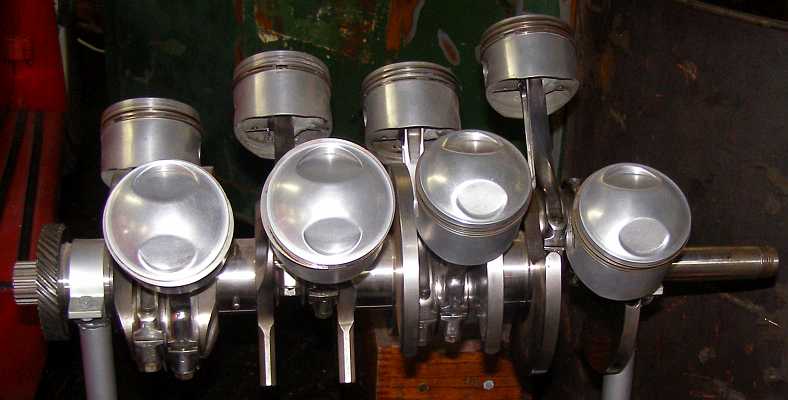
Lancia D50. Set up to display the ‘rotating assembly,’ this lovely little exhibit was likewise unlabelled, but at the front desk they foraged through their books and found it belonged to the Lancia D50, the engine which was further developed by Ferrari after Lancia abandoned F1 in 1955. A delightful little 2.5-litre V8 which challenged the Mercedes straight eights of the era.
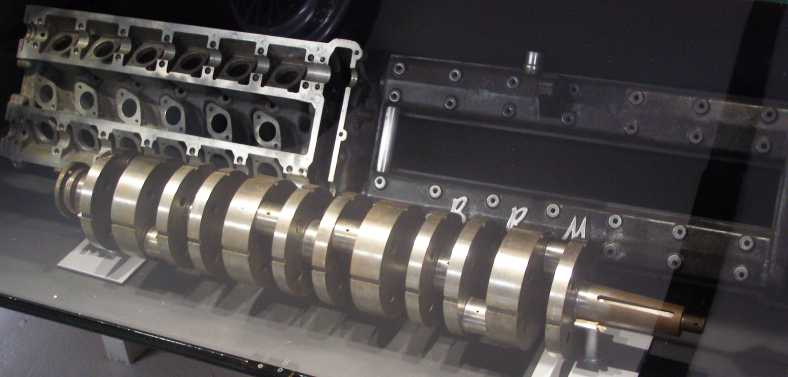
Cranks and heads. Another one I had to find, but this time it’s my fault as I’d assumed it had something to do with BRM as it’s in a case with other BRM parts and had no labelling. From a friend in high places I found out it belonged to a 1934 Maserati 8CM, while the head and cam cover is BRM V12.
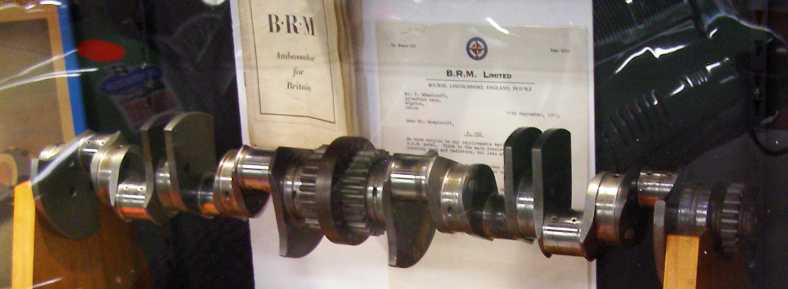
BRM V16 crankshaft. A complicated design, very light for a crank intended to deliver over 500bhp from the supercharged 1.5-litre engine, gears in the centre drive the camshaft timing gears and drives to the centrifugal supercharger and the flywheel. In this way the whip in the crank was minimised.
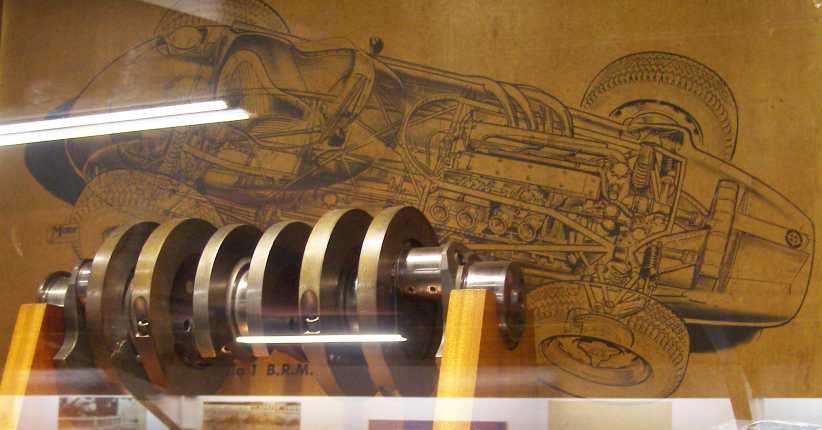
BRM H16. The incredibly complicated and heavy 1966/67 BRM H16 had two cranks and this is one of them. The fully counterbalanced shaft, as shown, must have been a significant part of the engine’s weight.
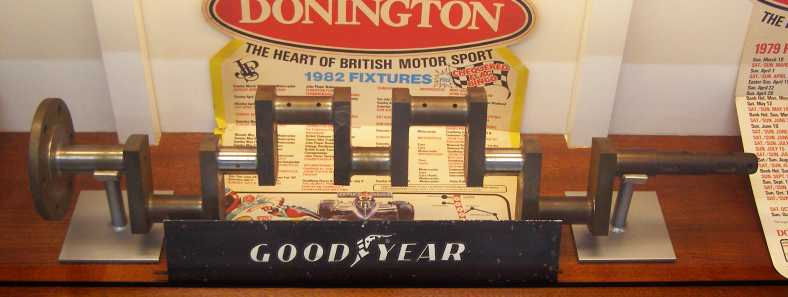
Very old crankshaft. Just to show how things changed over the decades, this old crank was on display too. It’s thought to be from a 1911 Cottin et Desgouttes of Jumbo Goddard’s collection.
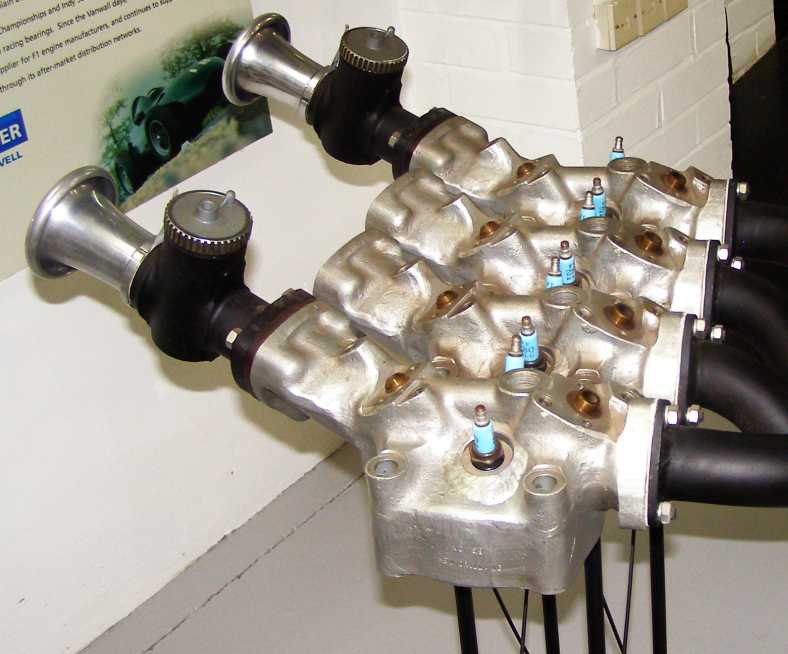
Vanwall head. Moving to the top of an engine, this cylinder head is a composite design with, effectively, four Norton motorcycle heads were formed in one water-cooled casting. The cam boxes bolt to the top on each side, which I’d have thought in those pre-Silastic days would have been asking for oil leaks.

Vanwall combustion. Underneath shows the hemispherical combustion chambers so favoured in those times. This head was bolted onto a Rolls-Royce industrial/military vehicle crankcase and block made of aluminium to form the basis for a Championship-winning engine.
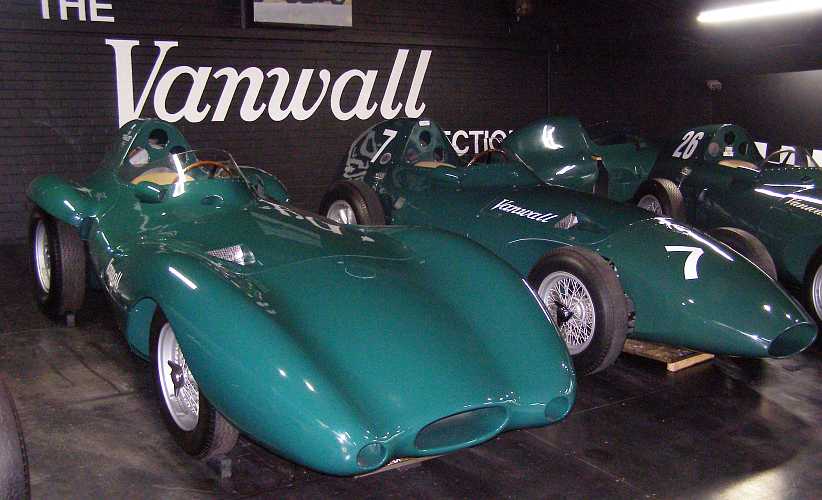
Vanwalls. Tony Vandervell was the maker of Thinwall bearing shells and decided to help the British efforts in Formula One. The Vanwalls were the result. This streamliner was built for the Reims race but was forsaken as the regular cars were quick enough. A nice diversion, however.
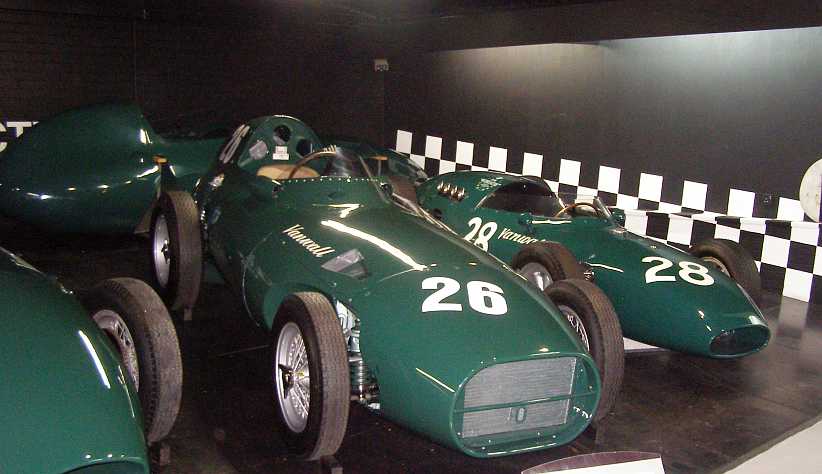
Stubby Vanwalls. It wasn’t uncommon for cars to go to Monaco with short noses to get more air in (and to be less likely to tangle with others) on the tight circuit. The rear-engined car came too late, but had some success in Formula Intercontinental racing in 1961 driven by John Surtees. It was Vanwall’s final fling.
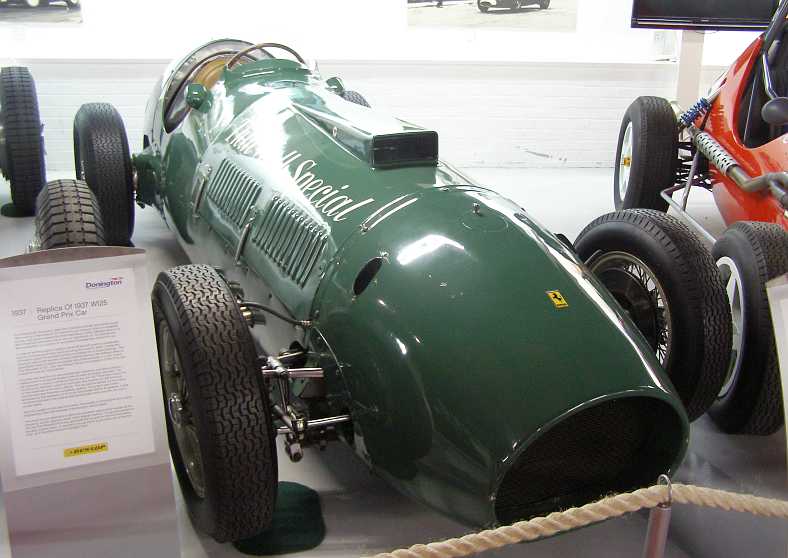
Thinwall Special. In an earlier effort to try to help BRM along in their V16 days, Vandervell purchased this Ferrari and entered it as the ‘Thinwall Special.’
There’s more to come of the museum, but I’ll make another post of that. I was pretty disillusioned about having to go and ask what things were, the lack of labelling on items played on my mind and the lack of information when I did ask about a couple of things was getting to me as I continued my stroll around. Not that I was happy with the military exhibits or some others, which I’ll cover in the next post.
Like me, he’s keen on visiting old circuits and has done several trips to France pursuing the old road tracks like Amiens, while he also lived in Malta for a while up until not long before I visited. We shared the ultimate pain, too, as he had also lost his wife a few years before that.
But this was a new day, there was some more waiting around before I decided I just had to hit the road. This is the path I was to follow:
Now, after covering three days with one post, this day will require two.
Secondary roads. Out in the greenery of the country early in the overcast day I drove along some nice little roads like this, a change from the motorways.
It was a fair drive to Donington, probably three hours with a stop for refreshments at one of the Welcome Breaks. There were two things to see there, the racing car museum and the racing circuit, which had seen the visits of the big German Grand Prix cars of the late thirties as well as (in an altered form) been the scene of a stunning exhibition of wet-weather driving by Ayrton Senna in the early nineties.
I had heard that some of the prize exhibits had been moved out after the death of the owner, Tom Wheatcroft. ‘Wheaty,’ as some knew him, was a great enthusiast and sponsored a couple of drivers in Formula One as well as lesser classes and he’d been a great friend of another car collector, ‘Jumbo’ Goddard.
At one point he and Jumbo did a deal which made a lot of sense to both. Jumbo sold all his cars to Tom at the price prevailing at the time (I think it was in the seventies) but kept whichever ones he wanted in his possession until he died. So financially Tom fared better, but Jumbo got to spend his money before he departed this life.
On paying my admission on this drizzly day I entered and had to walk past lots of World War 2 machinery, which are the preferred interest of Wheatcroft’s son. And there were to be other things which irked me, but there were still plenty of good exhibits.
UPS Shadow. Don Nichols of UPS poured a lot of money into racing, Can-Am and Formula One. This is one of the F1 cars he had built for Jean-Pierre Jarier to drive. Their successes were minimal. The car alongside is a Trojan F5000.
Williams FW08C Still racing with the DFV Cosworth engines, Williams faced a lot of turbocharged opposition with this car after its predecessor had won the World Championship for Keke Rosberg. Just one win in 1983, at Monaco, came to the team.
Force India. Probably too modern for my liking, these cars were on display in abundance, not highly successful in their time in the early 2000s, but not everybody can win.
More Williams. One of the things I came to be disenchanted with in the museum was the large displays of one make such as this. Again, too new for my liking visually swamping the place.
Williams and Stewart. For a short time Jackie Stewart had his own team, here his car is surrounded by the Williams of an earlier time, when they had Renault and Honda power.
Renault V10. The technically-exciting period from the nineties and early 2000s bred a lot of new things as computers allowed engine designers to explore new avenues. The V10 layout was the best compromise for the 3.5-litre (naturally aspirated) F1 as it delivered more power than a V8 but was more compact than a V12. Until computers came, 5 and 10-cylinder engines could not easily be balanced.
Jordan. In the nineties the extrovert Eddie Jordan built a Grand Prix team and had some minor successes. These are some of his cars.
Penthouse Hesketh. Lord Hesketh came into F1 sponsoring James Hunt in a March, but in time he had his own cars built. After Hunt had moved to McLaren, Hesketh continued for a couple of years, the sponsorship from Penthouse was most appropriate for this playboy team owner.
Tyrrell and Ferrari. Two teams which were generally at the pointy end of the field, this Tyrrell 006 won Jackie Stewart his third World Driver’s Championship, the Ferrari alongside is the model which won Niki Lauda his first title in 1975.
Matra MS05 This was the car which launched Jacky Ickx’ career when he took on the Formula One cars at the Nurburgring. Driving this 1.6-litre Formula Two car he practised faster than all but two F1 cars and in the race, having started behind all of the F1 cars, he was up to fifth place after just four laps. A suspension failure put him out of the race.
Wheatcroft Hart F2. Using a Pilbeam R27 chassis, Tom Wheatcroft gave a couple of drivers a chance in F2 racing. In 1976 he was denied success because the Abarth 6-cylinder engine used was a failure, in 1977 he diverted his attention to setting up the circuit and the museum.
Sauber C9. With Mercedes-Benz engines and backing, Sauber suffered setbacks in 1987 and 1988 before finally dominating the Endurance races – including Le Mans – in 1989 with this car.
BRM crankshafts. A display of BRM crankshafts from the F1 formulae of 1954 to the eighties. The top one is from their earliest 4-cylinder 2.5-litre engines, the next is the little V8 crank from the 1.5-litre era, then the V12 crank used from 1968 in the 3-litre era.
Coventry-Climax crank. The 4-cylinder engine Coventry-Climax engine started life as a 1.5-litre and grew to an eventual 2.7-litres (as used by Jack Brabham at Indianapolis in 1961), this crank being from one of the larger versions. In 2.5-litre form it won two World Championships for Brabham and a number of other races for other drivers of Cooper and Lotus cars.
Lancia D50. Set up to display the ‘rotating assembly,’ this lovely little exhibit was likewise unlabelled, but at the front desk they foraged through their books and found it belonged to the Lancia D50, the engine which was further developed by Ferrari after Lancia abandoned F1 in 1955. A delightful little 2.5-litre V8 which challenged the Mercedes straight eights of the era.
Cranks and heads. Another one I had to find, but this time it’s my fault as I’d assumed it had something to do with BRM as it’s in a case with other BRM parts and had no labelling. From a friend in high places I found out it belonged to a 1934 Maserati 8CM, while the head and cam cover is BRM V12.
BRM V16 crankshaft. A complicated design, very light for a crank intended to deliver over 500bhp from the supercharged 1.5-litre engine, gears in the centre drive the camshaft timing gears and drives to the centrifugal supercharger and the flywheel. In this way the whip in the crank was minimised.
BRM H16. The incredibly complicated and heavy 1966/67 BRM H16 had two cranks and this is one of them. The fully counterbalanced shaft, as shown, must have been a significant part of the engine’s weight.
Very old crankshaft. Just to show how things changed over the decades, this old crank was on display too. It’s thought to be from a 1911 Cottin et Desgouttes of Jumbo Goddard’s collection.
Vanwall head. Moving to the top of an engine, this cylinder head is a composite design with, effectively, four Norton motorcycle heads were formed in one water-cooled casting. The cam boxes bolt to the top on each side, which I’d have thought in those pre-Silastic days would have been asking for oil leaks.
Vanwall combustion. Underneath shows the hemispherical combustion chambers so favoured in those times. This head was bolted onto a Rolls-Royce industrial/military vehicle crankcase and block made of aluminium to form the basis for a Championship-winning engine.
Vanwalls. Tony Vandervell was the maker of Thinwall bearing shells and decided to help the British efforts in Formula One. The Vanwalls were the result. This streamliner was built for the Reims race but was forsaken as the regular cars were quick enough. A nice diversion, however.
Stubby Vanwalls. It wasn’t uncommon for cars to go to Monaco with short noses to get more air in (and to be less likely to tangle with others) on the tight circuit. The rear-engined car came too late, but had some success in Formula Intercontinental racing in 1961 driven by John Surtees. It was Vanwall’s final fling.
Thinwall Special. In an earlier effort to try to help BRM along in their V16 days, Vandervell purchased this Ferrari and entered it as the ‘Thinwall Special.’
There’s more to come of the museum, but I’ll make another post of that. I was pretty disillusioned about having to go and ask what things were, the lack of labelling on items played on my mind and the lack of information when I did ask about a couple of things was getting to me as I continued my stroll around. Not that I was happy with the military exhibits or some others, which I’ll cover in the next post.
Last edited by Ray Bell; Jun 15, 2020 at 08:34 AM.